
Cheapest Car Insurance in Florida: Compare Quotes & Save
You want the cheapest car insurance in Florida without getting burned by fine print. Fair. Florida is a unique insurance market—no-fault rules, Personal Injury Protection (PIP), frequent storms, and a higher-than-average fraud rate all push premiums up. Here’s how to find real savings without sacrificing the coverage that actually protects you.
Florida minimum car insurance and key state rules (PIP, liability, no-fault)
Florida is a no-fault state. That means after most crashes, your own policy pays for your injuries first, regardless of who caused the accident.
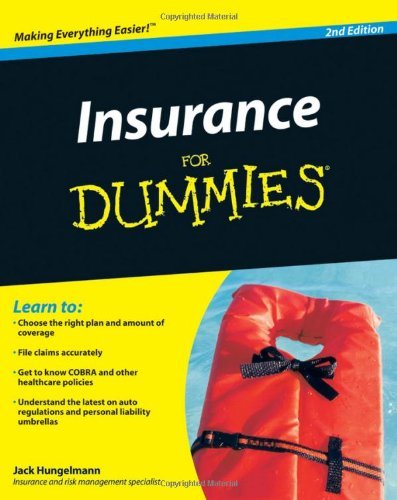
Insurance For Dummies?: Hungelmann, Jack
Whether you’re a homeowner or ... need on: ... Author Jack Hungelmann <strong>uses his twenty-five years of experience in the insurance industry to make buying insurance as simple as possible</strong>
Check Price on Amazon- PIP (Personal Injury Protection): Required. Minimum $10,000 per vehicle. PIP typically covers 80% of reasonable medical expenses and 60% of lost wages up to $10,000, subject to deductibles and an “emergency medical condition” rule that can cap non-emergency benefits at $2,500. See Florida Statutes §627.736.
- PDL (Property Damage Liability): Required. Minimum $10,000. Pays for damage you cause to other people’s property (their car, a fence, a building). See Florida Statutes §324.022.
- BIL (Bodily Injury Liability): Not required for everyone, but strongly recommended. If you seriously injure someone, PIP likely won’t cover all their costs—and you can be sued. Florida’s Financial Responsibility Law (Florida Statutes §324.021 and §324.023) can require you to carry BIL if you’ve caused certain crashes or have specific violations. After a DUI, Florida requires an FR-44 filing with higher limits (commonly 100/300/50 — $100,000 per person, $300,000 per accident in bodily injury, and $50,000 property damage).
- UM/UIM (Uninsured/Underinsured Motorist): Optional but valuable. Protects you if you’re hit by someone with little or no liability insurance. See Florida Statutes §627.727.
About no-fault: Florida’s no-fault law (Florida Statutes §§627.730–627.7405) is why PIP exists. It speeds up payment for injuries but does not protect you from being sued for serious injuries you cause. That’s why BIL is worth considering even if you’re laser-focused on price.
Regulatory note: The Florida Office of Insurance Regulation (OIR) oversees rates and market conduct. Carriers must file rates and follow OIR guidance, but premiums still vary widely by driver profile, location, and claims trends.
Want a deeper dive into state requirements and typical costs? See our Florida overview: Auto Insurance in Florida: Rates, Requirements & How to Save.
What drives Florida car insurance rates
Your price depends on risk signals carriers use to predict claims. In Florida, these are the big ones:
- Age and experience: Teen and early-20s drivers typically pay the most. Mature drivers (30s–60s) with clean records often see the lowest rates.
- ZIP code and garaging: Dense urban areas, coastal regions, and counties with higher crash or litigation rates usually cost more. Garage parking can help.
- Driving record: Tickets, at-fault crashes, and DUIs are major surcharges. A recent DUI triggers FR-44 requirements with much higher limits and premiums.
- Vehicle type and value: Newer or high-performance cars cost more to repair or replace. Vehicles with advanced safety features can help lower rates.
- Annual mileage and use: Long commutes and rideshare use (Uber/Lyft) tend to raise premiums. Be accurate—misstating use can lead to claim denials.
- Coverage selections: “Full coverage” is shorthand for liability plus comprehensive and collision. Raising liability limits, adding UM/UIM, and choosing low deductibles all increase price—but also increase protection.
- Credit-based insurance score: Florida allows insurers to use credit-based insurance scores when rating policies. Better credit often lowers premiums. If your credit improves, re-shop.
- Household factors: Multi-car and multi-driver households can unlock discounts. Homeownership and bundling home + auto can save more.
Who usually gets the cheapest car insurance in Florida
No two drivers get the same rate, but here’s how prices often shake out.
- 35-year-old good driver: Clean record, good credit, driving a 6-year-old sedan, 10–12K miles/year. Typical ranges we see in suburban Florida: $90–$180/month for state-minimum; $180–$300/month for broader coverage with comprehensive/collision. Your actual rate can be lower or higher depending on your ZIP and insurer.
- Safe seniors (60–70): Often benefit from long driving history and loyalty/defensive driving discounts—assuming clean records and good credit. Minimum coverage can be very competitive; full coverage varies with vehicle value. If you’re retired and driving fewer miles, mention that when quoting.
- Young drivers (18–22): Expect the highest rates. Minimum coverage might land around $250–$450/month; full coverage can be well above that, especially for new cars. Adding a teen to a parent’s policy is typically cheaper than a standalone policy.
- Drivers with a recent accident or ticket: Rates rise for 3–5 years. Shopping multiple carriers is essential; some penalize certain violations less than others.
- High-risk (SR-22/FR-44) drivers: If you need an SR-22 (proof of financial responsibility) or FR-44 (post-DUI), you’ll pay more and must meet specific liability limits. Non-standard insurers may be your best short-term option while you rebuild your record.
For age-specific strategies, see:
- Cheapest Car Insurance for Young Drivers: How to Cut Your Rates
- Cheap Auto Insurance for Seniors: Smart Ways to Cut Premiums Without Sacrificing Coverage
Which insurers commonly offer low rates in Florida—and how to evaluate them
Rates swing by profile, but we regularly see the following patterns in Florida. Your mileage will vary, so use this as a starting map, not a destination.
- Good drivers with solid credit: Large direct carriers (well-known national brands) often compete hard here. Telematics programs (usage-based tracking) can shave 10–30% for consistently safe driving.
- Young drivers: Carriers with strong “good student,” driver training, and telematics discounts can be competitive. Look for companies that price fairly for added youth drivers on family policies.
- Multi-policy households: Companies known for solid home + auto bundle discounts can come out cheaper net of savings. If you own a home or condo in Florida, bundling can be one of your biggest levers.
- High-risk or SR-22/FR-44: Non-standard specialists and certain regional carriers tend to be more forgiving on past violations, but check claims service reviews and financial strength carefully.
- Seniors: Companies that partner with mature driver safety courses or have senior-friendly programs (reduced mileage, accident forgiveness) can price well.
How to evaluate beyond price:
- Financial strength: Look for AM Best ratings of A- or better. This reflects an insurer’s ability to pay claims.
- Claims reputation: Scan complaint ratios (the Florida OIR publishes complaint data) and independent surveys. Price is great; fair claims handling is better.
- Discounts you’ll actually qualify for: Telematics, homeowner, multi-car, good student, military, paperless, autopay—stack what applies.
- Fit for your profile: Some carriers are simply known to be friendlier to certain risk factors—like youthful operators or older vehicles. Test at least 3–5 options.
How to find the cheapest car insurance in Florida (step-by-step)
The fastest way to see what you would actually pay is to compare quotes from 3–5 carriers. Here’s a simple workflow that keeps it apples-to-apples.
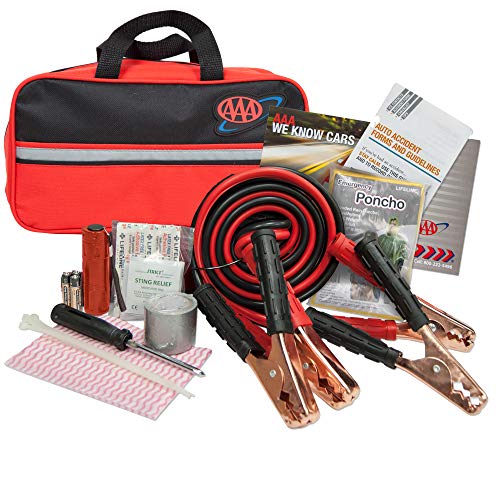
Lifeline AAA Premium Road Kit, 42 Piece Emergency Car Kit with Jumper Cables, Flashlight and First Aid Kit,4330AAA,Black : Everything Else
View on Amazon- Decide on coverage targets first
- Liability: At minimum, Florida requires $10,000 PDL and $10,000 PIP. For realistic protection, many Florida drivers consider at least 100/300/50 for liability (that’s $100,000 per person/$300,000 per accident bodily injury and $50,000 property damage) plus UM/UIM if budget allows.
- Comprehensive and collision: Add if your car is financed/leased (your lender will require it) or if you can’t afford to replace the car out of pocket. Pick deductibles you could pay tomorrow ($500–$1,000 are common).
- Gather your info
- Driver data: License numbers, dates of birth, marital status, education.
- Vehicles: VINs, mileage, how each car is used (commute, business, pleasure), safety features.
- History: Claims, tickets, accidents with dates and details.
- Current policy: Limits, deductibles, and expiration date (helps with continuous coverage discounts).
- Quote with identical inputs
- Use the same liability limits, deductibles, and coverage add-ons for each carrier so your comparisons are clean.
- Select the same mileage and usage for each vehicle.
- Check the details that swing price
- PIP deductible: Some carriers offer PIP deductibles (e.g., $250, $500, $1,000). Higher deductible = lower premium, but you’ll pay more up front if injured.
- Rental reimbursement, roadside, OEM parts: Decide what you need vs. what you can skip.
- Telematics: If you’re a careful driver and okay with monitoring, these programs can deliver real savings.
- Validate the insurer
- Financial rating (AM Best), Florida OIR complaint index, and claims handling reputation.
- Final price after discounts and fees. Some quotes look cheaper until fees or minimum earned premiums appear.
Ready to price it out now? Start here: Car Insurance Quotes: Compare Rates & Get Personalized Quotes Fast
10 proven ways to lower your Florida car insurance premium
- Bundle policies: Home/condo/renters + auto often unlocks sizable credits. If you own in Florida, bundling is one of the biggest levers.
- Raise comprehensive/collision deductibles: Moving from $500 to $1,000 can trim premiums, especially on higher-value vehicles. Keep an emergency fund to cover the bigger deductible.
- Right-size your car: Insuring a modest, older vehicle typically costs less than a new luxury SUV. Avoid expensive-to-repair models if minimizing premium is the goal.
- Add telematics: Safe braking, smooth acceleration, and limited night driving usually earn discounts after the trial period.
- Maintain good credit: Paying bills on time and reducing balances can gradually lower premiums where credit is used.
- Take a defensive driving course: Florida-approved courses can trigger a discount for eligible drivers, often seniors.
- Ask for every discount: Good student, multi-car, homeowner, military, professional/affinity groups, paperless, autopay, pay-in-full. They add up.
- Keep a clean record: One speeding ticket can nudge rates up for 3 years. Use cruise control, leave early, and consider a dashcam.
- Shop at key milestones: At policy renewal, after your credit improves, when tickets fall off, or after you sell/buy a car.
- Review coverage annually: If your car’s value drops, you might adjust comp/collision. If your commute changed or you retired, update mileage.
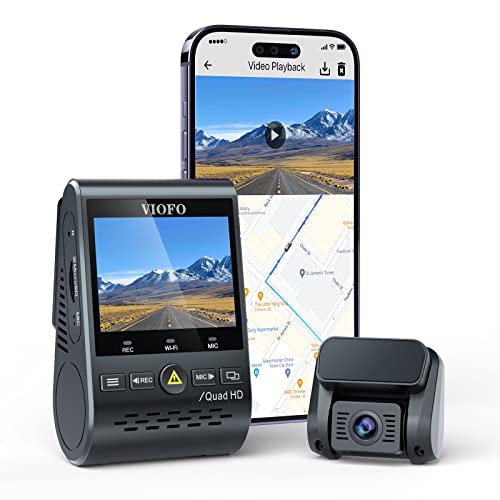
VIOFO Dual Dash Cam, 2K 1440P 60fps+1080P 30fps Front and Rear Dash Camera with Wi-Fi GPS, Parking Mode, Emergency Recording, Super Capacitor, Motion Detection (A129 Plus Duo) : Electronics
View on AmazonFor more money-saving tactics, see: Cheap Auto Insurance: How to Lower Your Premiums & Get Quotes
Real-world Florida examples
- Clean-driver in Tampa with a 2018 Camry, 12K miles/year, good credit: We’ve seen minimum-coverage quotes cluster around $110–$170/month and full coverage around $210–$320/month. Rates vary widely by carrier and ZIP.
- 19-year-old added to a parent policy in Jacksonville with a 2016 Civic: Minimum coverage for the household might rise by $120–$240/month, sometimes more. A telematics discount can help offset.
- 62-year-old in Sarasota driving 6K miles/year with a 2014 CR-V: Minimum coverage may fall under $100/month with the right carrier and defensive driving discount; full coverage depends on the vehicle’s value and chosen deductibles.
Note: These are illustrative ranges, not guarantees. Your price will depend on your exact profile, insurer, and location.
Frequently asked questions about cheap car insurance in Florida
What are the minimum car insurance requirements in Florida?
- $10,000 PIP and $10,000 Property Damage Liability. Bodily Injury Liability is not required for everyone but is strongly recommended. Certain situations (like causing an injury crash or a DUI) trigger higher requirements. See Florida Statutes §§324.021, 324.023, and 627.736.
Is Florida a no-fault state?
- Yes. Your PIP pays first for your injuries regardless of fault, typically 80% of medical and 60% of lost wages up to $10,000. You can still be sued for serious injuries you cause.
What is an SR-22 or FR-44 in Florida?
- SR-22: A form some drivers must file to prove they carry at least state-required liability limits—often required after certain violations or license suspensions.
- FR-44: Required after a DUI in Florida. It proves you carry significantly higher liability limits (commonly 100/300/50), and premiums are typically much higher.
Can my policy be rescinded or canceled in Florida?
- During the first 60 days, Florida law (§627.728) allows insurers to cancel policies for specific reasons (e.g., material misrepresentation, driver’s license issues). Misstating drivers, usage, or incidents can lead to cancellation or rescission. After 60 days, cancellations are more limited (nonpayment is the most common). Always give accurate information.
Does Florida offer state assistance for car insurance?
- There’s no income-based subsidy for auto insurance. If you can’t find coverage due to your driving record, you may be eligible for the Florida Automobile Joint Underwriting Association (FAJUA)—a last-resort market that typically costs more but guarantees access to coverage.
How do I actually get the cheapest car insurance in Florida?
- Quote at least 3–5 carriers with identical coverages, stack every discount you qualify for, consider telematics, and adjust deductibles to fit your budget. Re-shop at renewal and when your record or credit improves.
Should I carry more than the minimum?
- In most cases, yes. The minimums rarely cover a serious crash. Consider higher liability limits and UM/UIM. If your car is financed, comp/collision are required by your lender.
Get personalized cheap Florida car insurance quotes today
The fastest way to see if you can do better is to check real quotes side-by-side. Have this ready:
- Your driver’s license information for all drivers in the household
- Vehicle VINs and current mileage
- Current coverage limits and deductibles
- Any tickets, accidents, or claims (with dates)
- Estimated annual mileage and how you use each car (commute, business, pleasure)
Compare now and see where you land: Car Insurance Quotes: Compare Rates & Get Personalized Quotes Fast
Prefer to talk it through? A licensed Florida agent can help tailor coverage to your budget and risk. No one-size-fits-all policy exists—especially here.
A quick note on getting real savings
If your goal is the cheapest car insurance in Florida, remember: the best deal is the one that will actually pay when you need it. Stick to financially strong companies, choose limits that match your assets and risks, and keep re-shopping as your life changes.
Next step: Get 3–5 quotes with identical coverages, test a telematics program if offered, and review discounts you can actually earn. Five minutes now can save you all year.
Recommended Resources
Insurance For Dummies?: Hungelmann, Jack
Whether you’re a homeowner or ... need on: ... Author Jack Hungelmann <strong>uses his twenty-five years of experience in the insurance industry to make buying insurance as simple as possible</strong>
VIOFO Dual Dash Cam, 2K 1440P 60fps+1080P 30fps Front and Rear Dash Camera with Wi-Fi GPS, Parking Mode, Emergency Recording, Super Capacitor, Motion Detection (A129 Plus Duo) : Electronics
Buy VIOFO Dual Dash Cam, 2K 1440P 60fps+1080P 30fps Front and Rear Dash Camera with <strong>Wi-Fi GPS, Parking Mode</strong>, Emergency Recording, Super Capacitor, Motion Detection (A129 Plus Duo): On
Lifeline AAA Premium Road Kit, 42 Piece Emergency Car Kit with Jumper Cables, Flashlight and First Aid Kit,4330AAA,Black : Everything Else
Amazon.com: <strong>Lifeline AAA Premium Road Kit</strong>, 42 Piece Emergency Car Kit with Jumper Cables, Flashlight and First Aid Kit,4330AAA,Black : Everything Else
Related Articles
- Auto Insurance in Florida: Rates, Requirements & How to Save
- Best Home Insurance in Florida: Top Companies & How to Save
- Home Insurance in Florida: Coverage, Costs & Best Companies
- Home Insurance in Florida: Quotes, Costs & Hurricane Tips
- Cheapest Car Insurance in Texas: Compare Rates & Get Quotes Today
- Cheapest Car Insurance in California: How to Find the Lowest Rates
- Cheap Car Insurance: How to Save on Coverage & Get Fast Quotes
- Cheapest Car Insurance in Georgia: Compare Low Rates & Get Quotes