
Cheapest Car Insurance for Young Drivers: How to Cut Your Rates
You just got a quote and the numbers feel sky-high. Is that normal for a 17–22-year-old? Short answer: yes. The cheapest car insurance for young drivers is rarely “cheap” at first because insurers price risk based on experience. The good news: there are reliable ways to push your rate down fast—often double‑digit savings—without leaving yourself underinsured.
This guide breaks down why young drivers pay more, what to compare, which insurers and programs often price well for teens and young adults, and smart moves that can lower your premium this month.
Why young drivers pay higher premiums (what insurers look for)
Insurers charge young drivers more because claim frequency and severity are higher in this group. In plain English: newer drivers get into more crashes, and the crashes can be costlier. Pricing follows risk.
Here’s what typically goes into the higher rates:
- Limited driving history: With fewer years behind the wheel, there’s less data to prove you’re a low risk. Insurers lean on age and experience as strong predictors of claims.
- Higher accident and violation rates: Teens and early‑20s drivers have more at‑fault accidents and speeding tickets on average. More violations usually mean higher premiums.
- Vehicle choice and usage: Sporty cars, high horsepower, and high annual miles drive up risk. Commuter traffic and late‑night driving also correlate with claims.
- Where you live and park: Dense urban areas have more collisions and theft. Your garaging ZIP code usually affects rates.
- Credit-based insurance score (where allowed): In many states, insurers may use a credit-based score to help predict claim risk. Not every state allows this; for example, California, Hawaii, and Massachusetts restrict or prohibit using credit in auto insurance pricing.
Typical cost ranges (not guarantees):
- Minimum coverage for an 18-year-old can often land between $1,000 and $2,500 per year, depending on the state and driving record.
- Full coverage (liability plus comprehensive and collision) for an 18–20-year-old can easily range from $2,500 to $6,000+ per year.
- Adding a teen to a parent’s policy is usually cheaper than a standalone teen policy—often by thousands per year.
How insurers calculate rates — and what to compare to find the cheapest policy
You’ll hear two concepts: underwriting (deciding if and how the company will insure you) and rating (what they’ll charge). Here’s what typically affects rating:
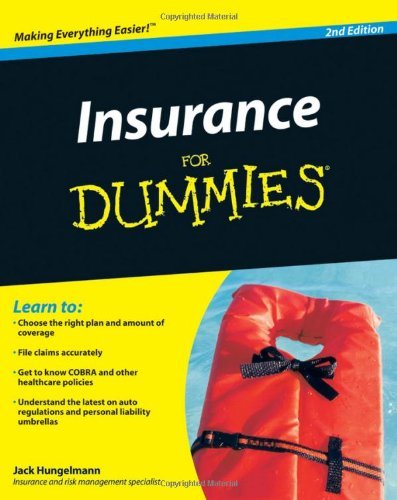
Insurance For Dummies?: Hungelmann, Jack
Whether you’re a homeowner or ... need on: ... Author Jack Hungelmann <strong>uses his twenty-five years of experience in the insurance industry to make buying insurance as simple as possible</strong>
Check Price on Amazon- Driver factors: age, years licensed, tickets/accidents, claims, license suspensions, and continuous insurance (no lapses)
- Vehicle factors: make/model/year, safety features, repair cost, theft likelihood
- Usage: annual miles, commute distance, who drives which car
- Location: garaging ZIP code and regional claim trends
- Coverage choices: liability limits, deductibles (the amount you pay out of pocket before insurance pays), and extras like roadside or rental
- Discounts: good student, driver training, telematics (app or device that tracks driving), multi-car, multi-policy, pay-in-full, paperless
What to compare when you’re hunting for the cheapest car insurance for young drivers:
- Apples-to-apples coverage: Keep the same liability limits and deductibles across quotes. A quote with state minimums will look cheaper but may not protect you well.
- Liability limits that fit your risk: State minimums are rarely enough. Many families choose at least 100/300/100 (bodily injury per person/per accident/property damage). Adjust to your budget, but understand the trade‑offs.
- Full coverage vs. liability‑only: If your car is financed or newer, full coverage is usually required or strongly recommended. If you drive an older paid‑off car with low value, you might consider liability‑only or raising deductibles, but know you’d pay your own repair costs after a crash.
- Telematics terms: Some programs give a sign‑up discount immediately and then adjust later based on driving habits. Ask how your score is calculated and if hard braking or late‑night driving can increase your price later.
- Fees and payment plans: Monthly installment fees add up. Pay-in-full or EFT (automatic bank draft) discounts can lower total cost.
- Claim service and repair network: Cheapest is not worth it if a claim becomes a nightmare. Scan recent reviews and ask about approved shops and rental coverage.
Ready to see real numbers? The fastest way to learn what you’d actually pay is to compare quotes from 3–5 carriers. You can start here: Car Insurance Quotes: Compare Rates & Get Personalized Quotes Fast.
Cheapest car insurance for young drivers: insurers and programs to know
Every insurer prices risk differently, and availability varies by state. That said, these brands and programs are often competitive for teens and young adults. Always verify eligibility and discount ranges where you live.
- State Farm
- Steer Clear: A program for drivers under 25 with a clean record; includes training modules and potential discount upon completion.
- Drive Safe & Save (telematics): App-based program that can reward safe driving with a variable discount.
- GEICO
- Good Student and defensive driving discounts: Typically for B average or better; approved driver safety courses can help.
- DriveEasy (telematics): Tracks behaviors like phone use, braking, and time of day.
- Progressive
- Snapshot (telematics): Sign-up discount in many states, then personalized savings (or increases) based on driving.
- Multi-car and continuous insurance discounts can be meaningful for families.
- Allstate
- Drivewise (telematics): Rewards safe driving; sometimes paired with crash detection.
- Smart Student: For full-time students under a certain age who meet GPA or distance-from-home criteria.
- Nationwide
- SmartRide (telematics): Short evaluation period with potential ongoing savings.
- SmartMiles (pay‑per‑mile): Good fit if you drive very little; a base rate plus per‑mile charge.
- Travelers
- IntelliDrive (telematics): Tracks speed, braking, time of day; discounts vary by results.
- Good Student and Driver Training discounts are commonly available.
- Liberty Mutual
- RightTrack (telematics): Typically a 90‑day assessment with potential savings if you drive safely.
- Farmers
- Signal (telematics): App monitors driving behavior; potential safe‑driving savings.
- Erie (in select states)
- Known for competitive pricing for families; features like Rate Lock in some states can help stabilize premiums (eligibility varies).
- USAA (for military members and families)
- Consistently competitive in many states; SafePilot telematics and good-student discounts may apply.
Telematics (usage-based insurance) basics: You install a small device or use a phone app that tracks behaviors like acceleration, hard braking, speed, phone distraction, and time of day. Safe habits typically earn 10–30% off, sometimes more, but aggressive driving or frequent late‑night trips can reduce or negate the savings. If privacy is a concern, ask exactly what data is collected and how it’s used.
Proven ways young drivers can lower premiums
You don’t control your age, but you control a lot else. These steps usually move the needle:
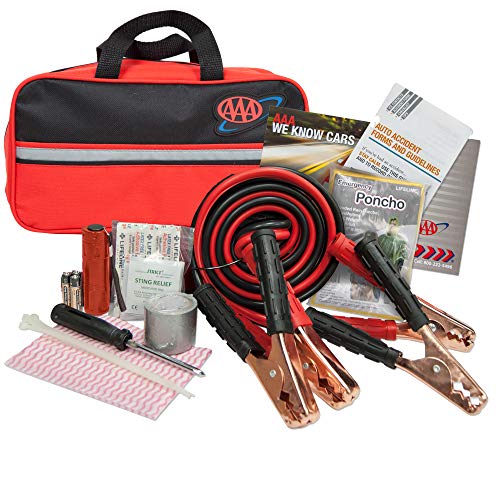
Lifeline AAA Premium Road Kit, 42 Piece Emergency Car Kit with Jumper Cables, Flashlight and First Aid Kit,4330AAA,Black : Everything Else
View on Amazon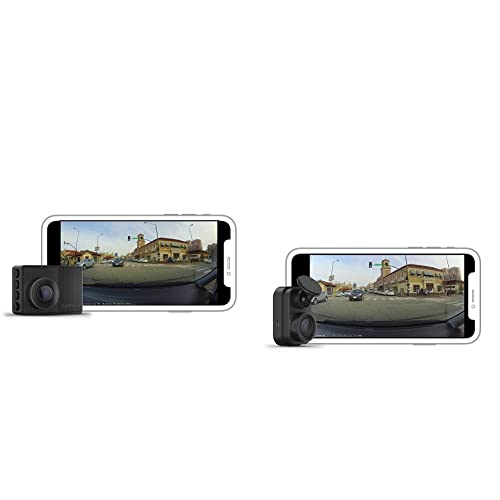
Garmin Dash Cam Mini 2, Tiny Size, 1080p and 140-degree FOV, Monitor Your Vehicle While Away w/ New Connected Features, Voice Control (Renewed) : Electronics
View on Amazon- Get on a parent’s or guardian’s policy if possible: Families often pay less when the teen or 20‑something is listed on a multi-car, multi-driver policy. Many discounts—multi-car, multi-policy—are bigger at the household level.
- Good Student discount: If you’re a full-time student under a set age (often 24 or 25) and maintain a B average (3.0 GPA) or better, you can typically save 5–20%. Transcripts or report cards are usually required.
- Driver training/defensive driving: Approved courses can trim 5–10% in many states. Ask your insurer which courses they accept before you enroll.
- Choose the right car: A modest, safe, older sedan with strong safety ratings usually costs less to insure than a turbocharged coupe or luxury SUV. Avoid vehicles with high theft rates or expensive parts.
- Raise deductibles—carefully: Higher deductibles on comprehensive and collision can reduce your premium. Only do this if you can cover that out-of-pocket cost after a claim.
- Consider liability‑only on older, low‑value cars: If the car’s value is close to or less than your annual full‑coverage premium, you might skip comp/collision. Know that your car wouldn’t be covered for crash damage you cause.
- Enroll in telematics early: Safe habits from day one can lock in better pricing faster. Many programs give an upfront discount just for trying.
- Bundle renters or homeowners insurance: Multi‑policy discounts are real—often 10–25% depending on the carrier.
- Limit high‑risk drivers to lower‑risk cars: If a household has multiple vehicles, listing the least-experienced driver on the least costly-to-insure car can help.
- Keep mileage reasonable: If you’re a student with limited driving, ask about low-mileage or pay‑per‑mile options.
- Maintain continuous coverage: Gaps in insurance can raise your rate when you restart.
- Pay-in-full, autopay, and paperless: Small discounts and fewer fees add up over a year.
- Named-driver options, with caution: In some states, you can have a “named driver only” policy that covers just the listed drivers and no one else, or you can exclude a specific driver from a household policy. Excluding a driver can lower cost but means zero coverage if that driver uses the car—ever. Only use exclusions if you fully understand the risk and local rules.
Want more ways to save? Dive deeper here: Insurance Discounts for Safe Drivers: Types, Eligibility & How to Maximize Your Savings and Affordable Car Insurance for Young Adults: Practical Ways to Lower Your Premiums.
Real‑world examples
- Example 1: 18‑year‑old in Ohio, 2012 Honda Civic, added to a parent’s policy with 100/300/100 liability, $500 deductibles, good-student discount, and telematics. Typical range: $1,800–$3,200/year added to the family premium, depending on driving patterns and carrier.
- Example 2: 21‑year‑old in Texas, 2018 Toyota Corolla, own policy, clean record, 50/100/50 liability, $1,000 deductibles, no telematics. Typical range: $2,200–$4,000/year for full coverage. Enrolling in telematics and raising deductibles could lower this by several hundred dollars annually.
These are illustrations, not quotes. Your price will vary based on your state, record, credit (where allowed), vehicle, and the insurer you choose.
State minimums, licensing age, and legal tips — check your state’s rules before you buy
Auto insurance is state law territory, so the “cheapest” setup depends on where you live.
- Minimum liability limits: Every state sets minimums (for example, 25/50/25 means $25,000 bodily injury per person/$50,000 per accident/$25,000 property damage). These limits can be exhausted quickly in a serious crash. If your budget allows, consider higher limits than the bare minimum.
- No‑fault and PIP: In no‑fault states, Personal Injury Protection (PIP) can cover medical bills regardless of fault. PIP requirements and options vary widely.
- Uninsured/Underinsured Motorist (UM/UIM): Protects you if the at‑fault driver doesn’t have enough insurance. In some states it’s required, in others it’s optional but highly recommended.
- Graduated Driver Licensing (GDL): Teens often face curfews, passenger limits, and cell‑phone bans under state GDL rules. Violations can spike premiums or lead to non‑renewal.
- Garaging address: Students going away to college should clarify where the car is primarily kept during the school year. The ZIP code that best reflects where the car sleeps at night typically governs pricing and eligibility.
- Title and insurable interest: If you’re not on the car’s title, ask your insurer about how to list you correctly. Some states and carriers require the named insured to have an ownership interest.
- SR‑22 filings: If you need one after a major violation, expect higher rates for a few years. Shop multiple carriers—some are far more competitive for SR‑22 than others.
- Named exclusions: Some states allow excluding a driver in the household; others restrict it. If allowed, exclusions can reduce cost but they eliminate coverage for that driver entirely.
Because rules vary by state, verify requirements on your state’s DMV or insurance department site, and consider a quick call with a licensed agent for personalized advice.
How to get personalized quotes: a step‑by‑step checklist
The fastest way to find the cheapest car insurance for young drivers is to compare the same coverage with several carriers on the same day.
- Decide your coverage target
- Start with at least your state minimum and price higher limits like 50/100/50 or 100/300/100 to see the cost jump. If your car is newer or financed, price full coverage with $500–$1,000 deductibles.
- Gather your info
- Driver’s license numbers for all drivers
- VIN or year/make/model for each car
- Annual miles and primary use (school, work, pleasure)
- Current policy declarations page (if you have one)
- Driver training certificates, student GPA proof
- Ask for every discount you might qualify for
- Good student, driver training, telematics, multi‑car, multi‑policy (renters/home), pay‑in‑full, paperless, low‑mileage, student away at school
- Compare apples to apples
- Keep liability limits and deductibles identical across quotes. Note any accident forgiveness, roadside, rental coverage, or telematics terms.
- Check the total annual cost, not just monthly
- Some carriers add installment fees. Look at the 6‑ or 12‑month total when you compare.
- Review insurer stability and service
- Financial strength ratings (A‑ or better with major rating agencies) and claim service reputation matter when you need help.
- Optimize before you buy
- Try a telematics trial if available, select the right vehicle assignment for each driver, and confirm that all expected discounts are applied.
- Bind and set reminders
- Lock in your policy, set renewal reminders 2–3 weeks before expiration, and update your insurer if your mileage or garaging address changes.
When you’re ready, take 5 minutes to see real prices from multiple carriers: Compare Car Insurance: Best Coverage and Price Today or start a single‑step quote here: Car Insurance Quotes: Compare Rates & Get Personalized Quotes Fast.
What to watch out for (common pitfalls)
- Chasing the absolute lowest number with state minimums only: A single crash can exceed minimum limits and put your finances at risk. Price test higher limits.
- Skipping telematics out of habit: If you’re a safe, low‑mileage driver, usage‑based programs can be your biggest lever.
- Not updating your garaging address: If you move from a high‑cost ZIP to a lower‑cost college town (or vice versa), your price should reflect it.
- Letting a lapse happen: A gap in coverage can raise your next quote, sometimes significantly.
- Forgetting to remove tickets/accidents after they fall off: Many violations drop from rating after 3–5 years. Reshop once they’re gone.
Quick note on advice
Insurance is personal. Coverage needs and eligibility for discounts vary by driver and by state. A short call with a licensed agent can help you balance premium and protection, especially when deciding on liability limits and whether to carry full coverage on an older vehicle.
Ready to cut your rate? Comparing 3–5 quotes with the same coverage is the smartest next step—and it takes just a few minutes online: Car Insurance Quotes: Compare Rates & Get Personalized Quotes Fast.
Recommended Resources
Insurance For Dummies?: Hungelmann, Jack
Whether you’re a homeowner or ... need on: ... Author Jack Hungelmann <strong>uses his twenty-five years of experience in the insurance industry to make buying insurance as simple as possible</strong>
Garmin Dash Cam Mini 2, Tiny Size, 1080p and 140-degree FOV, Monitor Your Vehicle While Away w/ New Connected Features, Voice Control (Renewed) : Electronics
Amazon.com: Garmin Dash Cam Mini 2, <strong>Tiny Size, 1080p and 140-degree FOV, Monitor Your Vehicle While Away w/ New Connected Features, Voice Control</strong> (Renewed) : Electronics
Lifeline AAA Premium Road Kit, 42 Piece Emergency Car Kit with Jumper Cables, Flashlight and First Aid Kit,4330AAA,Black : Everything Else
Amazon.com: <strong>Lifeline AAA Premium Road Kit</strong>, 42 Piece Emergency Car Kit with Jumper Cables, Flashlight and First Aid Kit,4330AAA,Black : Everything Else
Related Articles
- Car Insurance for 18-Year-Olds: Costs, Discounts & How to Get Quotes
- Affordable Car Insurance for Young Adults: Practical Ways to Lower Your Premiums
- Best Car Insurance for New Drivers: Top Picks & How to Save
- Auto Insurance for New Drivers: Coverage, Costs, and Smart Ways to Save
- Cheap Life Insurance for Young Adults: How to Get Affordable Coverage without Overpaying
- Cheap Car Insurance: How to Save on Coverage & Get Fast Quotes
- How to Lower Car Insurance: 15 Smart Ways to Cut Your Premiums
- Find the Cheapest Insurance Company: A Practical Guide