
Cheap Auto Insurance: How to Lower Your Premiums & Get Quotes
You’re here because you want cheap auto insurance without getting burned by lousy coverage. Smart. The fastest way to real savings is understanding what drives your price, which coverages you should never cut, and how to compare quotes the right way. Let’s walk through it clearly.
What “cheap auto insurance” really means: price vs. protection
When people say “cheap auto insurance,” they typically mean paying the lowest possible premium (your price for insurance, usually billed monthly or every 6 months). But the cheapest policy isn’t always the best value.
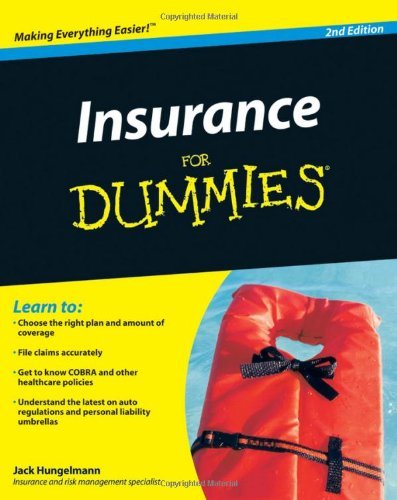
Insurance For Dummies?: Hungelmann, Jack
Whether you’re a homeowner or ... need on: ... Author Jack Hungelmann <strong>uses his twenty-five years of experience in the insurance industry to make buying insurance as simple as possible</strong>
Check Price on Amazon- State minimum coverage (the smallest liability coverage your state law allows) can make your premium low, but it often leaves big financial gaps.
- Liability coverage (pays others if you cause injuries or property damage) is listed in split limits like 25/50/25 — that’s $25,000 per person for injuries, $50,000 per accident total for injuries, and $25,000 for property damage. Those numbers can be used up fast.
Real-world risk example:
- Say you carry a 25/50/25 policy and you total a $60,000 SUV and cause $80,000 in medical bills. Your insurance may pay $25,000 for the car and $50,000 for injuries, leaving you on the hook for $65,000 out of pocket. That’s how “cheap” becomes expensive.
What usually makes sense for most drivers:
- Higher liability limits such as 100/300/100 (that’s $100,000 per person, $300,000 per accident, $100,000 property damage) typically add a modest cost for a lot more protection.
- Uninsured/underinsured motorist (UM/UIM) coverage (pays you if the other driver has no or too little insurance) is critical in areas with many uninsured drivers.
- If your car is financed or newer, comprehensive and collision (together often called “full coverage,” which isn’t a formal policy but a common term) protect your car. Comprehensive covers non-crash damage like theft, fire, hail, or hitting a deer; collision covers crash damage to your car regardless of fault.
How insurers calculate your rate
Insurers price risk. Different companies weigh factors differently, which is why quotes vary.

Garmin Dash Cam Mini 2, Tiny Size, 1080p and 140-degree FOV, Monitor Your Vehicle While Away w/New Connected Features, Voice Control - 010-02504-00 : Electronics
Buy Garmin Dash Cam Mini 2, <strong>Tiny Size, 1080p and 140-degree FOV, Monitor Your Vehicle While Away w/New Connected Features, Voice Control</strong> - 010-02504-00: On-Dash Cameras - Amazon.com ✓
Check Price on AmazonKey factors typically used:
- Age and experience: Teen and new drivers pay more; rates often improve in your mid-20s and stabilize in your 30s–50s, assuming a clean record.
- Driving record and claims: Tickets, at-fault accidents, and DUIs increase premiums for 3–5 years. Serious violations may trigger an SR‑22 filing (a state form proving you carry required insurance). Learn more: SR‑22 insurance.
- Vehicle type and cost to repair: A luxury SUV with pricey parts usually costs more to insure than a modest sedan. Safety features and theft rates matter, too.
- Location: ZIP codes with higher crash, theft, or medical costs tend to have higher premiums.
- Mileage and usage: Fewer miles driven annually and commuting less often can lower rates. Some carriers offer pay‑per‑mile options.
- Credit-based insurance score (where allowed): In many states, better credit history correlates with fewer claims and can reduce your premium. Some states limit or prohibit credit use (for example, California, Hawaii, Massachusetts) — check your state’s rules below.
- Coverage selections and deductibles: Choosing higher limits and adding comprehensive/collision increases cost; raising your deductible (what you pay out of pocket on a covered claim before insurance pays) can lower your premium.
- Prior insurance and lapses: A gap in coverage can raise rates; continuous coverage usually helps.
Example snapshot (for illustration only; your price will vary):
- A 35‑year‑old clean‑record driver in Texas with a 6‑year‑old sedan might see $55–$85 per month for state minimum liability and $110–$180 for higher limits with comprehensive and collision, depending on the insurer, ZIP code, and deductible.
Practical steps to lower premiums today
You don’t have to accept your first price. Here’s how to chip away — often by stacking small savings that add up.
1) Hunt for discounts you actually qualify for
Common discounts include:
- Multi‑policy (bundling auto with home or renters)
- Multi‑car (insuring more than one vehicle on a policy)
- Safe driver or claims‑free
- Telematics/usage‑based programs (a smartphone app or plug‑in device that tracks driving habits like braking and mileage)
- Good student (usually for a GPA threshold)
- Defensive driving course (state‑approved class)
- Paperless, autopay, and pay‑in‑full
- Safety features (anti‑theft device, airbags — often automatically applied)
- Homeowner discount (even if your home insurance is elsewhere)
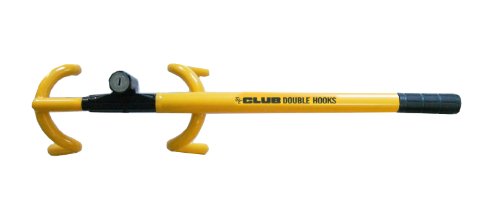
Winner International The Club 3000 Twin Hooks Steering Wheel Lock, Yellow : Automotive
View on AmazonAsk the agent to review every available discount line‑by‑line. If a discount requires enrollment (like telematics), get the fine print on how the program affects rates at renewal.
2) Bundle smartly
Bundling auto with home or renters can save 5%–25% in many cases. Still compare standalone quotes; occasionally, a top auto‑only rate beats a bundle.
3) Adjust deductibles thoughtfully
If you carry comprehensive and collision, raising your deductible (the amount you pay before insurance pays your claim) from, say, $500 to $1,000 can trim your premium. Make sure you can comfortably cover the higher out‑of‑pocket cost if you have a claim.
Quick math example:
- If increasing your deductible saves $180 per year, it takes less than 3 years to “break even.” If you can handle $500 more out of pocket and you rarely claim, it can be worth it.
4) Right‑size your coverage
- Driving an older car you could afford to replace? You might drop collision and keep comprehensive (often cheaper and still covers theft, hail, and animals) — run quotes both ways.
- Keep robust liability and UM/UIM. Skimping here is where people get into financial trouble.
5) Shop the car before you buy it
Some cars are simply cheaper to insure. Before purchasing, get quotes for the actual VIN (vehicle identification number). A mid‑trim sedan may cost far less to insure than a high‑performance model with the same sticker price.
6) Reduce miles and prove it
If your commute changed or you now work from home, tell your insurer. Some carriers will lower your rate at mid‑term if your documented annual mileage drops.
7) Clean up tickets — and calendar your re‑quotes
Most violations fall off pricing after 36 months; some after 60. Set a reminder to requote at those milestones. If you can take a state‑approved defensive driving class to remove a minor ticket, ask your DMV and insurer first.
8) Consider pay‑per‑mile
If you drive under ~8,000–10,000 miles per year, a pay‑per‑mile or telematics‑based policy can be very competitive. Just verify how they rate occasional road trips.
9) Avoid lapses
Non‑payment or canceling before your new policy starts can increase rates later. Overlap by a day if needed to maintain continuous coverage.
10) Ask for a renewal review
At renewal, ask your insurer to re‑run discounts and check for rating changes. Then compare against at least three competitors.
Cheap auto insurance vs. full coverage: what not to skimp on
“Full coverage” is a shorthand consumers use for a policy with liability plus comprehensive and collision. It’s not a formal term, but it’s useful.
What you should rarely cut back on:
- Liability limits: Consider at least 100/300/100 if you have a job, savings, or assets to protect. The extra premium is often small compared to the potential risk.
- Uninsured/Underinsured Motorist (UM/UIM): Protects you if the other driver can’t pay. In many states with high uninsured rates, this is essential.
- Medical coverages: Personal Injury Protection or PIP (pays medical bills and sometimes lost wages for you and your passengers regardless of fault) is required in no‑fault states; in other states, Medical Payments or MedPay (pays medical bills for you and passengers, regardless of fault, up to a limit) can be helpful and inexpensive.
Where you can tailor:
- Comprehensive and collision: Keep them as long as the car’s value and your finances justify it. If your car is financed or leased, your lender typically requires these coverages.
- Rental reimbursement and roadside: Nice to have, and relatively inexpensive; prioritize after core protections are solid.
- Gap insurance (covers the difference between your loan/lease balance and the car’s value if it’s totaled): Useful on new cars with small down payments; shop lender vs. insurer pricing.
What to look for when comparing coverages:
- Clear, written liability limits and deductibles side‑by‑side on every quote
- UM/UIM limits matching your liability limits where allowed
- PIP or MedPay amounts that realistically cover first‑aid and ER costs in your area
- OEM parts or aftermarket parts language for repairs (can affect repair quality and cost)
- Accident forgiveness terms (if offered) and how they apply
- New car replacement or better‑car replacement add‑ons for newer vehicles
How to shop and get multiple quotes fast
The fastest way to see your real price is to compare quotes from 3–5 carriers on the same day.
What to have ready:
- Driver’s license numbers for all drivers
- Vehicle info or VINs (vehicle identification numbers)
- Current odometer and estimated annual mileage
- Your current policy declarations page (a summary of your coverages and limits)
- Driving history for the last 3–5 years (tickets, accidents)
- Garaging address and how you use each car (commuting, pleasure)
How to compare apples‑to‑apples:
- Start with one “target” set of coverages (for example, 100/300/100 liability, UM/UIM 100/300, comprehensive/collision with $500 deductibles) and request every quote to match.
- Then test variables one at a time (e.g., raise deductibles to $1,000) to see the savings impact.
Online tools vs. agents:
- Online quote tools are quick and typically use a soft credit inquiry (doesn’t affect your score) to estimate rates.
- Independent agents can pull quotes from multiple companies and help you navigate state‑specific rules. Captive agents quote one brand but can still be great advisors.
Avoid common pitfalls:
- Don’t cancel your current policy until your new one is active — get the new policy’s effective date in writing.
- Double‑check drivers listed and exclusions. If a household member with a license isn’t listed, ask how the insurer handles that risk.
- Confirm fees and payment plan charges. Paying in full can sometimes save 5%–10%.
Want a head start? Compare side‑by‑side now: Compare car insurance quotes. It’s the fastest way to see what you would actually pay.
State‑by‑state considerations and how minimums affect price
Your state’s legal minimums and rules have a big impact on your premium. Here’s what varies by state:
- Minimum liability limits: Some states require as low as 15/30/5, others 30/60/25 or higher. Higher minimums usually mean higher base prices — but also better protection.
- No‑fault and PIP rules: In no‑fault states (for example, Florida, Michigan, New York, Pennsylvania), PIP (personal injury protection) is required and can be a major cost driver.
- Uninsured motorist requirements: Many states require UM/UIM (for example, Illinois and Connecticut), which increases price slightly but adds essential protection.
- Credit usage: Some states restrict or prohibit using credit‑based insurance scores (for example, California, Hawaii, Massachusetts). That can change which insurer is cheapest for you.
- SR‑22/FR‑44 filings after violations: Requirements and fees differ by state.
Use your state’s official resources to confirm current rules:
- California: https://www.dmv.ca.gov/portal/vehicle-registration/insurance/
- Texas: https://www.tdi.texas.gov/consumer/cpminauto.html
- Florida: https://www.flhsmv.gov/insurance/
- New York: https://dmv.ny.gov/insurance
- Illinois: https://insurance.illinois.gov/Consumers/AutoInsurance.html
- Georgia: https://oci.georgia.gov/auto-insurance
- Michigan: https://www.michigan.gov/difs/consumers/auto-insurance
- Pennsylvania: https://www.insurance.pa.gov/Coverage/Pages/Automobile.aspx
- Washington: https://www.insurance.wa.gov/auto-insurance
- Arizona: https://azdot.gov/motor-vehicles/insurance
More state guidance: State minimum car insurance
Checklist: 10 actions to reduce your annual premium
- Compare quotes from at least 3–5 insurers on the same coverages
- Enroll in autopay, paperless, and pay‑in‑full if cash‑flow allows
- Bundle auto with home or renters
- Raise comprehensive/collision deductibles you can afford
- Re‑rate after tickets/accidents fall off (36–60 months)
- Ask about telematics or pay‑per‑mile if you drive less
- Verify all discounts and update life changes (marriage, new job, garage)
- Shop vehicle insurance costs before you buy a car
- Keep continuous coverage — avoid any lapse
- Review coverage needs every renewal; don’t under‑insure liability or UM/UIM
FAQs about cheap auto insurance
How much is “cheap” car insurance per month?
- It varies by driver, state, car, and coverage. Minimum‑only policies can be under $50 per month for some drivers and well over $150 for others. The only way to know is to compare personalized quotes.
Is state minimum coverage enough?
- It meets the legal requirement, but in most cases it doesn’t meet real‑world risk. Medical bills and vehicle prices often exceed minimum limits. Consider higher liability and UM/UIM even if you skip other extras.
Will shopping around hurt my credit?
- Insurance quotes typically use a soft inquiry, which doesn’t affect your credit score. If an insurer needs a hard pull for any reason, they must ask for permission.
Can I get a cheap policy after a DUI or accident?
- Rates will increase, sometimes significantly, and you may need an SR‑22. Still, quoting multiple carriers, adjusting deductibles, and enrolling in telematics can help. Consider specialized high‑risk insurers if needed.
Does paying in full really save money?
- Often yes. Many carriers discount for paying the 6‑month or annual premium upfront and waive installment fees. Ask how much you’d save.
Should I drop collision on an older car?
- If your car’s value is close to the deductible plus premium cost, dropping collision (and possibly keeping comprehensive) can make sense. Run quotes both ways and make sure you can replace or repair the car if it’s damaged.
How often should I shop my insurance?
- Typically every 6–12 months, and any time you move, add or remove drivers, buy a car, or have life changes that affect risk.
Can I switch mid‑term?
- Usually yes. Insurers generally pro‑rate unused premium. Confirm cancellation fees and avoid any coverage lapse. Help: How to switch car insurance.
Your next step: see your real price in minutes
The fastest way to find cheap auto insurance that still protects you is to compare quotes from 3–5 carriers on the same coverages. Start here: Get personalized quotes. It’s quick, and you’ll see exactly how changes in deductibles and limits affect your price.
If you’re unsure how to set limits or have complex needs, a licensed agent can help tailor coverage for your state and budget. You can speak with one after you see initial quotes or request help anytime: Talk to an agent.
Helpful reads:
- Auto insurance basics
- Full coverage car insurance explained
- No‑fault insurance and PIP
Remember: every insurer prices risk differently. With a few smart tweaks and side‑by‑side quotes, most drivers can lower costs without sacrificing the protections that actually matter.
Recommended Resources
Insurance For Dummies?: Hungelmann, Jack
Whether you’re a homeowner or ... need on: ... Author Jack Hungelmann <strong>uses his twenty-five years of experience in the insurance industry to make buying insurance as simple as possible</strong>
Garmin Dash Cam Mini 2, Tiny Size, 1080p and 140-degree FOV, Monitor Your Vehicle While Away w/New Connected Features, Voice Control - 010-02504-00 : Electronics
Buy Garmin Dash Cam Mini 2, <strong>Tiny Size, 1080p and 140-degree FOV, Monitor Your Vehicle While Away w/New Connected Features, Voice Control</strong> - 010-02504-00: On-Dash Cameras - Amazon.com ✓
Winner International The Club 3000 Twin Hooks Steering Wheel Lock, Yellow : Automotive
The Club'S Patented Self-Locking Feature Locks With One Pull. Keyless Locking, for ease of use ... The Club 3000 Twin Hooks Steering Wheel Lock is <strong>a part of The Club line of quality produ
Related Articles
- Cheap Car Insurance: How to Save on Coverage & Get Fast Quotes
- How to Find Cheap Life Insurance: Smart Ways to Lower Your Premiums Without Sacrificing Coverage
- Cheap Auto Insurance for Seniors: Smart Ways to Cut Premiums Without Sacrificing Coverage
- How to Lower Car Insurance: 15 Smart Ways to Cut Your Premiums
- Affordable Auto Insurance for Families: Smart Ways to Cut Costs Without Sacrificing Protection
- Best Auto Insurance Discounts: How to Find, Qualify For, and Maximize Savings
- Cheapest Car Insurance in Texas: Compare Rates & Get Quotes Today
- Cheapest Car Insurance in California: How to Find the Lowest Rates