
Cheapest Car Insurance in Texas: Compare Rates & Get Quotes Today
You want the cheapest car insurance in Texas without sacrificing protection. Smart. Here’s what actually matters, how to quickly compare quotes the right way, and where “cheap” can leave you exposed. The fastest way to see your real price is to compare quotes from 3–5 carriers, but this guide will help you cut through the noise first.
Texas minimum car insurance requirements (what you must carry)
Texas law requires you to be able to pay for injuries and damage you cause in a crash. Most drivers meet this with liability insurance. The state minimum liability limits are 30/60/25, which means:
- $30,000 bodily injury liability per person (covers injuries you cause to others)
- $60,000 bodily injury liability per accident (the total for all injuries in one crash)
- $25,000 property damage liability per accident (repairs or replacement for someone else’s car or property)
A quick translation: liability pays others, not you. It doesn’t fix your car or cover your medical bills.
Texas insurers must also offer:
- Uninsured/Underinsured Motorist (UM/UIM): Helps if you’re hit by a driver with no insurance or not enough insurance. You can reject it in writing, but most Texans benefit from keeping it because uninsured drivers are not uncommon.
- Personal Injury Protection (PIP): Covers medical costs and some lost wages for you and your passengers, regardless of fault. You can reject in writing; if you keep it, typical limits start at $2,500.
Other need-to-knows:
- Collision coverage: Pays to repair/replace your car after a crash, minus your deductible (the amount you pay out of pocket before insurance kicks in).
- Comprehensive coverage: Pays for non-crash damage (hail, flood, theft, fire, hitting a deer), minus your deductible.
- SR‑22: Not insurance, but a filing proving you carry required coverage—often needed after certain violations (like a DUI). Expect higher premiums while you need it.
- Proof of insurance: You must carry it. Ticketed drivers without proof can face fines and potential license/registration issues.
If you want a deeper dive on state rules, see our Texas overview: Auto Insurance in Texas: Rates, Requirements & How to Save. [/auto-insurance/auto-insurance-in-texas-rates-requirements-save]
What affects car insurance rates in Texas (age, driving record, ZIP code, vehicle)
Insurers in Texas price based on risk. Here’s what typically moves your premium up or down:
- Age and driving experience: Newer drivers (especially under 25) usually pay the most. Mature drivers with a clean record often get the best pricing.
- Driving record: Tickets, at‑fault accidents, and DUIs can raise rates—sometimes significantly—for three to five years. Safe driving usually pays off.
- Credit-based insurance score: In Texas, most insurers can use credit information. Improving your credit over time can reduce premiums.
- ZIP code: Higher traffic density, theft rates, and weather risks (hail, flooding) in your area can raise costs. Urban centers like Houston and Dallas often see higher rates than smaller towns.
- Vehicle type and cost to repair: Newer, pricier cars or vehicles with expensive parts typically cost more to insure. Advanced safety features can help, but complex sensors can increase repair bills.
- Annual mileage and use: Long daily commutes or business use generally cost more than low mileage “pleasure use.”
- Coverage and deductibles: More coverage = more premium. Higher deductibles usually lower your bill.
- Insurance history: Lapses in coverage often lead to higher quotes. Keeping continuous coverage helps.
- Household and policy structure: Multi-car policies and bundling with home or renters can unlock sizable discounts.
Quick examples (your results will vary):
- A 35‑year‑old good driver in San Antonio with a modest commute might see minimum coverage offers in the $60–$110 per month range and full coverage in the $150–$260 range from competitive carriers.
- A 22‑year‑old in Houston with a clean record might see minimum coverage more like $95–$180 per month and full coverage in the $220–$400 range. Urban traffic and limited driving history push rates up.
Cheapest car insurance companies in Texas — sorted by driver profile
No single insurer is always cheapest for everyone in Texas. That said, some companies tend to price competitively for certain driver types. Use this as a starting point, then get quotes from 3–5 carriers to see what you’d actually pay.
Important note: Prices change often and vary by city, vehicle, and your profile. Treat these as common patterns—not guarantees.
Good drivers (clean record, mid‑30s to 50s)
Often competitive in Texas: State Farm, Geico, Texas Farm Bureau, Nationwide, Progressive, and USAA (for military members, veterans, and their families). Travelers and Allstate can also be strong in some ZIP codes.
Typical range you might see for good drivers:
- Minimum coverage: Often $60–$120/month
- Full coverage (liability + comp/collision): Often $150–$280/month
Young drivers (under 25)
Young Texans usually pay more because of limited driving history. Companies that often price well for younger drivers include State Farm, Geico, Nationwide, Progressive, and USAA (if eligible). Staying on a parent’s policy—when possible—can be much cheaper than a standalone policy.
Tips that can help:
- Good student discount (usually for a B average or higher)
- Driver training/defensive driving courses
- Telematics programs (a device or app that tracks driving habits) can reduce rates if you drive smoothly and avoid hard braking
Seniors (60+)
Many seniors with clean records still see favorable pricing, especially with State Farm, Nationwide, Travelers, Texas Farm Bureau, and Geico. Some carriers also offer discounts after completing an approved mature driver course.
Things to check:
- Medical payments (MedPay) or PIP for medical costs after a crash
- Rental reimbursement if you rely on your vehicle daily
High‑risk drivers (recent accident, DUI, or multiple tickets)
Expect higher prices and fewer discount opportunities. Progressive is often competitive with complex or higher‑risk profiles. Nonstandard carriers like Dairyland or GAINSCO may be options if you’ve been declined elsewhere. If you need an SR‑22 filing, confirm the insurer provides it.
Ways to manage costs:
- Choose a higher deductible you can still afford
- Consider a reliable, lower‑value car to reduce comp/collision costs
- Complete court‑approved courses when available and allowed
- Ask when your surcharge periods end (e.g., after 36 months)
How to lower your premium: discounts, bundling, mileage, and policy options
Think of your premium as a handful of levers you can pull. In most cases, layering several small wins beats any one “silver bullet.”
Discounts to ask about:
- Bundling: Combine auto + home or renters for 10–25% off in many cases.
- Multi‑car and multi‑driver: Putting vehicles and drivers on one policy usually reduces the per‑car price.
- Telematics/safe‑driver programs: Good driving habits tracked by an app can cut rates—sometimes 5–30%—though results vary.
- Good student, student away at school, and alumni/affinity: If a teen or college student is on the policy.
- Paid‑in‑full, automatic payments, paperless documents: Small but easy savings.
- Anti‑theft and safety features: Confirm you’re getting credit for features your car already has.
- Defensive driving course: In Texas, approved courses can reduce ticket points and sometimes lower premiums—ask your insurer first.
Policy and vehicle strategies:
- Right‑size your deductibles: Raising a $500 deductible to $1,000 can lower premiums, but be sure you can comfortably pay it if you file a claim.
- Consider dropping comp/collision on older cars: If your car’s value is low and paid off, running liability‑only can make sense. Do the math on the car’s value vs. your premium savings.
- Limit high‑risk drivers on your best car: If possible, assign younger or high‑risk drivers to older, cheaper‑to‑insure vehicles.
- Reduce mileage: Ask about low‑mileage or commute‑distance tiers if you work remotely or drive less now.
- Improve credit over time: In Texas, better credit can translate to better rates.
Want more ways to cut costs? See our practical playbook: Cheap Auto Insurance: How to Lower Your Premiums & Get Quotes. [/auto-insurance/cheap-auto-insurance-lower-premiums-get-quotes]
Ready to see your own numbers? Get personalized quotes in minutes: Car Insurance Quotes: Compare Rates & Get Personalized Quotes Fast. [/auto-insurance/car-insurance-quotes-compare-rates]
How to compare quotes step‑by‑step (what to ask and what to keep constant)
Comparing apples to apples is everything. Here’s the clean way to do it:
Insurance for Dummies: Hungelmann, Jack
<strong>Manage life, health, and disability risks</strong> ― explore individual and group policies, understand Medicare basics, and evaluate long-term disability and long-term-care insurance ...
Check Price on Amazon- Decide your coverage first
- Liability: Many Texas drivers choose at least 100/300/100 (that’s $100,000 per person/$300,000 per accident for injuries and $100,000 for property damage) for better protection. Minimum 30/60/25 often isn’t enough in real‑world crashes.
- UM/UIM and PIP/MedPay: If you can, match UM/UIM to your liability limits and choose a PIP/MedPay amount that covers a typical ER visit and a few weeks of lost wages.
- Comp/collision: Keep or drop based on your car’s value, loan/lease requirements, and your emergency fund.
- Keep these constants across all quotes
- Liability limits
- UM/UIM and PIP/MedPay limits
- Comp/collision included or excluded, with the same deductibles (e.g., $500 or $1,000)
- Roadside/rental reimbursement either on all quotes or none
- Annual mileage and usage category
- Ask each insurer the same questions
- Which discounts am I missing, and how do I qualify?
- If I try telematics, what’s the range of possible savings or increases, and can I opt out later?
- Are there fees for monthly billing? Any early‑shopping discount if I buy 7–14 days before my renewal date?
- How do you source parts for repairs—OEM or aftermarket? Any restrictions on repair shops?
- How is rental reimbursement defined (daily limit and total days)?
- Compare more than price
- Claims experience: Response time and customer support matter when you need them most.
- Policy flexibility: Ease of adding drivers/vehicles, changing deductibles, and managing your policy online.
- Financial strength: A well‑capitalized insurer is more likely to be there for big events.
- Lock in and set reminders
- Buy the policy that balances protection and price for you.
- Set calendar reminders for 30 and 60 days before your renewal to re‑shop.
If you want a streamlined way to compare, start here: Compare Car Insurance: Best Coverage and Price Today. [/auto-insurance/compare-car-insurance]
Small note: For complex situations (business use, SR‑22, multiple drivers with tickets), a licensed Texas agent can help you structure coverage and find carriers that fit your profile.
When cheap isn’t enough: gaps in low‑cost policies and recommended add‑ons
The downside of chasing the absolute lowest price is the risk of big out‑of‑pocket costs after a serious crash.
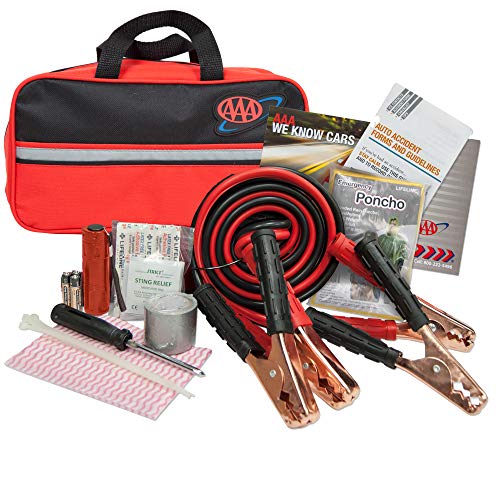
Lifeline AAA Premium Road Kit, 42 Piece Emergency Car Kit with Jumper Cables, Flashlight and First Aid Kit,4330AAA,Black : Everything Else
View on Amazon
Garmin Dash Cam Mini 2, Tiny Size, 1080p and 140-degree FOV, Monitor Your Vehicle While Away w/New Connected Features, Voice Control - 010-02504-00 : Electronics
Buy Garmin Dash Cam Mini 2, <strong>Tiny Size, 1080p and 140-degree FOV, Monitor Your Vehicle While Away w/New Connected Features, Voice Control</strong> - 010-02504-00: On-Dash Cameras - Amazon.com ✓
Check Price on AmazonCommon gaps with bare‑bones policies:
- Low property damage limit ($25,000): Hitting a luxury SUV or causing a multi‑car pileup can exceed this fast. You pay the difference out of pocket.
- No UM/UIM: If an uninsured driver injures you, you could be relying on your health insurance and savings.
- No PIP/MedPay: Even a minor ER visit can run into the thousands.
- No collision/comprehensive: You’re on the hook for your car’s repairs or replacement after a crash, hailstorm, theft, or flood.
Recommended upgrades for many Texas drivers:
- Higher liability (100/300/100 or 250/500/100): Protects your assets if you’re sued after a serious accident.
- UM/UIM at similar limits to liability: Helps cover injuries and, with UIM‑PD, damage to your car if the other driver is underinsured.
- PIP (or MedPay): Pays for you and your passengers’ medical bills regardless of fault; PIP can also cover some lost wages.
- Collision and comprehensive with a sensible deductible: Especially smart if your car’s value is significant or you can’t easily replace it.
- Rental reimbursement: Keeps you mobile after a covered claim while your car is in the shop.
- Roadside assistance: Inexpensive peace of mind for tows, jump starts, and lockouts.
- Gap coverage: If you lease or have a loan and your car is totaled, gap can cover the difference between what you owe and the car’s value.
Think about your emergency fund and risk tolerance, then build from there. The goal is still smart, affordable coverage—not overbuying.
Frequently asked questions about cheap car insurance in Texas
What’s the absolute cheapest car insurance in Texas?
- It’s typically a state‑minimum liability policy from a budget‑friendly carrier, sometimes with telematics or a big deductible trade‑off. But the “cheapest” for your neighbor won’t necessarily be your cheapest. Get quotes from 3–5 companies to see your real number.
Is USAA the cheapest in Texas?
- USAA is often very competitive for eligible military members, veterans, and families. But in many Texas ZIP codes, State Farm, Geico, Progressive, Nationwide, Texas Farm Bureau, and others can beat USAA for certain drivers. Quotes vary by profile.
How much is car insurance in Texas on average?
- A good driver often sees full‑coverage quotes somewhere in the $150–$280 per month range and minimum coverage around $60–$120. Younger drivers and high‑risk histories typically pay more. Your exact price depends on your profile, vehicle, coverage, and ZIP code.
Can I get cheap insurance after a DUI or at‑fault accident?
- It’s tougher but possible. Expect higher rates for 3–5 years. Shop more carriers, consider a higher deductible you can afford, and ask about telematics and any course completions that may help. If required, make sure the insurer can file an SR‑22.
Do tickets fall off my Texas insurance?
- Most moving violations affect pricing for 36 months, sometimes up to 5 years for major violations. Ask each insurer when specific surcharges drop off and calendar your re‑shopping.
Do I need insurance to register my car in Texas?
- You need proof of financial responsibility to drive legally, and you’ll be asked for proof of insurance in many transactions (like inspections and if you’re pulled over). Keep your ID card current.
Can I pause my insurance to save money?
- A lapse can cost you more later. If you’re storing a car, ask your insurer about comprehensive‑only or reduced‑use options instead of canceling.
Does credit affect my rate in Texas?
- In most cases, yes. Insurers can use credit‑based insurance scores in Texas, and better credit typically leads to lower premiums. Improving credit is a longer play but can pay off.
What if I have a teen driver?
- Adding them to your policy is usually cheaper than a separate policy. Ask about good student, driver training, and student‑away‑at‑school discounts, and consider telematics.
Get personalized quotes and next steps (CTA and how we help)
Here’s a quick action plan:
- Decide your must‑have coverage and deductibles (aim above the Texas minimums if you can).
- Gather details: VINs, driver license numbers, current limits, tickets/accidents, annual mileage.
- Compare quotes from 3–5 carriers, keeping limits and deductibles identical.
- Take the best value, then set a reminder to re‑shop before renewal.
When you’re ready, get side‑by‑side quotes fast: Car Insurance Quotes: Compare Rates & Get Personalized Quotes Fast. [/auto-insurance/car-insurance-quotes-compare-rates]
If you prefer guidance, a licensed Texas agent can walk you through options, explain trade‑offs in plain English, and help tailor coverage to your situation. Either way, a smart comparison is how you find the cheapest car insurance in Texas that still protects you when it counts.
Recommended Resources
Insurance for Dummies: Hungelmann, Jack
<strong>Manage life, health, and disability risks</strong> ― explore individual and group policies, understand Medicare basics, and evaluate long-term disability and long-term-care insurance ...
Garmin Dash Cam Mini 2, Tiny Size, 1080p and 140-degree FOV, Monitor Your Vehicle While Away w/New Connected Features, Voice Control - 010-02504-00 : Electronics
Buy Garmin Dash Cam Mini 2, <strong>Tiny Size, 1080p and 140-degree FOV, Monitor Your Vehicle While Away w/New Connected Features, Voice Control</strong> - 010-02504-00: On-Dash Cameras - Amazon.com ✓
Lifeline AAA Premium Road Kit, 42 Piece Emergency Car Kit with Jumper Cables, Flashlight and First Aid Kit,4330AAA,Black : Everything Else
Amazon.com: <strong>Lifeline AAA Premium Road Kit</strong>, 42 Piece Emergency Car Kit with Jumper Cables, Flashlight and First Aid Kit,4330AAA,Black : Everything Else
Related Articles
- Cheap Car Insurance: How to Save on Coverage & Get Fast Quotes
- Auto Insurance in Texas: Rates, Requirements & How to Save
- Cheapest Car Insurance in California: How to Find the Lowest Rates
- Home Insurance in Texas: Coverage, Costs & Best Companies
- Cheapest Car Insurance in Florida: Compare Quotes & Save
- Homeowners Insurance in Texas: Coverage, Costs & Get Quotes
- How to Find the Cheapest Homeowners Insurance (Get Quotes & Save)
- Cheapest Car Insurance in Georgia: Compare Low Rates & Get Quotes