
How to Get Car Insurance: What You Need to Know to Choose, Buy, and Save
You’re ready to drive, but the process feels murky. Here’s how to get car insurance without the guesswork. This step‑by‑step guide shows you exactly how to assess what you need, compare “apples‑to‑apples” quotes, and buy a policy that actually protects you—while keeping your premium in check.
Before we dive in: the fastest way to see what you’d actually pay is to compare quotes from 3–5 carriers. Rates vary by state, vehicle, and your driving profile, so real quotes beat guesses every time.
Quick start: how to get car insurance (step by step)
Here’s the simple, practical path most drivers follow when figuring out how to get car insurance:

NOCO Boost GB40: 1000A UltraSafe Jump Starter – 12V ...
View on Amazon- Assess your needs and budget
- Your car: Is it financed or leased? If yes, your lender typically requires collision and comprehensive (physical damage coverages). If it’s older and paid off, liability‑only might be an option.
- Your risk: What assets are you protecting (savings, income, home)? Higher assets usually call for higher liability limits.
- Your tolerance for out‑of‑pocket costs: Choose a deductible (the amount you pay out of pocket before insurance pays) you can cover today.
- Choose coverage types and limits
- Set liability limits (bodily injury and property damage) that match your risk, not just state minimums. Many drivers choose something like 100/300/100 or higher, depending on budget.
- Decide on collision and comprehensive if the car is newer or financed.
- Add required or smart extras in your state: uninsured/underinsured motorist, personal injury protection (PIP) or medical payments (MedPay), rental reimbursement, and roadside.
- Gather what insurers need
- Driver’s license numbers for all household drivers
- Vehicle identification number (VIN) and current odometer reading
- Garaging address (where the car is kept overnight)
- Current policy declarations page (if switching) to mirror coverage for comparisons
- Lender/lease company name and address (if applicable) Note: Insurers typically pull your motor vehicle report (your official driving record) and a claims history report, so be honest—discrepancies slow things down or raise the price.
- Get multiple quotes (3–5 is the sweet spot)
- Use trusted online tools for fast estimates and an independent agent if you want guidance across several companies. Always match coverages and deductibles across quotes so you’re comparing “apples to apples.”
- Pick your policy and set the effective date
- Choose the carrier, confirm the start date and time (e.g., today at 12:01 a.m.), and pay your initial premium. Some policies require a down payment.
- If you need proof for a dealership, lender, or DMV, ask for an insurance binder (temporary proof of coverage) and ID cards.
- Confirm and set up
- Download your digital ID cards and app.
- Turn on autopay if you like, and note renewal dates.
- If you need an SR‑22 (a filing the insurer sends to your DMV to confirm you carry insurance after certain violations), confirm it was filed—there’s usually a small fee.
Call‑to‑action: Ready to price it out? See real numbers in minutes by comparing personalized quotes from several carriers. It’s the quickest way to find a policy that fits your budget and coverage needs: Car Insurance Quotes: Compare Rates & Get Personalized Quotes Fast
Coverage options and legal requirements (what each piece does)
Understanding coverages turns guesswork into good decisions. Here’s the plain‑English version of the main choices.
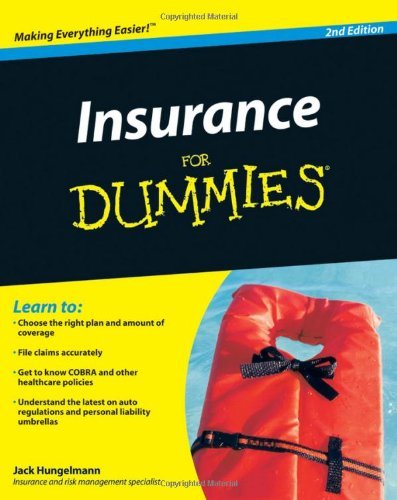
Insurance For Dummies?: Hungelmann, Jack
Whether you’re a homeowner or ... need on: ... Author Jack Hungelmann <strong>uses his twenty-five years of experience in the insurance industry to make buying insurance as simple as possible</strong>
Check Price on AmazonLiability coverage: Pays other people when you’re at fault
- Bodily injury liability: Covers the other party’s medical bills, lost wages, and legal costs if you injure them. Limits are shown like 100/300, meaning up to $100,000 per person/$300,000 per accident.
- Property damage liability: Covers damage you cause to someone else’s car or property (e.g., a fence). Often shown as 50 or 100 (thousand dollars).
- Tip: State minimums are often very low (e.g., 25/50/25). They can be used up by one serious accident. If you have income or assets, consider higher limits.
Collision coverage: Pays to repair or replace your car if you crash into another vehicle or object, regardless of fault. You choose a deductible (the amount you pay first)—commonly $500 or $1,000. Higher deductibles lower premiums, but make sure you could comfortably pay that amount out of pocket.
Comprehensive coverage: Pays for non‑collision damage—think theft, vandalism, fire, hail, flood, falling objects, and animal strikes. Also has a deductible.
Uninsured/underinsured motorist (UM/UIM): Protects you if you’re hit by a driver with no insurance or too little insurance. It can cover your medical costs (and in some states, your car damage via UM property damage). In many states, UM/UIM is required or strongly recommended because roughly 1 in 8 drivers is uninsured, depending on the state.
Medical payments (MedPay) or Personal Injury Protection (PIP): MedPay helps pay medical bills for you and your passengers, regardless of fault, up to a small limit. PIP (required in “no‑fault” states) can cover medical bills, lost wages, and essential services.
Extras that can be worth it
- Rental reimbursement: Pays for a rental car while yours is being repaired after a covered claim (daily and maximum limits apply).
- Roadside assistance: Towing, flat tires, jump starts—convenient and inexpensive.
- Gap coverage: If your car is totaled and you owe more on your loan/lease than the car is worth, gap pays the difference. Often required on leases.
Legal requirements: State minimums and lender rules
- Every state sets minimum liability coverage. Some also mandate MedPay, PIP, or UM/UIM.
- If you have a loan or lease, your lender typically requires collision and comprehensive and may set maximum deductibles (often $500 or $1,000).
- Your insurer or agent can tell you the exact requirements for your state and lender.
What affects your premium and eligibility
Insurance companies price risk. Here are the big factors that typically move your rate up or down.

Garmin Dash Cam Mini 2, Tiny Size, 1080p and 140-degree FOV, Monitor Your Vehicle While Away w/New Connected Features, Voice Control - 010-02504-00 : Electronics
View on AmazonDriving history: Accidents, speeding tickets, DUIs, and at‑fault claims usually raise premiums for 3–5 years. A clean record often earns you better pricing.
Age and driving experience: Newer and younger drivers generally pay more because of limited experience. Completing an approved defensive driving course can sometimes help.
Vehicle make/model and safety features: Newer, safer vehicles can be cheaper to insure for liability, but costlier for physical damage due to repair costs. Anti‑theft devices and advanced safety systems can sometimes reduce rates.
Location and mileage: Where you live and park (garaging address) matters—claims frequency, theft rates, and repair costs vary by area. Fewer miles driven often means lower risk.
Credit‑based insurance score (where allowed): In most states, insurers may use a credit‑based insurance score to predict the likelihood of claims. Better scores often lead to lower rates. Some states restrict or prohibit this—rules vary.
Prior insurance and lapses: Continuous coverage usually earns better pricing. A lapse (going uninsured) can raise rates and may require an SR‑22 depending on your situation.
SR‑22/high‑risk status: An SR‑22 is a state filing, often required after serious violations. Not all carriers file SR‑22s. You can still get covered, but expect higher rates in most cases. If this is you, read our guide for practical ways to qualify and save: Auto Insurance for High‑Risk Drivers: Finding Coverage, Cutting Costs, and Rebuilding Your Record
Discounts: Stack what you can
- Bundling (home/renters + auto), multi‑car, good student, safe driver, telematics/usage‑based (driving app that tracks habits), paid‑in‑full, autopay, defensive driver course, military/affinity—eligibility and savings vary by carrier and state.
Example prices (estimates; your rate will vary):
- Say you’re a 35‑year‑old non‑smoker in Texas with a clean record driving a 2018 Toyota Corolla, 12,000 miles/year, garaged in a suburban ZIP. Liability‑only might range roughly $60–$110/month. Adding collision and comprehensive with $500 deductibles could land around $120–$190/month. These are broad ranges—shopping around matters.
- A 20‑year‑old in Florida with a 2016 Honda Civic and one recent speeding ticket might see $180–$320/month for liability‑only and $280–$450/month with full coverage, depending on ZIP, mileage, telematics participation, and discounts.
Want to dig deeper into typical costs and what moves them? Check out: How Much Is Car Insurance? Average Costs, Factors & Ways to Save
How to compare and buy smart (apples‑to‑apples matters)
Comparing quotes only works if you keep the variables the same. Here’s how to do it right.
Match coverages across all quotes
- Same liability limits (e.g., 100/300/100)
- Same UM/UIM, MedPay/PIP selections
- Same collision and comprehensive deductibles (e.g., $500/$500)
- Same drivers, vehicles, garaging address, and estimated annual mileage
Use the right tool for your situation
- Online direct quotes: Fast, great for straightforward situations and quick price checks.
- Independent agents/brokers: Helpful if you have unique needs (multiple cars, youthful drivers, SR‑22, rideshare, custom equipment) or want guidance across several insurers.
- Captive agents (one company): Useful if you know you want that brand’s ecosystem or specific discounts.
Ask these questions before you buy
- Claims: 24/7 reporting? Local adjusters? Average repair cycle time?
- Parts and repairs: OEM parts options for newer cars? Preferred repair shops?
- Rental coverage: Daily and total limits? Any waiting periods?
- Glass: Separate deductible for windshield? In what states?
- Rideshare/delivery: Am I covered if I drive for Uber/Lyft or deliver food? Many standard policies exclude this without an add‑on.
- Payment: Any installment or card fees? Is there a paid‑in‑full discount?
- Policy perks: Accident forgiveness, vanishing deductible—what are the rules?
Check the company’s reliability
- Financial strength: Look for strong AM Best ratings (A‑ or better typically signals solid claims‑paying ability).
- Customer experience: J.D. Power auto claims satisfaction, NAIC complaint index, and app reviews can provide a reality check.
If you want a quick way to compare rates side by side, start here: Car Insurance: Compare Quotes & Save on Coverage Today
Timing, documents, and common pitfalls
What documents you’ll typically need
- Driver’s license for each household member of driving age (even if they won’t be listed—insurers ask about all household drivers)
- VIN(s) and current mileage
- Garaging address
- Prior insurance details (carrier, limits, lapses) if applicable
- Lienholder/lessor name and address for financed/leased cars
Adding drivers or vehicles
- Disclose all household drivers—hiding a driver can lead to denied claims or cancellation. You can often “exclude” a driver formally if needed, but exclusions mean that person is not covered at all.
- Adding a new car is easy—have the VIN and purchase date. Most policies include a short automatic coverage window for newly acquired cars, but notify your insurer promptly to set exact coverages.
Effective dates, cancellations, and proof of insurance
- Avoid a lapse: Overlap policies by a day if you’re switching—activate the new one before you cancel the old.
- Backdating coverage is usually not allowed. Be precise about the start date and time.
- Need proof? You’ll get digital ID cards immediately. For dealers/lenders, request an insurance binder and list the lienholder.
Financing or leasing a car
- Lenders typically require collision and comprehensive with set maximum deductibles (often $500–$1,000) and to be listed as lienholder or loss payee.
- Some dealers won’t let you drive off the lot without proof—arrange coverage before you sign.
- Consider gap coverage if you put little down or have a long loan term.
SR‑22 specifics
- If your state requires an SR‑22, your insurer must file it with the DMV. There’s usually a fee, and canceling early can reset your compliance period. Confirm the filing went through before you drive.
Simple mistakes to avoid
- Chasing the lowest price with state minimums when you have assets or income at risk.
- Picking deductibles so high you couldn’t afford to use your insurance.
- Forgetting UM/UIM in states with lots of uninsured drivers.
- Not telling your insurer about teenage or new household drivers.
- Understating mileage or giving the wrong garaging address—insurers verify and can adjust rates or cancel.
- Missing installment fees or app discounts hidden in the fine print—ask directly.
What to look for if you want to save (without regrets)
- Start with coverage, then tune the price: Set responsible liability limits first, then pick deductibles you can handle.
- Use telematics/usage‑based programs: Many carriers offer a discount for safe driving as measured by phone or plug‑in devices. You’ll typically see greater savings after a monitoring period if you brake and accelerate smoothly and avoid late‑night driving.
- Stack easy discounts: Bundle home/renters, add multiple cars, set up autopay, and ask about employer, alumni, or military affiliations.
- Compare at least annually or after life changes: New car, move, marriage, teen driver—rates can shift significantly.
- If you’re on a tight budget, these guides will help:
Real‑world buying examples
Example 1: First‑time buyer with a financed car
- You’re a 28‑year‑old in Ohio buying a 2020 Subaru Forester with a loan. Your lender requires collision and comprehensive with deductibles no higher than $1,000.
- Steps: Get your driver’s license and VIN from the dealer, decide on 100/300/100 liability, UM/UIM to match liability, collision/comprehensive with $500 deductibles, and add rental/roadside. Pull 4–5 quotes online and from one independent agent. Prices come in between $118 and $162/month. You pick the $132/month option from a well‑rated carrier, set the policy to start the morning you pick up the car, and have the agent email the binder and list the lender. You drive off the lot fully covered.
Example 2: Switching carriers to save without reducing coverage
- You’re a 45‑year‑old homeowner in Arizona, two cars, clean record. Current policy is 100/300/100 with $500 deductibles and costs $1,980/year.
- Steps: Grab your declarations page, mirror coverage and drivers across new quotes, and ask about bundling with your homeowners. You get 5 quotes ranging from $1,620 to $2,050. You choose $1,640/year with the same limits, plus a telematics discount after a 90‑day trial. You activate the new policy for next Monday at 12:01 a.m., confirm ID cards, then cancel the old policy effective Monday at 12:01 a.m. (after the new one starts). No lapse, $340 saved.
When to talk with a licensed agent
Insurance is personal. If you’re unsure about limits, have a complex situation (new teen driver, SR‑22, rideshare, custom parts, or multiple vehicles), or just want a second opinion, a licensed agent can help you tailor coverage and spot discounts you might miss. There’s no one “best” company for everyone—your profile and state rules drive the answer.
Your next step
You now know how to get car insurance—from choosing coverages and gathering documents to comparing quotes and turning on your policy. The smartest move from here is simple: get real quotes.
- Quick, personalized quotes from multiple carriers let you see what you’d actually pay and which discounts apply to you: Car Insurance Quotes: Compare Rates & Get Personalized Quotes Fast
- If you want a broader overview before you buy, start here: Car Insurance: Compare Quotes & Save on Coverage Today
Rates and eligibility vary by individual circumstances and state. Review your options carefully, and consider speaking with a licensed agent for personalized advice before you purchase.
Recommended Resources
Insurance For Dummies?: Hungelmann, Jack
Whether you’re a homeowner or ... need on: ... Author Jack Hungelmann <strong>uses his twenty-five years of experience in the insurance industry to make buying insurance as simple as possible</strong>
Garmin Dash Cam Mini 2, Tiny Size, 1080p and 140-degree FOV, Monitor Your Vehicle While Away w/New Connected Features, Voice Control - 010-02504-00 : Electronics
Buy Garmin Dash Cam Mini 2, <strong>Tiny Size, 1080p and 140-degree FOV, Monitor Your Vehicle While Away w/New Connected Features, Voice Control</strong> - 010-02504-00: On-Dash Cameras - Amazon.com ✓
NOCO Boost GB40: 1000A UltraSafe Jump Starter – 12V ...
Find portable jump starters for emergency preparedness. Browse options with intelligent protection systems and extended battery life.
Related Articles
- How Much Car Insurance Do I Need? A Practical Guide to Choosing Coverage
- Insurance Basics for Beginners: What to Know Before You Buy
- Auto Insurance for New Drivers: Coverage, Costs, and Smart Ways to Save
- Cheap Car Insurance: How to Save on Coverage & Get Fast Quotes
- Life Insurance: How to Choose the Right Policy and Get Quotes
- How to Get Business Insurance Quotes: What to Ask, What to Provide, and How to Compare
- Best Car Insurance for New Drivers: Top Picks & How to Save
- Insurance Companies Explained: How They Work and How to Choose