
How to Get Business Insurance Quotes: What to Ask, What to Provide, and How to Compare
You’re ready to protect your business but don’t want to overpay — and the forms for business insurance quotes look endless. What do carriers actually need, how are prices set, and how do you compare quotes in a way that’s fair? Here’s the practical, step-by-step way to get business insurance quotes that are accurate and competitive.
Note: Rates vary based on your state, industry, payroll, revenue, and loss history. The details below help you present your business clearly so you get better, more consistent comparisons.
Business Insurance Quotes: What Policies Do You Actually Need?
Not every business needs every policy. Start by matching coverage to the risks you actually have.
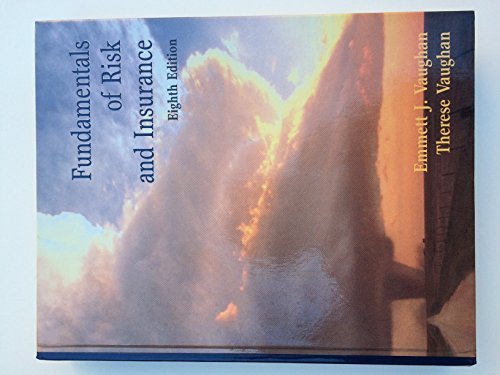
Fundamentals of Risk and Insurance: Vaughan, Emmett J.
Emmett J. Vaughan ... Fundamentals of Risk and Insurance, 11th Edition <strong>presents a thorough and comprehensive introduction to the field of insurance while emphasizing the consumer</strong>.
Check Price on Amazon- General liability (GL): Covers third-party bodily injury and property damage claims (e.g., a customer slips in your store). Look for $1,000,000 per occurrence/$2,000,000 aggregate limits, which are common for small businesses. “Aggregate” is the most the policy will pay in total during the policy term.
- Professional liability (errors & omissions or E&O): Covers claims that your professional advice or service caused a financial loss (e.g., design mistake, missed deadline). Usually “claims-made,” meaning the claim must be made while the policy is active. You’ll see a retroactive date — the earliest date your work is covered.
- Commercial property: Covers your building, tenant improvements, equipment, and inventory from covered perils (fire, theft, wind, etc.). Pay attention to the coinsurance clause (a penalty if you insure below a percentage of true value, often 80%–90%).
- Business owner’s policy (BOP): A bundle that typically includes general liability + commercial property + business income (lost income when a covered loss shuts you down). BOPs often deliver package discounts for qualifying small businesses.
- Workers’ compensation: Required in most states when you have employees. Covers medical and lost wages for work-related injuries. Premiums are based on payroll by class code plus an experience modification factor (“mod”) that rewards or penalizes you for past claims compared to peers.
- Commercial auto: Covers vehicles titled to or used primarily for the business. Liability is required if you drive for business. Add physical damage (comprehensive/collision) for your owned vehicles. Consider hired and non-owned auto (HNOA) if employees use personal cars for work errands.
- Umbrella/excess liability: Adds higher limits above GL, auto, and employers’ liability. Often required by contracts.
- Optional but increasingly common: Cyber liability (data breach and ransomware), employment practices liability (EPLI, for claims like wrongful termination or harassment), inland marine (mobile equipment/tools), and crime/fidelity (employee theft).
Which should you consider?
- Client-facing businesses: GL is baseline; E&O if you advise or design (consultants, accountants, designers, IT).
- Brick-and-mortar: GL + property or a BOP. Add business income coverage to keep payroll and bills flowing after a loss.
- Any employer: Workers’ comp once you have employees (requirements vary by state). Consider EPLI as you grow.
- Driving for work: Commercial auto or HNOA if you use personal vehicles for business tasks.
- Contract requirements: Check insurance sections for specific limits, additional insured requirements, waivers of subrogation, and primary/noncontributory wording.
What You Need to Provide for Accurate Quotes
Carriers price based on exposure (how much risk you present). The more precise your info, the tighter and more consistent your business insurance quotes will be.
Core business details
- Legal name, DBA, FEIN, entity type, and contact info
- Start date and years of experience for owners/managers
- NAICS code/industry classification (a code that describes your industry — your accountant or prior policy may list it)
- Operations description (what you do, where you do it, who your customers are, % of residential vs commercial, any subcontracting)
Financials and exposure metrics
- Annual gross revenue (last 12 months and projected next 12)
- Payroll by class code (hourly vs salaried, owners/officers included or excluded by state rules)
- Number of employees, role mix, and seasonal/part-time counts
- Subcontractor costs and whether you obtain certificates and require hold-harmless/indemnity agreements
Locations and property
- Addresses and square footage for each location; building construction type (frame, masonry), year built/updates (roof, HVAC, wiring), and protections (sprinklers, alarms)
- Values: building replacement cost (not market price), tenant improvements, equipment/machinery, inventory, and business personal property
- Business income/extra expense needs (how many months of coverage to replace revenue after a covered loss)
Vehicles and equipment
- Vehicle list: year/make/model/VIN, garaging address, drivers’ names and dates of birth, any personal use
- Equipment schedules: type, serial numbers, values, and whether items travel between job sites
Safety and controls
- Written safety program and training, use of PPE, driving policies (MVR checks), fleet telematics/dashcams, alarms/sprinklers, cybersecurity steps (MFA, backups)
Claims history (loss runs)
- Loss runs: A carrier-issued report showing 3–5 years of claims, amounts paid, and reserves. Ask your current or prior insurer or broker; most will deliver within a week. If you haven’t had coverage, be transparent — a “no prior” explanation is fine for many startups.
Documents that speed things up
- Prior policies (declarations pages with limits/deductibles)
- Sample contracts or vendor/client insurance requirements
- W-2 or payroll reports; 941s for payroll audits
- Lease with insurance clauses; proof of alarms/sprinklers
Fast-prep tips
- Pull a single data packet: last year and projected revenue; payroll by role; location square footage and building updates; vehicle and driver list; equipment list with values; 3–5 years of loss runs.
- If you’re unsure on values, use replacement-cost tools with your broker to avoid coinsurance penalties.
- Draft a clear, one-paragraph operations description. Carriers reward clarity.
Ready to see pricing? The fastest way to find out what you’d actually pay is to compare quotes from 3–5 carriers. If you want budget-friendly small-business options, start here: Affordable Business Insurance Options: Smart, Budget-Friendly Coverage for Small Businesses.
How Insurers Calculate Business Insurance Quotes (and Why They Differ)
Understanding the pricing drivers helps you read quotes like a pro.
- Coverage limits and aggregates: Higher limits generally cost more. Watch per-occurrence vs aggregate limits for GL and E&O. Some quotes include defense costs outside the limit (better) vs inside the limit (reduces what’s left to pay claims).
- Deductibles (your out-of-pocket before insurance pays): Higher deductibles typically lower premiums. For property, a 1% wind/hail deductible may save money but could mean a big bill after a storm.
- Risk class and operations: Your class codes (GL class, workers’ comp class, NAICS) drive base rates. Misclassification can overcharge you — or cause coverage gaps.
- Location factors: Fire protection class, crime scores, coastal/wind zones, and even roof age impact property and BOP pricing.
- Loss history: Frequency and severity matter. A clean 5-year loss run often earns credits. Recent large losses may trigger surcharges or higher deductibles.
- Safety controls: Written programs, training, telematics, alarms, sprinklers, and cybersecurity controls can lead to credits or more carrier appetite.
- Endorsements and exclusions: Common examples include subcontractor exclusions (no coverage for sub work), professional services exclusions, or protective safeguards (requiring you to maintain alarms/sprinklers). These can significantly change real-world protection and price.
- Workers’ comp experience mod: A mod below 1.00 reduces premium; above 1.00 increases it, based on your claims relative to similar businesses in your state.
- Policy form: Occurrence vs claims-made (E&O and cyber are often claims-made). Claims-made can start cheaper but needs tail coverage if you cancel or switch carriers to cover future claims from past work.
- Package credits: BOPs or bundling GL + property + auto with the same carrier can produce multi-policy discounts.
A quick example
- Quote A: GL $1M/$2M, defense outside the limits, no subcontractor exclusion, $1,000 deductible.
- Quote B: GL $1M/$2M, defense inside the limits, subcontractor exclusion, $2,500 deductible. If Quote B is only 8% cheaper, Quote A is likely stronger coverage for the money. Seemingly small wording differences (defense outside, no sub exclusion) can save you tens of thousands in a real claim.
Want a deeper look at how carriers and underwriting work? This explainer can help: Insurance Companies Explained: How They Work and How to Choose.
How to Get Competitive, Comparable Quotes (Without Wasting Time)
Here’s how to run a tight process and keep the “apples-to-apples” comparison truly apples-to-apples.
When to use a broker vs a direct carrier
- Direct carrier: Simple, low-risk main-street businesses (boutiques, small offices, cafes) can often get fast online BOP quotes from direct carriers. Good for speed.
- Independent broker/agent: Best when you need multiple carriers to compete, you have specialized risks (contracting, professional services, tech, healthcare), you need endorsements (additional insured/waiver), or you want guidance across lines.
- Digital brokers/marketplaces: Useful for gathering bids quickly across several carriers. Verify that the final quote is bindable (not just an estimate) and which carrier will service the policy.
Set your specs before you shop
- Decide limits and deductibles you’re comfortable with: e.g., GL $1M/$2M, property at full replacement cost with 80%–90% coinsurance, business income for 12 months, WC per state law, auto at $1M CSL, umbrella at $1M–$2M.
- Note contract requirements: additional insured (adds your client as insured for your work), primary and noncontributory wording (your policy pays first), waiver of subrogation (your insurer won’t seek recovery from your client). Ask for these on a blanket basis when possible — it’s cleaner and often cheaper over time.
- Standardize endorsements: Request defense outside limits for GL if available, no subcontractor exclusion if you use subs (and confirm you collect their COIs), and professional services carve-backs if your GL is excluding incidental advice.
A simple request-for-quote (RFQ) email template you can copy Subject: Request for business insurance quotes – [Your Business Name]
Hello [Broker/Carrier],
We’d like comparable quotes for:
- General Liability: $1M/$2M occurrence/aggregate, $1,000 deductible, defense outside limits if available; Blanket Additional Insured – Ongoing/Completed Ops; Primary & Noncontributory; Waiver of Subrogation
- BOP/Property: Building $[X] replacement cost; BPP $[Y]; Business Income: [12/18] months; 80–90% coinsurance; sprinkler/alarm credits if applicable
- Workers’ Comp: Per state statute; include estimated payroll by class codes (attached)
- Commercial Auto: $1M CSL, add HNOA if applicable; list drivers/vehicles (attached)
- Umbrella: $1M (over GL/AL/EL)
- E&O (if applicable): $1M each claim/$1M aggregate; Retro date as inception or prior work if available; $2,500 deductible
Attached: Operations description, 3–5 years of loss runs, prior dec pages, payroll and revenue, locations, equipment/vehicle schedules. Please provide specimen forms and list of endorsements/exclusions.
Thanks, [Name, Title, Contact]
Bundle and time it right
- Bundling: Placing GL, property, and auto with one carrier can unlock credits. Ask for side-by-side with and without bundling.
- Timing: Start 30–60 days before your target effective date (longer for construction, manufacturing, or accounts with claims).
Deductible trade-offs (how to think about savings)
- Property: Moving from $1,000 to $2,500 may save a small percentage; jumping to $5,000–$10,000 can save more, but only pick a deductible you’re comfortable paying.
- E&O/cyber: Higher retentions can meaningfully reduce cost, but claims frequency and vendor contract requirements should guide you.
Avoid market blocking
- Many carriers only release one quote through the first broker who requests it. Choose one strong broker to “shop the market,” or use a platform that transparently shows which carriers are being approached. If you switch brokers mid-process, you may need a Broker of Record letter to transfer marketing rights — ask before you start.
Compare fairly
- Ask every carrier to match your specs. If they can’t, have them note differences on the quote. Request a coverage comparison summary listing limits, deductibles, defense inside/outside, key exclusions, and total premium with fees.
If you want a quick way to line up options side-by-side, try a comparison flow here: Insurance Quotes: Compare & Get Accurate Quotes Fast.
Common Pitfalls, What to Watch For, and How to Bind
Watch these areas so you don’t end up with a cheap quote that leaves you uncovered.
- Price vs coverage: A lower premium with a subcontractor exclusion or defense inside limits may cost far more in a real claim. Ask for specimen policy forms and a list of endorsements.
- Temporary or nonbinding quotes: “Indications” are rough estimates, not final. A bindable quote will specify effective dates, forms, and subjectivities (items needed to bind). Quotes also have expiration dates — don’t sit on them.
- Hidden exclusions and warranties: Protective safeguards (you must maintain alarms/sprinklers), designated work exclusions, roofing or height limitations, or professional services exclusions can surprise you. Have your broker highlight them.
- Inaccurate submissions: Overstating risky operations or leaving out safety controls can inflate rates. Understating payroll or revenue can trigger big audit bills later — workers’ comp and many GL policies are auditable at year-end.
- Property valuation and coinsurance: Insuring well below replacement cost can reduce claim payouts via coinsurance penalties. Use credible tools to set values.
- Claims-made nuances: For E&O and cyber, confirm the retro date and ask about tail coverage if you plan to switch or retire.
- Certificates of insurance (COIs): A COI is proof of coverage, not the policy. If a client needs to be added as additional insured or needs a waiver of subrogation, ask your broker to endorse the policy or use a blanket endorsement that automatically applies when required by contract.
How to verify and bind a policy
- Review the quote proposal: Confirm limits, deductibles, and forms. Ask for a one-page coverage summary comparing each quote.
- Clear subjectivities: Provide any remaining documents (e.g., signed apps, photos, driver lists, inspection responses). “Subjectivities” are the conditions you must meet before the policy can be bound.
- Sign and pay: Policies are typically bound upon signed application and initial payment. Ask for a binder (temporary proof of coverage) and then the full policy when issued.
- Get the documents you’ll need: Binder, declarations pages, schedule of forms/endorsements, and certificates for your clients or landlords.
- Calendar key dates: Audit windows (for WC/GL), inspection appointments, and renewal 60 days out.
What to Look For When Comparing Business Insurance Quotes
- Limits and aggregates: Match your specs across all quotes.
- Deductibles/retentions: Note per-occurrence vs per-claim deductibles.
- Defense costs: Outside vs inside the limits.
- Endorsements/exclusions: Subcontractor, professional services, height/roofing, designated operations, protective safeguards, cyber exclusions.
- Property terms: Replacement cost vs actual cash value, coinsurance %, special vs basic form, wind/hail deductibles, business income months.
- Service: Claims handling reputation, inspection process, and who issues certificates quickly when you need them.
- Total cost: Premium plus taxes and fees. Ask for annual and monthly pay options and any financing charges.
If you want help tailoring coverages to your budget, you can explore options here: Affordable Business Insurance Options: Smart, Budget-Friendly Coverage for Small Businesses.
Real-World Scenarios
- Example 1: 8-employee marketing agency (no office visitors, remote team). Likely needs a BOP (or at least property for equipment if owned), GL $1M/$2M, E&O $1M claims-made with a retro date at policy inception, cyber $250K–$1M depending on client data, and WC where required. Strong MFA and backups can improve cyber pricing.
- Example 2: 12-employee landscaping company with 4 trucks and mowers. GL $1M/$2M, inland marine for mobile equipment, auto $1M CSL with scheduled drivers, WC based on payroll by class code, umbrella $1M (often required by commercial clients). Ask carriers to avoid subcontractor exclusions if you use subs and collect their COIs.
- Example 3: Retail boutique in a sprinkled building. BOP with building improvements and business income for 12 months, GL $1M/$2M, WC for staff, and cyber endorsement for POS risks. A BOP package credit can beat stand-alone GL + property pricing.
Quick Next Steps
- Make your one-page data packet: operations description, revenue/payroll by class, locations/values, equipment/vehicles, and loss runs.
- Decide your target limits/deductibles and any client contract requirements.
- Get 3–5 business insurance quotes on the same specs and review endorsements/exclusions before choosing.
- Have a licensed agent review your unique situation and local regulations. A quick conversation can catch state-specific rules and available credits.
Want a fast way to compare options? Line up multiple quotes side-by-side here: Insurance Quotes: Compare & Get Accurate Quotes Fast.

Vantrue N4 Pro S 4K 3 Channel Dash Cam w/Triple STARVIS 2, 4K+1080P+2.5K Front Inside Rear Dash Camera, 4+2.5K Dual Channel, HDR IR Night Vision, Voice Control, Parking Mode, GPS, Wi-Fi, Support 1TB : Electronics
View on Amazon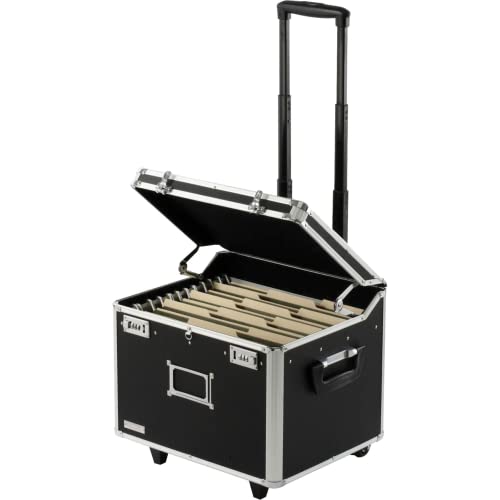
Vaultz Portable File Storage Box with Handle - 14.5" x 17.5" x 15.5" Letter/Legal Size Mobile Lock Box - Double Combination Locking Cabinet - Black : Filing Crates
View on AmazonRecommended Resources
Fundamentals of Risk and Insurance: Vaughan, Emmett J.
Emmett J. Vaughan ... Fundamentals of Risk and Insurance, 11th Edition <strong>presents a thorough and comprehensive introduction to the field of insurance while emphasizing the consumer</strong>.
Vantrue N4 Pro S 4K 3 Channel Dash Cam w/Triple STARVIS 2, 4K+1080P+2.5K Front Inside Rear Dash Camera, 4+2.5K Dual Channel, HDR IR Night Vision, Voice Control, Parking Mode, GPS, Wi-Fi, Support 1TB : Electronics
[ 24/7 Parking Mode ] The N4 Pro S 3 channel dash cam <strong>provides round-the-clock security for your parked vehicle</strong>. Its buffered motion detection captures footage from 10ss before an eve
Vaultz Portable File Storage Box with Handle - 14.5" x 17.5" x 15.5" Letter/Legal Size Mobile Lock Box - Double Combination Locking Cabinet - Black : Filing Crates
Amazon.com : Vaultz Portable File Storage Box with Handle - <strong>14.5" x 17.5" x 15.5"</strong> Letter/Legal Size Mobile Lock Box - Double Combination Locking Cabinet - Black : Filin
Related Articles
- Best Insurance Policies for Small Businesses: Essential Coverage, Costs, and How to Choose
- Commercial Insurance Coverage Basics: Essential Coverages, Costs, and How to Choose
- Business Insurance Types Explained: What Each Policy Covers and How to Choose
- Small Business Insurance Options: What to Know and How to Choose
- Business Insurance Discounts Available: Types, How to Qualify, and Maximize Savings
- How to Get Car Insurance: What You Need to Know to Choose, Buy, and Save
- Affordable Business Insurance Options: Smart, Budget-Friendly Coverage for Small Businesses
- How Business Insurance Protects Your Company: Key Benefits and What They Cover