
Life Insurance in Colorado: What Residents Need to Know
You are looking into life insurance in Colorado and wondering what’s typical for costs, coverage, and rules here. The short answer: the right policy is less about your ZIP code and more about your health, age, and goals—but a few Colorado-specific factors can influence how you shop. Let’s break it down in plain English and help you choose with confidence.
Tip: The fastest way to see what you would actually pay is to compare quotes from 3–5 carriers. Rates vary by age, health, tobacco or cannabis use, and the coverage you choose.
Life insurance in Colorado: the basics
Life insurance pays a tax-free cash benefit (the “death benefit”) to your beneficiaries if you pass away. Most Coloradans compare two main policy types:
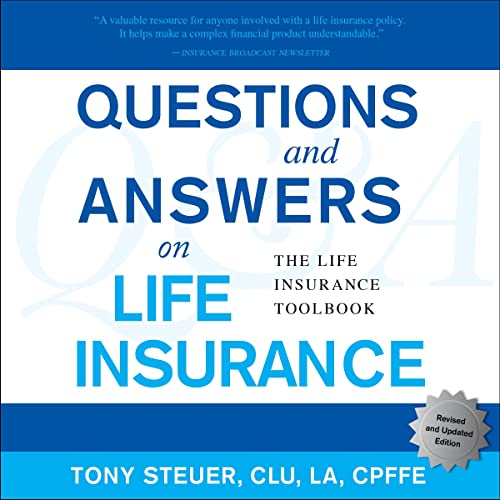
Questions and Answers on Life Insurance: Steuer, Tony
*Amazon Best Seller in Life Insurance* Questions and Answers on Life Insurance is <strong>an extremely useful and one of a kind resource for anyone looking for a simple way to understand life insuranc
Check Price on Amazon- Term life insurance: Coverage for a set period—typically 10, 15, 20, 25, or 30 years. If you pass during the term, your beneficiaries receive the death benefit. There’s no savings component. It’s usually the most affordable way to get a large amount of coverage.
- Permanent life insurance: Coverage that can last your entire life if you keep paying premiums. It adds a savings component called “cash value” (money that grows tax-deferred and that you can borrow from). Common types are whole life and universal life. Permanent policies cost more than term for the same death benefit.
Other terms you’ll see—here’s what they actually mean:
- Underwriting: The insurer’s process to assess risk and set your rate, using your application, health history, motor vehicle records, and sometimes a brief exam or labs.
- Rider: An add-on to a policy that changes or enhances coverage, like a child term rider (small coverage for a child) or a waiver of premium rider (your premiums are waived if you become disabled, as defined in the rider).
- Accelerated death benefit: A built-in feature on many policies that lets you access part of the death benefit if you’re diagnosed with a qualifying terminal or specified critical illness.
- Guaranteed issue: A policy with no health questions. It’s easy to qualify for but has low coverage amounts and higher premiums per dollar of coverage. Often used by seniors for final expenses.
- Simplified issue: Fewer health questions and no medical exam in many cases, but still underwritten. It’s faster than fully underwritten coverage and may cost a bit more.
If you have coverage through work (group life), keep in mind:
- Group coverage is usually 1–2 times your salary at little or no cost, but it rarely follows you if you change jobs (that’s “portability”).
- Individual policies stay with you, and you choose the amount and term.
Colorado-specific considerations that can affect shopping and pricing
While life insurance rules are fairly consistent nationwide, a few things are especially relevant in Colorado.
Outdoor hobbies and underwriting
If you ski in the backcountry, climb, or skydive, disclose it on your application. Insurers typically ask about higher-risk hobbies. You may pay a higher rate, face an exclusion for that activity, or be declined by some carriers. The good news: underwriting standards vary, so if one carrier is strict on rock climbing, another might be more flexible. This is exactly why it helps to compare 3–5 carriers.
Cannabis use
Colorado residents often ask whether marijuana use automatically triggers smoker rates. Policies differ. Some insurers classify any THC use as “tobacco,” which raises premiums; others treat occasional use differently from daily use. Either way, be candid—misstating use can cause problems later. An experienced agent can direct you to carriers that are more cannabis-friendly.
Occupation and lifestyle
Guides, ski patrol, oil and gas, construction, and other physically demanding or hazardous jobs can influence underwriting. So can frequent high-altitude activities, not because of altitude itself but because of associated hobbies and travel to remote terrain.
State oversight and consumer protections
Colorado’s Division of Insurance regulates insurers that sell here and works to prevent unfair discrimination in underwriting. The state has taken a close look at how insurers use external data and algorithms. For you, this means an added emphasis on transparency and accountability in how rates are set. Always verify that your insurer is licensed in Colorado and check complaint trends when you narrow your choices.
Typical policy provisions to expect (these are common nationwide; your policy controls):
- Free-look period: A short window after policy delivery—commonly 10–30 days—when you can cancel for a full refund.
- Grace period: Usually around 31 days to make a late premium payment before the policy lapses.
- Contestability: During the first two years, the insurer can review your application if there’s a claim. Be accurate and complete on your application to avoid headaches later.
How much life insurance do Coloradans need?
Use a simple framework to right-size your coverage. Think DIME—Debts, Income, Mortgage, Education:
- Debts: Add car loans, private student loans, and credit cards you don’t want your family to handle.
- Income replacement: Multiply your annual income by the number of years your family would need support. A common range is 10–15 years, adjusted for your savings and your spouse’s income.
- Mortgage (or rent): If you own a home, include the remaining balance. If you rent, consider several years of rent.
- Education: Estimate future college or child-care costs.
Then subtract liquid savings and existing life insurance.
Real-world examples (estimates only—your needs will differ):
Single renter in Denver, age 30, income $80,000, no kids
- Debts: $15,000
- Income replacement: $80,000 × 5 years = $400,000 (shorter horizon since no dependents)
- Rent coverage: $2,000/month × 24 months = $48,000
- Education: $0
- Savings and existing insurance: −$20,000
- Approximate need: $443,000 → round to a $500,000 20-year term for simplicity
Young family in Colorado Springs, age 35, income $120,000, two kids, $500,000 mortgage
- Debts: $20,000
- Income replacement: $120,000 × 12 years = $1,440,000
- Mortgage: $500,000
- Education: $60,000 per child × 2 = $120,000
- Savings and existing insurance: −$50,000
- Approximate need: $2,030,000 → consider a $2 million 20–30 year term
Empty nesters in Fort Collins, age 55, mortgage $250,000, strong retirement savings
- Debts: $10,000
- Income replacement: $90,000 × 5 years = $450,000 (bridge to retirement)
- Mortgage: $250,000
- Education: $0
- Savings and existing insurance: −$200,000
- Approximate need: $510,000 → a $500,000 10–15 year term or a smaller permanent policy for legacy goals
How your Colorado lifestyle affects the amount:
- Housing costs: Higher home values mean bigger mortgages; match coverage accordingly.
- Two-income households: You might not need a full 10–15x income if both partners work and have savings, but do not forget child care, household services, or time to grieve and regroup.
- Health insurance deductibles: Many households carry high-deductible plans. Some choose a rider with living benefits to help if a critical illness strikes while you’re still alive. If you’re reassessing your broader safety net, our guide to Health Insurance in Colorado: Plans, Costs & How to Enroll can be a helpful companion read.
Evaluating insurers and policy features
Here is what actually matters when choosing among Colorado-friendly carriers.
Financial strength and service
- Financial ratings: Look for strong ratings from A.M. Best, Moody’s, or Standard & Poor’s. These indicate the company’s ability to pay claims decades from now.
- Claims and complaints: Check Colorado Division of Insurance resources for complaint patterns. A slightly cheaper premium is not worth poor service when your family needs the benefit.
Term length and structure
- Match your term to your timeline: Choose a term that covers your longest major obligation—mortgage years left, youngest child’s years to independence, or time to retirement.
- Laddering: Buying more than one term policy with different end dates can reduce cost while covering needs that phase out over time (for example, a 30-year policy for the mortgage and a 20-year policy for child-raising years).
Permanent coverage: When it can make sense
Permanent policies can be useful for estate planning, lifelong dependents, business succession, or if you want a forced-savings component. They are more expensive, so compare carefully and understand how cash value (the policy’s savings bucket) grows, how loans work, and what guarantees vs. projections look like. If you are exploring this route, see our explainer on Whole Life Insurance Explained: Benefits, Costs, and How to Buy.
Riders to consider
- Waiver of premium: If you meet the policy’s definition of disability, your premiums are waived.
- Child term rider: Small coverage for children, often convertible to adult coverage later.
- Accelerated death benefit: Access a portion of the death benefit if diagnosed with a qualifying serious illness; usually built-in but verify the triggers.
- Term conversion: The right to convert term coverage to permanent without new medical underwriting—valuable if your health changes.
Underwriting style and speed
- Fully underwritten: Typically the best rates if you are healthy, but may require a brief exam or labs.
- Accelerated underwriting: Uses data like prescription history and motor vehicle records to skip the exam for qualified applicants; decisions can be made in days.
- Simplified or guaranteed issue: Fastest options with fewer questions or none, usually at higher cost per dollar of coverage.
What to look for when comparing quotes
When you narrow your shortlist, compare more than just the monthly premium.
- Policy type and guarantees: Is it level term (flat premiums and death benefit) or does anything change over time? For permanent policies, what guarantees are contractually stated vs. current assumptions?
- Conversion options: If buying term, how long do you have to convert, and to which permanent products?
- Cannabis and hobby underwriting: Ask how each carrier classifies your usage or activities; this can move you between “preferred,” “standard,” or “tobacco” rate classes.
- Fees and riders: What is included vs. extra? Are riders worth it for your situation?
- Customer support: Is there local or dedicated support? How is the digital experience for billing, beneficiaries, and claims?
CTA: If you want a step-by-step plan to compare carriers, see our guide to Life Insurance: How to Choose the Right Policy and Get Quotes. Then gather real numbers—the fastest way to know your price is to compare quotes from 3–5 top-rated companies.
What does life insurance cost in Colorado?
Rates vary widely by age, health, coverage amount, term length, and whether you use nicotine or cannabis. Here are ballpark examples for healthy non-smokers applying for fully underwritten term life (estimates only; actual quotes will differ):
- Age 30, $500,000 for 20 years: often in the $17–$30/month range
- Age 35, $500,000 for 20 years: often in the $20–$35/month range
- Age 45, $500,000 for 20 years: often in the $40–$70/month range
- Age 55, $500,000 for 15–20 years: often in the $90–$160/month range
If you use nicotine, recreational THC, or have certain health conditions, rates can be higher. Some carriers are more lenient for occasional cannabis use, so it pays to shop around.
Common mistakes Coloradans can avoid
- Buying too little coverage for your mortgage and cost of living: Home prices and childcare add up. Stress-test your number.
- Waiting until after a diagnosis: In most cases, buying when you are younger and healthier saves money.
- Naming a minor child as beneficiary: Life insurers typically can’t pay directly to minors. Consider naming a trusted adult or a trust and talk to an attorney about the best approach.
- Forgetting contingent beneficiaries: Add a backup in case your primary beneficiary can’t receive the benefit.
- Assuming all carriers treat cannabis the same: They don’t. Ask before you apply.
- Not disclosing hazardous hobbies: If an excluded activity is involved in a claim, benefits may be denied. Better to find a carrier comfortable with your lifestyle.
- Letting a policy lapse: Use autopay and know your grace period. A lapsed policy may require new underwriting to reinstate.
- Ignoring conversion: If you buy term, note your conversion window—you might want it later if health changes.
How to get quotes and buy with confidence
Here’s a straightforward path that works for most people in Colorado:

Clever Fox Peace of Mind Planner – Guided End of Life Organizer, Personal Record Book & Emergency File for Important Information (Dark Green)
View on Amazon- Set your coverage amount and term: Use the DIME framework and match the term to your longest obligation.
- Decide on policy type: Term for pure income protection; permanent for lifelong needs or legacy goals.
- Reality-check your budget: Choose a monthly premium you can sustain. It’s better to buy a right-sized policy now than to wait for a “perfect” one later.
- Compare quotes from 3–5 carriers: Look at price, conversion, riders, and underwriting approach (especially for hobbies or cannabis use).
- Apply honestly: Accurate health and lifestyle information avoids headaches during the contestability period.
- Schedule any needed exam promptly: Many approvals now happen without an exam, but if one is needed, getting it done quickly can lock in your rate.
- Review your policy upon delivery: Confirm beneficiaries, riders, and billing. Use the free-look period if it’s not what you expected.
Note: For personalized guidance—especially if you have medical history, complex finances, or hazardous hobbies—speak with a licensed agent who can match you with carriers that fit your profile.
CTA: Ready to see real numbers? Comparing quotes side-by-side is the fastest way to understand your options. Shop 3–5 carriers to zero in on the best value for your situation.
Keep your broader Colorado insurance picture in view
Life insurance is one piece of your safety net. Many families review their coverage during big milestones—buying a home, welcoming a child, or starting a business. If you’re reviewing your overall protection, our guides to Home Insurance in Colorado: Coverage, Costs & Best Companies and Health Insurance in Colorado: Plans, Costs & How to Enroll can help you round out your plan.

SentrySafe Waterproof and Fireproof Alloy Steel Digital Safe Box for Home with Code Button Keypad, 1.23 Cubic Feet, 17.8 x 16.3 x 19.3 Inches (exterior), SFW123GDC - Gun Safes And Cabinets - Amazon.com
View on AmazonQuick FAQs about life insurance in Colorado
- Do I need a medical exam? Not always. Many healthy applicants qualify for accelerated underwriting with no exam. If your profile is more complex, a short exam and labs may help you qualify for better rates.
- Are payouts taxable? In most cases, the death benefit is income tax–free to beneficiaries. If you’re doing advanced planning or using trusts, consult a tax professional.
- Can I own multiple policies? Yes. You can own more than one term policy (laddering) or combine term and permanent. Insurers just want the total to be financially justified.
- Will living at altitude affect my premium? Not by itself. Insurers focus on medical history, tobacco or cannabis use, driving record, and hobbies/occupations—not your elevation.
Next step: Price out your top 3–5 carriers, choose the policy that fits your budget and goals, and get coverage in force. Your future self—and your family—will thank you.
Recommended Resources
Questions and Answers on Life Insurance: Steuer, Tony
*Amazon Best Seller in Life Insurance* Questions and Answers on Life Insurance is <strong>an extremely useful and one of a kind resource for anyone looking for a simple way to understand life insuranc
SentrySafe Waterproof and Fireproof Alloy Steel Digital Safe Box for Home with Code Button Keypad, 1.23 Cubic Feet, 17.8 x 16.3 x 19.3 Inches (exterior), SFW123GDC - Gun Safes And Cabinets - Amazon.com
<strong>SentrySafe Medium Gray Fireproof Safe and Waterproof Safe Box with Dial Combination, Home Security for Money, Documents, or other Valuables</strong>, 1.23 Cubic Feet, SFW123DSB
Clever Fox Peace of Mind Planner – Guided End of Life Organizer, Personal Record Book & Emergency File for Important Information (Dark Green)
The Clever Fox Peace of Mind Planner <strong>helps you clearly organize your final wishes and important information, easing stress and ensuring your family can honor them just as you intended</strong>
Related Articles
- Home Insurance in Colorado: Coverage, Costs & Best Companies
- Auto Insurance in Colorado: Rates, Requirements & How to Save
- Life Insurance in Idaho: What Residents Need to Know
- Life Insurance in Connecticut: What Residents Should Know
- Life Insurance in Arizona: What Residents Should Know Before Buying
- Life Insurance in Illinois: What Residents Need to Know
- Life Insurance in Indiana: What Residents Need to Know
- Life Insurance in Florida: Coverage Options, Costs, and How to Choose