
Life Insurance in Connecticut: What Residents Should Know
You’re trying to figure out life insurance in Connecticut — what type to buy, how much coverage you actually need, and what’s different in this state. Here’s what really matters so you can make a confident, cost‑smart choice.
Fast tip: the quickest way to see what you’d actually pay is to compare quotes from 3–5 carriers. Rates vary by health, age, and carrier underwriting, so side‑by‑side comparisons are your best friend.
Life insurance in Connecticut: the basics
Life insurance in Connecticut works like it does elsewhere: you pay a premium (the amount you pay the insurer, usually monthly) to secure a death benefit (the tax‑free payout to your beneficiaries) if you pass away while the policy is in force. The right policy helps your family replace income, pay the mortgage, cover childcare, and protect long‑term goals like college or retirement savings.
Main policy types
- Term life: Coverage for a set period (typically 10, 15, 20, 25, or 30 years). It’s the most budget‑friendly way to buy a large death benefit. There’s no cash value (savings component); you’re paying purely for protection.
- Whole life: A type of permanent life insurance that lasts your entire life if premiums are paid. It includes cash value (a savings pot that grows tax‑deferred) and guaranteed premiums and death benefit. Expect higher premiums than term for the same death benefit.
- Universal life: Permanent life insurance that can be more flexible. You may be able to adjust premiums and death benefit within limits. Variations include indexed and variable universal life, which tie cash value growth to indexes or investments. They’re more complex and require ongoing monitoring.
- Final expense (guaranteed issue/simplified issue): Smaller whole life policies (often $5,000–$25,000) designed to help with funeral costs. Usually minimal or no medical exam, but higher cost per dollar of coverage and graded benefits (reduced payout) in the first couple of years are common.
How these policies protect beneficiaries
- Income replacement: A death benefit of, say, $750,000 can help a spouse replace years of earnings, keep the home, and maintain childcare.
- Debt payoff: Covers mortgages, private student loans, or other cosigned debt.
- Legacy and planning: Whole and universal life policies can support long‑term estate or business planning.
Connecticut‑specific rules, norms, and factors
Connecticut generally follows national standards for consumer protections, with a few points CT shoppers should know. Regulations can change, so always check your actual policy and confirm with a licensed agent.
- Free‑look period: New individual life policies typically include a free‑look period (often at least 10 days) to review the contract and cancel for a full refund of premiums. If you’re replacing an existing policy, the free‑look period may be longer. Check the first page of your policy for the exact number of days.
- Grace period: If you miss a premium, life policies typically provide a grace period of at least 31 days to make a payment before the policy lapses (ends). Interest on the overdue premium may apply.
- Contestability: Like other states, life policies in Connecticut include a two‑year contestability period. If you die within two years and there was a material misstatement on your application, the insurer can investigate and potentially adjust or deny the claim. After two years, the policy is generally incontestable for most issues other than nonpayment.
- Insurable interest: You must have an insurable interest (a financial or familial relationship) in the life insured at policy inception. This is standard across states.
- Claims timing: Insurers typically pay approved claims within 30–60 days after receiving required documentation. If payment is delayed beyond a set timeframe, Connecticut law may require insurers to pay interest — ask the carrier about its practice in CT.
- Guaranty association safety net: If a licensed life insurer becomes insolvent, the state’s guaranty association provides a backstop up to certain limits. These caps vary by coverage type and can change; they’re typically limited and not a reason to choose a weaker insurer.
- Marijuana and nicotine: Connecticut permits recreational cannabis, but life insurance underwriting is set by carriers, not state law. Some companies rate marijuana use more favorably than tobacco; others may still assign smoker or “tobacco‑use” rates. Disclose use honestly to avoid contestability problems.
- Cost of living and taxes: Connecticut’s higher cost of housing, childcare, and property taxes (especially in Fairfield, New Haven, and Hartford counties) often means families need larger coverage amounts to truly replace income. Connecticut also has a state estate tax. Thresholds and rules change, so if your estate might be taxable, speak with a tax professional or estate attorney about how life insurance fits into your plan.
How to compare term vs. whole life in Connecticut
Here’s the clean way to choose, without overbuying.
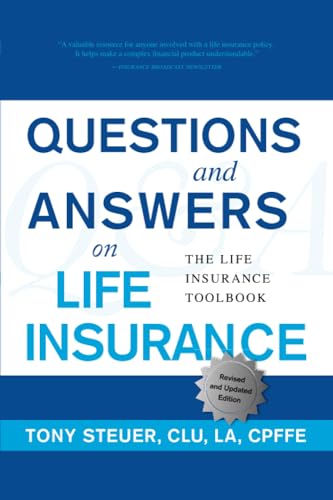
Questions and Answers on Life Insurance: The Life Insurance Toolbook (Fifth Edition): Steuer, Tony
With thirty-five years of experience in the life insurance business, Tony Steuer <strong>delivers a practical, one-of-a-kind resource for anyone involved in choosing or monitoring a life insurance pol
Check Price on AmazonWhen term life usually fits best
- You need the most coverage for the lowest cost, especially while raising kids or paying a mortgage.
- You have a clear time horizon (for example, 20–30 years until kids are out of school and the mortgage is paid).
- You’re comfortable investing separately for long‑term savings in 401(k)s, IRAs, and brokerage accounts.
When permanent life may make sense
- You have a lifelong dependent, or want guaranteed coverage for final expenses no matter when you die.
- You have estate planning needs (business succession, liquidity for estate taxes, special needs trust funding).
- You value guarantees (whole life) or flexibility with active monitoring (universal life).
For a deeper dive into permanent coverage options and how cash value works, see Whole Life Insurance Explained: Benefits, Costs, and How to Buy (/life-insurance/whole-life-insurance-explained-benefits-costs-how-to-buy).
What to look for when comparing policies
- Financial strength: Prefer carriers rated A‑ or better by AM Best. Strong insurers are more likely to keep long‑term guarantees.
- Conversion options (for term): A convertibility feature lets you switch some or all of your term policy to permanent insurance within a window (for example, before age 65) without a medical exam. This can be valuable if your health changes.
- Guaranteed vs. non‑guaranteed elements: Whole and universal life illustrations often show “projected” values. Focus on guaranteed values and stress‑test the non‑guaranteed parts.
- Riders: Consider only those you’ll likely use (see the riders section below). Riders add cost.
- Total cost against your budget: Stick to premiums you can comfortably sustain for the full term or lifetime. Lapses erase protection when your family might need it most.
If you want a broader framework on narrowing choices and getting apples‑to‑apples quotes, check out Life Insurance: How to Choose the Right Policy and Get Quotes (/life-insurance/life-insurance-choose-right-policy-get-quotes).
Choosing a coverage amount that fits Connecticut budgets
Two ways to right‑size coverage:
- Income multiple: Many families pick 10–15x annual income for term life. A $100,000 earner might start at $1–1.5 million. In higher‑cost parts of Connecticut, leaning toward the higher end often better reflects mortgage and childcare costs.
- DIME method (Debts, Income, Mortgage, Education):
- Debts: Add credit cards, personal loans, and private student loans that won’t be forgiven.
- Income: Multiply the years you want to replace (for example, 10–20 years) by your annual income.
- Mortgage: Add the remaining balance.
- Education: Estimate future college costs per child.
Example: Say you’re a 35‑year‑old in Hartford earning $95,000, with a $380,000 mortgage and two kids. Using a 12x income target plus the mortgage and $150,000 for education, you might land around $1.7–$2.0 million in term coverage. If that exceeds your budget, prioritize the biggest risks first (income replacement and the mortgage) and adjust from there.
Note: Actual needs vary by family, debts, savings, and goals. A licensed agent can run personalized needs analyses for you.
Popular riders and add‑ons for Connecticut shoppers
- Accelerated death benefit rider: Lets you access part of the death benefit early if you’re diagnosed with a qualifying terminal illness. Usually included at no additional premium.
- Chronic/critical illness riders: May allow access to part of the benefit if you have certain severe health events or can’t perform activities of daily living. Definitions and triggers vary widely; read the fine print.
- Waiver of premium rider: If you become totally disabled (as defined in the contract), the insurer pays your premiums so coverage continues.
- Child term rider: Adds a small amount of term coverage on children, often convertible to permanent coverage later.
- Term conversion rider or window: Ensure your term policy has a clear convertibility period and acceptable permanent product options.
- Accidental death benefit rider: Pays an extra amount if death is due to a qualifying accident. Typically low cost, but limited use cases.
If your goals include estate planning, trusts, or business succession, it’s worth skimming Life Insurance and Estate Planning: How to Protect Your Family and Preserve Your Legacy (/life-insurance/life-insurance-and-estate-planning-guide) and then speaking with a CT‑licensed agent and an attorney.
Quotes, premiums, and medical exams: what to expect in Connecticut
Your premium is driven by risk. Insurers look at age, health history, prescriptions, build (height/weight), blood pressure and cholesterol, tobacco or nicotine use (including vaping), driving history (DUIs, multiple violations), risky hobbies (scuba, aviation), and occupation.
Medical exams and accelerated underwriting
- Fully underwritten: Often includes a brief medical exam (blood/urine) and records review. Best for healthy applicants seeking the lowest rates and larger coverage.
- Accelerated/no‑exam: Some insurers can approve healthy CT applicants with no exam based on electronic data (prescriptions, MIB, motor vehicle report) and a phone interview. Coverage amounts and rates vary by carrier.
- Simplified/guaranteed issue: Minimal health questions or none. Faster, but more expensive per dollar of coverage and lower maximums.
Typical price ranges (examples — not quotes)
Rates vary by carrier and personal health. These Connecticut‑based scenarios are for illustration only.
- 35‑year‑old non‑smoker in Hartford, excellent health, $500,000 20‑year term: Often somewhere around $18–$30/month for a woman and $22–$38/month for a man.
- 45‑year‑old in New Haven, standard health, $750,000 20‑year term: Commonly in the $60–$110/month range.
- 50‑year‑old in Fairfield County, excellent health, $1,000,000 20‑year term: You might see $140–$260/month.
Your actual cost can be higher or lower depending on underwriting class, policy features, and insurer. That’s why comparing 3–5 carriers is so useful.
Factors that can raise or lower CT rates
- Tobacco/nicotine use: Expect 2–4x higher premiums. If you quit, many carriers reconsider after 12 months tobacco‑free.
- Cannabis use: Disclose frequency and form. Some carriers still assign smoker rates; others don’t. Shopping matters.
- Driving history: Multiple moving violations or a recent DUI can increase rates or delay approval.
- Weight, blood pressure, cholesterol: Even small improvements before applying can help.
- Medical history: Conditions like sleep apnea, anxiety/depression, or prediabetes are often insurable, but documentation and good control help your case.
How to potentially improve your offer
- Apply while healthy and younger — age is the biggest price lever.
- Ask for reconsideration if you’ve improved risk factors (weight loss, smoking cessation). Some carriers will review and may lower rates.
- Time your lab work for your “best day” (hydrated, avoid heavy exercise and alcohol 24–48 hours before, fast if instructed).
Where to shop for life insurance in Connecticut
- Independent brokers: Can compare multiple top‑rated carriers for you, which is often the fastest route to a competitive offer.
- Online marketplaces: Quick quotes and easy side‑by‑side comparisons; look for platforms that show multiple carrier options and licensed CT support.
- Captive agents (single‑company): Helpful if you want one company’s ecosystem, but compare elsewhere to validate price.
- Employer group life: A great supplement, especially if you get 1–2x salary at little or no cost. It usually isn’t portable or sufficient by itself, so many people also buy their own policy.
Before committing, verify the agent or broker is licensed in Connecticut and check carrier financial strength. You can also review complaint trends and consumer resources via the Connecticut Insurance Department.
If you want a step‑by‑step on picking a policy and teeing up quotes, see Life Insurance: How to Choose the Right Policy and Get Quotes (/life-insurance/life-insurance-choose-right-policy-get-quotes).
What to have ready before you request a quote
Having these details handy speeds things up and helps you get accurate, comparable offers:

Smead Poly Frequency Expandable File Folders Letter Size, 12 Pockets, Flap & Cord Closure, Blue/Black (70863) : Expanding File Jackets And Pockets
View on Amazon- Basic info: Legal name, date of birth, address, and contact info
- Lifestyle: Tobacco/nicotine or cannabis use, alcohol intake, hobbies (scuba, private aviation, climbing)
- Health snapshot: Height/weight, medications, medical conditions, primary care and specialist names
- Family history: Parents/siblings with early‑onset heart disease, stroke, or certain cancers
- Coverage preferences: Term length and amount, or permanent type you’re considering
- Financials: Income, approximate net worth (for large policies), existing coverage
- Beneficiaries: Names and relationships; if naming a minor, consider a trust or UTMA custodianship
- Driver’s license information: For motor vehicle reports
What to do next
- Quick win: Compare life insurance quotes from 3–5 CT‑friendly carriers. This is the fastest way to see your real price range.
- Decide on term length and coverage amount that match your mortgage, kids’ ages, and your budget.
- Consider riders you’ll actually use (accelerated benefit is usually included; conversion flexibility is valuable).
- If you’re weighing permanent insurance for estate or business reasons, revisit Whole Life Insurance Explained (/life-insurance/whole-life-insurance-explained-benefits-costs-how-to-buy) and speak with a CT‑licensed agent and your attorney or CPA.
SentrySafe Waterproof and Fireproof Alloy Steel Digital Safe Box for Home with Code Button Keypad, 1.23 Cubic Feet, 17.8 x 16.3 x 19.3 Inches (exterior), SFW123GDC - Gun Safes And Cabinets - Amazon.com
<strong>SentrySafe Medium Gray Fireproof Safe and Waterproof Safe Box with Dial Combination, Home Security for Money, Documents, or other Valuables</strong>, 1.23 Cubic Feet, SFW123DSB
Check Price on AmazonLooking for personal guidance? A licensed agent can help you fine‑tune coverage and shop the right carriers for your health profile and budget. No one can guarantee a specific rate, but smart shopping typically pays off.
—
Call to action: Ready to see your numbers? Take five minutes to compare quotes from multiple Connecticut‑approved insurers. It’s the easiest way to find strong coverage at a fair price.
Recommended Resources
Questions and Answers on Life Insurance: The Life Insurance Toolbook (Fifth Edition): Steuer, Tony
With thirty-five years of experience in the life insurance business, Tony Steuer <strong>delivers a practical, one-of-a-kind resource for anyone involved in choosing or monitoring a life insurance pol
SentrySafe Waterproof and Fireproof Alloy Steel Digital Safe Box for Home with Code Button Keypad, 1.23 Cubic Feet, 17.8 x 16.3 x 19.3 Inches (exterior), SFW123GDC - Gun Safes And Cabinets - Amazon.com
<strong>SentrySafe Medium Gray Fireproof Safe and Waterproof Safe Box with Dial Combination, Home Security for Money, Documents, or other Valuables</strong>, 1.23 Cubic Feet, SFW123DSB
Smead Poly Frequency Expandable File Folders Letter Size, 12 Pockets, Flap & Cord Closure, Blue/Black (70863) : Expanding File Jackets And Pockets
<strong>Smead Poly Frequency Expandable File Folders Letter Size, 12 Pockets, Flap & Cord Closure, Red/Black (70866)717</strong> ... Expanding File Folder, 13 Pockets Accordion File Organizer, A4
Related Articles
- Auto Insurance in Connecticut: Rates, Requirements & How to Save
- Home Insurance in Connecticut: Coverage, Costs & Best Companies
- Life Insurance in Illinois: What Residents Need to Know
- Life Insurance in Delaware: Coverage Options, Costs, and What Residents Should Know
- Health Insurance in Connecticut: Plans, Costs & How to Enroll
- Life Insurance in Colorado: What Residents Need to Know
- Life Insurance in Iowa: What Residents Should Know Before Buying
- Life Insurance in Georgia: What Residents Should Know Before Buying