
Life Insurance in Idaho: What Residents Need to Know
You’re trying to figure out life insurance in Idaho and the quotes you’re seeing are all over the place. What’s normal? Which policy type actually fits your family? And how do you avoid overpaying?
Here’s what actually matters when choosing life insurance in Idaho—how it works, what affects cost here, and how to compare real quotes with confidence.
Life insurance in Idaho: the basics
Before we get into Idaho-specific rules and prices, let’s ground on the building blocks. A few terms you’ll see throughout:
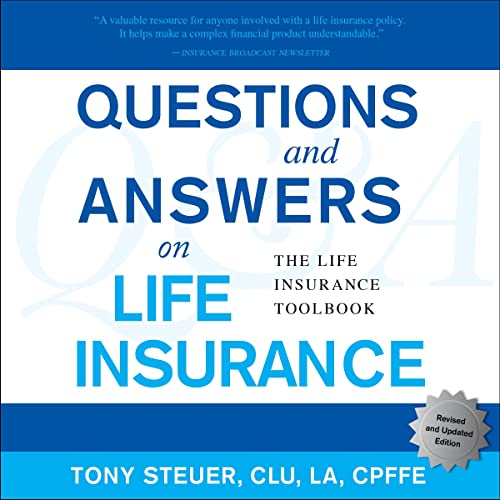
Questions and Answers on Life Insurance: Steuer, Tony
*Amazon Best Seller in Life Insurance* Questions and Answers on Life Insurance is <strong>an extremely useful and one of a kind resource for anyone looking for a simple way to understand life insuranc
Check Price on Amazon- Premium: the amount you pay for coverage (monthly or annually)
- Death benefit: the tax-free payout your beneficiary (the person or people you choose to receive the money) gets when you die
- Underwriting: the insurer’s risk review—health history, lifestyle, prescriptions, build (height/weight), and sometimes a brief medical exam—to set your rate and approve coverage
- Rider: an optional add-on to a policy (usually for an extra premium) that changes or expands benefits
Term life insurance (most families start here)
- How it works: Coverage for a fixed period (10, 15, 20, 25, or 30 years). If you pass away during the term, your beneficiaries receive the death benefit. If you outlive the term, the policy ends.
- Who it fits: People who want the biggest death benefit per dollar—typically young families, mortgage holders, business owners with loans, or anyone replacing income during working years.
- Why Idahoans pick it: It’s affordable and straightforward. You can match the term to your financial obligations—say 20 or 30 years to cover a mortgage and kids through college.
Whole life insurance (lifetime coverage with forced savings)
- How it works: Coverage lasts for your entire life as long as premiums are paid. It includes cash value (a savings component that grows tax-deferred) you can borrow against or withdraw from while alive. Loans or withdrawals may reduce the death benefit and could have tax implications.
- Who it fits: People who value guaranteed lifelong coverage and level premiums, and who want to build cash value over decades. Often used for legacy planning, estate liquidity, or to ensure funds for final expenses.
- Tradeoffs: Substantially higher premiums than term for the same death benefit.
Universal life insurance (flexible permanent coverage)
- How it works: Permanent coverage with flexible premiums and an adjustable death benefit. The cash value growth can be interest-based (current account rates), tied to an index (indexed universal life), or variable (invested in subaccounts—variable universal life). Flexibility cuts both ways—underfunding can cause the policy to lapse (end) if cash value runs out.
- Who it fits: People who want lifetime coverage but value flexibility to adjust premiums, or who have more complex planning goals. Careful monitoring is essential.
If you want a deeper dive on these policy types and how to size your coverage, our step-by-step explainer is a helpful companion: Life Insurance: How to Choose the Right Policy and Get Quotes (/life-insurance/life-insurance-choose-right-policy-get-quotes).
Idaho-specific factors that can affect your policy and price
Here’s what typically shapes life insurance in Idaho beyond the basics.
Cost drivers you’ll actually feel in Idaho
- Age: The single biggest factor. The younger you are when you apply, the lower your rate typically is.
- Health and medical history: Blood pressure, cholesterol, BMI, family history, and prescriptions matter. Managing conditions (with consistent checkups and meds) may help you qualify for better rates.
- Tobacco and nicotine: Any nicotine use (cigarettes, vaping, chew) usually gets “smoker” rates, which can be 2–4x higher than non-smoker rates.
- Occupation and hobbies: Idaho is an outdoors state. Backcountry skiing, rock climbing, whitewater rafting, aviation, and certain ranching or forestry work can influence underwriting. Not all “hazardous” activities are rated the same; frequency and safety training matter.
- Coverage amount and term length: Bigger death benefits and longer terms cost more. Picking the right amount and term is the biggest lever on affordability.
- Policy type: Term is generally the least expensive, universal and whole cost more due to lifetime coverage and cash value.
What can change by insurer (and by Idaho)
- Accelerated or no-exam options: Many carriers offer accelerated underwriting (no medical exam for eligible applicants) up to certain limits—often $250,000 to $2,000,000 depending on age and health. You’ll still answer health questions and may have data checked (like prescription and motor vehicle records).
- Rating differences: One insurer might view occasional marijuana use differently than another. Idaho law does not control insurer risk classes here; carriers set their own underwriting guidelines.
- Community property considerations: Idaho is a community property state. Premiums paid with marital (community) funds can create a community interest in the policy. If you’re married and name someone other than your spouse as primary beneficiary, you may want written spousal consent and/or legal guidance.
- State taxes: Idaho has no state estate or inheritance tax. Federal estate tax may apply for very large estates (thresholds change; consult a tax professional).
Protections and standard provisions in Idaho
- Free look period: After you receive your policy, you typically have at least 10 days to review and cancel for a full refund. Some policies and circumstances allow longer (often 20–30 days for replacements).
- Grace period: If you miss a premium, most policies include a 30- or 31-day grace period to catch up before the policy lapses (ends). Terms vary by contract.
- Contestability period: During the first two years, the insurer may investigate and deny claims for material misrepresentations on your application. After that, policies are generally incontestable except for nonpayment.
- Idaho Life & Health Insurance Guaranty Association: If a member insurer becomes insolvent, coverage is generally protected up to certain limits (commonly up to $300,000 in life insurance death benefits and $100,000 in cash surrender value per person). Limits and conditions apply—this backstop isn’t a substitute for picking a financially strong insurer.
Ballpark term life costs in Idaho
Rates vary by individual circumstances, but healthy non-smokers in Idaho often see premiums similar to national averages. Examples for 20-year level term, $500,000 death benefit:
- Age 30: Female typically from low $15s–$25/month; Male typically from $18–$28/month
- Age 35: Female typically from $19–$28/month; Male typically from $23–$35/month
- Age 45: Female typically from $35–$60/month; Male typically from $45–$75/month
- Age 55: Female typically from $75–$140/month; Male typically from $110–$200/month
Your rate could be higher or lower based on health, build, family history, tobacco use, and insurer underwriting. The fastest way to see what you would actually pay is to compare quotes from 3–5 carriers.
How to compare life insurance in Idaho (and not overpay)
Here’s a simple, Idaho-ready checklist to compare policies apples-to-apples.
What to look for
- Financial strength: Prefer carriers with strong independent ratings (for example, A- or better from AM Best). Financial strength helps ensure claims-paying ability decades down the road.
- Guaranteed level premiums: For term life, look for a policy where the premium is guaranteed not to increase during the initial term.
- Convertibility: Can you convert your term policy to a permanent policy later without another medical exam? Check the conversion deadline (often within the first 10 years or before a certain age).
- Living benefits (accelerated death benefit rider): Many policies let you access a portion of the death benefit if you’re diagnosed with a terminal or qualifying chronic/critical illness. Know the triggers and any fees.
- Waiver of premium rider: If you become totally disabled (as defined in the contract), this rider can cover your policy premiums. Definitions and costs vary.
- Child term rider: Adds affordable coverage for children now, with potential future conversion options.
- Accidental death benefit rider: Pays an extra amount if death is caused by a qualifying accident. Useful for higher-risk occupations or hobbies.
- Exclusions and limitations: Suicide clauses (typically two years) and aviation/ hazardous activity limitations may apply. If you fly recreationally out of McCall or Salmon, disclose it and make sure you understand coverage.
- Policy service and digital tools: Online account access, beneficiary updates, and easy premium changes matter more than you think over 20–30 years.
Underwriting: how to avoid surprises
- Be accurate and complete: The contestability period means misstatements can derail a claim. Disclose health history, prescriptions, and activities up front.
- Consider timing: Locking in coverage while you’re healthy—and before birthdays, new diagnoses, or starting nicotine—typically yields better rates.
- Shop underwriting, not just price: One carrier might rate sleep apnea or backcountry skiing more favorably than another. Independent agents can match your profile to receptive carriers.
Affordability moves that work in Idaho
- Right-size the term: Align the term with when your biggest obligations end—e.g., 20 years for a remaining mortgage and childcare years, 30 years if you want a longer runway.
- Ladder policies: Instead of one big 30-year policy, buy multiple policies with different terms (e.g., a 10-year $300K + 20-year $200K). As needs fall, coverage falls—and premiums do too.
- Pay annually if possible: Most carriers discount annual payments versus monthly.
- Improve your health class: Quitting nicotine for 12 months or more, maintaining a healthy BMI, and keeping blood pressure/cholesterol controlled can unlock lower rates at renewal or with a new policy (never cancel old coverage until new is active).
Want a fuller walkthrough of comparing term vs. permanent, riders, and policy sizing? See our guide: Life Insurance: How to Choose the Right Policy and Get Quotes (/life-insurance/life-insurance-choose-right-policy-get-quotes).
CTA: Ready to see your actual price? Compare quotes from 3–5 Idaho-friendly carriers. It’s the quickest way to match coverage to your budget without guessing.
Why Idaho residents buy life insurance
Here are the most common, real-world reasons people in Idaho put coverage in place:
- Income replacement: If you earn $70,000/year in Boise, a 10–15x income rule of thumb suggests $700,000–$1,050,000 to replace income for a period while investments or Social Security survivor benefits kick in.
- Mortgage protection: A $350,000, 30-year mortgage in Meridian? A 30-year term that covers the balance means your family can keep the home, not sell under stress.
- Final expenses: Funerals and burial in Idaho can range anywhere from $7,000 to $15,000+. A small permanent policy (or a portion of a larger term or permanent plan) can earmark funds for this.
- Debts and co-signed loans: Think auto loans, private student loans, or business lines of credit. If you own a small farm or shop, lenders often want life insurance as a condition of financing.
- College costs for kids: Add a dedicated amount—say $50,000–$100,000 per child—to help with tuition at the University of Idaho or Idaho State when the time comes.
- Protecting non-earning work: Stay-at-home parents provide substantial economic value (childcare, logistics, elder care). Coverage for both spouses can keep life on track if one passes away.
- Business and ranch succession: Life insurance can fund buy-sell agreements between partners, equalize inheritances among heirs, or provide liquidity to keep land and equipment in the family.
If you’re mapping life insurance alongside other protections, it’s worth reviewing your health coverage too: Health Insurance in Idaho: Plans, Costs & How to Enroll (/health-insurance/health-insurance-in-idaho-plans-costs-enroll).
How much coverage do you need—and for how long?
Two practical approaches most Idaho families use:
- Income multiple: 10–15x your annual income. Add more if you have young kids or less if you’re near retirement with strong savings.
- DIME method: Debt, Income, Mortgage, Education. Total your debts (excluding mortgage), add years of income you want to replace, your remaining mortgage balance, and projected education costs. That sum is your starting death benefit.
Example: You’re a 35-year-old non-smoker in Twin Falls making $80,000, with a $300,000 mortgage, $10,000 in other debt, and two kids under 5. You want to replace 10 years of income and set aside $100,000 for college. DIME says: $10,000 (debts) + $800,000 (income) + $300,000 (mortgage) + $100,000 (education) = $1.21 million. You might round to $1.25M on a 25- or 30-year term.
Getting quotes in Idaho: step-by-step
- Gather your info
- Height/weight, prescriptions, basic health history
- Recent medical visits and labs (if any)
- Driving history (tickets/DUIs can matter)
- Lifestyle disclosures (nicotine, aviation, hazardous hobbies)

Clever Fox Peace of Mind Planner – Guided End of Life Organizer, Personal Record Book & Emergency File for Important Information (Dark Green)
The Clever Fox Peace of Mind Planner <strong>helps you clearly organize your final wishes and important information, easing stress and ensuring your family can honor them just as you intended</strong>
Check Price on Amazon- Decide on a starting coverage target
- Use the income multiple or DIME method above
- Pick a term that covers your biggest obligations (20 vs. 30 years)
- Compare quotes from 3–5 carriers
- Ask for the same death benefit, term, and riders on each quote
- Include at least one accelerated/no-exam option if you qualify
- Review both the illustrated premium and guarantees
- Check the fine print
- Conversion deadline and options for term policies
- Rider costs and triggers (especially living benefits and waiver of premium)
- Exclusions (suicide clause, aviation/hazardous activities) and grace period
- Apply—and don’t cancel existing coverage yet
- Keep current coverage active until the new policy is approved, placed, and you’ve completed your free look review window
If you want a refresher as you compare your quotes, bookmark this: Life Insurance: How to Choose the Right Policy and Get Quotes (/life-insurance/life-insurance-choose-right-policy-get-quotes).
CTA: Get personalized life insurance quotes for Idaho in minutes. Seeing side-by-side options from multiple carriers is the smartest way to find the right fit at a fair price.
Special Idaho considerations: beneficiaries, minors, and spouses
- Beneficiaries: Name both a primary and a contingent (backup). Update after major life events—marriage, divorce, new child, moving, refinancing your mortgage.
- Minors: Don’t name a minor child directly. Consider naming a trusted adult custodian under UTMA/UGMA or a trust. Otherwise a court may need to appoint a guardian to receive funds.
- Community property: Because Idaho is community property, spouses often have a community interest in policies funded with marital money. If you intend to name someone other than your spouse as beneficiary, consider written consent and legal advice.
- Ownership vs. insured: You can own a policy on your spouse or business partner with insurable interest (a real financial stake). Ownership controls beneficiary changes, so decide deliberately.
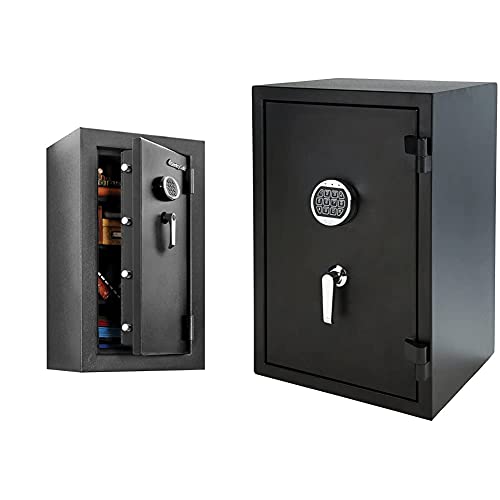
SentrySafe Waterproof and Fireproof Alloy Steel Digital Safe Box for Home with Code Button Keypad, 1.23 Cubic Feet, 17.8 x 16.3 x 19.3 Inches (exterior), SFW123GDC - Gun Safes And Cabinets - Amazon.com
View on AmazonWhat insurers don’t always tell you
- Group life at work is helpful—but limited: Employer coverage is often 1–2x salary, rarely portable if you leave, and premiums can jump as you age. It’s a great foundation, but most families need more.
- You can re-shop later: If your health improves or you quit nicotine for 12 months or more, you may qualify for better rates. Just remember: always secure the new policy first.
- Permanent policy illustrations are not guarantees: Non-guaranteed elements (interest rates, dividends, index credits) can change. Focus on guaranteed premiums and benefits when comparing.
Need help choosing?
A licensed Idaho agent can help you size coverage, navigate community property questions, and match your health profile to insurers that underwrite it favorably. Independent agents (who can quote multiple carriers) are especially useful.
If you’re also reviewing your broader protection plan—home, auto, and health—these Idaho-focused resources can help you see the big picture: Home Insurance in Idaho: Coverage, Costs & Best Companies (/home-insurance/home-insurance-in-idaho-coverage-costs-best-companies) and Health Insurance in Idaho: Plans, Costs & How to Enroll (/health-insurance/health-insurance-in-idaho-plans-costs-enroll).
Your next step
- Estimate your coverage need using the DIME method
- Pick a term that matches your mortgage, kids’ ages, and retirement timeline
- Compare quotes from 3–5 financially strong carriers on the same terms
- Add only the riders you’ll truly use
Locking in life insurance in Idaho while you’re healthy typically saves money for decades. A few minutes of quoting today can protect your family’s tomorrow.
Note: This guide is educational. For advice specific to your situation, consult a licensed insurance agent and, for legal/tax questions, a qualified professional.
Recommended Resources
Questions and Answers on Life Insurance: Steuer, Tony
*Amazon Best Seller in Life Insurance* Questions and Answers on Life Insurance is <strong>an extremely useful and one of a kind resource for anyone looking for a simple way to understand life insuranc
Clever Fox Peace of Mind Planner – Guided End of Life Organizer, Personal Record Book & Emergency File for Important Information (Dark Green)
The Clever Fox Peace of Mind Planner <strong>helps you clearly organize your final wishes and important information, easing stress and ensuring your family can honor them just as you intended</strong>
SentrySafe Waterproof and Fireproof Alloy Steel Digital Safe Box for Home with Code Button Keypad, 1.23 Cubic Feet, 17.8 x 16.3 x 19.3 Inches (exterior), SFW123GDC - Gun Safes And Cabinets - Amazon.com
<strong>SentrySafe Medium Gray Fireproof Safe and Waterproof Safe Box with Dial Combination, Home Security for Money, Documents, or other Valuables</strong>, 1.23 Cubic Feet, SFW123DSB
Related Articles
- Auto Insurance in Idaho: Rates, Requirements & How to Save
- Home Insurance in Idaho: Coverage, Costs & Best Companies
- Life Insurance in Iowa: What Residents Should Know Before Buying
- Health Insurance in Idaho: Plans, Costs & How to Enroll
- Life Insurance in Indiana: What Residents Need to Know
- Life Insurance in Colorado: What Residents Need to Know
- Life Insurance in Arizona: What Residents Should Know Before Buying
- Life Insurance in Illinois: What Residents Need to Know