
Whole Life Insurance Explained: Benefits, Costs, and How to Buy
You keep hearing that whole life insurance can protect your family and build savings at the same time. But when you get a quote, the premiums look high. Is that normal? And how do you tell a solid policy from a sales pitch? This guide breaks down whole life insurance in plain English so you can decide if it’s right for you—and how to buy it smartly.
Note: Rates and features vary by insurer and by your age, health, state, and tobacco status. Consider speaking with a licensed agent for personalized advice.
What is whole life insurance?
Whole life insurance is permanent life insurance designed to last your entire life, as long as you pay the required premiums. It pays a death benefit (the tax-advantaged money your beneficiaries receive when you die) and builds cash value (a savings-like component you can access while alive).
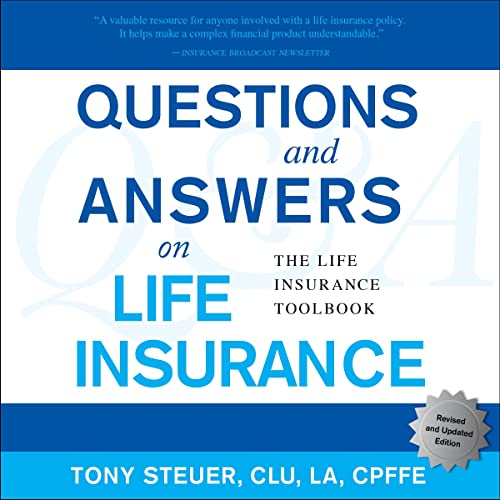
Questions and Answers on Life Insurance: Steuer, Tony
*Amazon Best Seller in Life Insurance* Questions and Answers on Life Insurance is <strong>an extremely useful and one of a kind resource for anyone looking for a simple way to understand life insuranc
Check Price on AmazonHow it differs:
- Term life insurance: Coverage for a set period (10–30 years, typically). No cash value. Usually the most affordable way to get a large death benefit.
- Whole life insurance: Lifelong coverage with guaranteed premiums, a guaranteed death benefit, and guaranteed cash value growth (per the policy). Usually costs more than term because of the lifetime guarantees and the cash value feature.
- Other permanent policies: Universal life, indexed universal life (IUL), and variable universal life (VUL) also provide lifelong coverage with cash value, but their flexibility and risk differ. For example, IUL ties interest crediting to an index with caps/floors; VUL invests in subaccounts with market risk. Whole life emphasizes guarantees and potential dividends from the insurer’s surplus.
If you want simple, built-in guarantees—without monitoring investments—whole life insurance is often the most straightforward permanent option.
How whole life insurance works: premiums, guaranteed cash value, dividends, and illustrated growth
Here’s what’s actually going on under the hood.
- Premiums: The amount you pay the insurer to keep the policy in force. With whole life, premiums are typically level (don’t increase) for life unless you pick a limited-pay design (more on that later).
- Guaranteed cash value: A policy’s savings component that grows at a contractually guaranteed rate. You can access it via withdrawals (taking money out) or policy loans (borrowing against your cash value at an interest rate set by the insurer). Unpaid loans and interest reduce the death benefit.
- Dividends: Many whole life policies from mutual or participating insurers are “participating,” meaning you may receive annual dividends. Dividends are not guaranteed. When paid, you can take them in cash, reduce your premium, accumulate at interest, or buy paid-up additions (PUAs)—small chunks of fully paid additional coverage that also build cash value.
- Illustrated growth: When you request an illustration, the insurer shows two tracks: guaranteed values (if dividends were never paid) and non-guaranteed values (based on current dividend assumptions). Regulators require clearly labeling what’s guaranteed vs. what’s not, and actual results will vary.
Accessing your value safely:
- Withdrawals: Typically tax-free up to your basis (the total premiums you’ve paid). Amounts above basis are generally taxable as ordinary income. Withdrawing can reduce your death benefit.
- Policy loans: Usually tax-advantaged while the policy stays in force and doesn’t become a Modified Endowment Contract (MEC). The insurer charges loan interest (often in the 4–8% range, fixed or variable). If the policy lapses with a loan outstanding, you may owe taxes on the gain. Keep an eye on loans with your agent.
Costs and pricing: what affects your premium, typical ranges, and an example illustration
Whole life insurance premiums are higher than term for the same death benefit because you’re buying lifetime coverage and a cash value component with contractual guarantees.
What affects your premium:
- Age at purchase: Younger applicants typically pay less. Every birthday matters.
- Health and underwriting class: Preferred Plus, Preferred, Standard, or substandard ratings. Conditions like diabetes, sleep apnea, or elevated blood pressure may increase premiums.
- Gender: Women typically pay less than men due to longevity differences.
- Tobacco use: Smoking or nicotine use significantly raises rates.
- Coverage amount and riders: Bigger death benefits and add-ons like long-term care riders increase cost.
- Payment structure: Limited-pay designs (e.g., 10-pay, 20-pay) compress premiums into fewer years—higher per year, done sooner.
- State: Some state-specific rules and taxes affect pricing.
- Insurer strength and design choices: Dividend history, expenses, and how you blend base premium vs. PUAs can impact value.
Typical monthly premium ranges (ballpark, for illustration only):
- $100,000 whole life policy
- Age 30, healthy non-smoking female: roughly $80–$120/month
- Age 35, healthy non-smoking male: roughly $110–$160/month
- Age 45, healthy non-smoking male: roughly $180–$260/month
- Age 55, healthy non-smoking female: roughly $220–$320/month
- $250,000 whole life policy
- Age 35, healthy non-smoking female: roughly $180–$260/month
- Age 35, healthy non-smoking male: roughly $220–$320/month
- Age 45, healthy non-smoking male: roughly $380–$520/month
- Age 55, healthy non-smoking male: roughly $700–$1,100/month
These are broad ranges from recent market observations. Actual premiums vary based on your specific profile, insurer, and policy design. The fastest way to see your real number is to compare quotes from 3–5 carriers.
Example premium illustration (hypothetical):
- Profile: 35-year-old female, non-smoker, $250,000 participating whole life, level-pay for life
- Annual premium: about $2,400 (about $200/month) — for illustration only
- Year 5
- Total premiums paid: $12,000
- Guaranteed cash value: ~$4,500–$6,000
- Non-guaranteed cash value (with current dividend scale): ~$7,500–$9,000
- Year 20
- Total premiums paid: $48,000
- Guaranteed cash value: ~$36,000–$42,000
- Non-guaranteed cash value: ~$55,000–$65,000
- Year 30
- Total premiums paid: $72,000
- Guaranteed cash value: ~$75,000–$85,000
- Non-guaranteed cash value: ~$110,000–$130,000
Important:
- Dividends are not guaranteed and can go up or down. Future performance may be better or worse.
- Exact numbers depend on the insurer, product version, riders, and how you allocate dividends (e.g., paid-up additions).
- Ask your agent to show policy internal rate of return (IRR) on cash value and death benefit at different years, on both guaranteed and current assumptions.
Pros and cons of whole life insurance
Whole life isn’t good or bad—it’s a tool. Here’s where it shines and where it may not.
Benefits:
- Guarantees: Level premiums, guaranteed death benefit, guaranteed cash value schedule.
- Tax advantages: Cash value grows tax-deferred. Death benefit is typically income-tax-free to beneficiaries. You can often access value via withdrawals to basis and policy loans with favorable tax treatment (if the policy stays in force and isn’t a MEC). Always consult a tax professional.
- Dividends and paid-up additions: Potential to enhance long-term cash value and death benefit if dividends are paid.
- Forced savings: The structure nudges disciplined, long-term funding—helpful for people who like set-and-forget plans.
- Legacy planning: Predictable death benefit for estate liquidity, charitable giving, or special-needs planning. Can be owned by a trust (e.g., an irrevocable life insurance trust—ILIT) to manage estate tax exposure—speak with an estate attorney.
- Asset protection: In many states, cash value gets some creditor protection (varies by state). Check your state’s rules.
Trade-offs:
- Cost and opportunity cost: Premiums are higher than term. Money locked into a policy might earn less than competing long-term investments. If you carry high-interest debt or haven’t maxed tax-advantaged accounts (401(k), IRA, HSA), whole life may not be the first dollar to allocate.
- Liquidity in early years: Early cash values are modest due to commissions and expenses. Surrender charges may apply if you cancel within the first 10–15 years.
- Loans require management: Loan interest accrues. If unmanaged, loans can erode values and even trigger a taxable lapse.
- Dividends not guaranteed: Non-guaranteed projections can look rosy; reality may differ, especially in low interest-rate environments.
- Complexity: Riders, PUAs, MEC testing—these need careful design to avoid surprises.
Who tends to benefit:
- High earners who already max out 401(k)/IRA/HSA and want additional tax-advantaged, conservative accumulation with guarantees.
- People who value permanent coverage for estate or business reasons (key person, buy-sell) and can comfortably afford premiums.
- Parents/grandparents funding legacy goals or long-term gifts with predictable outcomes.
Who may be better off with alternatives:
- Families needing the biggest death benefit per dollar today—term life usually wins. See Term vs. Whole Life: Which Is Right for You?
- Investors comfortable with market risk and seeking higher expected returns after maxing other priorities.
- Anyone whose budget would be strained by lifelong premiums.
Common riders and policy variations
Riders are add-ons that change how your policy works. Always ask how a rider affects guarantees, dividends, and MEC testing.
- Paid-Up Additions (PUA) rider: Lets you buy additional, fully paid coverage using extra premium or dividends. PUAs accelerate cash value growth but can push the policy toward MEC status if overfunded. Your agent should run MEC tests.
- Accelerated Death Benefit (ADB) rider: Allows you to access part of the death benefit if you’re diagnosed with a qualifying terminal or chronic illness, subject to terms. The amount advanced reduces the final death benefit.
- Long-Term Care (LTC) or Chronic Illness riders: Help pay for qualifying long-term care needs by accelerating the death benefit or through a linked-benefit structure. Definitions and triggers vary widely. Review elimination periods, monthly caps, and impact on cash value.
- Disability Waiver of Premium: If you meet the policy’s disability definition, the insurer waives premiums while keeping coverage and cash value growth in place.
- Term rider: Adds cost-effective term coverage on top of your base whole life. Useful for blending high early death benefit with long-term guarantees.
- Limited-pay policies (e.g., 10-pay, 20-pay, Paid-Up at 65): You pay higher premiums for a fixed period and then the policy is fully paid. Popular with those who want to fund the policy during working years.
- Reduced Paid-Up (RPU) nonforfeiture option: If you stop paying, you can convert to a smaller, fully paid death benefit using your existing cash value.
- Extended Term insurance option: Another nonforfeiture choice that keeps the original death benefit in force for a limited time using your policy’s value.
State rules and consumer protections
Life insurance is regulated at the state level, with coordination through the National Association of Insurance Commissioners (NAIC). Key protections you’ll typically see:
SentrySafe Waterproof and Fireproof Alloy Steel Digital Safe Box for Home with Code Button Keypad, 1.23 Cubic Feet, 17.8 x 16.3 x 19.3 Inches (exterior), SFW123GDC - Gun Safes And Cabinets - Amazon.com
View on Amazon- Free-look period: A window (often 10–30 days, depending on your state) to review the policy and cancel for a refund.
- Grace period: Usually 31 days to pay a missed premium before the policy lapses.
- Contestability period: Typically the first 2 years. Insurers can review material misstatements on the application and may deny a claim if fraud is found.
- Suicide clause: Often 2 years—limits the death benefit if death is by suicide during this period, with premiums typically refunded.
- Nonforfeiture laws: Ensure you receive certain minimum benefits (like reduced paid-up or extended term) if you stop paying.
- Illustration standards: The NAIC Life Insurance Illustrations Model Regulation requires clear separation of guaranteed vs. non-guaranteed values.
- State guaranty associations: Provide limited protection if an insurer fails, subject to state-specific limits and conditions (commonly around $300,000 for death benefits and $100,000 for cash value, but it varies). These associations cannot be used as a marketing inducement. Do not buy based on guaranty coverage.
Where to check your state’s rules:
- Visit your state Department of Insurance (DOI) website for complaint data, free-look and grace period rules, and consumer guides.
- Use the NAIC’s consumer resources to look up company complaint ratios and regulatory actions.
- Review an insurer’s financial strength ratings from independent agencies (A.M. Best, S&P, Moody’s, Fitch). See our guide: How to Check an Insurer’s Financial Strength
How to compare whole life quotes and choose a policy
Whole life is about long-term fit. Use this step-by-step checklist to compare apples to apples.

Smead Life Documents Organizer Kit (92010), Black
View on Amazon- Clarify your goal
- Is your top priority lifelong protection, conservative accumulation, supplemental retirement income, business planning, or legacy?
- What budget can you comfortably sustain every year, even if your income fluctuates?
- Select the death benefit and funding schedule
- Choose a coverage amount that actually solves the need. For family protection, see How Much Life Insurance Do I Need?
- Decide between level-pay for life vs. limited-pay (e.g., 10-pay/20-pay/Paid-Up at 65). Limited-pay costs more per year but ends sooner.
- Get multiple quotes and illustrations
- Request at least 3–5 carriers. Ask for the exact same design (base premium vs. PUAs, riders, pay period) to compare fairly.
- Ask for both guaranteed and current (non-guaranteed) ledgers, projected IRR at 10, 20, 30+ years, and the year the guaranteed cash value equals total premiums paid.
- Review participating status and dividend history
- Is the policy participating? If so, what’s the company’s long-term dividend track record? Dividends aren’t guaranteed, but history and financial strength matter.
- Scrutinize costs and flexibility
- Surrender charges: How long and how steep?
- Loan provisions: Fixed vs. variable rate, direct vs. non-direct recognition (how loans affect dividends), wash loan availability.
- Rider costs: What’s included vs. extra? How do riders affect dividends and MEC testing?
- Evaluate the insurer
- Financial strength ratings (aim for strong ratings if you value guarantees).
- Service reputation and complaint ratios.
- Policyowner-friendly features (e.g., flexible PUA payments, reduced paid-up options, robust illustrations).
- Understand taxes and MEC testing
- Ask your agent to run MEC tests if you plan to fund heavily with PUAs.
- Verify how withdrawals/loans would be treated in retirement and how to avoid a taxable lapse.
- Sleep test
- If you lost your job for 6 months, could you keep this policy in force? If not, consider a smaller whole life policy plus term coverage to reach your total death benefit goal.
Questions to ask agents before you buy:
- Can you show me guaranteed vs. current projections, and the break-even year on cash value?
- What happens to dividends if I take a loan—does your carrier use direct or non-direct recognition?
- How do riders change my guarantees and dividend eligibility?
- What are my nonforfeiture options if I need to stop paying?
- If I overfund with PUAs, how close am I to MEC status each year?
- What’s the loan interest rate today, and how often can it change?
CTA: Ready to see real numbers? The fastest way to know what you’d actually pay is to compare quotes from 3–5 top-rated carriers. Start here: Compare Whole Life Quotes
Real‑world scenarios
- Family protection with guarantees: A 37-year-old non-smoking couple wants $1 million of coverage each. They take $750,000 20-year term for low-cost income protection and add $250,000 whole life for lifelong needs (final expenses, legacy). This blend keeps premiums manageable and locks in permanent coverage.
- High earner, maxing retirement accounts: A 42-year-old business owner maxes 401(k), backdoor Roth, and HSA. They add a limited-pay participating whole life with PUAs to create a conservative, tax-advantaged cash value bucket and guaranteed death benefit for heirs.
- Special-needs planning: Grandparents fund a modest whole life policy owned by a special-needs trust to provide predictable, tax-advantaged support for a grandchild. An experienced attorney and licensed agent coordinate design.
FAQs about whole life insurance
- Are dividends guaranteed? No. Dividends are declared annually and can change. Your policy’s guaranteed values do not depend on dividends.
- How long do I pay premiums? For life in a traditional design, or for a set period (e.g., 10-pay, 20-pay, Paid-Up at 65) in a limited-pay policy.
- Can I access cash value while alive? Yes, via withdrawals (typically tax-free up to your basis) and policy loans (tax-advantaged if the policy stays in force and is not a MEC). Loans and withdrawals reduce the death benefit.
- What is a MEC? A Modified Endowment Contract is a life policy that fails the 7-pay test under IRS rules. MECs keep tax-deferred growth and an income-tax-free death benefit, but loans/withdrawals generally become taxable like distributions from an annuity and may face penalties before age 59½.
- What happens if I stop paying? You’ll usually have nonforfeiture options such as reduced paid-up or extended term. Letting the policy lapse can cause taxes if there’s outstanding loan balance.
- Is whole life good for kids? It can be, if your goal is guaranteed insurability and long-term accumulation with small, steady funding. Just weigh it against other priorities like 529 plans for college.
- How safe is my cash value? It depends on the insurer’s financial strength and state protections. Policies aren’t FDIC-insured. Review ratings and your state’s guaranty association limits (do not buy based on guaranty coverage alone).
- Can I convert term to whole life? Many term policies include a conversion privilege for a set period—no new medical exam. Check your term policy’s rules.
- What return should I expect? Returns vary widely by design and dividends. Historically, conservative long-term outcomes may land between high-grade bond-like returns on cash value. Focus on guarantees first, then potential upside.
- Can I 1035 exchange an old policy? Often yes. A 1035 exchange lets you move cash value from one policy to another without immediate taxation. Get a cost/benefit analysis first.
Next steps
- If you’re early in research: Read Term vs. Whole Life: Which Is Right for You? and Life Insurance Riders Explained
- If you know your budget and goal: Request side-by-side illustrations from multiple A-rated carriers, with and without PUAs, and with your preferred riders.
- If you want personalized guidance: Talk with a licensed agent who can run MEC tests, show IRR on cash value and death benefit, and design a policy you can comfortably fund for the long haul.
Smart move: Compare personalized quotes from 3–5 carriers to see your real premium and cash value trajectory. Start your free, no-obligation comparison now: Compare Whole Life Quotes
Recommended Resources
Questions and Answers on Life Insurance: Steuer, Tony
*Amazon Best Seller in Life Insurance* Questions and Answers on Life Insurance is <strong>an extremely useful and one of a kind resource for anyone looking for a simple way to understand life insuranc
Smead Life Documents Organizer Kit (92010), Black
Organizing key life documents helps ... kit <strong>contains a poly file box, 6 colored hanging folders, 24 SuperTab file folders, 9 Viewable quick-fold tabs, 3 label sheets with preprinted labels and
SentrySafe Waterproof and Fireproof Alloy Steel Digital Safe Box for Home with Code Button Keypad, 1.23 Cubic Feet, 17.8 x 16.3 x 19.3 Inches (exterior), SFW123GDC - Gun Safes And Cabinets - Amazon.com
<strong>SentrySafe Medium Gray Fireproof Safe and Waterproof Safe Box with Dial Combination, Home Security for Money, Documents, or other Valuables</strong>, 1.23 Cubic Feet, SFW123DSB
Related Articles
- Best Whole Life Insurance Plans: Top Picks and How to Choose
- Term vs. Whole Life Insurance: Which Is Right for You?
- Term Life Insurance: Complete Guide to Coverage, Cost & Getting Quotes
- How to Save on Life Insurance: Practical Ways to Lower Your Premiums
- How Does Life Insurance Work? A Clear, Step-by-Step Guide
- How to Lower Life Insurance Premiums: A Practical Guide to Discounts & How to Qualify
- How to Find Cheap Life Insurance: Smart Ways to Lower Your Premiums Without Sacrificing Coverage
- Life Insurance for Young Adults: Why to Buy Now, What to Choose, and How to Save