
What Happens If You Drive Without Insurance? Penalties & Next Steps
You just got pulled over (or worse, had a fender bender) and you don’t have active auto insurance. What happens if you drive without insurance? Here’s the plain-English version of the legal, financial, and practical fallout—plus the fastest ways to fix it and lower your costs going forward.
Note: Laws and penalties vary by state and even by county. Use this as a guide and verify details with your state DMV or a licensed agent.
What happens if you drive without insurance?
In most states, driving without auto insurance (or another approved form of “financial responsibility,” like a bond) can lead to fines, license and registration suspensions, and vehicle impound. If you cause a crash, you’re typically on the hook personally for damages, and repeat or aggravated cases can trigger criminal charges. You may also need an SR-22 (a certificate your insurer files to prove you carry the required coverage) for several years, which means higher premiums.
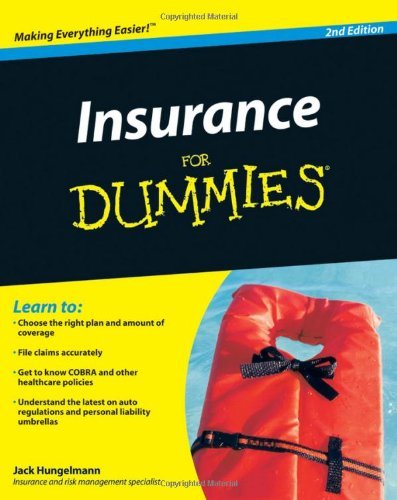
Insurance For Dummies?: Hungelmann, Jack
Whether you’re a homeowner or ... need on: ... Author Jack Hungelmann <strong>uses his twenty-five years of experience in the insurance industry to make buying insurance as simple as possible</strong>
Check Price on AmazonState requirements: who must carry auto insurance
Nearly every state requires drivers to carry liability insurance—coverage that pays for injuries and property damage you cause to others. A few states allow alternatives, like posting a cash bond, but the effect is the same: you must prove you can pay if you hurt someone or damage their property.
Common minimum liability limits (written as per-person bodily injury/per-accident bodily injury/property damage):
- California: 30/60/15 as of 2025 and beyond. That’s $30,000 for injuries per person, $60,000 per accident, and $15,000 for property damage.
- Texas: 30/60/25.
- New York: 25/50/10, plus mandatory Personal Injury Protection (PIP) of at least $50,000 per person and uninsured motorist bodily injury of at least 25/50.
Key terms, translated:
- Liability coverage: Pays others if you cause injuries or property damage. It does not repair your car.
- PIP (personal injury protection): In “no-fault” states like New York, PIP helps pay your medical bills and lost wages regardless of who caused the crash.
- UM/UIM (uninsured/underinsured motorist): Helps if you’re hit by someone with no coverage or not enough coverage.
If your main goal is to meet your state’s minimums affordably, most drivers look at liability-only policies. See our explainer on what liability-only covers and when it makes sense: Liability-Only Car Insurance: Costs, Pros & How to Buy.
Immediate consequences if you’re stopped without proof of insurance
If a police officer stops you and you don’t have active insurance—or you simply forgot your card—here’s what typically happens:
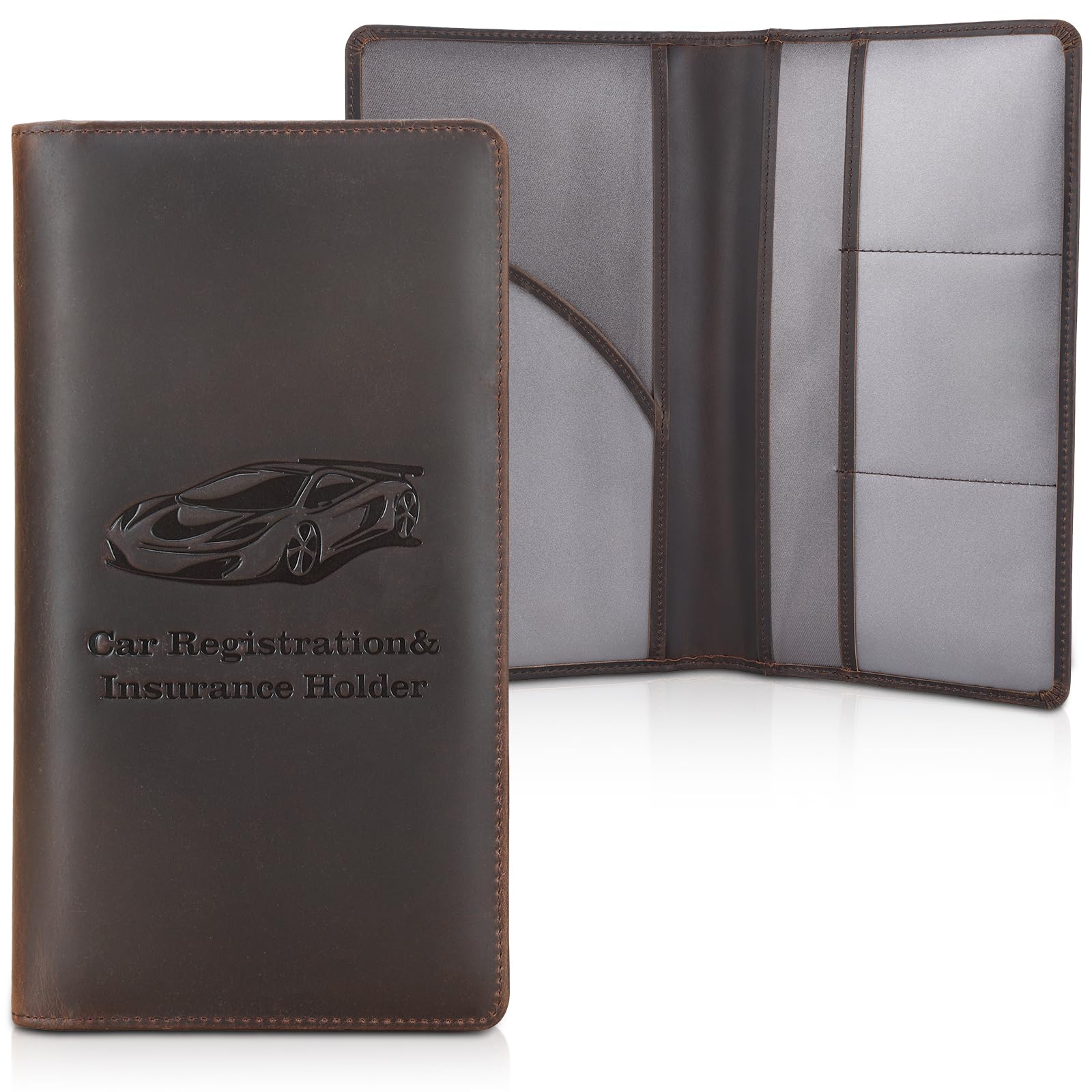
Car Registration and Insurance Card Holder - Leather Vehicle Glove Box Automobile Documents Paperwork Wallet Case Organizer for ID, Driver's License, Key Contact Information Cards - Men&Women : Automotive
View on Amazon- Ticket and fines: First-offense fines often range from a few hundred dollars up to $1,000+, depending on your state and prior history. Court fees and assessments usually push the total higher.
- License and registration suspension: Many states suspend your driver’s license and/or your vehicle registration until you show proof of coverage and pay reinstatement fees.
- Vehicle impound: Some jurisdictions may tow and impound your vehicle on the spot if you have no proof of insurance, especially if you’re also unlicensed or your registration is suspended.
- Proof of insurance after the fact: If you actually had an active policy but no card at the stop, bring (or upload) proof by the court date. In many states, the judge or clerk will reduce or dismiss the ticket if you were insured at the time.
Examples (not exhaustive):
- California: Fines can be several hundred dollars after fees; repeat offenses and crashes can lead to impound and longer suspensions.
- Texas: Fines generally increase for repeat offenses, and you may be required to carry an SR-22 for a period.
- New York: Driving while your registration is suspended due to an insurance lapse can trigger misdemeanor charges and further suspension.
After a crash with no insurance: your financial exposure
If you cause a crash without insurance, you’re personally responsible for paying the other driver’s repairs, their medical bills, lost wages, and other damages. The numbers add up fast:
- Property damage: Even a moderate two-car crash can easily top $10,000–$20,000 in repairs.
- Injuries: Ambulance rides, ER care, imaging, and follow-ups can push medical bills well into five figures—sometimes much more.
- Legal liability: You can be sued. If a court enters a judgment against you, your wages could be garnished and liens could be placed on your assets, depending on state law.
Other serious consequences:
- License suspension for unpaid judgments: Many states suspend your license if you don’t satisfy a court judgment from a crash.
- Subrogation letters: The other party’s insurer may pay their customer, then come after you (called “subrogation”) to recover what they paid.
- “No pay, no play” rules: Several states limit what an uninsured driver can recover after a crash—even when the uninsured driver is not at fault. For example, California’s Proposition 213 and Louisiana law often bar uninsured drivers from collecting non-economic damages (like pain and suffering), with limited exceptions.
No-fault twist (e.g., New York): PIP typically covers initial medical bills regardless of fault. But being uninsured can still expose you to other penalties and liability, especially for property damage or if the injured party meets the “serious injury” threshold and sues.
Criminal penalties and extreme scenarios
Driving without insurance by itself is often treated as a traffic infraction or misdemeanor, usually punishable by fines rather than jail. That said, jail enters the picture in certain combinations:
- Repeat offenses paired with other violations (like driving while suspended for an insurance lapse) can escalate penalties and produce misdemeanor charges in some states.
- DUI/DWI plus no insurance is a red flag for prosecutors and judges; you may face separate criminal penalties for the DUI and stiffer administrative fallout for the insurance lapse.
- Hit-and-run, reckless driving, or causing serious injury can trigger criminal charges that carry jail time, independent of the insurance issue.
Bottom line: while “no insurance” alone may not land you in jail in many states, stacking it with a suspended license, DUI, or injury crash can.
Administrative fallout: SR-22/FR-44, higher premiums, and program eligibility
If your state requires proof of financial responsibility after a violation, you’ll likely be told to file an SR-22.
- SR-22: A certificate your insurer files with the state showing you carry at least the required liability limits. It’s not a type of insurance; it’s a filing. Most states require it for about 2–3 years after certain violations.
- FR-44: Used in a few states (notably Florida and Virginia) after serious offenses like DUI, it requires higher-than-minimum liability limits.
- Premium impact: Expect higher rates—often 20% to 60% more—while you’re in the SR-22/FR-44 period, especially if a crash or DUI is also on your record. Actual pricing varies by company, driving history, age, vehicle, and your state.
- Lost discounts: You’ll typically lose “good driver” or accident-free discounts for a time. Some low-cost state programs and charitable auto programs require a valid license and may be unavailable if you’re suspended.
What to do right now if you were stopped or had a crash
At the traffic stop:
- Be respectful and provide your license and registration.
- Don’t make false statements. If you forgot your proof but are insured, say so and provide electronic or paper proof as soon as possible.
- Ask the officer what the next steps are to show proof or appear in court. Note any deadlines.
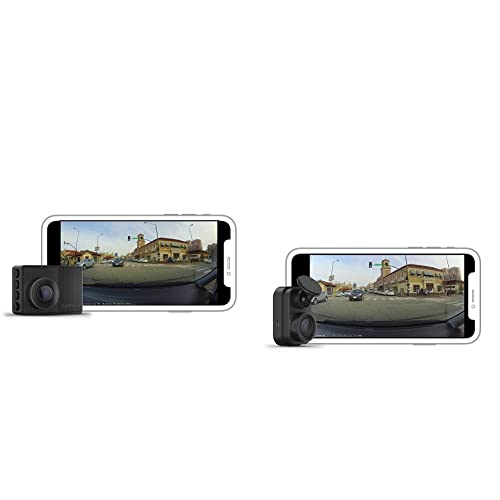
Garmin Dash Cam Mini 2, Tiny Size, 1080p and 140-degree FOV, Monitor Your Vehicle While Away w/ New Connected Features, Voice Control (Renewed) : Electronics
View on AmazonAfter a crash when you’re uninsured:
- Prioritize safety. Call 911 if anyone is hurt. Move to a safe location if possible.
- Exchange information: names, contact info, driver’s license numbers, license plates, and VINs. Ask for the other driver’s insurer and policy number.
- Document everything: take photos of vehicle positions, damage, road conditions, traffic signs, and visible injuries. Collect witness names and contact details.
- Avoid admitting fault: Stick to facts when speaking with the other driver or police. Your words can be used against you later.
- Get the report: Ask how to obtain the police report. It’s often critical for claims and negotiations.
- Contact your state DMV if required: Some states require you to report crashes above a certain damage threshold within a set number of days.
- Consider legal advice: If injuries or major damage are involved, a brief consult with a local attorney can help you understand your exposure and options.
How to get coverage fast and keep costs down
Good news: you can typically buy a policy online and have proof of insurance the same day. Here’s how to do it quickly and affordably.
Short-term vs. standard policies
- True “short-term” car insurance (like a 30-day policy) is rare in the U.S. Most insurers sell 6-month policies you can cancel later. Confirm any fees before you buy.
Start with the minimum you need
- If budget is tight, consider state-minimum liability limits to get legal. Understand this offers limited protection. Our guide walks through when liability-only can make sense: Liability-Only Car Insurance: Costs, Pros & How to Buy.
Consider payment flexibility
- If upfront cash is the issue, some companies allow low or no down payment options (your monthly bill may be higher). Learn how these work and the trade-offs: Cheap Car Insurance No Deposit: Get Coverage Without an Upfront Payment.
Look beyond the big names
- Nonstandard and regional insurers often serve drivers with lapses or SR-22 needs. Rates vary widely, so get multiple quotes.
Ask for every discount you can realistically claim
- Even with a lapse, you may qualify for savings: telematics (driver-tracking apps), paying in full, autopay, paperless billing, multi-car, and more. See which discounts are common and how to qualify: Insurance Discounts for Safe Drivers: Types, Eligibility & How to Maximize Your Savings.
Assigned risk plans if you can’t get a quote
- Every state has a “residual market” or assigned risk plan for drivers who are declined by several insurers. You won’t get bargain rates, but you can get legal coverage. Your state insurance department’s website lists how to apply.
How to compare policies quickly (what to look for)
- Required filings: If you need an SR-22/FR-44, confirm the insurer will file it and ask about the filing fee.
- Liability limits: Minimums get you legal, but consider whether $25,000 or $30,000 would cover a typical injury crash in your area. Many drivers step up to 50/100/50 or 100/300/50 when possible.
- Payment terms: Down payment amount, monthly fees, late fees, and cancellation penalties matter if cash flow is tight.
- Claims support: 24/7 claims reporting and a mobile app make life easier if you have another incident.
- Telematics: Safe-driver programs can shave 5%–30% off over time, depending on your driving and the insurer.
- Total 6-month cost: Don’t fixate on the first month. Add up all payments and fees for a true apples-to-apples comparison.
Real-world price example (illustrative only)
Say you’re a 25-year-old driver in Texas with a recent lapse and no accidents in the last three years, shopping liability-only for a 2015 Honda Civic. Quotes might cluster around $85–$150 per month with an SR-22 filing, depending on the company, where you live, and your exact record. Some may ask for $0–$100 down with higher monthly payments. These are ballpark figures; your actual price can be higher or lower.
Prevention and next steps: reinstating, appeals, payment plans, and when to call for help
If you’re dealing with tickets or suspensions now, here’s how to move forward.
- Reinstating your license/registration: Typically you must (1) buy a policy, (2) have your insurer file SR-22 if required, (3) pay reinstatement and court fees, and (4) maintain continuous coverage for the required period (often 2–3 years). Any lapse can restart the clock.
- Court options: Ask about payment plans, community service, or diversion programs if available. Showing proof of current insurance often helps reduce fines.
- DMV timelines: Watch for deadlines to avoid extra suspensions. Mark your calendar for SR-22 end dates so you know when you can shop again without the filing.
- Budgeting: Set autopay reminders and keep a small buffer for monthly premiums. A missed payment can cancel your policy and put you back at square one.
- When to contact an attorney: If injuries are involved, you’re sued, or you face criminal charges (e.g., DUI, driving while suspended), speak with a local lawyer. A short consultation can prevent costly missteps.
- When to contact your insurer: If you actually had coverage at the time of the stop but no proof, call your insurer and get a letter or declarations page dated for the stop. If you’ve since bought a policy, ask for electronic ID cards you can show on your phone.
FAQ: quick hits about driving without insurance
- Can the other driver’s uninsured motorist coverage pay for my injuries? Yes, if they carry UM and you’re hit by an at-fault uninsured driver. But that doesn’t erase your own penalties for driving uninsured.
- Will I definitely need an SR-22? Not always. It depends on your state and the specific violation. Your court paperwork or DMV notice will say if it’s required.
- How long will my insurance be more expensive? In many cases, 3 years is the key window for surcharges, but serious violations can affect rates longer. Shopping at renewal typically helps.
- Is it ever legal to drive without insurance? A handful of states allow alternatives (like a bond) but functionally, you still must prove financial responsibility. Driving with neither is illegal almost everywhere.
A quick word to the wise
The real cost of driving without insurance isn’t just the ticket—it’s the risk of a single crash wiping out your savings and wages. If you’re in this situation now, take the fastest responsible next step: get covered, document everything, and set yourself up to avoid lapses.
If you could use help tailoring coverage to your state and budget, consider speaking with a licensed agent. They can walk you through SR-22 filings, discount eligibility, and payment options based on your exact record and location.
Next step: price a basic policy today, then revisit limits in a few months once fines are paid and life is calmer. Staying insured continuously is the single best way to avoid repeating the “what happens if you drive without insurance” cycle.
Recommended Resources
Insurance For Dummies?: Hungelmann, Jack
Whether you’re a homeowner or ... need on: ... Author Jack Hungelmann <strong>uses his twenty-five years of experience in the insurance industry to make buying insurance as simple as possible</strong>
Garmin Dash Cam Mini 2, Tiny Size, 1080p and 140-degree FOV, Monitor Your Vehicle While Away w/ New Connected Features, Voice Control (Renewed) : Electronics
Amazon.com: Garmin Dash Cam Mini 2, <strong>Tiny Size, 1080p and 140-degree FOV, Monitor Your Vehicle While Away w/ New Connected Features, Voice Control</strong> (Renewed) : Electronics
Car Registration and Insurance Card Holder - Leather Vehicle Glove Box Automobile Documents Paperwork Wallet Case Organizer for ID, Driver's License, Key Contact Information Cards - Men&Women : Automotive
In short, it can fully meet your needs. 【Premium PU Leather】 <strong>The Auto Document Wallet</strong> is made from high quality PU leather, passed Euro REACH Quality Standard, US EN71 and US CA Prop
Related Articles
- How to File a Car Insurance Claim: When to File, What to Document, and How to Navigate the Claims Process
- Car Insurance With No Driving History: Options, Costs, and How to Qualify
- How to File a Car Insurance Claim: What to Do, What to Submit, and How to Get a Fair Payout
- How to Get Car Insurance: What You Need to Know to Choose, Buy, and Save
- Auto Insurance for New Drivers: Coverage, Costs, and Smart Ways to Save
- Gap Insurance: What It Covers, Costs, and How to Get a Quote
- Auto Insurance Requirements by State — State‑by‑State Coverage Rules & What You Really Need
- Auto Insurance for High‑Risk Drivers: Finding Coverage, Cutting Costs, and Rebuilding Your Record