
Liability-Only Car Insurance: Costs, Pros & How to Buy
You’re trying to lower your car insurance bill and wondering if liability only car insurance is enough. Here’s the plain-English version: liability-only car insurance pays for other people’s injuries and property damage when you’re at fault, but it will not pay to repair or replace your own car. For many drivers with older, paid-off vehicles, it can be a smart, legal way to stay insured and cut costs—if you pick the right limits and understand the trade-offs.
What is liability-only car insurance?
Liability-only car insurance is the foundational part of your auto policy that covers two big buckets when you cause an accident:
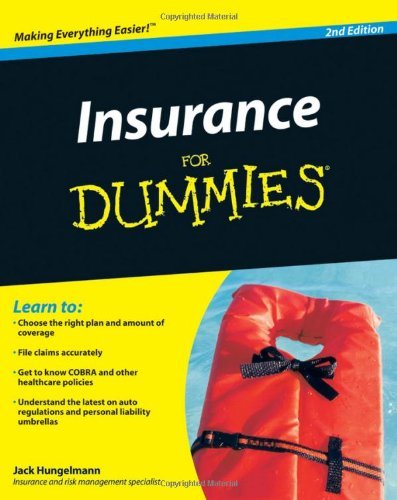
Insurance For Dummies?: Hungelmann, Jack
Whether you’re a homeowner or ... need on: ... Author Jack Hungelmann <strong>uses his twenty-five years of experience in the insurance industry to make buying insurance as simple as possible</strong>
Check Price on Amazon- Bodily injury liability (BI): pays for other people’s medical bills, lost wages, and legal costs if you injure them. “Other people” can include the driver and passengers in the other car, pedestrians, cyclists, and in many states, passengers in your car. It does not cover your own injuries as the at-fault driver.
- Property damage liability (PD): pays to repair or replace other people’s property you damage—most often another vehicle, but also things like a fence, mailbox, or storefront.
You’ll see liability limits expressed like 25/50/25. Here’s what that means in practice:
- 25/50/25 = $25,000 bodily injury per person / $50,000 bodily injury per accident / $25,000 property damage per accident.
There’s also something called a combined single limit (CSL), which gives you one lump-sum limit (say $300,000) to split across both BI and PD as needed in a single accident.
Who it protects: liability-only coverage primarily protects other people from the harm you cause. Indirectly, it also protects your assets by paying claims up to your limits so you’re less likely to be sued for the full amount personally.
State minimums and legal requirements
Every state sets its own required minimum liability limits, and they vary widely. Many states require something like 25/50/25, while others require higher limits or add coverages such as uninsured/underinsured motorist (UM/UIM) or personal injury protection (PIP). A few states allow alternatives to a traditional insurance policy (for example, posting a bond or proving financial responsibility), though most drivers simply buy a policy.
- No-fault states: Some states require PIP (personal injury protection) that pays for your medical costs regardless of fault. Even in these states, liability insurance is typically still required to cover others when you’re at fault.
- Special cases: A small number of states have unique financial responsibility rules and options. The bottom line: rules change, and they’re state-specific.
Where to verify: check your state’s Department of Insurance (DOI) or Department of Motor Vehicles (DMV) website for current minimums and required coverages. Your insurer or agent can also confirm what’s required where you live. If your policy shows split limits you don’t recognize, look for a “Declarations Page” and compare those numbers to your state’s minimums.
Important: minimums are just that—the legal floor. They’re often too low to protect your finances in a serious crash. Medical costs and newer vehicle values can exceed minimum property damage limits quickly.
Who should consider liability-only coverage
Here is what actually matters when deciding if liability-only car insurance fits you:
- Your car’s value: If your car is older and worth, say, $3,000–$6,000, paying for collision (repairs from a crash you cause) and comprehensive (non-crash damage like theft, hail, fire) may no longer make financial sense. A quick gut check: if your annual premium for comp and collision plus their deductibles (the amount you pay out of pocket before insurance kicks in) approaches a large share of the car’s value, liability-only could be reasonable.
- Loan or lease: If you finance or lease, your lender almost always requires collision and comprehensive. Liability-only is typically not allowed until the loan is paid off.
- Your savings and assets: Liability-only protects others, not your car. If you can afford to repair or replace your vehicle yourself, liability-only can be fine. If you have significant assets or a higher income, you should still choose higher liability limits (for example, 100/300/100 or a combined single limit like $300,000) to reduce the risk of paying out of pocket if a claim exceeds limits.
- Driving habits and risk tolerance: Short commutes, low mileage, and careful driving reduce your risk—but don’t eliminate it. If you’d lose sleep over paying to fix your own car after a crash or a hailstorm, consider keeping comprehensive and/or collision.
- Household drivers: Teen or inexperienced drivers raise risk. Even with an older car, you might keep comprehensive and collision until their loss history stabilizes.
Real-world scenarios:
- You drive a paid-off 2012 Toyota Corolla worth $4,500. You have an emergency fund and can handle a worst-case car replacement. Liability-only with higher limits may fit.
- You commute in a 2019 Honda CR-V worth $18,000. You’re still paying off a loan. Liability-only isn’t an option; your lender will require comprehensive and collision.
- You own a 2008 pickup you use occasionally for home projects. It’s worth ~$3,000, and you have another daily driver. Liability-only is a common choice here, with strong liability limits to protect your assets.
What liability-only covers — and what it doesn’t
Liability-only typically covers:

Vantrue N4 Pro S 4K 3 Channel Dash Cam w/Triple STARVIS 2, 4K+1080P+2.5K Front Inside Rear Dash Camera, 4+2.5K Dual Channel, HDR IR Night Vision, Voice Control, Parking Mode, GPS, Wi-Fi, Support 1TB : Electronics
[ 24/7 Parking Mode ] The N4 Pro S 3 channel dash cam <strong>provides round-the-clock security for your parked vehicle</strong>. Its buffered motion detection captures footage from 10ss before an eve
Check Price on Amazon- Injuries to other people when you’re at fault (BI liability)
- Damage to others’ property when you’re at fault (PD liability)
- Legal defense costs if you’re sued, up to your policy limits
Liability-only does not cover:
- Repairs to your own car after a crash you cause (that’s collision)
- Non-crash losses to your car like theft, vandalism, fire, flood, or hail (that’s comprehensive)
- Your own injuries as the at-fault driver (look to your health insurance, medical payments coverage, or PIP depending on your state)
- Someone else hitting you if they have no insurance (that’s uninsured motorist coverage, if available and purchased)
- Rental car after an accident, roadside assistance, or custom equipment (these are optional add-ons)
Gap scenarios to watch:
- Total loss on liability-only: If you total your car and you’re at fault, there’s no payout to replace it. You’d buy your next car out of pocket.
- Hit-and-run or uninsured driver: With liability-only, damage to your car typically isn’t paid unless you bought UM property damage or collision (availability varies by state).
- Rideshare and delivery: Personal auto policies often exclude commercial use. If you’re driving for a rideshare or delivery app, ask about a rideshare endorsement.
Costs and how insurers calculate rates
Liability-only car insurance is usually the cheapest legal way to drive insured because it excludes collision and comprehensive. But “how cheap” depends on you and where you live.
What drives your price:
- Driving record: Tickets, at-fault accidents, and DUIs increase rates—sometimes for three to five years.
- Age and experience: Young and new drivers pay more. Mature drivers with clean records typically pay less.
- Location: Rates vary by state and even ZIP code based on claim frequency, medical costs, litigation trends, and theft rates.
- Vehicle: Make, model, and repair costs matter even for liability-only, since severity of damage you could cause can vary.
- Annual mileage and usage: More miles typically equals more risk. Some insurers offer low-mileage discounts.
- Credit-based insurance score: In many states, insurers use credit-based insurance scores as a risk indicator. A few states prohibit or limit this practice.
- Prior insurance and gaps: Lapses in coverage can increase your premium.
Sample cost ranges (illustrative only; your price will vary):
- Clean-record driver, age 30–40, moderate-cost state (e.g., Ohio, Wisconsin): roughly $35–$80 per month for state-minimum liability; $50–$110 per month for higher limits like 100/300/100.
- Urban area in a higher-cost state (e.g., California, New York): roughly $60–$150 per month for liability-only depending on limits and record.
- High-risk profile or very high-cost markets (e.g., Florida): $120–$300+ per month for liability-only is not unusual, especially after violations.
Note: These are ballpark ranges from recent market data and consumer reports. Actual rates vary by individual circumstances, insurer, and state filings.
Alternatives and when to add more coverage
Add-on coverages to consider if liability-only feels too bare-bones:
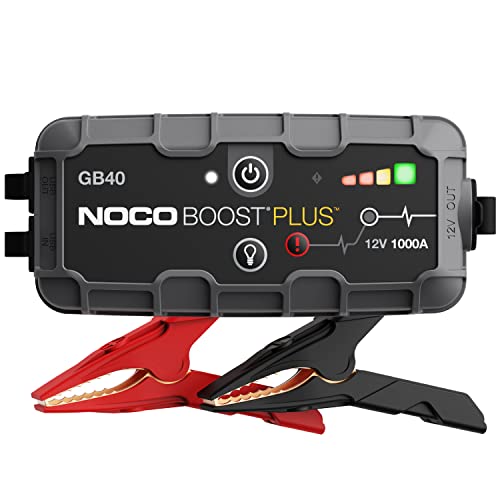
NOCO Boost GB40: 1000A UltraSafe Jump Starter – 12V ...
View on Amazon- Collision: Pays to repair or replace your car after a crash you cause or a single-vehicle event (like hitting a pole). You choose a deductible. Consider keeping this if your car is still worth more than a few thousand dollars and you can’t easily replace it.
- Comprehensive: Covers non-crash losses—theft, vandalism, fire, hail, flood, falling objects, and animal strikes. Often relatively affordable compared to collision. Common choice to keep on older cars in storm- or theft-prone areas.
- Uninsured/underinsured motorist (UM/UIM): Pays for your injuries (UMBI) and sometimes your car’s damage (UMPD, availability varies by state) if the at-fault driver has no insurance or not enough. Highly recommended in most states given the number of uninsured drivers.
- Medical payments (MedPay) or Personal Injury Protection (PIP): Helps with your and your passengers’ medical bills regardless of fault. PIP is required in some states and can include lost wages.
- Rental reimbursement and roadside assistance: Convenience coverages that can be worth a few extra dollars per month if you rely on your car daily.
- Umbrella policy: Separate policy that gives you additional liability protection beyond your auto limits, typically in $1M increments. Consider if you have significant assets or future income to protect.
How to compare quotes and buy liability-only car insurance
Here’s a simple, effective way to shop so you get the protection you need without overpaying.
Step-by-step checklist:
- Gather details: VIN(s), driver’s license numbers, garaging address, annual mileage, current coverages and limits, and any tickets or claims in the last five years.
- Decide on liability limits before you shop: A common starting point is 100/300/100 or a $300,000 combined single limit—often a modest increase in premium for much more protection than state minimums. If budget is tight, at least consider raising property damage above low state floors.
- Consider must-have add-ons: If you won’t sleep well without some protection for your car, add comprehensive (and collision if the car is still valuable to you). If you skip them, strongly consider UM/UIM and MedPay/PIP if available.
- Get 3–5 real quotes: Compare the same limits and options across multiple insurers on the same day. Keep it apples-to-apples.
- Ask about discounts: Bundling home/renters, telematics/usage-based programs, good driver, good student, multi-car, pay-in-full, autopay, paperless, defensive driving course.
- Check the company’s reputation: Look at financial strength ratings (e.g., AM Best) and your state DOI’s complaint index. A rock-bottom quote isn’t a bargain if claims service is weak.
- Verify fees and policy terms: Some companies charge installment or cancellation fees. Ask how easy it is to adjust limits mid-term.
- Pick an effective date and avoid a lapse: Even a short break in coverage can raise your future rates.
- Review your policy at each renewal or when life changes: New drivers, moves, or car purchases are good times to reassess.
Questions to ask an agent:
- If I raise liability from state minimums to 100/300/100, how much more is it per month?
- What are my options for UM/UIM and MedPay/PIP in my state, and what do they cost?
- Am I eligible for a telematics discount, and how is my driving scored?
- Are there any policy fees I should know about?
- Do you offer rideshare endorsements if I drive for an app?
Savings tips for liability-only policies:
- Keep a clean record; consider a defensive driving course discount where allowed.
- Try a telematics program if you’re a consistently safe driver.
- Bundle with renters or homeowners insurance.
- Ask about low-mileage discounts if you drive infrequently.
- Shop again at renewal—rates change and insurers file new prices often.
Helpful next step: The fastest way to see what you would actually pay is to compare quotes from 3–5 carriers for the same liability limits. It takes about 10–15 minutes and can save real money.
FAQ and common scenarios
If I cause an accident, what does liability-only pay?
- Example: You rear-end a car, causing $12,000 in damage and $30,000 in medical bills for the other driver. With 50/100/25 limits, property damage ($25,000 limit) fully covers the $12,000. Bodily injury ($50,000 per accident) covers the $30,000. Your car’s repairs are not covered.
What if damages exceed my limits?
- If you cause $80,000 in injuries and you carry 25/50/25, your insurer pays up to $50,000 per accident for BI. You could be personally responsible for the rest. This is why higher limits are often worth it.
What if someone without insurance hits me?
- Liability-only doesn’t cover your car in this case. If you have UM property damage (where available) or collision, those could help. Without them, you may have to pay out of pocket or pursue the at-fault driver directly.
What about hail, theft, or hitting a deer?
- Those are typically comprehensive claims. Liability-only won’t pay for those losses.
Can I carry liability-only if I still owe money on my car?
- Typically no. Lenders almost always require comprehensive and collision until the loan is paid off. If you drop them, your lender may buy “force-placed” insurance for their interest and add the cost to your loan—usually expensive and not protective for you.
I’m selling my car. When can I cancel?
- Keep coverage until the car is sold and no longer in your name. If you’re going without a car for a while, consider a non-owner policy if you’ll still drive occasionally (borrowing or renting). Avoid a lapse if you plan to buy another car soon; lapses can raise rates.
Can my policy be canceled?
- Insurers can cancel mid-term for specific reasons (e.g., nonpayment, suspended license, fraud). They can also choose not to renew at term end. You’ll get notice. Shop early if you receive a cancel/non-renew letter.
Do I need an SR-22?
- If your state requires an SR-22 (a filing that proves you carry required insurance) after certain violations, many insurers can attach it to a liability-only policy. Expect higher rates in most cases.
A quick note on getting advice
Insurance is state-specific and personal. A brief conversation with a licensed agent can help you choose the right liability limits and any add-ons you might want, especially UM/UIM and MedPay/PIP options that vary by state.
Your next move
- Decide the minimum protection you’re comfortable with (many drivers choose 100/300/100 or a $300,000 CSL for stronger protection).
- If your car is older and paid off, consider liability-only—and add UM/UIM and MedPay/PIP where available for yourself.
- Get quotes from 3–5 carriers on the same day, with the same limits. See your real price before you decide.
Smart step: Compare personalized quotes now. It’s the most reliable way to see what liability-only car insurance would cost for your exact situation—and to make sure you’re not leaving yourself exposed just to save a few dollars today.
Recommended Resources
Insurance For Dummies?: Hungelmann, Jack
Whether you’re a homeowner or ... need on: ... Author Jack Hungelmann <strong>uses his twenty-five years of experience in the insurance industry to make buying insurance as simple as possible</strong>
Vantrue N4 Pro S 4K 3 Channel Dash Cam w/Triple STARVIS 2, 4K+1080P+2.5K Front Inside Rear Dash Camera, 4+2.5K Dual Channel, HDR IR Night Vision, Voice Control, Parking Mode, GPS, Wi-Fi, Support 1TB : Electronics
[ 24/7 Parking Mode ] The N4 Pro S 3 channel dash cam <strong>provides round-the-clock security for your parked vehicle</strong>. Its buffered motion detection captures footage from 10ss before an eve
NOCO Boost GB40: 1000A UltraSafe Jump Starter – 12V ...
Find portable jump starters for emergency preparedness. Browse options with intelligent protection systems and extended battery life.
Related Articles
- What Is Liability Insurance? Types, Coverage, and Who Needs It
- Understanding Business Liability Insurance: What It Covers, Who Needs It, and How to Choose
- How Much Car Insurance Do I Need? A Practical Guide to Choosing Coverage
- Affordable Business Liability Coverage: Get the Right Protection for Less
- How to Get Car Insurance: What You Need to Know to Choose, Buy, and Save
- Auto Insurance in New Jersey: Rates, Requirements & How to Save
- How Much Is Car Insurance? Average Costs, Factors & Ways to Save
- Auto Insurance for New Drivers: Coverage, Costs, and Smart Ways to Save