
Car Insurance With No Driving History: Options, Costs, and How to Qualify
You’re ready to drive, but you keep seeing a question you can’t answer on applications: “Years licensed in the U.S.?” If you have car insurance without a driving history—or no U.S. record yet—you’re not alone. New drivers, recent immigrants, and people coming back after a gap all face this. Here’s what actually matters when choosing coverage, what it typically costs, which documents help you qualify, and smart ways to lower your rate.
Who counts as having “no driving history”?
In insurance, “no driving history” usually means an insurer doesn’t see a U.S. motor vehicle record (MVR) they can rate. That can include:
- New drivers with their first license or a learner’s permit
- Recent immigrants or returning expats with experience abroad but no U.S. record
- Drivers with a long insurance gap (months or years without an active auto policy)
- People who haven’t driven regularly or were unlisted on a household policy
How insurers interpret this for risk:
- No U.S. MVR = unknown risk. Insurers price uncertainty by assuming you’re similar to an inexperienced driver until they have data.
- Foreign experience helps—sometimes. Some carriers will evaluate a foreign MVR (your official driving abstract from another country). Others will still rate you as “new” in the U.S. even if you drove safely abroad.
- Gaps raise flags. A lapse in insurance (time without active coverage) can signal higher risk to insurers, even if you didn’t own a car. There are exceptions, but you’ll often pay more initially.
If you’re a brand‑new driver, our deeper guide for first‑timers can also help: Auto Insurance for New Drivers: Coverage, Costs, and Smart Ways to Save.
How insurers price when there’s no record
When there’s no U.S. driving record, insurers lean on other rating factors. None of these guarantee a specific outcome, and rules vary by state and carrier, but here are the big ones:
- Age: Younger drivers typically pay more because claim frequency and severity are higher for young drivers.
- Location (your garaging ZIP code): Areas with more accidents, theft, or higher medical and repair costs usually see higher premiums.
- Vehicle: The make/model, safety features, repair costs, and theft rates affect price. A modest sedan is typically cheaper to insure than a high‑performance SUV or luxury car.
- Coverage selections: Higher liability limits and lower deductibles (your out‑of‑pocket cost before insurance pays) increase the premium.
- Prior insurance status: A recent lapse may increase rates in many states.
- Credit‑based insurance score: Where allowed, companies may use elements from your credit report to predict claim risk. Some states limit or prohibit this (for example, California, Hawaii, and Massachusetts). Your state’s rules matter here.
- Driving school or defensive driving certificates: Proof you completed a recognized course can help offset “no history” with some carriers.
- Telematics/usage‑based insurance: A plug‑in device or mobile app tracks behaviors like braking, speeds, times of day, and mileage. Safer driving can earn a discount; risky driving can reduce or eliminate it. Some states limit how this data is used.
- Prior foreign MVRs: If you can provide an official, translated driving record from countries such as Canada, the U.K., the EU, or others, some insurers will factor it in.
Why premiums are typically higher at first
- Insurers price to expected risk. Without a verifiable U.S. record, they assume less experience and greater uncertainty.
- Claims data shows the first 6–24 months of driving (or driving after a long break) come with more accidents on average.
- As you build a clean record—accident‑ and violation‑free—most carriers will reclassify you over time, often after 6–12 months, with larger improvements after 3–5 years.
State‑by‑state variations that affect cost
- Minimum required coverage: Each state sets minimum liability limits (the part that pays others if you’re at fault). States with low minimums can look inexpensive, but skimping can be risky.
- No‑fault/PIP states: In no‑fault states, Personal Injury Protection (PIP) pays your medical costs regardless of fault, which can raise premiums.
- Use of credit and certain factors: A few states restrict credit‑based insurance scores or limit telematics for pricing. Check your state’s rules.
- SR‑22 requirements: If your state requires an SR‑22 (a certificate your insurer files to prove you carry state‑mandated coverage) after certain violations or license issues, premiums typically rise.
Policy options when you have no U.S. record (and the documents you’ll need)
You have more paths than you might think. Here’s what to consider, plus the paperwork that helps.
1) Get your own policy (owner or non‑owner)
- Standard owner policy: If you own a car, you’ll need an owner policy listing you as the primary driver. If you share a car, you’ll usually be added wherever the car is primarily garaged.
- Non‑owner car insurance: Liability‑only coverage for people who drive but don’t own a car. It covers damage you cause to others when you borrow or rent cars (it does not cover the car you’re driving). This can be a lower‑cost way to build continuous insurance history.
Typical documentation insurers may request:
- Government ID (U.S. driver’s license, state ID, or passport while you transfer a foreign license)
- Proof of residence (lease, utility bill, bank statement)
- Vehicle info (VIN, registration, lienholder details if financed)
- Any prior MVRs, including foreign records, with certified translation if required
- Driving school/defensive driving completion certificates
2) Be added to a household or family policy
If you live with family or roommates who already have a policy, being added as a driver can be cost‑effective. Insurers like bundling risks under one policy and often rate an inexperienced driver more favorably in a multi‑driver household than on a solo policy. Expect to share the policy’s coverage limits and deductibles.
Tip: Be transparent. Insurers usually require all licensed drivers in a household to be listed, even if they only drive occasionally. Hiding a driver can cause denied claims.
3) Learner’s permits and temporary licenses
Most companies will insure a permit holder as long as a fully licensed driver is supervising, as your state requires. Some will not list the learner separately or will charge little until they obtain a full license. Ask how your carrier treats permit status.
4) Transferring a foreign license
- International Driving Permit (IDP): Helpful for car rentals, but it’s not a standalone license. It translates your foreign license.
- State license transfer: Many states allow you to transfer a valid foreign license into a U.S. license, often with testing. Do this as soon as possible—some insurers offer better rates once you hold a U.S. license.
- Foreign MVR acceptance: Bring an official driving abstract and translation. Some insurers will credit years of foreign experience, others won’t—but it never hurts to ask.
5) SR‑22 if the state requires it
An SR‑22 is a filing your insurer sends to the state to prove you carry at least the required liability coverage. It’s typically required after certain violations, suspensions, or uninsured accidents—only if ordered by your state or a court. It’s not insurance itself, but it usually raises your premium while it’s on file. If you’re rebuilding after serious issues, you may find tips in our guide for higher‑risk situations: Auto Insurance for High‑Risk Drivers: Finding Coverage, Cutting Costs, and Rebuilding Your Record.
What to look for when comparing car insurance without a driving history
You don’t need to become an insurance expert—focus on these key decision points:
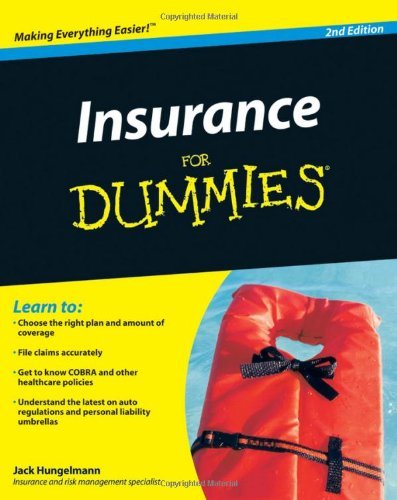
Insurance For Dummies?: Hungelmann, Jack
Whether you’re a homeowner or ... need on: ... Author Jack Hungelmann <strong>uses his twenty-five years of experience in the insurance industry to make buying insurance as simple as possible</strong>
Check Price on Amazon- Liability limits: Your liability covers injuries and damage you cause to others. State minimums can be as low as 25/50/25 ($25,000 per person, $50,000 per accident for injuries, $25,000 for property). Many drivers choose higher limits like 50/100/50 or 100/300/100 for better protection.
- Collision and comprehensive: Collision covers your car if you hit another vehicle or object. Comprehensive covers non‑collision losses (theft, fire, vandalism, hail). If you finance or lease, the lender typically requires both.
- Deductible: The amount you pay out of pocket before insurance pays on collision or comprehensive. Higher deductibles usually mean lower premiums—but make sure you can afford the amount if you need to file a claim.
- Uninsured/underinsured motorist (UM/UIM): Pays you if someone with little or no insurance injures you. In many states, this is a must‑have for peace of mind.
- Personal Injury Protection (PIP) or Medical Payments (MedPay): Covers medical bills regardless of fault (PIP also can include lost wages). Required or optional depending on your state.
- Telematics: If offered, check whether the app or device can only discount or can also surcharge in your state, and whether late‑night driving or hard braking matter to their score.
- New‑to‑U.S. credits: Ask specifically whether the insurer will consider a foreign MVR, a letter of experience, or a driving school certificate—and how much it can help.
Practical steps and cost‑saving strategies
Step 1: Compare 3–5 quotes the same day
Prices vary widely when you have no U.S. record. The fastest way to see what you would actually pay is to compare quotes from multiple carriers on the same day with the same coverages and deductibles. Start here: Car Insurance Quotes: Compare Rates & Get Personalized Quotes Fast.
- Keep vehicle and coverage inputs identical across quotes.
- Try one version with higher deductibles (for savings) and one with lower deductibles (for out‑of‑pocket comfort).
- If you don’t own a car, get a non‑owner quote to build history.
Step 2: Ask for every discount you may qualify for
Discount availability varies by carrier and state, but common ones include:
- Good student: Typically for full‑time students with a B average or better.
- Defensive driving or driver’s ed: Provide your certificate; some carriers have preferred course lists.
- Telematics/usage‑based programs: Often show a discount at sign‑up, with your long‑term savings based on actual driving.
- Multicar and multi‑policy (bundling with renters or homeowners): Bundling can trim 5–20% in many cases.
- Autopay, paperless, pay‑in‑full: Simple operational discounts that add up.
- Low mileage: If you drive fewer miles than average each year, ask if a low‑mileage tier or pay‑per‑mile plan exists in your state.
For details on stackable savings, see: Insurance Discounts for Safe Drivers: Types, Eligibility & How to Maximize Your Savings.
Step 3: Make smart coverage choices (without under‑insuring)
- If you own an older car outright and can afford to replace it yourself, opting for liability‑only can cut costs. If you rely on the car and couldn’t replace it easily, consider keeping collision and comprehensive.
- Many drivers choose at least 50/100/50 liability. If you have assets, higher limits plus an umbrella policy may be worth a quote.
- Raising a $500 deductible to $1,000 can noticeably reduce premium—balance savings with your emergency fund.
Step 4: Build your U.S. driving record intentionally
- Timeline: Many insurers reassess after 6 months; more pricing improvements often come at 12 and 36 months claim‑ and violation‑free. The best rates typically show up after 3–5 clean years.
- Keep continuous coverage: Even a 1–2 month lapse can increase what you pay at renewal with some carriers.
- Keep documents: Save certificates, foreign MVRs, and any letters of experience from prior insurers.

VIOFO Dash Cam A119 V3 2K 2560x1440P Quad HD+ 60FPS Front Car Dash Camera, 5MP STARVIS Sensor, 140-Degree Wide Angle, GPS Included, Buffered Parking Mode, True HDR, Motion Detection, Time Lapse : Electronics
View on AmazonStep 5: Common mistakes to avoid
- Driving uninsured “just for a week”: Even a minor crash or a traffic stop can snowball into fines, license issues, or SR‑22 requirements. If you need to drive a borrowed car, a non‑owner policy can be a safer bridge.
- Hiding household drivers: Insurers often require disclosure of all licensed household members. Omitting a driver can lead to denied claims.
- Buying the car before you get quotes: Some models are surprisingly expensive to insure. Get quotes on short‑listed vehicles first.
- Choosing only state minimums without considering risk: Low limits can leave you personally responsible if injuries or repairs exceed them.
- Ignoring telematics terms: Understand whether your program can increase your premium or only reduce it based on driving behavior, depending on state rules.
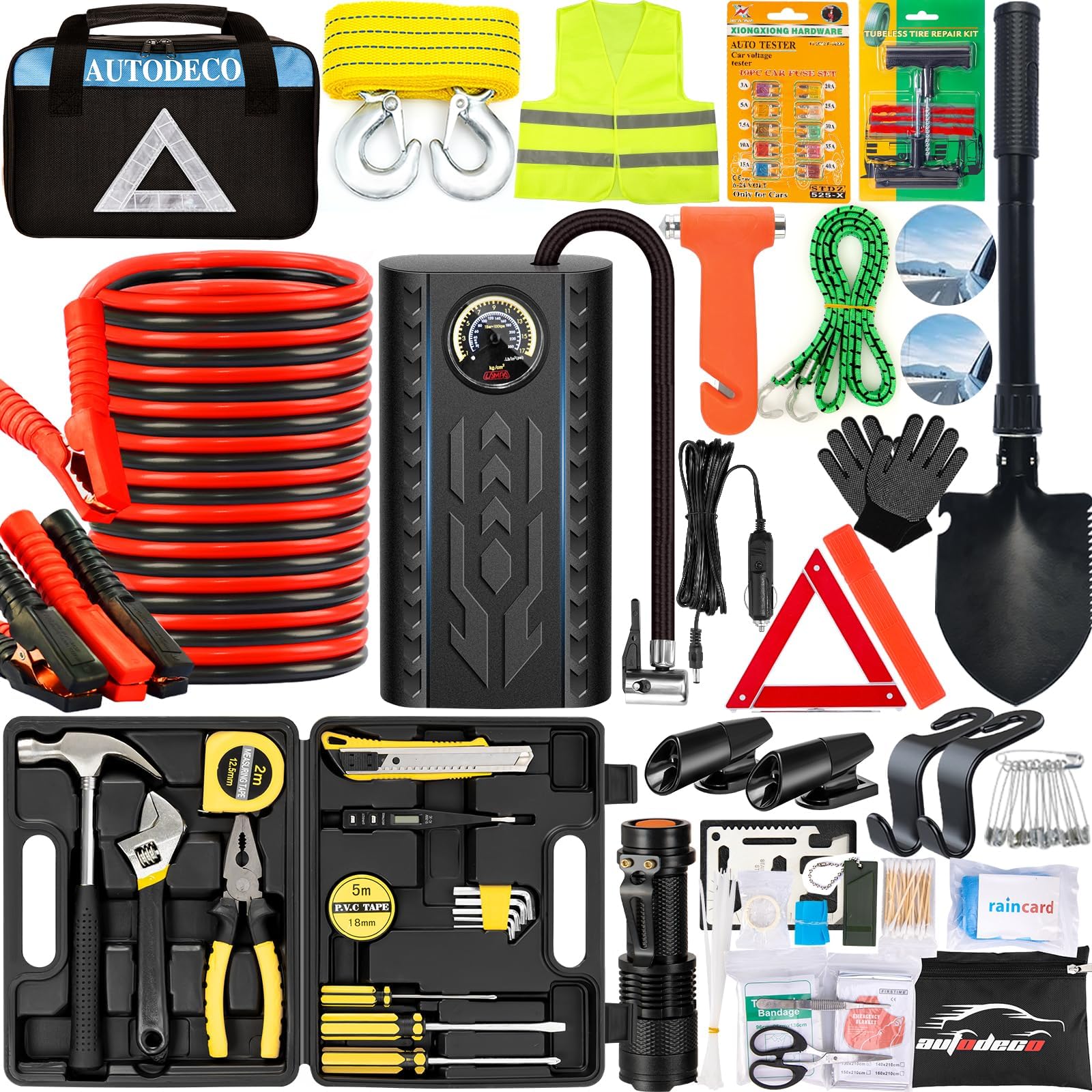
Car Emergency Kit with Air Compressor, Jumper Cables ...
View on AmazonReal‑world examples (estimates, your rates will vary)
These are ballpark ranges to set expectations. Actual quotes vary by state, city, vehicle, insurer, and your personal factors.
- 22‑year‑old new driver in Florida, 2015 Honda Civic, liability‑only: Often see $120–$220 per month; full coverage (with $500 deductibles) might land around $250–$450 per month.
- 30‑year‑old recent immigrant in Texas with clean foreign record and a defensive driving certificate, 2018 Toyota Camry: Liability‑only may fall in the $75–$140 per month range; full coverage could be $160–$280 per month.
- 40‑year‑old returning driver in Illinois after a 2‑year insurance gap, 2016 Subaru Forester, full coverage: Quotes commonly cluster around $130–$220 per month once insured continuously for 6 months.
- Non‑owner policy in states with moderate rates: $25–$60 per month is common for basic liability limits.
These figures are illustrative—not guarantees. If your city has higher medical or repair costs, or your credit‑based insurance score is lower (in states where it’s used), you may see higher quotes; the reverse is also true.
FAQs when you’re new to U.S. driving
- Can I insure a car with only a foreign license? In many states, yes—especially while you’re in the process of transferring your license. Some carriers require a U.S. license post‑transfer; ask before you buy.
- Will my foreign driving record count? Sometimes. Provide an official abstract with translation; it can help with some companies, especially if it shows multiple years accident‑ and violation‑free.
- Do I need an SR‑22? Only if your state or a court requires it, typically after certain violations, license suspensions, or uninsured accidents.
- How long until my premiums drop? You may see improvements after 6–12 months with continuous coverage and a clean record, and more meaningful drops after 3–5 years.
When to talk to a licensed agent
If your situation is complex—foreign license transfer, SR‑22 questions, or unusual vehicle financing—a licensed agent can help you document experience correctly, pick state‑appropriate coverages, and find carriers that credit foreign MVRs. An agent can also explain state‑specific rules on credit and telematics.
Your next step: check your real price
The fastest way to see what you would actually pay is to compare quotes from 3–5 carriers, apples‑to‑apples. Start here and get side‑by‑side options in minutes: Car Insurance Quotes: Compare Rates & Get Personalized Quotes Fast.
If you’re brand‑new behind the wheel, you might also like: Auto Insurance for New Drivers: Coverage, Costs, and Smart Ways to Save.
Rates vary by state and individual factors. No article can replace personalized advice, so consider speaking with a licensed agent if you have questions about your specific situation.
Recommended Resources
Insurance For Dummies?: Hungelmann, Jack
Whether you’re a homeowner or ... need on: ... Author Jack Hungelmann <strong>uses his twenty-five years of experience in the insurance industry to make buying insurance as simple as possible</strong>
VIOFO Dash Cam A119 V3 2K 2560x1440P Quad HD+ 60FPS Front Car Dash Camera, 5MP STARVIS Sensor, 140-Degree Wide Angle, GPS Included, Buffered Parking Mode, True HDR, Motion Detection, Time Lapse : Electronics
Amazon.com: VIOFO Dash Cam A119 V3 2K 2560x1440P Quad HD+ 60FPS Front Car Dash Camera, 5MP STARVIS Sensor, 140-Degree Wide Angle, <strong>GPS Included</strong>, Buffered Parking Mode, True HDR, Motion
Car Emergency Kit with Air Compressor, Jumper Cables ...
jumper cables · car accessories · car essentials · car first aid kit · first aid kit · Previous · 1 · 2 · 37 · Next · Visit the help section or contact us · Go back to filtering menu · Skip to main se
Related Articles
- Auto Insurance for New Drivers: Coverage, Costs, and Smart Ways to Save
- Best Car Insurance for New Drivers: Top Picks & How to Save
- Auto Insurance for High‑Risk Drivers: Finding Coverage, Cutting Costs, and Rebuilding Your Record
- Car Insurance for 18-Year-Olds: Costs, Discounts & How to Get Quotes
- How to Get Car Insurance: What You Need to Know to Choose, Buy, and Save
- What Happens If You Drive Without Insurance? Penalties & Next Steps
- Cheapest Car Insurance for Young Drivers: How to Cut Your Rates
- Affordable Car Insurance for Young Adults: Practical Ways to Lower Your Premiums