
Auto Insurance Quotes: Compare Rates & Get a Fast Free Quote
You’re shopping for auto insurance quotes and the numbers feel all over the place. Is that normal? Yes. Insurers price the same driver very differently. This guide shows you how to compare quotes the smart way, what information you’ll need, and the best moves to lower your rate without cutting the protection you actually need.
How to Use This Page — find the best quote fast
Here’s the quick path to a great rate without sacrificing coverage:
- Get your info ready (drivers, cars, current limits). There’s a checklist below.
- Decide your target coverage (we’ll explain the options in plain English).
- Compare at least 3–5 quotes side by side. The fastest way to see your real price is to shop multiple carriers at once.
- Focus on total value: price, coverage, and claims reputation. Then lock it in.
Ready to check prices now? You can compare multiple carriers in minutes here: Compare personalized car insurance quotes.
Why getting multiple auto insurance quotes matters
Every insurer uses its own rating formula. Two companies can look at the same driver and car and come up with very different prices because they weigh risk factors differently and target different customers.
- Example: Say you’re a 35‑year‑old driver with a clean record, driving 10,000 miles per year, and you want 100/300/100 liability with a $500 collision deductible. One carrier might come in around $110–$140 per month, while another quotes $160–$190 for the exact same coverage. That spread is typical.
- Another example: A family adding a newly licensed teen often sees one insurer jump way up while another stays relatively competitive. Insurers don’t view teen risk equally.
In most cases, the best rate for you will not be the same company that had the best rate for your friend, neighbor, or last year’s you. That’s why comparing multiple auto insurance quotes at the same time is the single most effective way to avoid overpaying.
What affects your auto insurance quote (drivers, car, coverage, location)
Several buckets of data drive your price. Here’s what actually matters and why:
Driver factors
- Driving history: Tickets, at‑fault accidents, and DUIs typically raise rates. A recent speeding ticket might nudge your rate for 3 years; an at‑fault accident can impact 3–5 years depending on your state and insurer.
- Experience and age: Newer drivers generally pay more because there’s less history to predict risk.
- Insurance history: A lapse in coverage (even a short one) can bump your premium. Continuous coverage often earns a lower rate.
- Credit‑based insurance score (where allowed): In most states, insurers can use a credit‑based score to help predict claims likelihood. Better credit typically means lower premiums. A few states limit or ban this—so the impact varies by location.
Vehicle factors
- Vehicle type and value: More expensive cars usually cost more to repair or replace. Sports models often rate higher due to performance and claim frequency.
- Safety and anti‑theft features: Automatic emergency braking, airbags, anti‑theft devices, and VIN etching can help, depending on the insurer.
- Repair costs and claims data: Some makes/models have pricier parts or higher theft rates; insurers price that in.

Bouncie GPS Tracker for Vehicles with Real-Time Location, Route History, Speed Monitoring, Geo-Fence & Accident Notifications - for Fleets & Family - Cancel Anytime : Electronics
View on AmazonCoverage choices
- Liability limits: Higher liability limits (the protection for injuries or damage you cause to others) cost more but protect your assets better.
- Physical damage coverage: Collision (pays to fix your car after a crash) and comprehensive (covers non‑crash events like theft, fire, hail, or hitting a deer) drive much of your premium if your car is newer or financed.
- Deductible: Your deductible is the amount you pay out of pocket before insurance kicks in. Higher deductibles usually lower your premium.
- Add‑ons: Rental reimbursement, roadside assistance, and gap coverage add small costs that can be worth it in the right scenario.
Location and usage
- State and ZIP code: Local crash rates, medical costs, weather, and legal environment influence pricing. Urban areas often cost more than rural due to traffic density.
- Mileage and commute: More miles typically mean more exposure to risk.
- Garaging: Where the vehicle spends the night (driveway, garage, street) can affect theft or damage risk.
What information you need to get accurate quotes
The more precise you are, the fewer surprises you’ll see later. Have this handy:
- Driver details for everyone on the policy: full name, date of birth, driver’s license number, years licensed, and marital status
- Driving history: tickets, accidents, and claims with approximate dates
- Current insurance: carrier, length of continuous coverage, current limits and deductibles
- Vehicle info: year, make, model, trim, VIN (Vehicle Identification Number), current mileage
- Usage: estimated annual miles, primary use (commute/business/pleasure), daily one‑way commute distance
- Address where the vehicle is garaged
- Lienholder/lease info if the car is financed
- Desired coverages: liability limits you want, collision/comprehensive yes/no, target deductibles
- Discounts: student status and GPA, memberships (alumni, professional groups), telematics interest, homeowner status, military/veteran status
Pro tip: If you’re unsure about coverages, match your current policy first so you’re comparing apples to apples. Then adjust limits and deductibles to see how price changes.
Compare coverage types vs price (liability, collision, comprehensive, UM/UIM)
Here’s what each coverage means—without the jargon fog:
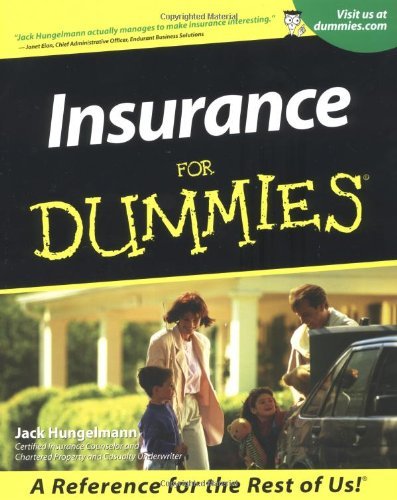
Insurance for Dummies: Hungelmann, Jack
<strong>Manage life, health, and disability risks</strong> ― explore individual and group policies, understand Medicare basics, and evaluate long-term disability and long-term-care insurance ...
Check Price on Amazon- Liability: Pays others if you’re legally responsible for injuries or property damage. It’s listed in split limits like 100/300/100, which means $100,000 per person for bodily injury, $300,000 per accident for bodily injury, and $100,000 for property damage. State minimums are much lower, but they’re often not enough to protect your savings or future wages.
- Collision: Pays to repair or replace your car after a crash, regardless of fault, minus your deductible.
- Comprehensive: Pays for non‑crash damage—think theft, vandalism, weather, fire, or hitting an animal—minus your deductible.
- Uninsured/Underinsured Motorist (UM/UIM): Covers you if you’re hit by someone with no insurance or not enough insurance. Often mirrors your liability limits and can be critical in states with high uninsured rates.
- Medical Payments (MedPay) or Personal Injury Protection (PIP): MedPay helps with medical bills for you and your passengers, regardless of fault. PIP is broader (required in no‑fault states) and can include lost wages and rehab—rules vary by state.
How to think about limits and deductibles:
- Balancing cost and risk: Raising a collision deductible from $500 to $1,000 typically lowers that part of your premium; choose a level you could truly pay tomorrow.
- Property damage risk: With newer cars on the road, $100,000 property damage can run out quickly after a multi‑vehicle crash. Many drivers step up to $100K–$250K+ for better protection.
- Liability vs. full coverage: “Full coverage” isn’t a real policy type—it usually means liability plus collision and comprehensive. If your car is older and paid off, you might consider dropping collision/comprehensive if the annual premium exceeds about 10% of the car’s cash value, but run the numbers and consider your risk tolerance.
Example: If comprehensive and collision together add $520 per year to insure a car worth ~$4,000, and you have a $1,000 deductible, you’re paying a significant amount relative to the payout you might receive. Some drivers keep comprehensive (for theft/weather) and drop collision to save money—just make sure you’re comfortable self‑insuring crash damage.
Ways to lower your auto insurance quote (discounts, bundling, driving history)
You can often trim your premium without sacrificing essential protection. Strategies that typically help:
- Bundle home/renters with auto: Many insurers offer 5%–25% off when you combine policies.
- Increase deductibles: Higher deductibles usually mean lower premiums—just keep an emergency fund to cover them.
- Telematics/safe‑driver programs: A smartphone app or device tracks driving habits (hard braking, speeding, time of day). Good results can reduce rates; driving at night or frequent hard stops can raise them with some carriers, so opt in if you’re confident.
- Good student and distant‑student: Teens and college students with strong grades often earn discounts.
- Multi‑car and multi‑driver: Putting all household cars on one policy typically reduces the per‑car rate.
- Pay‑in‑full and autopay: Paying six or twelve months upfront or enrolling in automatic payments can shave off fees.
- Safety and anti‑theft features: Ask about discounts for alarms, tracking devices, and advanced safety tech.
- Defensive driving course: In some states, an approved course brings a premium credit.
- Mileage reduction: Driving fewer miles per year can lower your rate—consider carpooling or public transit where practical and report changes accurately.
- Maintain continuous coverage and a clean record: Time is your friend after a ticket or accident; many surcharges drop off after 3–5 years.
Want a deeper dive on cutting costs? See our savings playbook here: Cheap auto insurance strategies and how to get quotes.
Note: Always be truthful on applications. Misstating drivers, usage, or garaging can lead to denied claims or policy cancellation.
State minimums & rules — why quotes differ by state (how to check your state law)
Car insurance is regulated at the state level. That’s why two identical drivers can see very different prices just by crossing a state line.
What varies by state:
- Minimum liability requirements: Some states start at 25/50/25, others require more.
- No‑fault and PIP rules: In no‑fault states, you typically carry Personal Injury Protection (PIP) and your own policy pays first for injuries after a crash, regardless of fault.
- UM/UIM mandates: A few states require Uninsured/Underinsured Motorist coverage; others make it optional.
- Rating rules: Some states restrict the use of credit‑based insurance scores, gender, or job title in pricing; others allow them.
- SR‑22/FR‑44 filings: After certain violations, your state may require a form proving you carry minimum coverage for a set period.
How to check your state requirements quickly:
- Visit your state Department of Insurance website and look for “auto insurance minimum limits” and “consumer guides.”
- If you prefer local help, compare nearby agents and local rates here: Find local car insurance options near you.
Special cases: If you have major violations or are considered high‑risk, you still have options—just expect higher quotes at first. Learn how to find coverage and rebuild your record: Auto insurance for high‑risk drivers.
Step-by-step: How to get and compare quotes now
Follow this short checklist to get accurate, apples‑to‑apples pricing in under 15 minutes:
- Gather your info: driver details, VINs, current coverage page (declarations page), mileage, and commute.
- Set your target coverage: For many drivers, a common starting point is 100/300/100 liability with UM/UIM and $500–$1,000 deductibles for collision/comprehensive—adjust up or down based on your assets, risk tolerance, and state rules.
- Shop 3–5 carriers at once: The fastest way to see your real price is to compare multiple companies side by side. Start here: Compare personalized car insurance quotes.
- Match coverages across quotes: Ensure liability limits and deductibles are identical before judging price.
- Scan discounts: Confirm you’re getting every discount you qualify for (bundle, multi‑car, good student, telematics, pay‑in‑full, homeowner).
- Look beyond price: Read how claims are handled, rental coverage options, and repair network flexibility. A slightly higher premium can be worth it for smoother claims.
- Decide your deductible: Pick an amount you can actually pay tomorrow—this keeps savings realistic.
- Lock in and set reminders: Policies renew every 6 or 12 months. Put a reminder 3–4 weeks before renewal to reshop; insurers frequently reshuffle pricing.
Real‑world scenarios to make this concrete
- You’re a 28‑year‑old with a 2018 Honda Civic and one minor speeding ticket last year. You compare five quotes with the same 100/300/100 limits and a $500 deductible. Results range from $138 to $201 per month. You choose a telematics program, drive mostly daytime, and see a discount after 60–90 days. You set a reminder to re‑shop when the ticket ages past the 36‑month mark, when it may impact your rate less.
- You’re a 45‑year‑old homeowner with two cars and a teen driver. Bundling home + auto drops the combined bill by roughly 10%–20% with several carriers. You also add a good‑student discount and raise the collision deductible on the older car only, where repairs would be cheaper relative to its value.
- You’re 62 with a paid‑off 2009 sedan used for short errands. You model dropping collision (keeping comprehensive for hail/theft) and see meaningful savings, deciding to self‑insure crash damage given the car’s value and your emergency fund.
What to look for when comparing quotes
- Identical coverage: Same liability limits, deductibles, and add‑ons across quotes
- UM/UIM included: Often overlooked but vital where uninsured drivers are common
- Claims reputation: Look at repair options, rental coverage, and time to close claims
- Total out‑of‑pocket risk: Premium plus your chosen deductible
- Discount fit: Some companies are simply a better match for your profile (new driver, homeowner, telematics‑friendly, etc.)

Garmin Dash Cam Mini 2, Tiny Size, 1080p and 140-degree FOV, Monitor Your Vehicle While Away w/New Connected Features, Voice Control - 010-02504-00 : Electronics
View on AmazonA quick word on getting help
Online quotes are great for speed, but if you have multiple cars, teen drivers, ride‑sharing or delivery use, an SR‑22 requirement, or you’re unsure about limits, it’s wise to speak with a licensed agent. They can explain how state rules apply to your situation and help tailor coverage. Rates vary by individual circumstances, and no one can guarantee a specific price until your application is reviewed and bound by the insurer.
Your next step
You’ve seen how quotes are built and how to compare them. The smartest move now is to get side‑by‑side prices from multiple carriers using the same coverage setup. It takes minutes and can save real money without cutting protection.
Get started here: Compare personalized car insurance quotes in minutes.
Recommended Resources
Insurance for Dummies: Hungelmann, Jack
<strong>Manage life, health, and disability risks</strong> ― explore individual and group policies, understand Medicare basics, and evaluate long-term disability and long-term-care insurance ...
Garmin Dash Cam Mini 2, Tiny Size, 1080p and 140-degree FOV, Monitor Your Vehicle While Away w/New Connected Features, Voice Control - 010-02504-00 : Electronics
Buy Garmin Dash Cam Mini 2, <strong>Tiny Size, 1080p and 140-degree FOV, Monitor Your Vehicle While Away w/New Connected Features, Voice Control</strong> - 010-02504-00: On-Dash Cameras - Amazon.com ✓
Bouncie GPS Tracker for Vehicles with Real-Time Location, Route History, Speed Monitoring, Geo-Fence & Accident Notifications - for Fleets & Family - Cancel Anytime : Electronics
Customer ReviewEZ Affordable Tracking & Alerts - Bouncie GPS Quick ReviewSee Full Review · Features & Specs · Measurements · Additional details · Product Warranty: For warranty information abo
Related Articles
- Car Insurance Quotes: Compare Rates & Get Personalized Quotes Fast
- Insurance Quotes: Compare & Get Accurate Quotes Fast
- Auto Insurance in California: Rates, Requirements & How to Save
- What Affects Your Auto Insurance Rate: Key Variables Explained
- Auto Insurance for New Drivers: Coverage, Costs, and Smart Ways to Save
- Auto Insurance in Washington: Rates, Requirements & How to Save
- Auto Insurance in Arizona: Rates, Requirements & How to Save
- How Much Is Car Insurance? Average Costs, Factors & Ways to Save