
Car Insurance Near Me: Compare Local Quotes & Find Agents Fast
You typed “car insurance near me” because you want something simple: the right coverage at a fair price, from someone you can actually reach if you have a claim. Here’s what actually matters when shopping locally, how pricing really works by ZIP code, and a fast path to compare quotes from nearby agents and carriers.
Note: Prices and availability always vary by your driver profile, vehicle, and state laws. The fastest way to see what you would actually pay is to compare quotes from 3–5 carriers.
Why “car insurance near me” matters
Local shopping can save you money and headaches because it matches your coverage to the risks on your streets—not just averages across your state.
- Local pricing reflects your garaging ZIP (where the car is kept overnight), which impacts theft rates, weather, repair costs, and accident frequency.
- Agents in your area know state rules, local body shops, and which carriers write competitively in your ZIP.
- Some discounts and programs are market-specific—think regional usage-based programs or local employer/association discounts.
- Claims service can feel smoother when your agent knows nearby adjusters and repair networks.
If you’ve been renewing out of habit, a quick local check can reveal $25–$70 per month in potential savings in many cases, especially if your life changed recently (new job, shorter commute, moved ZIPs, improved credit/insurance score).
How car insurance pricing works locally (ZIP, driving record, vehicle, and carrier footprint)
Car insurance premium (the amount you pay for your policy) is built from risk factors. Locally, four buckets drive most of it:
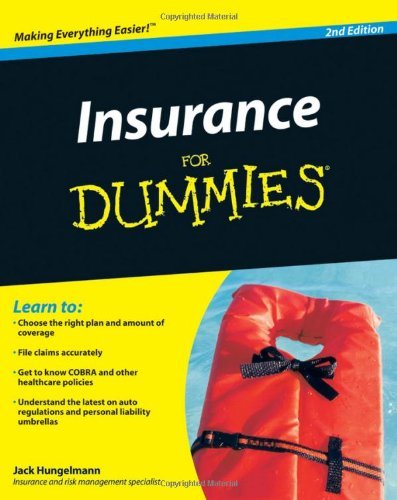
Insurance For Dummies?: Hungelmann, Jack
Whether you’re a homeowner or ... need on: ... Author Jack Hungelmann <strong>uses his twenty-five years of experience in the insurance industry to make buying insurance as simple as possible</strong>
Check Price on Amazon- ZIP code: Insurers analyze loss data at a very local level.
- Traffic density and accident frequency
- Theft and vandalism rates
- Weather risk (hail, flood, wildfire)
- Medical and repair costs nearby
- Driving record: Your motor vehicle report (tickets and violations) and claims history typically follow you for 3–5 years with most carriers.
- At-fault accident: Usually increases premium for several policy terms
- Speeding/major violations: Often costlier than minor tickets
- Lapses in coverage: A gap in insurance typically raises rates
- Vehicle details:
- Safety features and repair costs (luxury parts and ADAS sensors can be expensive)
- Comprehensive and collision coverage choices. Collision covers your car after a crash; comprehensive covers non-crash events like theft or hail. Both use a deductible (the amount you pay out of pocket before the insurer pays).
- Annual mileage and use (commute vs. pleasure vs. business)
- Carrier footprint: Each insurer focuses on certain states and ZIPs where they’re competitive. “Carrier footprint” simply means where a company actively sells and prices favorably. The same driver could see a 20–40% swing between carriers depending on this.
Other factors that typically matter:
- Age and household drivers
- Insurance-based credit/insurance score (where allowed by state law) — a measure correlated with claims likelihood, not your FICO itself
- Prior insurance length and limits (longer continuous coverage and higher past limits can help)
- Bundling home or renters insurance
Find and compare local quotes in 3 steps
The fastest way to see your actual cost is to compare quotes side by side from 3–5 companies writing in your ZIP. You can do this online, by phone, or through a local agent.
CTA: Get free quotes — Compare 3–5 local carriers in minutes.
Step 1: Gather quick details
Have this handy to speed things up:
- Address and garaging ZIP
- Driver’s license(s) for all drivers
- Vehicle VIN(s) if available (or year/make/model)
- Current coverage declarations page (to mirror limits and deductibles for apples-to-apples quotes)
- Estimated annual mileage and primary use (commute/pleasure/business)
- Lienholder/lessor info if you have a loan or lease (they often require certain coverages)
Jargon check: Declarations page (often called a “dec page”) is the summary sheet listing your current coverages, limits, and deductibles.
Step 2: Choose your shopping path
- Online quote forms: Fast and convenient. Great for getting a baseline from multiple carriers. Consider starting with 2–3 big national carriers and 1–2 regionals.
- Phone quotes: Helpful if you prefer guided questions or have a complex situation (new teen driver, rideshare use, or prior SR‑22). An SR-22 is a state filing proving you carry required insurance after certain violations; it’s not a coverage.
- Local agent: An independent agent can pull quotes from multiple insurers; a captive agent represents one brand but can offer strong service and discounts from that carrier.
Pro tip: Take note of each company’s claims options (24/7 phone, app, local adjusters) as you go. Claims service is as important as price.
Step 3: Compare the quotes, apples to apples
Match these items across all quotes so you’re evaluating true differences:
- Liability limits: Bodily injury liability (pays for injuries you cause to others) and property damage liability (pays for others’ property you damage). Minimums vary by state, often shown as split limits like 25/50/25 (thousands per person/accident/property). Higher limits typically cost modestly more but protect your assets better.
- Comprehensive and collision: If you carry them, use the same deductibles on each quote. A $500 vs. $1,000 deductible can swing price significantly.
- Uninsured/underinsured motorist (UM/UIM): Covers you if the other driver has no or too little insurance. In many states, this is crucial protection.
- Personal injury protection (PIP) or medical payments (MedPay): Helps with medical costs for you/your passengers regardless of fault; availability and limits vary by state.
- Discounts and telematics: Telematics means a program (via app or device) that tracks driving behaviors for potential discounts; check estimated savings and data retention policies.
What to look for beyond price:
- Financial strength (A.M. Best rating) and complaint index in your state
- Claims satisfaction scores and local repair network
- Accident forgiveness options (if available) and surcharge timelines
CTA: Ready to see real numbers? Get free quotes from 3–5 local carriers now.
Car insurance near me: local agents vs. direct carriers
Both paths can work. Here’s how to pick what fits your style.

Garmin Dash Cam 67W, 1440p and Extra-Wide 180-degree FOV, Monitor Your Vehicle While Away w/New Connected Features, Voice Control, Compact and Discreet, Includes Memory Card - 010-02505-05 : Electronics
The pocket-sized Garmin Dash Cam™ 67W with voice control (only available in English, German, French, Spanish, Italian and Swedish) <strong>automatically records 1440p video and provides discreet eyewi
Check Price on AmazonLocal independent agent (represents multiple insurers)
- Pros: One conversation, multiple quotes; personalized advice; help at renewal if rates jump
- Cons: Not every insurer is available through every agency; service quality varies by office
Captive/local brand agent (represents one insurer)
- Pros: Deep product knowledge; strong brand-specific discounts and apps; face-to-face help
- Cons: You’ll need to call other carriers separately to compare
Direct carriers (buy online/phone, no local storefront)
- Pros: Quick digital quotes; often competitive pricing; robust apps for ID cards and claims
- Cons: You manage comparisons yourself; local in-person help may be limited
Questions to ask any agent or carrier
- Which insurers are most competitive in my ZIP for my driver profile, and why?
- What coverage changes would you recommend—and what would that add or save per month?
- How are glass claims, hail, and hit‑and‑run handled locally?
- What’s your average time to get ID cards and bind coverage? A binder is temporary proof the policy is in force until final documents are issued.
- Can you walk me through my discount eligibility and how to keep them active?
State minimums, proof of insurance, and how to verify an agent
State minimums: Every state sets minimum liability limits. They’re a legal floor, not a financial recommendation. In many cases, 25/50/25 is not enough to protect your assets if a serious accident happens. Consider higher limits like 100/300/100 or more, depending on your situation.
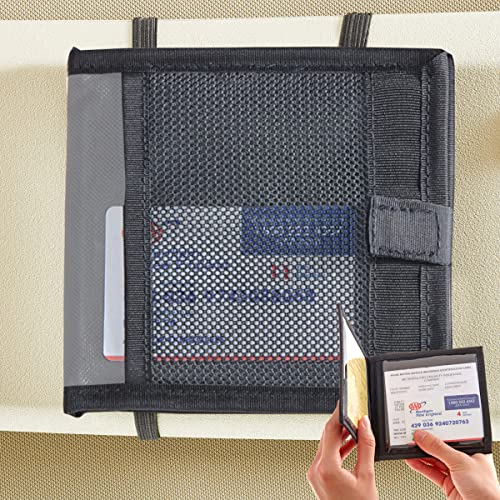
High Road Car Glove Box Organizer, Registration and Insurance Document Holder and Car Manual Holder with Flexible Secure Zippered Case and Note Pad : Automotive
View on AmazonProof of insurance: Most states accept digital ID cards in a mobile app. Keep at least one backup—paper in your glove box or a screenshot on your phone—especially when traveling out of state.
Verifying an agent: Always confirm licensing with your state’s Department of Insurance (DOI). You can also check complaint history.
- Find any state regulator (NAIC directory): https://content.naic.org/state-insurance-departments
- California Department of Insurance: https://www.insurance.ca.gov/
- Texas Department of Insurance: https://www.tdi.texas.gov/
- Florida Office of Insurance Regulation: https://www.floir.com/
- New York Department of Financial Services: https://www.dfs.ny.gov/consumers/insurance
- Illinois Department of Insurance: https://insurance.illinois.gov/
- Washington State Office of the Insurance Commissioner: https://www.insurance.wa.gov/
Tip: When you speak with an agent, ask for their license number and the carriers they’re appointed with. Cross-check both on the DOI website.
Internal help: See our overview of coverage basics Car insurance coverages explained and how SR‑22 filings work SR‑22 insurance guide.
Common local discounts and ways to lower your premium
Discounts vary by state and carrier, but here are local levers that typically help:
- Multi-policy: Bundle auto with home or renters. Savings typically 5–20% depending on your state and carrier.
- Multi-car: Insure multiple cars on one policy.
- Safe driver/claims-free: Clean record usually lowers rates after 3–5 years without accidents.
- Telematics/usage-based: Voluntary app/device that tracks braking, speed, phone use, and time of day. Good driving can unlock 10–30% in many programs, while risky driving may reduce or negate savings.
- Good student/driver training: For teens/young adults meeting GPA thresholds or completing approved courses.
- Low mileage: Fewer annual miles can reduce premiums; consider public transit or carpooling if it fits your routine.
- Vehicle safety: Anti-theft devices and advanced safety features sometimes earn discounts.
- Payment choices: Pay-in-full, autopay, or paperless often trim a few percent and avoid installment fees.
- Homeowner or local affiliation: Some carriers offer savings for homeowners or members of local employers/associations.
Other ways to save—trade-offs to weigh carefully:
- Raise your comprehensive/collision deductible (the out-of-pocket cost before insurance pays). Make sure you can afford the higher amount if a claim happens tomorrow.
- Adjust coverage on older cars: If your vehicle’s market value is low, consider whether collision/comprehensive still make sense. Many people keep at least comprehensive to protect against theft, fire, or hail.
- Keep continuous coverage: Avoid gaps to qualify for better rates.
- Improve insurance-based credit factors over time (where allowed): On-time payments, lower revolving balances, and responsible credit use can help your insurance score.
Real example: sample ranges by ZIP—and how changes affect quotes
These are illustrative ranges for a 35‑year‑old driver with a clean record, driving 12,000 miles/year, carrying 100/300/100 liability and $500 deductibles on comprehensive and collision. Your quotes will vary by carrier and state.
- Urban Chicago, IL (ZIP 60614): You might see a range like $140–$260 per month from major carriers.
- Suburban Frisco, TX (ZIP 75034): You might see $115–$210 per month.
- Smaller city/rural Delaware, OH (ZIP 43015): You might see $95–$180 per month.
How adjustments often change quotes:
- Add a teen driver (licensed 6 months): Ranges can increase $90–$220 per month depending on GPA, telematics, and vehicle.
- One recent at‑fault accident: Often adds $35–$90 per month for several terms.
- Raise deductibles from $500 to $1,000: Commonly saves $10–$25 per month, depending on vehicle value.
- Drop collision on a 15‑year‑old car worth $3,000: Could save $12–$30 per month, but you’ll pay out of pocket for your car’s damage after a crash.
Again, these are ranges, not quotes. The only way to know your price in your ZIP is to run multiple quotes the same day.
Next steps: buy, bind, get ID cards—and what to do after you switch
Here’s the typical timeline once you’ve picked a quote:
- Bind coverage: Binding means the insurer has accepted your application and coverage is in force as of the effective date. This can be same-day in most cases.
- Get ID cards: You’ll receive digital ID cards immediately and paper cards by mail if requested. Keep one in your car and one on your phone.
- Lienholder/lessor: If you lease or finance, share proof of insurance and ensure the required coverages and deductibles are in place (many require comprehensive and collision with max $500–$1,000 deductibles).
- Cancel old policy—without a lapse: Start the new policy first, then cancel the old one effective the same day to avoid a coverage gap. Ask your previous insurer about any early cancellation fee in your state.
- Pro‑rated refund: If you prepaid your old policy, you’ll typically receive a pro‑rated refund for unused days, minus any fees.
- Telematics setup: If you enrolled, install the app/device promptly so your discount applies.
- Documents and inspections: Some carriers require a quick photo inspection to confirm vehicle condition—knock this out within the window so comprehensive/collision remain active.
- Follow‑up: Save your new declarations page and set a 9–10 month reminder to review rates at renewal.
CTA: Want current local pricing? Compare free quotes from 3–5 carriers in your ZIP.
A quick note on personal advice: This guide is educational. Insurance is regulated by state, and your situation is unique. Speaking with a licensed agent can help you decide on appropriate limits for your budget and risk tolerance.
Helpful internal links:
- Compare car insurance quotes Start here
- Understand coverage limits Coverage basics
- Discount checklist Car insurance discounts
- SR‑22 guidance SR‑22 insurance
Recommended Resources
Insurance For Dummies?: Hungelmann, Jack
Whether you’re a homeowner or ... need on: ... Author Jack Hungelmann <strong>uses his twenty-five years of experience in the insurance industry to make buying insurance as simple as possible</strong>
Garmin Dash Cam 67W, 1440p and Extra-Wide 180-degree FOV, Monitor Your Vehicle While Away w/New Connected Features, Voice Control, Compact and Discreet, Includes Memory Card - 010-02505-05 : Electronics
The pocket-sized Garmin Dash Cam™ 67W with voice control (only available in English, German, French, Spanish, Italian and Swedish) <strong>automatically records 1440p video and provides discreet eyewi
High Road Car Glove Box Organizer, Registration and Insurance Document Holder and Car Manual Holder with Flexible Secure Zippered Case and Note Pad : Automotive
High Road Glove Box Organizer and Car Manual Holder - Insurance and Registration Holder for Glove Box with Clear Pockets for Quick Access to Car Documents and Expandable Manual Holder
Related Articles
- Car Insurance Quotes: Compare Rates & Get Personalized Quotes Fast
- Cheap Car Insurance: How to Save on Coverage & Get Fast Quotes
- Auto Insurance Quotes: Compare Rates & Get a Fast Free Quote
- Car Insurance: Compare Quotes & Save on Coverage Today
- Cheapest Car Insurance in Texas: Compare Rates & Get Quotes Today
- Car Insurance in New York: Compare Quotes & Save on NY Auto Policies
- Insurance Quotes: Compare & Get Accurate Quotes Fast
- Auto Insurance in Nebraska: Rates, Requirements & How to Save