
Life Insurance in Delaware: Coverage Options, Costs, and What Residents Should Know
You’re shopping for life insurance in Delaware and wondering: How much do I really need, what will it cost, and which policy makes sense for my family? Here’s what actually matters when choosing a policy in the First State, plus how to compare quotes the smart way.
Life Insurance in Delaware: The Basics
Life insurance is a contract where you pay a premium (the amount you pay the insurer, typically monthly or annually) and, in return, the insurer promises a death benefit (the lump-sum payout to your beneficiary—the person or people you choose) if you pass away while the policy is in force.
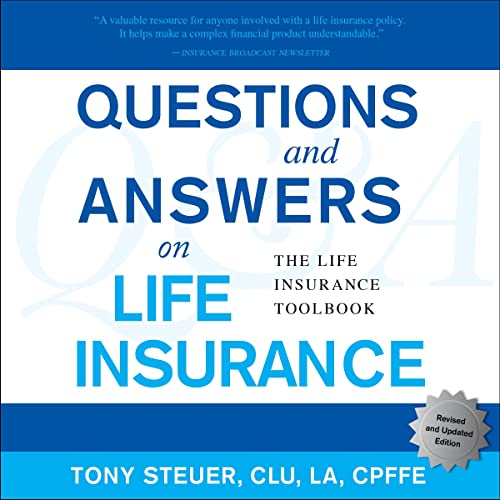
Questions and Answers on Life Insurance: Steuer, Tony
*Amazon Best Seller in Life Insurance* Questions and Answers on Life Insurance is <strong>an extremely useful and one of a kind resource for anyone looking for a simple way to understand life insuranc
Check Price on AmazonThere are two main types:
- Term life insurance: Coverage for a set period—10, 20, 30 years, for example. It’s straightforward and typically the most budget-friendly way to get a large death benefit. There’s no savings component.
- Permanent life insurance: Coverage that can last for life if you keep paying premiums. The most common is whole life insurance, which includes cash value (a savings-like account that can grow tax-deferred). Universal life also falls in this category but offers more flexible premiums and death benefits.
Who in Delaware often needs coverage?
- Families: To replace income and keep day-to-day bills paid if a breadwinner dies.
- Homeowners: To cover the mortgage and property taxes on homes in New Castle, Kent, or Sussex counties.
- Business owners: To protect the business with key person insurance or fund a buy-sell agreement.
If you want a deeper dive on permanent coverage, this explainer can help: Whole Life Insurance Explained: Benefits, Costs, and How to Buy.
How Policies Work (In Plain English)
- Premium: What you pay to keep the policy active.
- Death benefit: The amount your beneficiaries receive if you die while covered.
- Term length (for term policies): The window of time your coverage lasts—often chosen to match a mortgage, years until retirement, or kids’ years to financial independence.
- Cash value (permanent policies): A portion of your premium that accumulates value you can borrow from or surrender (give up the policy for its value). Borrowing reduces your death benefit if not repaid.
- Riders: Optional policy add-ons, like a waiver of premium rider (pauses premiums if you’re disabled) or a child rider (small coverage for children). More on riders below.
- Underwriting: The insurer’s evaluation of your health, lifestyle, and financial situation to set your rate class and premium.
Delaware-Specific Considerations: Costs, Rules, and Underwriting
What influences Delaware life insurance costs
In most cases, rates for life insurance in Delaware mirror national averages. What moves the needle most are personal factors:
- Age and health: Younger and healthier applicants typically get lower premiums.
- Tobacco use: Smoking or vaping can double or triple rates.
- Coverage amount and term length: More coverage for longer terms costs more.
- Policy type: Term is usually much cheaper than permanent life.
Local realities can indirectly matter:
- Medical access and wellness: Your health history and medications (pulled via Rx database checks) influence underwriting outcomes.
- Driving history: Insurers often review a motor vehicle report (tickets/DUIs can affect risk class).
- Occupation and hobbies: High-risk jobs (certain construction or maritime roles) or activities (like private aviation) can increase cost.
Insurers in Delaware use similar underwriting tools as in other states—an application, possible paramedical exam, medical records, prescription checks, and financial justification for larger face amounts. Many carriers now offer accelerated underwriting (a faster, no-exam process) for well-qualified applicants up to certain coverage limits.
Consumer protections and standard provisions in Delaware
- Free look period: You get a window to review your new policy and cancel for a refund. In Delaware, policies typically include at least a 10-day free look; some situations (like replacements) may provide a longer period. Always check your contract.
- Grace period: If you miss a premium, you usually have around 30–31 days to pay before the policy lapses.
- Contestability period: For the first two years, the insurer can review your application for misstatements if a claim occurs.
- Suicide clause: Typically limited benefits if death by suicide occurs within the first two years.
Delaware also participates in a state guaranty association. If a licensed life insurer becomes insolvent, the Delaware Life and Health Insurance Guaranty Association may protect policyholders up to certain limits (often cited around $300,000 in death benefits and $100,000 in cash value, but limits can change and conditions apply). Don’t buy a policy based solely on guaranty protection; verify current limits and always prioritize an insurer’s financial strength.
Employer-sponsored life insurance in Delaware
Many Delaware employers offer basic group life (often 1x salary) and optional supplemental coverage. A few key points:
- Portability: You may be able to keep coverage if you leave your job by paying premiums directly, usually at higher rates.
- Conversion: You might be able to convert group term coverage to an individual permanent policy within a limited time window (often 31 days) without new underwriting. Premiums will be higher, but it’s a valuable option if your health has changed.
- Coverage caps: Group plans often have relatively low maximums without medical questions. If you need more protection (for a mortgage or multiple dependents), a personal policy is often necessary.
Why Delaware Residents Buy Life Insurance
Income replacement
Your paycheck fuels your household—rent or mortgage, groceries, utilities, and everything in between. A death benefit can typically provide a tax-free cushion to keep that going while your family regroups. A common starting point is 10–15x your annual income, adjusted for savings and debts.
Mortgage protection
Whether you own in Wilmington, Newark, Dover, or near the beaches in Rehoboth, many residents buy life insurance to make sure a surviving partner isn’t forced to sell the home. Matching a 20- or 30-year term to your mortgage can be a simple approach.
College funding
For families with kids eyeing the University of Delaware or out-of-state schools, earmarking part of the death benefit for 529 contributions or tuition can keep education plans on track.
Final expenses
Funeral and burial costs in Delaware often run several thousand dollars. A small policy or a rider can prevent loved ones from paying those costs out of pocket.
Estate planning and business continuity
Delaware does not currently impose a state estate tax or inheritance tax (the state estate tax was repealed effective 2018). Federal estate tax rules still apply if your estate exceeds federal thresholds. Life insurance can provide liquidity to pay taxes, equalize inheritances among heirs, or fund a buy-sell agreement. For a deeper walk-through, see: Life Insurance and Estate Planning: How to Protect Your Family and Preserve Your Legacy.
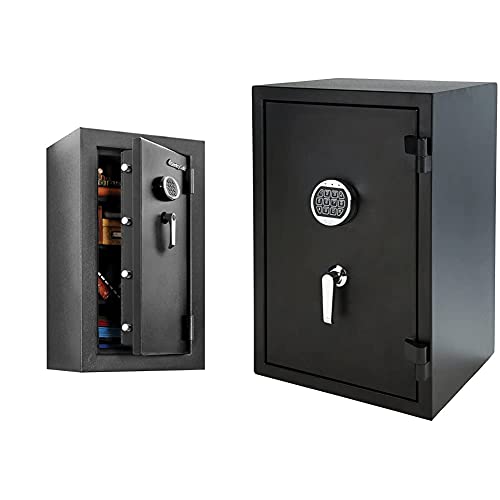
SentrySafe Waterproof and Fireproof Alloy Steel Digital Safe Box for Home with Code Button Keypad, 1.23 Cubic Feet, 17.8 x 16.3 x 19.3 Inches (exterior), SFW123GDC - Gun Safes And Cabinets - Amazon.com
View on AmazonChoosing Term vs. Permanent: How to Match Coverage to Goals
- Choose term life if your main goal is affordable, high coverage during your highest-responsibility years—raising children, paying the mortgage, or covering income until retirement.
- Consider permanent life if you need lifetime coverage—special-needs dependents, estate liquidity, or you value building cash value within a policy. Whole life is the most well-known permanent option; for mechanics, pros/cons, and costs, read: Whole Life Insurance Explained: Benefits, Costs, and How to Buy.
You can also blend strategies—buy a base of permanent coverage and add term life for large temporary needs. Or layer multiple term policies (“laddering”) so coverage steps down as debts shrink and kids become independent.
How Much Life Insurance Do Delaware Residents Need?
A quick framework:
- Start with 10–15x your annual income.
- Add major debts (mortgage, student loans if not forgiven at death, auto loans).
- Add specific goals (childcare costs, college funding target, eldercare support for parents).
- Subtract liquid savings, existing life insurance, and other assets that would be available.
Two Delaware scenarios (illustrative only; actual costs vary):
35-year-old non-smoker in Wilmington, $95,000 income, $380,000 mortgage, spouse and one child. A typical target might be $1,000,000 for 20–30 years to cover income replacement, the mortgage, and college savings. Premiums for $1M/20-year term for a healthy 35-year-old can often land in the ballpark of $30–60 per month for women and $40–75 for men, depending on health, build, and insurer underwriting—your results may differ.
45-year-old small business owner in Dover, $150,000 income, $250,000 remaining on mortgage, two teens, a partner in the business. Consider a mix: $1,000,000 20-year term for family protection plus a separate key person or buy-sell policy sized to the company’s valuation. Personal policy premiums for $1M/20-year at age 45 might fall in a broad range—often $70–150/month for non-smokers with good health—based on health history and carrier.
Term length guidelines most Delaware shoppers use:
- 10-year term: Nearing retirement, or covering a small remaining mortgage balance.
- 20-year term: Popular for families with school-age children.
- 30-year term: New homeowners or those wanting maximum runway at a fixed rate.
What to Look For in a Delaware Life Insurance Policy (and Company)
- Strong financial ratings: Aim for carriers with solid AM Best ratings (A– or better) to help ensure claims-paying strength over decades.
- Clear conversion options: If buying term, look for a term-to-permanent conversion privilege (the right to convert to a permanent policy without a medical exam) and note the deadline and which permanent products are eligible.
- Competitive underwriting for your profile: Different carriers favor different risk factors—some are more forgiving on build (height/weight), others on blood pressure, cholesterol, or specific conditions like sleep apnea.
- Speed and convenience: If you qualify for accelerated underwriting, you may skip the medical exam and get a decision faster.
- Transparent illustrations (for permanent policies): Review assumptions, guaranteed vs. non-guaranteed elements, and policy charges. Ask the agent to stress-test the illustration.
- Service and claims reputation: Read recent reviews and check complaint ratios. A responsive carrier can make a difficult time easier for your beneficiaries.
- Riders that fit your needs: Common riders include
- Accelerated death benefit rider: Access part of the death benefit if diagnosed with a qualifying terminal or chronic illness.
- Waiver of premium: Premiums are waived if you meet the policy’s disability criteria.
- Child term rider: Small coverage for children, often convertible later.
- Guaranteed insurability: Lets you buy more coverage later without new medical underwriting at certain life events.
- Accidental death benefit: Extra payout if death is due to a qualifying accident.
Understand exclusions and limitations in plain terms:
- Suicide clause (typically two years).
- Material misrepresentation (inaccurate or omitted health info can void coverage during contestability).
- Certain hazardous activities may require a flat extra charge or be excluded.
What Do Life Insurance Rates Look Like in Delaware?
While exact pricing depends on your individual profile, here are typical ranges healthy non-smokers might see from reputable carriers (illustrative only; your quotes may differ):
- 30-year-old, $500,000 20-year term: often around $18–35/month for women, $20–40/month for men.
- 40-year-old, $500,000 20-year term: often around $28–55/month for women, $35–65/month for men.
- 50-year-old, $500,000 20-year term: often around $70–140/month for women, $85–170/month for men.
These are broad ballparks. Health conditions (sleep apnea, anxiety/depression meds, cholesterol or blood pressure treatment), family history, and driving records can move you up or down a rate class. The fastest way to see what you would actually pay is to compare quotes from 3–5 carriers.
If you want a general shopping walkthrough, start here: Life Insurance: How to Choose the Right Policy and Get Quotes.
How to Compare Quotes and Save in Delaware
Here’s a simple, Delaware-tested approach:
- Decide on a target coverage amount and term. Use the income-debt-goals framework above.
- Get quotes from multiple carriers. Prices vary more than most people expect for the same coverage.
- Ask about accelerated underwriting. If you’re a good fit, you could lock coverage in days, not weeks.
- Apply through an independent broker or platform. They can match your health profile to the carrier most likely to offer a favorable rate class.
- Consider laddering. Two policies (e.g., $750k for 20 years + $250k for 30 years) can better match your declining needs.
- Pay annually if cash flow allows. Many carriers discount annual premiums vs. monthly.
- Lock your rate while you’re younger and healthier. Waiting usually costs more.
- Be honest and thorough on the application. Inaccuracies can cause delays or issues at claim time.
Call-to-action: Ready to see real numbers? Compare personalized quotes from 3–5 top-rated carriers. It’s the quickest way to understand your options and likely cost.
Delaware Details for Business Owners
- Key person insurance: Protects your company if a crucial employee or owner dies. The business owns the policy, pays the premium, and is the beneficiary.
- Buy-sell funding: Life insurance can fund a buyout between partners, keeping the business stable for employees and clients in Wilmington, Smyrna, or Lewes.
- Loan collateral and succession: Lenders often prefer coverage on owners. A well-structured policy supports financing and succession plans.
Work with your attorney and CPA to align coverage with your operating agreement and tax strategy.
Common Mistakes Delaware Shoppers Can Avoid
- Underinsuring: Buying only what your employer provides (often 1x salary) typically isn’t enough for families.
- Choosing the cheapest policy without checking conversion options: Future flexibility matters if health changes.
- Waiting until “after I get healthy”: If you’re working on weight, blood pressure, or quitting nicotine, you can still apply now—your rate is locked to your current status, and some carriers allow reconsideration if you improve.
- Skipping riders that are inexpensive and valuable (like accelerated benefits) or buying riders you don’t need. Read the fine print.
Quick Delaware FAQ
- Are life insurance payouts taxable in Delaware? Typically, the death benefit is income-tax free to beneficiaries. Interest earned on the benefit and certain transfer-for-value transactions can be taxable. Always consult a tax professional.
- Does Delaware have an estate or inheritance tax? Delaware does not currently have a state estate or inheritance tax; federal estate tax rules still apply depending on your estate’s size.
- Can I buy life insurance if I’ve had a serious health condition? Often yes—insurability depends on the specific condition, treatment, and time since diagnosis. Carriers vary widely. Comparing multiple insurers is key.
A Note on Getting Personal Advice
Life insurance is highly individual. A licensed agent can help you size coverage, evaluate riders, and match your health profile to a carrier. Regulations can change, and forms vary by company—professional guidance can save you time and money.
Next Steps for Delaware Shoppers
- Estimate your needed coverage using the 10–15x income rule, then refine for debts and goals.
- Decide on term length (10/20/30 years) or whether you need permanent coverage.
- Compare quotes from 3–5 carriers to see real pricing for your profile.
- Review riders, conversion options, and insurer financial strength before you apply.

Smead Poly Expanding File, 12 Pockets, Flap and Cord Closure, Letter Size, Blue (70876) : Expanding File Jackets And Pockets
View on AmazonHelpful resource while you compare: Life Insurance: How to Choose the Right Policy and Get Quotes.
Call-to-action: Take five minutes to see your personalized rates. Comparing a handful of carriers is the single best way to find strong coverage at a fair price—without overpaying.
Recommended Resources
Questions and Answers on Life Insurance: Steuer, Tony
*Amazon Best Seller in Life Insurance* Questions and Answers on Life Insurance is <strong>an extremely useful and one of a kind resource for anyone looking for a simple way to understand life insuranc
SentrySafe Waterproof and Fireproof Alloy Steel Digital Safe Box for Home with Code Button Keypad, 1.23 Cubic Feet, 17.8 x 16.3 x 19.3 Inches (exterior), SFW123GDC - Gun Safes And Cabinets - Amazon.com
<strong>SentrySafe Medium Gray Fireproof Safe and Waterproof Safe Box with Dial Combination, Home Security for Money, Documents, or other Valuables</strong>, 1.23 Cubic Feet, SFW123DSB
Smead Poly Expanding File, 12 Pockets, Flap and Cord Closure, Letter Size, Blue (70876) : Expanding File Jackets And Pockets
Includes 1 letter size <strong>(13” W x 9-1/2” H</strong>) poly expanding file jacket in blue with 12 pockets and clear indexed dividers to keep your documents neatly sorted · Closed on three sides to
Related Articles
- Life Insurance in Connecticut: What Residents Should Know
- Health Insurance in Delaware: Plans, Costs & How to Enroll
- Auto Insurance in Delaware: Rates, Requirements & How to Save
- Life Insurance in Alabama: What Residents Need to Know
- Life Insurance in Florida: Coverage Options, Costs, and How to Choose
- Life Insurance in Indiana: What Residents Need to Know
- Life Insurance in Georgia: What Residents Should Know Before Buying
- Life Insurance in Arizona: What Residents Should Know Before Buying