
Life Insurance and Estate Planning: How to Protect Your Family and Preserve Your Legacy
You are not just buying a policy — you are trying to make sure your loved ones are okay, your wishes are honored, and your assets do not have to be sold in a hurry. That is the heart of life insurance and estate planning. Used together, they can create immediate cash, stabilize your family’s finances, and carry out your legacy the way you intend.
Below is a practical guide to how life insurance fits into an estate plan, the options that actually matter, and the pitfalls to avoid.
How life insurance and estate planning work together
When people say “estate,” they simply mean everything you own (your house, accounts, business, property) and what happens to it after you pass. Life insurance is a contract that pays a death benefit (a lump sum paid to your beneficiaries) when you die. Put together well, life insurance can plug financial gaps during estate settlement, protect dependents, and help you transfer wealth efficiently.

Plan Your Estate: Clifford, Denis
Denis Clifford, a graduate of Columbia Law School, where he was an editor of The Law Review, is a lawyer who specializes in estate planning. He is the author of many Nolo titles including Quick and Le
Check Price on AmazonImmediate liquidity: paying taxes, debts, and final expenses
The most underappreciated benefit of life insurance in an estate plan is liquidity — fast cash when your estate needs it most.
What that typically covers:
- Funeral and burial costs
- Final medical bills
- Probate fees (the court process to validate a will and settle an estate)
- Short-term living expenses for family
- Estate and inheritance taxes (if applicable in your situation and state)
- Debts and liens to avoid forced sales of property
Why this matters: Many estates are “asset rich, cash poor.” You might own a home, a business, or land that cannot be sold quickly without a discount. A death benefit can arrive within weeks, allowing your executor (the person you choose to manage your estate) to pay urgent bills and taxes without liquidating assets at bad prices.
Example: You pass with a valuable small business and investment property but very little cash. Your executor needs funds for payroll, the funeral, and property taxes. A $750,000 policy can bridge the gap and prevent a rushed sale.
Note on taxes: In most cases, life insurance death benefits are income-tax-free to beneficiaries. However, the proceeds may be included in your taxable estate if you “own” the policy at death. We cover ownership and trusts below.
Income replacement so heirs are not forced to sell assets
If you have dependents — a spouse, kids, or anyone relying on your income — life insurance can replace years of earnings. This keeps the mortgage paid, tuition on track, and everyday bills covered while assets are transferred according to your plan.
Typical goals:
- Replace 5–15 years of income, depending on the ages of dependents
- Cover a mortgage so your family can keep the home
- Fund college savings so long-term goals survive short-term loss
Say you are a 35-year-old non-smoker in Texas looking for $500,000–$1,000,000 of term life coverage for income replacement. In many cases, premiums are relatively affordable compared to the financial protection they provide, but actual rates vary by age, health, and insurer underwriting. The practical point: affordable term life can do the heavy lifting for income needs while other estate assets remain intact.
Aligning policy ownership, beneficiaries, and trusts with your goals
The way you title a policy and name beneficiaries is as important as the policy itself. A few fundamentals:

Quicken Willmaker & Trust 2024: Book & Online Software Kit: Nolo, Editors of
Quicken Willmaker & Trust 2024: Book & Online Software Kit [Nolo, Editors of] on Amazon.com. *FREE* shipping on qualifying offers. Quicken Willmaker & Trust 2024: Book & Online Softwar
Check Price on AmazonOwnership: The policy owner controls the policy — who can change beneficiaries, take loans, or surrender it. If you own the policy at death, the proceeds may be included in your taxable estate. If another person or a trust owns it, you can often keep it outside your estate for tax purposes.
Beneficiaries: The people or entities you list to receive the death benefit. Always name a primary beneficiary and at least one contingent beneficiary (a backup in case the primary cannot accept the funds). See our detailed guide to Life Insurance Beneficiary Rules: What Policyholders Need to Know.
Trusts: A trust is a legal entity that can own assets and set rules for how and when money is used. For life insurance, the most common is an Irrevocable Life Insurance Trust (ILIT) — a trust that owns the policy so you do not, which can help keep the death benefit outside your estate for estate-tax purposes. “Irrevocable” means you generally cannot change it after setup.
Key ILIT basics (plain English):
- The trustee (the person managing the trust) is the policy owner and beneficiary.
- You make gifts to the trust to pay premiums. Many ILITs use “Crummey notices,” which are written notices to beneficiaries to qualify those gifts for the annual gift-tax exclusion.
- If you transfer an existing policy into an ILIT, there is a federal “three-year rule” — if you pass within three years of the transfer, the proceeds may be pulled back into your estate for tax purposes.
Who should consider an ILIT? Households with potential estate tax exposure, those who want professional management for proceeds, or anyone who needs to protect funds for minors or beneficiaries with special needs.
Tip: Avoid naming your “estate” as beneficiary. Doing so can route the death benefit into probate (slower, potentially available to creditors) and may increase administrative costs. A trust or individual beneficiary is usually cleaner.
Choosing the right policy type for estate planning needs
Term life insurance: Coverage for a set period (10–30 years). It is cost-effective for income replacement, mortgage protection, or bridging a window until retirement savings mature. Learn the tradeoffs in our guide Term vs. Whole Life Insurance: Which Is Right for You?
Permanent life insurance: Coverage that can last for life, typically with fixed premiums and a cash value (a savings component you can access). This bucket includes whole life, universal life, and guaranteed universal life (GUL). Whole life is often used for long-term estate liquidity because it is designed to stay in force to any age if premiums are paid. See our explainer on Whole Life Insurance: Benefits, Costs, and How to Buy.
Survivorship (second-to-die) policies: Insure two people (often spouses) and pay the death benefit after the second death. These are commonly used for estate tax liquidity for couples because estate taxes often apply at the second spouse’s death, and survivorship policies can be more cost-effective for older couples or where one person has health issues.
Common estate-planning uses of life insurance
- Equalizing inheritances
- Situation: One child will inherit the family business or farm; you want other children to receive comparable value without forcing a sale.
- Solution: Leave the illiquid asset to the active heir. Use life insurance to provide comparable cash to the others.
- Funding buy-sell agreements for business owners
- A buy-sell agreement is a contract that dictates how ownership interests transfer if an owner dies, becomes disabled, or exits. Life insurance provides the cash to buy out the deceased owner’s share so the business and the surviving family both land on stable ground.
- Structures:
- Cross-purchase: Owners buy policies on each other. On death, the surviving owners use the proceeds to purchase the decedent’s shares from their estate.
- Entity purchase: The company owns and is beneficiary of policies on owners, and redeems the deceased owner’s shares.
- Charitable giving
- Name a charity as a beneficiary for all or part of a policy.
- Donate an existing policy to a charity (possible current-year income tax deduction based on fair market value — talk to a tax advisor).
- Pair a large charitable bequest from retirement accounts (which are income-taxable to heirs) with life insurance in an ILIT to “replace” wealth to heirs more tax-efficiently.
- Protecting a loved one with special needs
- Direct inheritances can jeopardize needs-based benefits. Instead, use a Special Needs Trust as beneficiary so a trustee can manage funds for their benefit without disqualifying public assistance.
- Mortgage and major-debt payoff
- Earmark part of the death benefit to clear the mortgage or business loans so assets can be kept rather than sold.
Taxes and technical pitfalls to watch
This section flags common traps so you can plan around them. Laws change and vary by state — coordinate with an estate attorney and tax professional.
Estate inclusion: If you own incidents of ownership (the power to change beneficiaries, borrow, or surrender), the death benefit may be included in your taxable estate. An ILIT or third-party ownership can help, but must be structured correctly.
The three-year rule: Assigning an existing policy to an ILIT or another owner within three years of death can bring the policy back into your estate for tax purposes. New policies owned by the ILIT from day one typically avoid this.
Transfer-for-value rule: Selling or transferring a policy for something of value (outside of certain exceptions) can cause part of the death benefit to become income-taxable. Do not “sell” policies casually — get tax guidance.
Naming minors directly: Insurers usually will not pay large benefits to minors outright. Without a trust or UTMA/UGMA custodianship (state laws that let an adult manage money for a minor), a court may appoint a guardian — slow and costly. A trust beneficiary avoids this.
Beneficiary mismatches: Your will does not override life insurance beneficiary forms. Keep forms current and consistent with your will and any trusts. Consider “per stirpes” (each family branch inherits its share) if you want a deceased child’s share to pass to their children.
Loans and withdrawals: Borrowing against a permanent policy reduces the death benefit. If a policy lapses with a loan, there can be unexpected income tax on the gain.
Modified Endowment Contract (MEC): If a permanent policy becomes a MEC (funded too quickly under IRS rules), distributions can be taxed differently and may face penalties before age 59½.
Community-property and divorce issues: In community-property states, your spouse may have rights to policy value or proceeds. Update beneficiary designations after marriage, divorce, or a new child, and comply with any divorce decree requirements.
State estate or inheritance taxes: Even if you are under the federal threshold, your state may have its own rules. Plan locally.
How to compare and shop for policies that support your estate plan
Here is what actually matters when choosing life insurance for estate planning:
Coverage amount and timing
- Estimate immediate cash needs: final expenses, debts, taxes, and a buffer for your executor.
- Add income replacement for a realistic number of years.
- If estate taxes are a concern, model various scenarios with your attorney/CPA.
Policy type fit
- Term for temporary needs; permanent (whole life, universal life, GUL) for guaranteed lifetime liquidity.
- Consider survivorship for couples needing estate-tax liquidity at the second death.
Guarantees vs projections
- Whole life offers guaranteed premiums and death benefit if paid as agreed; universal life may depend on crediting rates. Ask what is guaranteed vs. non-guaranteed in the illustration (the policy’s long-term projection document).
Conversion options
- If starting with term, look for a conversion rider (the right to exchange to permanent coverage later without a new medical exam) — powerful if your health changes.
Ownership and beneficiary coordination
- Decide upfront: individual ownership, spouse ownership, or trust (ILIT). Get the structure right before applying when possible.
Carrier financial strength
- Prioritize insurers with strong ratings (e.g., A or better from AM Best) for long-term promises.
Riders that matter
- Waiver of premium (if you become disabled), chronic/long-term care riders, and policy split options for survivorship policies. Only pay for riders you will realistically use.
Cost and underwriting
- Premiums vary by age, health, and insurer. The fastest way to see what you would actually pay is to compare quotes from 3–5 carriers. Start by exploring options and quotes here: Life Insurance: How to Choose the Right Policy and Get Quotes.
Trustee readiness (for ILITs)
- Line up a trustee who understands responsibilities: keeping the policy in force, sending Crummey notices, and coordinating with your attorney and CPA.
Real-world scenarios to make this concrete
- Young parents focused on income and the mortgage
- Profile: Two kids under 6, one income of $120,000, $400,000 mortgage.
- Approach: 20- or 30-year term life sized to cover income replacement, mortgage payoff, and college funding. Beneficiaries are spouse primary, trust for children contingent.
- Why it works: Low cost for high protection during the years when risk is highest.
- Business owner with partners
- Profile: Three owners, each holding 33% of a $6M company.
- Approach: A funded buy-sell agreement with life insurance on each owner. Coverage equals each owner’s equity value with periodic reviews as valuation changes.
- Why it works: Prevents a fire sale and provides fair value to the deceased owner’s family.
- Couple with potential estate tax exposure
- Profile: Married, significant illiquid real estate portfolio.
- Approach: Survivorship guaranteed universal life owned by an ILIT to provide estate liquidity at second death. Trustee coordinates premium gifts and Crummey notices.
- Why it works: Keeps death benefit outside the taxable estate (if structured correctly) and provides cash to pay taxes without selling properties immediately.
- Blended family and equalization
- Profile: Two adult children from a first marriage; spouse wants to remain in the home.
- Approach: Trust receives policy proceeds to provide income to the spouse for life, with the remainder to children. Additional policy equalizes what each child ultimately receives.
- Why it works: Balances competing goals and reduces conflict.
Coordinating documents: keep your plan in sync
- Update beneficiary forms whenever you have a life event: marriage, divorce, birth/adoption, new home, new business, or a significant inheritance.
- Check account titling (joint tenancy, payable-on-death) so it aligns with your will and trusts.
- Keep copies of policies, beneficiary designations, and trust documents in one place your executor/trustee can access.
- Review every 2–3 years with your licensed agent, attorney, and tax professional.
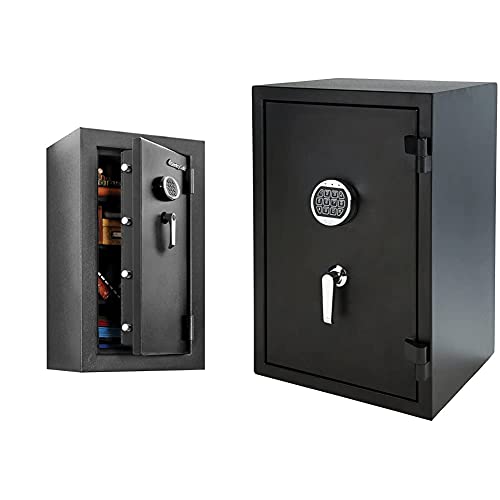
SentrySafe Waterproof and Fireproof Alloy Steel Digital Safe Box for Home with Code Button Keypad, 1.23 Cubic Feet, 17.8 x 16.3 x 19.3 Inches (exterior), SFW123GDC - Gun Safes And Cabinets - Amazon.com
View on AmazonQuick FAQ
Will my family owe income tax on the death benefit? Typically no — life insurance proceeds are generally income-tax-free. Estate or inheritance taxes may still apply depending on ownership and your state.
Should I name my minor child as beneficiary? Usually no. Use a trust or UTMA/UGMA custodianship so an adult can manage funds.
Term or permanent for estate planning? For long-term estate liquidity, permanent coverage usually fits better. Term is excellent for income replacement during working years. Many people use both.
Can I change beneficiaries later? Yes, if the policy is not irrevocably assigned to a trust and you retain the right to change them.
A helpful next step
If you are weighing life insurance and estate planning options, get two things moving in parallel:
- Speak with a licensed estate planning attorney to confirm the right ownership/beneficiary structure (especially if considering an ILIT).
- Get personalized life insurance quotes so you can fit the plan to a real budget. The fastest way to see your actual options is to compare quotes from 3–5 carriers: Life Insurance: How to Choose the Right Policy and Get Quotes.
A licensed insurance agent can help you narrow carriers, explain policy illustrations, and coordinate changes as your life evolves. An attorney and tax professional can confirm trust language and tax implications for your state.
What to remember
- Life insurance creates immediate liquidity so your family is not forced to sell assets under pressure.
- Align the policy type (term vs permanent) with the job you need it to do.
- Get ownership and beneficiaries right from the start — especially if trusts or estate taxes are in play.
- Review after major life changes and at least every couple of years.
- Comparison shopping is your friend; rates and underwriting vary by insurer.
You are building a plan that works on your family’s hardest day. Done thoughtfully, life insurance and estate planning together can protect the people you love and preserve the legacy you have worked for.
Recommended Resources
Plan Your Estate: Clifford, Denis
Denis Clifford, a graduate of Columbia Law School, where he was an editor of The Law Review, is a lawyer who specializes in estate planning. He is the author of many Nolo titles including Quick and Le
Quicken Willmaker & Trust 2024: Book & Online Software Kit: Nolo, Editors of
Quicken Willmaker & Trust 2024: Book & Online Software Kit [Nolo, Editors of] on Amazon.com. *FREE* shipping on qualifying offers. Quicken Willmaker & Trust 2024: Book & Online Softwar
SentrySafe Waterproof and Fireproof Alloy Steel Digital Safe Box for Home with Code Button Keypad, 1.23 Cubic Feet, 17.8 x 16.3 x 19.3 Inches (exterior), SFW123GDC - Gun Safes And Cabinets - Amazon.com
<strong>SentrySafe Medium Gray Fireproof Safe and Waterproof Safe Box with Dial Combination, Home Security for Money, Documents, or other Valuables</strong>, 1.23 Cubic Feet, SFW123DSB
Related Articles
- Why Life Insurance Matters: How to Protect Your Family and Finances
- Term Life Insurance for Parents: How Much to Buy, Which Policy to Choose, and How to Save
- How Does Life Insurance Work? A Clear, Step-by-Step Guide
- Life Insurance Beneficiary Rules: What Policyholders Need to Know
- Life Insurance vs Savings Account: Protection or Liquidity — Which Should You Choose?
- How to Save on Life Insurance: Practical Ways to Lower Your Premiums
- Whole Life Insurance Explained: Benefits, Costs, and How to Buy
- Best Whole Life Insurance Plans: Top Picks and How to Choose