
Best Rates for Term Life Insurance: How to Compare Quotes and Lower Your Premiums
You’re here because you want the best rates for term life insurance and you don’t want to overpay. Smart. Term life is usually the most cost-effective way to protect your family, but rates vary a lot by age, health, and the company you choose. Let’s walk through what actually drives your price, how to lock in lower premiums, and realistic numbers so you can benchmark any quote you see.
What Determines Term Life Insurance Rates
Your rate is based on two buckets of factors: your personal risk profile and the policy you choose. Then the insurer assigns you an underwriting class (your risk category) that ultimately sets the price.
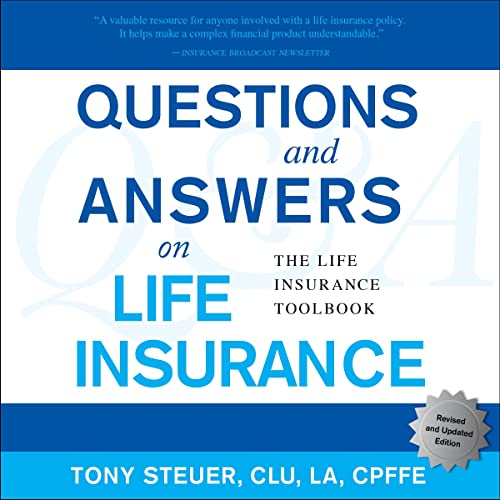
Questions and Answers on Life Insurance: Steuer, Tony
*Amazon Best Seller in Life Insurance* Questions and Answers on Life Insurance is <strong>an extremely useful and one of a kind resource for anyone looking for a simple way to understand life insuranc
Check Price on AmazonPersonal factors insurers evaluate
- Age: Younger applicants typically pay significantly less. Each birthday matters because insurers price based on life expectancy.
- Gender: Women generally pay less because, statistically, they live longer.
- Tobacco use: Using cigarettes, vapes, cigars, nicotine gum, or patches in the last 12 months typically puts you in a tobacco class, which can be 2x–3x the non‑smoker rate.
- Health and medical conditions: Blood pressure, cholesterol, diabetes control, heart history, cancer history, mental health treatment, and other conditions all factor in. Underwriters look at stability, treatment, and recent test results.
- BMI (body mass index): Carriers have build charts. A higher BMI can push you down a class; significant weight loss kept off for 12+ months may help you up a class.
- Family history: Early death from heart disease or certain cancers (often before age 60) in parents or siblings can affect your class.
- Occupation and hobbies: Risky jobs (high‑rise construction, commercial diving) or avocations (scuba, rock climbing, private aviation) can add a surcharge or exclusion.
- Driving record: Multiple moving violations, DUIs, or recent license suspensions can raise rates or delay approval.
Policy choices that change the price
- Term length: A 10‑year term usually costs less than a 20‑year; a 30‑year term costs more because the insurer covers you longer during higher‑risk years.
- Coverage amount (face amount): More coverage costs more, but the price per $1,000 often gets cheaper at higher amounts due to volume discounts.
- Riders: Optional add‑ons. Common riders include:
- Accelerated death benefit (often included at no cost): lets you access part of the benefit if you’re diagnosed with a terminal illness.
- Waiver of premium: waives payments if you become disabled; can add 5%–10%+ to the premium.
- Child term rider: small additional coverage for children; usually a few dollars per month.
- Return of premium: refunds premiums if you outlive the term; typically 2x–3x the cost of basic term. Nice in theory, pricey in practice.
- Level vs. decreasing coverage or annually renewable term:
- Level term keeps your premium and coverage fixed—this is what most people buy.
- Decreasing term lowers the death benefit over time (often used for mortgage protection) while keeping premiums level. You’ll generally get more value with level term.
- Annually renewable term (ART) starts cheap but increases every year. It’s rarely the best long‑term deal.
Underwriting classes explained
When you apply, the carrier assigns an underwriting class—a pricing tier based on your health and risk:
- Preferred Plus (or Super Preferred): best health, lowest rates.
- Preferred: excellent health with a few minor factors.
- Standard Plus: average health, slightly better than Standard.
- Standard: average risk.
- Table‑rated (Table A/1 through H/8, etc.): higher risk due to health history; each “table” typically adds about 25% to the Standard rate.
- Tobacco classes: Preferred/Standard Tobacco; usually 2x–3x the non‑tobacco price.
Knowing your likely class helps you sanity‑check quotes and avoid surprises.
How to Get the Best Rates for Term Life Insurance
If your goal is the best rates for term life insurance, focus on these levers you can actually control.
Shop multiple carriers—prices vary for the same person
Insurers have different appetites. One may be strict on cholesterol but flexible on build; another the opposite. The fastest way to see what you would actually pay is to compare quotes from 3–5 top carriers on the same term and coverage amount. If you want a curated starting list, see our overview of competitive, consumer‑friendly companies in Best Term Life Insurance Companies (2026): Top Picks & How to Choose.
Time your application around health improvements
- Blood pressure/cholesterol: If your doctor just adjusted meds, waiting 1–3 months for stabilized readings can help.
- Labs and exams: Hydrate, avoid heavy exercise and high‑salt meals 24–48 hours before your paramed (the brief medical exam with blood/urine) to avoid “false” spikes.
- Weight: Carriers often credit a portion of recent weight loss if kept off for several months. If you’ve recently lost 15–20 pounds and can maintain it, waiting can pay off.
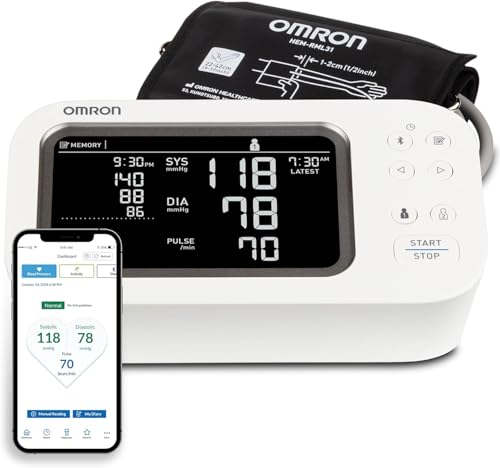
OMRON Platinum Blood Pressure Monitor for Home Use & Upper Arm Blood Pressure Cuff - #1 Doctor & Pharmacist Recommended Brand - Clinically Validated - AFib Detection - Connect App
View on AmazonQuit smoking (and know the timelines)
Many carriers require 12 consecutive months nicotine‑free to qualify for non‑tobacco rates, with some requiring 24 months for the top class. Occasional cigar use may be allowed with a negative nicotine test—varies by carrier. If you’re actively quitting, you can buy now at a tobacco rate and ask for reconsideration after you’ve reached the carrier’s smoke‑free threshold.
Right‑size your term and coverage amount
- Match the term to the risk window you’re actually insuring: years until the mortgage is paid, kids finish college, or a spouse reaches retirement age.
- Consider laddering: Instead of a single $1M 30‑year policy, you might buy $500K for 30 years and $500K for 15 years. As expenses drop, some coverage falls off, and total cost is typically lower.
- Don’t overbuy riders: Only pay for riders you truly need. Return of premium and long conversion riders can be valuable but add cost.
For a deeper dive on trimming costs without sacrificing protection, see How to Find Cheap Life Insurance: Smart Ways to Lower Your Premiums Without Sacrificing Coverage.
Consider fully underwritten vs. no‑exam options
No‑medical‑exam policies skip the paramed exam and rely on data (prescription history, motor vehicle report, health records). They’re fast and can be competitively priced for younger, very healthy applicants—but in many cases, fully underwritten policies deliver the lowest price. If speed or exam‑avoidance matters, compare both paths side by side. Start here: No Medical Exam Life Insurance: Compare Providers & Get Quotes.
Pay annually if cash flow allows
Monthly payments often include a small “modal” fee. Paying annually can shave roughly 3%–8% off total yearly cost, depending on the carrier.
Value convertibility (future flexibility)
Convertibility means you can switch your term policy to a permanent policy (like whole life) without a new medical exam during a set window. Even if you don’t plan to convert, a longer conversion period protects your insurability if health changes. Expect slightly higher premiums from carriers with very flexible conversion privileges, but it can be worth it.
For more ways to dial in quality coverage for less, see Affordable Term Life Insurance: How to Get the Right Coverage for Less.
What to Expect: Sample Term Life Insurance Rates
Real‑world expectations help you spot a great quote—or a red flag. These are typical ranges for a healthy, non‑smoker applicant buying a 20‑year level term policy from a competitive carrier. Your actual rate will vary by carrier, state, and underwriting class.
Examples (Preferred Plus Non‑Tobacco, 20‑year term):
- Age 25
- $500,000: Women $14–20/mo; Men $18–25/mo
- $1,000,000: Women $24–35/mo; Men $32–45/mo
- Age 35
- $500,000: Women $17–25/mo; Men $20–30/mo
- $1,000,000: Women $30–45/mo; Men $38–60/mo
- Age 45
- $500,000: Women $35–55/mo; Men $45–70/mo
- $1,000,000: Women $65–105/mo; Men $85–140/mo
- Age 55
- $500,000: Women $90–150/mo; Men $120–190/mo
- $1,000,000: Women $175–300/mo; Men $230–390/mo
How term length changes price (for the same person and coverage):
- 10‑year vs 20‑year: often ~25%–40% less
- 30‑year vs 20‑year: often ~40%–70% more
How underwriting class changes price (rough rules of thumb):
- Preferred Plus → Preferred: +10%–20%
- Preferred Plus → Standard Plus: +30%–50%
- Preferred Plus → Standard: +50%–80%
- Standard → Table 2 (B): about +25%–50% more than Standard (each table typically adds ~25%)
- Non‑Tobacco → Tobacco: 2x–3.5x more, depending on age and class
A quick benchmark scenario
- Say you’re a 35‑year‑old non‑smoking woman in good health looking for $500,000 of 20‑year term. Preferred Plus quotes often land around $17–25/month. If you fall to Standard, you might see $28–40/month. A tobacco class could push it to $45–70/month or more.
- A 45‑year‑old non‑smoking man seeking $1,000,000 for 20 years might see $85–140/month at Preferred Plus, $120–190/month at Standard, and $200–350/month for tobacco classes.
Important: These are estimates, not offers. Carriers price uniquely, and your final class depends on full underwriting.
How to Get and Compare Accurate Quotes
Where to shop: online tools vs. independent agents
- Online quote tools: Fast, transparent, helpful for initial screening. Great to see a spread of prices in minutes.
- Independent agents/brokers: Represent multiple carriers and know each company’s underwriting “niches” (for example, which carrier is friendlier to sleep apnea with good CPAP compliance). A good broker can pre‑underwrite your case and avoid costly surprises.
If you’re just starting, this walkthrough can help you organize decisions and get side‑by‑side offers: Life Insurance: How to Choose the Right Policy and Get Quotes.
Information underwriters actually use
Be ready to share:
- Basics: Date of birth, gender, state of residence, citizenship/visa status
- Nicotine: Any use in the last 12–24 months, including vapes and nicotine replacement therapy
- Health history: Diagnoses, surgeries, prescriptions, mental health treatment, recent labs
- Height/weight: Accurate numbers matter—build charts are strict
- Family history: Early cardiovascular disease or cancer in parents/siblings
- Driving history: Violations, DUIs, suspensions (usually last 3–5 years)
- Occupation/hobbies: Aviation, scuba, climbing, racing, hazardous work
- Financials for larger policies: Income/assets and purpose of coverage (insurers use typical income multiples to size coverage; this helps prevent over‑insurance)
Data sources carriers check:
- Prescription database (Rx check)
- MIB (Medical Information Bureau) for past applications/impairments
- Motor Vehicle Report
- Medical records (APS) for certain histories
- Paramed exam and labs for fully underwritten policies; older applicants or higher face amounts may require an EKG
Timing tips
- Don’t try to “game” nicotine tests. Even if your test is clean, many carriers still classify you as tobacco if you used nicotine within 12 months. Wait until you hit the carrier’s threshold for the best class, or buy now and plan a post‑quit reconsideration.
- Traveling or living abroad soon? Significant foreign travel or extended stays can delay or limit approval—apply before those plans if possible.
- Expect 2–6 weeks from application to approval for fully underwritten cases; some simplified/no‑exam offers can finalize in days.
Common mistakes that lead to overpaying (or the wrong policy)
- Getting just one quote from a single carrier
- Estimating a top health class when your history suggests Standard—leading to a surprise price increase late in the process
- Choosing too short a term that expires before big obligations end
- Overbuying riders you won’t use (especially return of premium)
- Paying monthly when annual is affordable and cheaper overall
- Skipping convertibility, then losing options after a new diagnosis
- Not re‑shopping after you quit smoking or your health improves (you can often replace or request a class improvement)
- Relying only on group life at work—those rates can rise and coverage usually ends when you change jobs
What to Look For When Comparing Quotes
Focus on more than the headline price. Here’s how to compare apples to apples.
- Financial strength: Look for strong ratings (e.g., A‑ or better from A.M. Best) to ensure claims‑paying ability.
- Conversion features: How long do you have to convert, and to which products? Longer windows and broader choices provide flexibility.
- Renewal terms: If you outlive your term, what are the guaranteed renewal rates? They’ll be high, but some carriers are less punitive.
- Underwriting fit: Does the carrier favor your profile (build, blood pressure, family history)? An independent agent can match you.
- Rider costs and availability: Waiver of premium, child term, and others—compare actual rider pricing, not just whether it exists.
- Customer service and digital experience: Ease of application, speedy approvals, online account access, and beneficiary support matter when it counts.
If you want broader context on companies and policy types while you compare prices, this guide is helpful: Best Life Insurance: Top Picks & How to Choose (2026 Guide).
Real‑World Scenarios
- You’re 30, non‑smoker, and just bought a home. You need coverage until the mortgage is near paid and kids (future) are through college. A $750K 30‑year level term could run roughly $40–65/month (Preferred Plus), depending on gender and state. Laddering $500K for 30 years + $250K for 15 years could trim $8–15/month while still protecting the highest‑risk years.
- You’re 42 with well‑controlled hypertension and a BMI of 29. One carrier might offer Preferred; another may drop you to Standard Plus. Shopping could save 20%–30% for the exact same coverage.
- You quit smoking 18 months ago. Re‑apply or request reconsideration—you may cut your premium by half compared with your current tobacco‑class policy.
Quick path to better pricing
- Compare quotes from 3–5 carriers on the same term and face amount. Small health details can swing prices—see it in writing.
- If you’re borderline between classes, ask an independent broker which carrier is most lenient for your specific risk factors.
- Decide if speed or absolute lowest cost matters more. If speed: add a no‑exam option to your comparison. If lowest cost: go fully underwritten.
Looking for next steps? A practical, step‑by‑step game plan is here: Affordable Term Life Insurance: How to Get the Right Coverage for Less.
When to Talk to a Licensed Agent
If you have a meaningful medical history, use nicotine of any kind, need over $2 million in coverage, or have a risky hobby/occupation, a licensed independent agent can pre‑underwrite your case and point you to the carrier most likely to give you the best rate. It’s typically free to you; commissions are paid by the insurer and are built into premiums whether or not you use an agent.
Your Next Step
The fastest way to see your best rates for term life insurance is to view real quotes side‑by‑side. Take five minutes to compare offers from multiple top‑rated carriers—you’ll know where you stand today and what levers could lower the price.

SentrySafe Charcoal Gray Fireproof and Waterproof Safe Box with Key Lock, Portable Chest for Money, Passport, 0.28 Cubic Feet, 6.6 x 15.4 x 14.3 Inches, CHW20221
View on Amazon- Start comparing with a clear checklist and get live quotes: Life Insurance: How to Choose the Right Policy and Get Quotes
- If you prefer a quick, exam‑free option to benchmark against, add this to your mix: No Medical Exam Life Insurance: Compare Providers & Get Quotes
Rates vary by age, health, state, and insurer. Quotes are illustrative—not guarantees. A licensed agent can help you personalize coverage and pricing for your situation.
Recommended Resources
Questions and Answers on Life Insurance: Steuer, Tony
*Amazon Best Seller in Life Insurance* Questions and Answers on Life Insurance is <strong>an extremely useful and one of a kind resource for anyone looking for a simple way to understand life insuranc
OMRON Platinum Blood Pressure Monitor for Home Use & Upper Arm Blood Pressure Cuff - #1 Doctor & Pharmacist Recommended Brand - Clinically Validated - AFib Detection - Connect App
CONFIDENCE IN EVERY READING: Monitor your heart health with the OMRON Platinum Upper Arm Blood Pressure Monitor's Advanced Accuracy with AFib Detection Technology; Store up to 100 readings each f
SentrySafe Charcoal Gray Fireproof and Waterproof Safe Box with Key Lock, Portable Chest for Money, Passport, 0.28 Cubic Feet, 6.6 x 15.4 x 14.3 Inches, CHW20221
The SentrySafe Charcoal Gray Fireproof and Waterproof Safe Box with Key Lock is <strong>the ultimate secure storage solution for your most valuable items</strong>. This portable chest boasts 0.28 cubi
Related Articles
- How to Find Cheap Life Insurance: Smart Ways to Lower Your Premiums Without Sacrificing Coverage
- Affordable Term Life Insurance: How to Get the Right Coverage for Less
- Term Life Insurance: Complete Guide to Coverage, Cost & Getting Quotes
- How to Save on Life Insurance: Practical Ways to Lower Your Premiums
- Best Term Life Insurance Companies (2026): Top Picks & How to Choose
- How to Lower Life Insurance Premiums: A Practical Guide to Discounts & How to Qualify
- Best Life Insurance: Top Picks & How to Choose (2026 Guide)
- Cheap Life Insurance for Young Adults: How to Get Affordable Coverage without Overpaying