
Term Life Insurance: Complete Guide to Coverage, Cost & Getting Quotes
You’re shopping for term life insurance and want straight answers: How much coverage do I need? What will it actually cost? And how do I compare quotes without overpaying? You’re in the right place. This guide explains term life insurance in plain English, shows typical price ranges with real-world examples, and gives you a clear path to get quotes the smart way.
Quick note on pricing: life insurance rates vary by your age, health, state, and insurer underwriting rules. Numbers below are typical ranges, not guarantees.
What is term life insurance?
Term life insurance is simple, affordable coverage that lasts for a set period (the “term”), such as 10, 20, or 30 years. If you pass away during that term, the policy pays a tax-free lump sum (the “death benefit,” the amount your beneficiaries receive) to the person you name on the policy (your “beneficiary”). If you outlive the term, the coverage ends and no benefit is paid—unless you renew or convert the policy (more on that below).
How it works in practice:
- You choose a term length and a coverage amount (say, 20 years, $500,000).
- You pay a premium (the amount you pay monthly or annually to keep the policy in force).
- If you die during the term, your beneficiary makes a claim and receives the death benefit.
- There’s no cash value (no savings component)—that’s why term life is typically the lowest-cost way to buy a lot of coverage.
Common term options you’ll see: 10, 15, 20, 25, 30, 35, and even 40 years with some carriers. “Level term” means your premium stays the same for the entire term. “Decreasing term” (less common today) means the coverage amount shrinks over time.
Term vs. whole life: when term makes sense
Both protect your family, but they work differently:
- Term life: Pure protection for a set time. No cash value. Lowest cost per dollar of coverage.
- Whole life: Permanent coverage for your lifetime with a cash value (savings component that grows over time). Premiums are much higher.
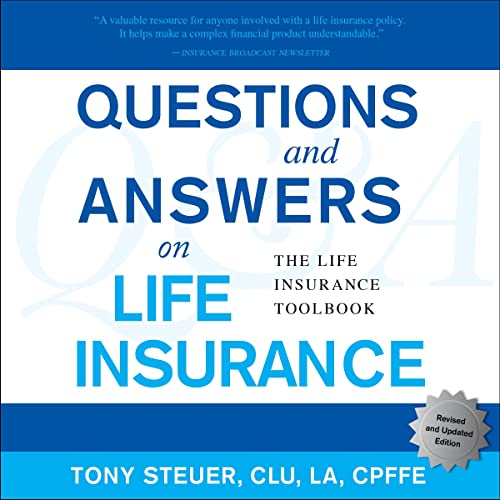
Questions and Answers on Life Insurance: Steuer, Tony
*Amazon Best Seller in Life Insurance* Questions and Answers on Life Insurance is <strong>an extremely useful and one of a kind resource for anyone looking for a simple way to understand life insuranc
Check Price on AmazonTerm life typically makes sense if your biggest need is income replacement for a period when people rely on you—covering the mortgage, childcare, or college while kids are at home, or replacing your paycheck until retirement savings can stand on their own.
If you’re weighing permanent coverage versus term, or thinking about combining them, see our side-by-side breakdown: Term vs. Whole Life Insurance: Which Is Right for You? (/life-insurance/term-vs-whole-life-insurance)
How term length and coverage amount affect your premium
Two choices have the biggest impact on what you pay:
- Term length: Longer term = higher premium, because the insurer covers you for more years.
- Coverage amount: More coverage = higher premium, roughly in proportion to the amount.
Typical price ranges for a healthy non-smoker (rates vary by state and insurer):
- Example: 35-year-old woman, Texas, $500,000 coverage
- 10-year term: around $15–$22 per month
- 20-year term: around $18–$28 per month
- 30-year term: around $28–$45 per month
- Example: 35-year-old man, Texas, $500,000 coverage
- 10-year term: around $18–$28 per month
- 20-year term: around $22–$35 per month
- 30-year term: around $35–$55 per month
Those ranges are for level term with standard to preferred health classes. If you have medical conditions, use tobacco, or choose riders (extra features), premiums will typically be higher.
A quick way to save: laddering
“Laddering” means buying two or three smaller term policies with different end dates to match shrinking needs. Example: $300,000 for 30 years (to protect a spouse) plus $200,000 for 20 years (to cover kids through college). As shorter terms end, you stop paying for coverage you no longer need.
How to calculate how much term life insurance you need
There’s no one magic formula, but these approaches will get you very close.
- Income-replacement method
- Start with 10–15 times your annual income. If you earn $80,000, that’s $800,000–$1.2 million. Use the higher end if you have young children or limited savings.
- Add major debts not already covered elsewhere (e.g., mortgage balance) and subtract liquid assets (savings, existing life insurance).
- The DIME method (Debt, Income, Mortgage, Education)
- Debt: Add credit cards, personal loans, auto loans (exclude mortgage here).
- Income: Multiply your annual income by the number of years your family would need support (often 10–15).
- Mortgage: Add the remaining balance.
- Education: Estimate future college costs per child (today, many families target $100,000–$200,000 per child for in-state public school; adjust for your plans).
- Debt + education scenarios
- If you’re single with no dependents: enough to cover final expenses and any co-signed debt (often $25,000–$100,000).
- If you’re a parent: often $500,000–$1.5 million depending on income, mortgage, and college goals.
Example calculation (parents with two kids):
- Income: $90,000 x 12 years = $1,080,000
- Mortgage: $320,000
- Other debt: $15,000
- Education: $120,000 x 2 = $240,000
- Subtotal: $1,655,000
- Subtract savings and existing life insurance: −$155,000
- Suggested coverage: about $1.5 million
Calculator note: If you’re viewing this on FindAssurance, use the calculator tool on this page. Plug in your annual income, mortgage balance, other debts, college target per child, and current savings to see a recommended coverage range and sample premiums.
What term length should you choose?
- Match it to your longest major obligation. If your youngest child is 3, a 20-year term covers you until they’re through college. If your mortgage has 28 years left, a 30-year term is a common choice.
Factors that affect term life premiums
Insurers price risk using underwriting (the process of evaluating your application). Here’s what typically moves your rate up or down:
- Age: The younger you are when you buy term life insurance, the lower your premium—because the risk of death during the term is lower. A 30-year-old generally pays far less than a 45-year-old for the same policy.
- Health history: Conditions like diabetes, heart issues, sleep apnea, or elevated blood pressure can increase rates. Well-controlled conditions may still qualify for competitive classes.
- Tobacco and vaping: Any nicotine use in the past 12–24 months often triggers “smoker” rates, which can be 2–3x higher than non-smoker rates.
- Height and weight (build): Higher body mass index (BMI) can move you to a different health class.
- Occupation and hobbies: Pilots, commercial divers, and people who skydive or rock climb may see surcharges or exclusions.
- Family history: Early cardiovascular disease or certain cancers in close relatives can affect your class.
- Driving record and prescriptions: Recent DUIs, multiple moving violations, or certain medications can raise flags. Insurers often check your MVR (motor vehicle record), Rx database (prescription history), and MIB (Medical Information Bureau) reports.
- Medical exam vs. no-exam: Some policies require a quick paramedical exam (vitals, blood/urine). Others use accelerated underwriting or no medical exam options.
Interested in skipping the exam? Compare options here: No Medical Exam Life Insurance: Compare Providers & Get Quotes (/life-insurance/no-medical-exam-life-insurance-compare-providers-quotes)
Key riders, exclusions, renewability, and convertibility
Riders are optional features you can add to a base policy. They increase flexibility but can raise your premium. Read these carefully before buying.
- Convertible term: Lets you convert your term policy to a permanent policy (like whole life) during a set window without a new medical exam. This can be a safety net if your health changes and you still want lifetime coverage.
- Guaranteed renewable term: Lets you extend coverage past the original term without new underwriting, typically year-to-year. Premiums jump each year based on your attained age, so this is a short-term bridge, not a long-term plan.
- Accelerated death benefit (ADB): If you’re diagnosed with a qualifying terminal illness, you can access a portion of the death benefit while alive. Any amount advanced reduces what beneficiaries receive.
- Waiver of premium: If you become totally disabled (as defined in the policy), the insurer waives your premium so coverage stays in force.
- Child or spouse riders: Add smaller amounts of term coverage for family members under your policy.
- Return of premium (ROP): Refunds premiums if you outlive the term. Costs more; worthwhile only in specific cases. Compare the added cost to simply buying lower-cost level term and investing the difference.
Common exclusions and clauses (read your policy language):
- Suicide clause: If death is by suicide within the first 2 years (time period varies by state), the insurer typically refunds premiums but does not pay the death benefit.
- Contestability period: For the first 2 years, the insurer can investigate and deny a claim for material misrepresentation (for example, failing to disclose a known condition). Always answer honestly.
- Illegal or hazardous activity: Claims tied to illegal acts, or undisclosed hazardous hobbies, may be denied.
How to buy term life insurance — step-by-step
Here’s the cleanest path to getting solid coverage at a fair price.

Clever Fox When I Die Planner With Pockets for Documents – End-of-Life Organizer Binder for Important Personal Info & Final Wishes (Blue Surf)
View on Amazon
SentrySafe Waterproof and Fireproof Alloy Steel Digital Safe Box for Home with Code Button Keypad, 1.23 Cubic Feet, 17.8 x 16.3 x 19.3 Inches (exterior), SFW123GDC - Gun Safes And Cabinets - Amazon.com
View on Amazon- Decide on your amount and term
- Use the income-replacement or DIME method above. Pick a term that outlasts your biggest obligation (kids at home, years left on mortgage, or years to retirement).
- Gather your info
- Height/weight, medications and dosages, recent lab results if you have them, primary care and specialist details, driving history, and beneficiary names and birthdates.
- Compare quotes from 3–5 carriers
- The fastest way to see what you would actually pay is to compare term life insurance quotes side by side. Different insurers price health conditions and build differently, so a “Standard” class at one company could be “Preferred” at another.
- Start here for comparison tips and ways to lower your rate: Best Rates for Term Life Insurance: How to Compare Quotes and Lower Your Premiums (/life-insurance/best-rates-term-life-insurance-compare-quotes-lower-premiums)
- Choose policy features
- Decide on riders (convertibility, waiver of premium, accelerated death benefit). Check the conversion window and which permanent products you can convert into.
- Complete the application and underwriting
- Many applicants qualify for accelerated underwriting (no exam) with quick decisions. Others will do a brief exam (20–30 minutes at home or work). Expect questions about your health and lifestyle. Typical timeline: a few days to 4–6 weeks, depending on records.
- Review your offer and place the policy in force
- You may receive an offer at a different health class than quoted if underwriting finds new information. Review the premium, riders, and beneficiary designations. Your coverage starts when you accept the offer and pay the first premium (in some cases, temporary coverage may apply—ask your agent).
- Keep your policy up to date
- Revisit coverage after major life events (marriage, new child, new mortgage, salary changes). Update beneficiaries and store the policy where your family can find it.
What to look for when comparing term quotes:
- Financial strength of the insurer (AM Best rating) and complaint levels (NAIC complaint index).
- Level-term guarantees (premium and death benefit stay level for the full term).
- Conversion options: how long you can convert and to which permanent products.
- Renewal provisions: guaranteed renewable, and at what rates.
- Rider costs and definitions (how disability or terminal illness is defined).
- Exclusions and contestability language.
Want help picking a carrier? See our current research: Best Term Life Insurance Companies (2026): Top Picks & How to Choose (/life-insurance/best-term-life-insurance-companies-2026)
CTA: Ready to see your number? Compare quotes from 3–5 leading insurers. It’s free, and you’ll quickly see which company treats your health profile most favorably.
State rules and consumer protections — how to verify your insurer
Life insurance is regulated at the state level. A few protections you should know:
- Free-look period: After your policy is delivered, you usually have 10–30 days (varies by state) to cancel for a full refund.
- Grace period: If you miss a payment, most states require a grace period (often 30–31 days) before coverage lapses.
- Replacement rules: If you’re swapping an existing policy for a new one, agents must provide comparison disclosures. Never cancel old coverage until the new policy is in force.
How to verify your insurer and agent
- License lookup: Search “YourState Department of Insurance license lookup.” Examples:
- California: search “California Department of Insurance license search”
- Texas: search “Texas Department of Insurance agent/company lookup”
- Florida: search “Florida DFS insurance license lookup”
- New York: search “NY DFS insurance license search”
- Financial strength: Look up AM Best ratings on the insurer. Aim for A- (Excellent) or better for long-term promises.
- Complaints: Search the NAIC complaint index for the company to see how its complaint volume compares to peers.
If anything looks off—unlicensed sellers, pressure tactics, or offers that seem too good to be true—pause and get a second opinion from a licensed, independent agent.
Real-world scenarios and sample costs
- 28-year-old non-smoker, $750,000 for 30 years: Often a sweet spot for new parents with a long mortgage runway. Typical range might land around the mid-$30s to mid-$50s per month, depending on health class and state.
- 45-year-old non-smoker, $500,000 for 20 years: Protects peak earning years through college. Typical range might be the mid-$40s to $80+ per month, depending on health and build.
- Smoker surcharge example: A smoker rate can be 2–3x a non-smoker rate of the same age and coverage. Quitting and staying tobacco-free for 12 months can, in many cases, qualify you for non-smoker classes at your next review or new application.
Again, these are typical ranges. Your actual cost depends on your unique profile and the insurer’s underwriting.
FAQs: quick answers you might be wondering about
- Can I increase or decrease my coverage later? You usually can’t increase the face amount on the same policy without underwriting, but you can buy an additional policy. You can often reduce coverage to lower your premium.
- What if my health improves? You can re-shop. If you qualify for a better health class, a new policy may save money. Never cancel existing coverage until the new one is in force.
- What happens at the end of my term? Many policies are guaranteed renewable annually, but rates jump. You can also convert (if within the window) or re-shop for a new term policy if you still need coverage.
- Is the death benefit taxed? It’s typically income-tax free to beneficiaries. Estate or other taxes can apply in specific situations—ask a tax professional.
Where to learn more
- Curious if term life is still the best fit? Term vs. Whole Life Insurance: Which Is Right for You? (/life-insurance/term-vs-whole-life-insurance)
- Want tactics to lock in a lower rate? Best Rates for Term Life Insurance: How to Compare Quotes and Lower Your Premiums (/life-insurance/best-rates-term-life-insurance-compare-quotes-lower-premiums)
- Prefer to avoid an exam? No Medical Exam Life Insurance: Compare Providers & Get Quotes (/life-insurance/no-medical-exam-life-insurance-compare-providers-quotes)
- Need help picking a carrier? Best Term Life Insurance Companies (2026): Top Picks & How to Choose (/life-insurance/best-term-life-insurance-companies-2026)
CTA: The fastest way to see what you’d actually pay is to compare quotes from 3–5 carriers. Take five minutes, see your options, and choose the policy that fits your family and budget.
A quick, important note: This guide is general education, not tax or legal advice. For personalized recommendations, speak with a licensed agent who can review your health profile, budget, and goals.
Next step: Estimate your coverage need using the methods above, then request side-by-side term life insurance quotes. Lock in a rate while you’re young and healthy—your future self will thank you.
Recommended Resources
Questions and Answers on Life Insurance: Steuer, Tony
*Amazon Best Seller in Life Insurance* Questions and Answers on Life Insurance is <strong>an extremely useful and one of a kind resource for anyone looking for a simple way to understand life insuranc
SentrySafe Waterproof and Fireproof Alloy Steel Digital Safe Box for Home with Code Button Keypad, 1.23 Cubic Feet, 17.8 x 16.3 x 19.3 Inches (exterior), SFW123GDC - Gun Safes And Cabinets - Amazon.com
<strong>SentrySafe Medium Gray Fireproof Safe and Waterproof Safe Box with Dial Combination, Home Security for Money, Documents, or other Valuables</strong>, 1.23 Cubic Feet, SFW123DSB
Clever Fox When I Die Planner With Pockets for Documents – End-of-Life Organizer Binder for Important Personal Info & Final Wishes (Blue Surf)
Clever Fox Peace of Mind Planner – Guided End of Life Organizer, Personal Record Book & Emergency File for Important Information (Blue Surf)
Related Articles
- What Is Term Life Insurance? A Clear Guide to Coverage & Costs
- Affordable Term Life Insurance: How to Get the Right Coverage for Less
- Best Rates for Term Life Insurance: How to Compare Quotes and Lower Your Premiums
- Best Term Life Insurance Companies (2026): Top Picks & How to Choose
- Whole Life Insurance Explained: Benefits, Costs, and How to Buy
- Life Insurance in Florida: Coverage Options, Costs, and How to Choose
- Cheap Life Insurance for Young Adults: How to Get Affordable Coverage without Overpaying
- How Much Life Insurance Do I Need? Simple Calculator & Step-by-Step Plan