
Cheap Life Insurance for Young Adults: How to Get Affordable Coverage without Overpaying
You want cheap life insurance for young adults, but you don’t want to cut corners on real protection. Smart. This guide walks you through what coverage actually needs to do at your age, the cheapest policy types, and practical ways to lock in a low rate now—without getting stuck with the wrong product.
Why cheap life insurance for young adults makes sense
Life insurance can feel unnecessary in your 20s or early 30s—until you run the math on who would be left holding the bag. Here is what typically matters for young adults and what this guide helps you accomplish.
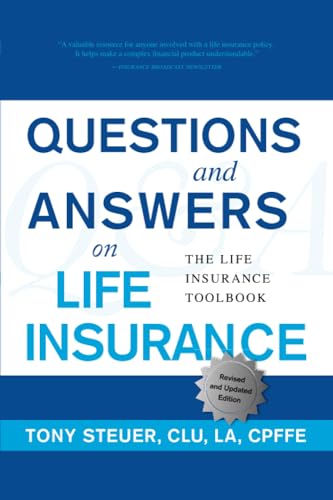
Questions and Answers on Life Insurance: The Life Insurance Toolbook (Fifth Edition): Steuer, Tony
With thirty-five years of experience in the life insurance business, Tony Steuer <strong>delivers a practical, one-of-a-kind resource for anyone involved in choosing or monitoring a life insurance pol
Check Price on AmazonClarify realistic protection goals
- Debt payoff and co-signer protection: If a parent or partner co-signed your private student loan, car loan, or credit card, a policy can cover that balance so they are not liable. Federal student loans are usually discharged at death, but private loans are not always—check your promissory note.
- Final expenses: A modest death benefit (the tax-free payout to your beneficiary) can cover funeral or memorial costs so your family does not have to crowd‑fund.
- Income replacement for dependents: If someone relies on your paycheck—spouse, partner, or child—life insurance can replace years of income to keep their plans on track.
- Temporary obligations: A policy can cover a lease with a roommate, a mortgage with a partner, or childcare plans if something happens to you.
The financial benefits of buying early
- Lower premiums locked for decades: Insurers price policies by age and health. The younger and healthier you are, the less you pay—often for a 10–30 year level term where the premium (what you pay each month) is guaranteed not to change.
- Easier underwriting (the insurer’s review of your health and risk): In your 20s and early 30s, you are more likely to qualify for a top rate class without hoops. Many carriers now offer accelerated underwriting (no medical exam, just a health questionnaire and data checks) for healthy applicants.
- Flexibility later: Buy what you need now, then add more coverage later as life changes (marriage, a home purchase, kids). Laddering policies—holding multiple terms that end at different times—can keep costs low while matching your needs.
Common misconceptions that cost people money
- “I do not have kids, so I do not need life insurance.” If anyone would be financially hurt by your death—co-signer, partner, parents—coverage can make a real difference at a very low cost when you are young.
- “I will wait until I buy a house.” Every birthday can nudge rates up. Health surprises can push them up a lot. Waiting typically costs more over the life of the policy.
- “Group life at work is enough.” Employer coverage is a helpful start, but it is often 1–2x salary and not portable (you lose it when you leave). Most people with dependents need more.
For a deeper dive on timing and why buying early saves money, see Life Insurance for Young Adults: Why to Buy Now, What to Choose, and How to Save (/life-insurance/life-insurance-for-young-adults).
The most affordable policy types for young adults
Not all policies priced for “cheap” are actually a good deal. Here is how to think about the most budget-friendly options.
Level-term life insurance (the default, and usually cheapest for solid coverage)
- What it is: Coverage for a set term (10, 15, 20, 25, or 30 years) with a level premium (does not change) and a level death benefit.
- Why it is cost‑effective: You pay only for the years you actually need coverage (while you are building assets, paying off debt, or raising kids).
- What to look for: Strong financial ratings, guaranteed level premiums, ability to convert (more below), and an accelerated death benefit rider (lets you access part of the death benefit if you are terminally ill—definitions vary by state and carrier).
Typical cost example: A healthy 25‑year‑old non‑smoker seeking $500,000 of 20‑year term might see quotes around $15–$25 per month, depending on state, health, and insurer. A 30‑year term for the same person could be around $22–$35 per month. These are illustrative ranges—your actual rate will vary.
Annual renewable term (ART) or short‑term policies
- What it is: One‑year coverage that automatically renews each year, with the premium increasing annually.
- When it fits: As a temporary bridge—say you are between jobs and want coverage for 12–24 months. It starts cheap but climbs quickly.
- Watchouts: If you keep ART for more than a few years, you will often pay more than if you had locked a level term from the start.
Simplified‑issue term (no medical exam) and guaranteed‑issue policies
- Simplified‑issue: No medical exam, but you answer health questions. Faster approvals. Premiums are typically 10–30% higher than fully underwritten policies for the same person.
- Good fit: You are healthy but want speed and convenience, or you have minor, well‑controlled conditions. Many carriers now offer competitive no‑exam options for top‑tier applicants.
- Guaranteed‑issue: No exam and no health questions. Usually small coverage amounts (often $5,000–$25,000) with graded benefits (limited payout in first 2 years except for accidental death).
- Not ideal for healthy young adults: Guaranteed‑issue is usually designed for older buyers with health challenges. It is typically more expensive per dollar of coverage.
If you are leaning toward term but want to squeeze cost further, check out Affordable Term Life Insurance: How to Get the Right Coverage for Less (/life-insurance/affordable-term-life-insurance-right-coverage-less).
Group life through your employer
- Pros: Often free or low‑cost up to a limit (e.g., 1x salary). Usually no medical underwriting for base coverage. You can often buy more at group rates during open enrollment.
- Cons: Coverage may not be portable—if you leave, you lose it or face a pricey conversion. Amounts are rarely enough for people with dependents. Group rates also rise with age bands.
- Smart move: Take the free/cheap employer life, then buy an individual term policy you own and control.
Permanent cash‑value policies (whole life, universal life)
- What they are: Lifetime coverage with a cash value component that grows tax‑deferred. Premiums are far higher than term for the same death benefit.
- Why they are usually not cost‑effective for young adults: You are paying for lifelong coverage you typically do not need while you are still building an emergency fund, paying off debt, and investing. The extra dollars often work harder in retirement accounts or high‑interest debt payoff.
- When they can fit: You have a permanent dependent (e.g., lifelong special‑needs planning), a specific estate planning need, or you are maxing out other tax‑advantaged options. For most young adults, term is the value play.
How to get the cheapest valid coverage: tactics that work
Understand how age and health drive your rate
- Age: Every birthday can bump premiums. Locking a 20–30 year level term in your 20s or early 30s typically saves thousands over the life of a policy.
- Health and rate class: Insurers assign a rate class—like Preferred Plus, Preferred, Standard—based on underwriting (their risk evaluation). Small differences matter. Dropping from “Standard Non‑Tobacco” to “Preferred” can cut premiums by 15–30%, depending on the carrier.
Medical exam vs. no‑exam (accelerated) underwriting
- Medical exam (paramed): A brief health exam with blood and urine, vitals, and medical questions. Best for squeezing out the lowest possible rate if you are very healthy or have a complex history that deserves a thorough review.
- Accelerated/no‑exam: Health questionnaire plus data checks (prescription history, motor vehicle records, MIB). Fast, and many healthy applicants can now qualify at the same rate as exam‑based policies. If you are invited to skip the exam, it usually means the carrier believes you qualify for a top class.
Picking a practical coverage amount in your 20s and 30s
Think in layers, not guesses.
- If you have a co‑signed private student loan or smaller debts but no dependents: $100,000–$250,000 for 10–15 years often works to cover debts and final expenses.
- If you rent, share a mortgage, or your partner counts on your income: Start around 10–15x your annual income, then add major debts and future childcare/education goals.
- If you expect big life changes soon (marriage, home, kids): Consider a longer term (25–30 years) to lock today’s rate through those milestones. You can also ladder: for example, $300,000 for 30 years plus $200,000 for 20 years.
Example: A 28‑year‑old non‑smoker earning $60,000 might choose $600,000–$900,000 for 25–30 years. Typical quotes could range from roughly $22–$45 per month depending on term length, state, and health. That range is illustrative; your quote may differ.
Lifestyle moves that often lower premiums
- Tobacco and vaping: Tobacco use is the single biggest cost driver. Many carriers classify nicotine vaping as tobacco. Being tobacco‑free for 12 months (sometimes longer) can cut premiums by half or more.
- Weight and blood pressure: Improving BMI (body mass index—the height/weight ratio insurers use) and controlling blood pressure or cholesterol can move you up a rate class.
- Driving record and risky hobbies: DUIs, multiple moving violations, or activities like skydiving or technical rock climbing can increase rates. If you can wait until tickets fall off your record, you might improve your offer—just weigh that against rising age‑based pricing.
When to lock a rate now versus waiting
- Lock now if: You are healthy, your budget can support a basic term policy, or you have any co‑signed debts or a partner who relies on you.
- Consider a short bridge if: You know a qualifying event (like finishing a probationary period at work for better group rates) is weeks away. Annual renewable term can be a short‑term placeholder, but do not let it ride long term.
- Use laddering: Buy a smaller policy now, then add another policy when life milestones happen. Stacking terms can be cheaper than buying a single large policy for the longest possible term.
For more tactics to cut your bill, you can also read How to Find Cheap Life Insurance: Smart Ways to Lower Your Premiums Without Sacrificing Coverage (/life-insurance/how-to-find-cheap-life-insurance) and Best Rates for Term Life Insurance: How to Compare Quotes and Lower Your Premiums (/life-insurance/best-rates-term-life-insurance-compare-quotes-lower-premiums).
Underwriting, eligibility, and pitfalls to avoid
What insurers actually look at (and why it matters)
Underwriting is the insurer’s process to price your policy based on risk. Common factors include:
- Tobacco/nicotine use: Cigarettes, cigars, vaping, nicotine replacement—often priced as tobacco. Time since last use matters.
- BMI: Carriers have build charts. A few pounds can change your rate class. Each insurer’s chart differs.
- Medical history: Current conditions, treatments, and prescription history. Well‑controlled, common issues (mild anxiety, seasonal allergies) rarely move the needle; uncontrolled issues might.
- Family history: Early death from heart disease or certain cancers in parents/siblings can affect top‑tier classes with some carriers.
- Motor vehicle record (MVR): Recent DUIs or multiple violations can increase premiums.
- Avocations and travel: Risky hobbies (pilot, scuba at depth) or frequent travel to restricted regions can be surcharged or excluded.
Most carriers also check third‑party databases like the MIB (Medical Information Bureau), Rx reports (your prescription fills), and the MVR. Be honest—discrepancies can delay or derail approvals.
Pitfalls that cost young buyers
- Over‑insuring: Paying for a $1 million policy when your needs are $300,000 wastes money. Estimate needs realistically, then round up a bit for margin.
- Buying the wrong product: Permanent life pitched as an “investment” can siphon dollars from higher‑priority goals (emergency fund, 401(k) match, debt payoff). Term usually delivers the most coverage per dollar.
- "Too good to be true" guaranteed offers: Guaranteed‑issue or accidental death‑only policies marketed to young adults can be pricey for the limited payout. Accidental death policies only pay if you die in a qualifying accident—not illness, which causes most deaths.
- Hidden step‑ups: Some term quotes are not truly level; ensure your illustration shows guaranteed level premiums for the full term.
What to look for and how to compare quotes
What to look for in a policy and insurer
- Guaranteed level premiums and death benefit for the full term
- Financial strength (A‑ or better from AM Best typically indicates strong claims‑paying ability)
- Conversion option: The ability to convert to permanent coverage later without new medical evidence. Useful if your health changes.
- Accelerated death benefit rider: Early access to a portion of the death benefit for terminal illness (definitions vary by state and carrier)
- Clear renewal terms: What happens if you keep coverage after the term (rates usually jump)?
- Policy fees and riders: Avoid paying for riders you do not need (e.g., child riders are inexpensive and can be useful; accidental death riders are usually unnecessary if you have enough term coverage).
How to compare quotes the right way
- Get quotes from 3–5 top‑rated carriers at the same time window and with the same inputs (age, tobacco status, term length, and coverage amount). Rates can differ meaningfully by carrier for the exact same profile.
- Compare by rate class, not just headline price. If one insurer likely places you Preferred while another would place you Standard, pick the carrier that prices your profile best.
- Check the illustration for guaranteed features. Look for “Guaranteed Level Premium” and confirm the term length.
- Consider conversion flexibility if you want long‑term options. Some carriers allow conversion to any of their permanent policies; others restrict it.
Independent broker vs. online quote tools
- Independent broker: Helpful if you have a medical history, a unique hobby, or are unsure which carriers are lenient on your specific profile. A good broker knows which insurers are friendlier to, say, well‑controlled asthma, anxiety meds, or a slightly elevated BMI.
- Online quote tools: Great for healthy, straightforward applicants who want to see market pricing in minutes. You can often complete an application in 10–20 minutes and, if eligible, get accelerated approval.
A quick sanity check with a licensed agent can confirm you are picking the right term length and amount for your goals.
Real‑world examples
- 25‑year‑old, healthy non‑smoker in Texas, $500,000 for 20 years: Typical quotes might fall around $15–$25 per month. Opting for 30 years might move that to $22–$35. Actual rates vary by state, health history, and carrier.
- 28‑year‑old with $40,000 private student loan co‑signed by a parent, no dependents: A 10‑year $100,000–$250,000 term could be roughly $8–$18 per month, depending on health and coverage amount.
- 31‑year‑old who vapes nicotine: Many carriers price vaping as tobacco. Quotes for $500,000/20‑year could be 2–4x higher than non‑tobacco rates. Twelve months nicotine‑free can often qualify you for non‑tobacco rates with many insurers.
These are illustrations, not guarantees. Your price depends on personal factors and state rules.
Quick checklist: buy smart and keep it cheap
- Define your goal: debts/co‑signer protection, funeral costs, dependents, or income replacement
- Choose term length to match obligations: 10, 20, 30 years; consider laddering
- Pick a realistic coverage amount: start with 10–15x income if you have dependents; less if just covering debts and final expenses
- Decide exam vs. no‑exam based on your health and timeline
- Get 3–5 quotes from strong carriers on the same day with identical inputs
- Verify guaranteed level premiums and a useful conversion option
- Take free/low‑cost employer life, but own your own portable policy
- Re‑shop after major positive health changes (e.g., 12 months tobacco‑free)

SentrySafe Charcoal Gray Fireproof and Waterproof Safe Box with Key Lock, Portable Chest for Money, Passport, 0.28 Cubic Feet, 6.6 x 15.4 x 14.3 Inches, CHW20221
View on AmazonYour next step
The fastest way to see what you would actually pay is to compare quotes from 3–5 carriers side by side. Start with the coverage amount and term that match your goals, then explore exam vs. no‑exam options to see which is cheaper for you.

Clever Fox When I Die Planner With Pockets for Documents – End-of-Life Organizer Binder for Important Personal Info & Final Wishes (Blue Surf)
View on AmazonIf you want a deeper strategy walkthrough before you quote, read Affordable Term Life Insurance: How to Get the Right Coverage for Less (/life-insurance/affordable-term-life-insurance-right-coverage-less). If you are ready to focus purely on price and competition, compare multiple carriers using a trusted online tool or an independent broker who can advocate for your health profile.
Have questions or a unique health history? A quick conversation with a licensed agent can help you target the right carriers and avoid application missteps that could raise your rate.
Bottom line: cheap life insurance for young adults is very achievable. Lock in a level‑term policy while you are young and healthy, match the term to your obligations, and keep extras to what you truly need. Then get those quotes—it should take less than 10 minutes to see your real options.
Recommended Resources
Questions and Answers on Life Insurance: The Life Insurance Toolbook (Fifth Edition): Steuer, Tony
With thirty-five years of experience in the life insurance business, Tony Steuer <strong>delivers a practical, one-of-a-kind resource for anyone involved in choosing or monitoring a life insurance pol
Clever Fox When I Die Planner With Pockets for Documents – End-of-Life Organizer Binder for Important Personal Info & Final Wishes (Blue Surf)
Clever Fox Peace of Mind Planner – Guided End of Life Organizer, Personal Record Book & Emergency File for Important Information (Blue Surf)
SentrySafe Charcoal Gray Fireproof and Waterproof Safe Box with Key Lock, Portable Chest for Money, Passport, 0.28 Cubic Feet, 6.6 x 15.4 x 14.3 Inches, CHW20221
The SentrySafe Charcoal Gray Fireproof and Waterproof Safe Box with Key Lock is <strong>the ultimate secure storage solution for your most valuable items</strong>. This portable chest boasts 0.28 cubi
Related Articles
- Life Insurance for Young Adults: Why to Buy Now, What to Choose, and How to Save
- Affordable Life Insurance for Seniors: How to Find Low-Cost, Appropriate Coverage
- How to Find Cheap Life Insurance: Smart Ways to Lower Your Premiums Without Sacrificing Coverage
- Affordable Term Life Insurance: How to Get the Right Coverage for Less
- Affordable Car Insurance for Young Adults: Practical Ways to Lower Your Premiums
- How to Save on Life Insurance: Practical Ways to Lower Your Premiums
- Affordable Travel Insurance for Travelers: Get Smart Coverage Without Overpaying
- How to Lower Life Insurance Premiums: A Practical Guide to Discounts & How to Qualify