
How Much Is Car Insurance Per Month? Average Costs & Ways to Lower It
You’re asking the right question: how much is car insurance per month, really—and what can you do to pay less without leaving yourself exposed? This guide gives you the quick answer, shows typical monthly costs by coverage, explains why your ZIP code matters, and lays out practical ways to trim your bill. The fastest way to see your actual price is to compare quotes from multiple insurers, but this page will help you predict where you’ll land and how to improve it.
What this page covers — quick answer and how to use this guide
- Quick answer: A typical driver pays about $50–$70 per month for state-minimum liability coverage and $150–$190 per month for full coverage (liability plus collision and comprehensive). Your rate can be much lower or higher depending on your state, age, driving history, vehicle, and coverage choices.
- Who this helps: If you’re budgeting for a car, deciding between coverage levels, or wondering if your renewal increase is normal, start here.
- How to use: Scan the national averages, check the state and driver factors that apply to you, use the sample estimate to ballpark your monthly payment, then shop 3–5 carriers for real quotes.
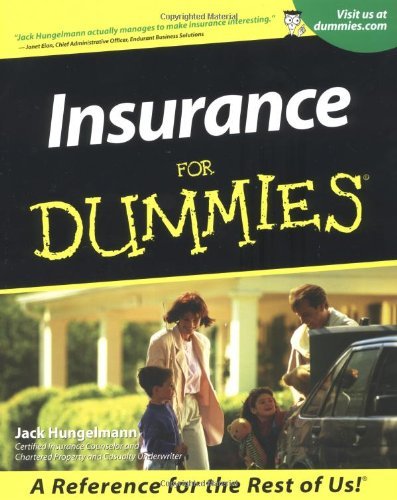
Insurance for Dummies: Hungelmann, Jack
<strong>Manage life, health, and disability risks</strong> ― explore individual and group policies, understand Medicare basics, and evaluate long-term disability and long-term-care insurance ...
Check Price on AmazonNote: “Full coverage” usually means you carry liability plus collision (pays for your car after a crash) and comprehensive (pays for non-crash damage like theft, fire, hail). It’s not a blank check—you still choose limits and deductibles.
Average monthly car insurance cost (national and by coverage level)
Here’s the baseline most people want when asking how much is car insurance per month:
- State-minimum liability only: typically $50–$70 per month for a driver with a clean record.
- Full coverage (liability + collision + comprehensive): typically $150–$190 per month for a driver with a clean record.
What can push you above or below those ranges:
- Younger drivers (especially teens) often pay 2–3x more than a 30–40-year-old.
- One recent at-fault accident can raise full-coverage rates $50–$120 per month for several years, depending on your state and insurer.
- Driving a pricier-to-repair or high-horsepower vehicle can add $30–$100+ per month compared with an economy sedan.
Reality check: These are national ballparks. Insurers price by risk, and pricing formulas vary widely. That’s why two similar drivers can see very different quotes.
How costs vary by state — state minimums and why your ZIP matters
Your state sets minimum liability limits, regulates parts of pricing, and has its own claim trends. That’s why averages differ so much:
- Higher-cost states often face dense traffic, severe weather, higher medical costs, or higher rates of litigation and fraud.
- Lower-cost states tend to have fewer claims per capita, lower repair and medical costs, and milder traffic patterns.

Winner International The Club 3000 Twin Hooks Steering Wheel Lock, Yellow : Automotive
View on AmazonExamples:
- Louisiana is regularly among the most expensive states for full coverage, partly due to claim severity and legal environment. See details: Auto Insurance in Louisiana: Rates, Requirements & How to Save.
- Maine is typically among the least expensive, thanks to lower traffic density and claim frequency. Learn more: Auto Insurance in Maine: Rates, Requirements & How to Save.
Why your exact ZIP code matters:
- Garaging address risk: Insurers look at crash frequency, theft, vandalism, and comprehensive losses in your neighborhood.
- Repair/medical costs: Local labor and medical prices flow into premiums.
- Traffic density and commuting patterns: More miles and congestion usually mean more crashes.
About state minimums: Liability limits vary, often written as split limits like 25/50/25 (that’s $25,000 bodily injury per person/$50,000 per accident/$25,000 property damage). Some states are lower; some are higher. Minimums keep you legal, but in most cases they won’t fully protect your assets after a serious crash. Consider higher limits if you can.
Key factors that affect your monthly premium
Insurers tally hundreds of variables, but these are the big ones that move your monthly price:
- Age and experience: Teen and new drivers are statistically riskier. Rates typically drop in your mid-20s and stabilize through your 30s–50s if you keep a clean record.
- Driving history: Tickets, at-fault accidents, and especially DUIs can spike your premium for 3–5 years. A clean record (no moving violations or chargeable accidents) unlocks the best pricing.
- Vehicle type and value: Repair costs, safety features, horsepower, and theft risk all matter. Collision and comprehensive (physical damage) costs rise with vehicle value and complexity.
- Coverage level and deductibles: Higher liability limits and adding collision/comprehensive raise your premium. A higher deductible (the amount you pay out of pocket before insurance kicks in) usually lowers it.
- Credit (where allowed): In most states, insurers use a credit-based insurance score. Better credit generally means lower rates; some states restrict or ban this practice.
- Annual mileage and usage: The more you drive, the more exposure. Low-mileage or usage-based programs can cut costs.
- Location: Your state, city, and even block influence claim patterns, repair costs, and theft risk.
- Prior insurance and gaps: Continuous coverage and proof you carried prior insurance can reduce surcharges.
- Household/garaging factors: Multiple drivers, multi-car households, and whether you park in a garage vs. the street can all affect pricing.
How to estimate your monthly payment — sample calculation and inputs
Let’s walk through a realistic example so you can ballpark your own monthly cost. This is illustrative, not a quote.
Say you’re a 35-year-old driver with a clean record, good credit, and a 2019 Toyota Camry. You want full coverage with $100,000/$300,000/$100,000 liability limits and $500 deductibles. You commute 12 miles each way and live in a mid-cost state.
Illustrative annual premium breakout:
- Liability coverage: $620
- Collision coverage: $420
- Comprehensive coverage: $180
- Uninsured/underinsured motorist: $120
- Medical payments or PIP (if applicable): $140
- State fees and policy fees: $40
- Subtotal: $1,520
- Discounts (multi-policy, telematics sign-up, safe driver, autopay): -$220
- Estimated annual total: $1,300
Monthly estimate: $1,300 ÷ 12 ≈ $108 per month.
What could change that number?
- Newer or luxury vehicle: +$30–$100+ per month.
- One at-fault accident: +$50–$120 per month.
- Higher liability limits (e.g., 250/500/100): +$10–$30 per month.
- Raising deductibles from $500 to $1,000: -$10–$25 per month.
- Moving to a higher-cost ZIP: +$15–$60 per month.
If you’d rather skip the math, the quickest reality check is to compare quotes. The fastest way to see what you would actually pay is to get multiple estimates: Car Insurance Quotes: Compare Rates & Get Personalized Quotes Fast.
What a calculator or quote will ask for:
- Your ZIP code and garaging address
- Driver details (age, license status, marital status)
- Driving history (tickets/accidents, dates, claims)
- Vehicle info (year, make, model, VIN if available)
- Annual mileage and how you use the car (commute, business, pleasure)
- Coverage selections (liability limits, collision/comprehensive, deductibles)
- Prior insurance details (current carrier, continuous coverage)
- Household drivers and whether they’re listed or excluded
- Possible discounts (bundling home/renters, telematics, good student, defensive driving)
7 practical ways to lower your monthly car insurance bill
You can usually trim costs without gutting coverage. Start with the easy wins and work down.

VIOFO Dash Cam A119 V3 2K 2560x1440P Quad HD+ 60FPS Front Car Dash Camera, 5MP STARVIS Sensor, 140-Degree Wide Angle, GPS Included, Buffered Parking Mode, True HDR, Motion Detection, Time Lapse : Electronics
View on Amazon- Shop 3–5 companies at once
- Different insurers price the same risk very differently. In most cases, comparing several carriers can save 10–30% without changing coverage.
- Pro tip: Keep the same liability limits and deductibles across quotes so you’re comparing apples to apples.
- Bundle home or renters insurance
- Multi-policy discounts typically run 5–20%. Even if your current home/renters insurer isn’t cheapest, the bundle discount might tip the scales.
- Adjust deductibles thoughtfully
- Raising your deductible from $500 to $1,000 can often cut collision/comprehensive costs 10–20%. Make sure you can afford the higher out-of-pocket if you have a claim.
- Use telematics/driver apps (usage-based insurance)
- These programs track driving habits like braking, speed, and time of day. Safe driving can earn 5–30% in discounts, typically after a monitoring period.
- Heads-up: Some programs can raise rates if risky driving is recorded. Check the terms and privacy policy.
- Right-size coverage on older cars
- If your car is older and paid off, consider whether collision/comprehensive are worth the premium relative to the car’s value. Keep robust liability limits to protect your assets.
- Improve your credit (where allowed)
- Over time, moving from “fair” to “good” to “excellent” credit can reduce premiums. Pay on time, lower balances, and limit new credit inquiries.
- Stack the small discounts
- Autopay, paperless, pay-in-full, good student, defensive driving courses, employer/affinity groups, and multi-car discounts often add up.
Want deeper tactics and a step-by-step checklist? Try this guide: Cheap Auto Insurance: How to Lower Your Premiums & Get Quotes.
How to get accurate quotes — documents to have, questions to ask, and next steps
You’ll get the best pricing when your application is complete and consistent.
Have these handy:
- Driver’s license numbers for all drivers
- Vehicle VINs and current odometer readings
- Dates/details of tickets, accidents, and claims for the past 3–5 years
- Current coverage declaration page (to mirror or upgrade limits)
- Lienholder/lease info if the car is financed (they may require full coverage)
What to look for when you compare quotes:
- Coverage fit: Do liability limits match your risk? Are collision/comprehensive deductibles affordable? Is rental car and roadside assistance included if you want them?
- Claims reputation: Look at customer satisfaction scores and claims turnaround. Faster, fairer claims are worth a few dollars more per month.
- Financial strength: Strong insurers (e.g., A.M. Best A- or better) are better positioned to pay claims during catastrophes.
- Repair approach: OEM vs. aftermarket parts, choice of shop, and guaranteed repairs vary by insurer.
- Helpful extras: Accident forgiveness, vanishing deductibles, lifetime glass, or new car replacement may be worth small premiums.
- Telematics terms: Check whether the program only discounts or can also surcharge, how long monitoring lasts, and data privacy.
Smart questions to ask an agent or carrier:
- Which discounts am I missing today—and what would I need to qualify?
- If I raise my liability from 100/300/100 to 250/500/100, what’s the monthly difference?
- How would a $500 vs. $1,000 deductible change my payment?
- If I take a defensive driving course, how much could I save and for how long?
Next step: Get side-by-side quotes from several insurers. It’s the quickest way to pin down your real monthly cost: Car Insurance Quotes: Compare Rates & Get Personalized Quotes Fast.
A quick note: A licensed agent can help tailor coverage to your situation and spot discounts you might miss. Personalized advice matters—especially if you’ve got a teen driver, a recent accident, or a financed vehicle with lender requirements.
FAQs: Common questions about monthly car insurance
How much is car insurance per month for a good driver?
- Typically around $50–$70 per month for state-minimum coverage and $150–$190 for full coverage. Your state, vehicle, and ZIP code can swing this up or down.
Is paying monthly more expensive than paying in full?
- Often yes. Many insurers add small installment fees or give a pay-in-full discount. If cash flow allows, paying in full or semi-annual can shave a few dollars per month equivalent.
How much does car insurance cost per month for a teenager?
- Adding a teen can raise a family policy by $100–$300+ per month, depending on your state, vehicle, and the teen’s grades. Good student and driver training discounts can help.
Why did my monthly rate go up at renewal if I had no accidents?
- Market-wide factors (repair costs, medical inflation, parts shortages, severe weather) can drive increases. Your ZIP’s claim patterns may have changed, too. Shopping around can soften the impact.
What if I barely drive—can I get a lower monthly price?
- Potentially. Low-mileage and usage-based policies can reduce your rate if you drive less or drive more gently. Verify how miles are tracked and whether risky driving can raise rates.
How much is full coverage per month on a financed car?
- Lenders typically require collision and comprehensive. For many drivers, full coverage falls in the $150–$190/month range, but newer or luxury cars can be higher.
Is minimum coverage enough?
- It keeps you legal, but minimums often don’t cover a major claim. Consider higher liability limits—especially if you have savings, a home, or income to protect.
Does my credit affect how much I pay per month?
- In most states, yes—better credit often means lower premiums. A few states restrict or prohibit credit-based pricing.
Can I pause my insurance to save money?
- Pausing can create a lapse in coverage, which typically raises future rates and can cause fines if your state requires continuous insurance. Ask your insurer about low-mileage options instead.
The bottom line and a smart next step
If you came here wondering how much is car insurance per month, the short answer is: around $50–$70 for minimum coverage and $150–$190 for full coverage for a clean driver—but your state, ZIP, vehicle, and history matter a lot. Take 10 minutes to see your real number by comparing multiple quotes. Then use the tips above to tune your coverage and lower your bill where it makes sense.
Ready to check your price? Start here: Car Insurance Quotes: Compare Rates & Get Personalized Quotes Fast.
Recommended Resources
Insurance for Dummies: Hungelmann, Jack
<strong>Manage life, health, and disability risks</strong> ― explore individual and group policies, understand Medicare basics, and evaluate long-term disability and long-term-care insurance ...
Winner International The Club 3000 Twin Hooks Steering Wheel Lock, Yellow : Automotive
The Club'S Patented Self-Locking Feature Locks With One Pull. Keyless Locking, for ease of use ... The Club 3000 Twin Hooks Steering Wheel Lock is <strong>a part of The Club line of quality produ
VIOFO Dash Cam A119 V3 2K 2560x1440P Quad HD+ 60FPS Front Car Dash Camera, 5MP STARVIS Sensor, 140-Degree Wide Angle, GPS Included, Buffered Parking Mode, True HDR, Motion Detection, Time Lapse : Electronics
Amazon.com: VIOFO Dash Cam A119 V3 2K 2560x1440P Quad HD+ 60FPS Front Car Dash Camera, 5MP STARVIS Sensor, 140-Degree Wide Angle, <strong>GPS Included</strong>, Buffered Parking Mode, True HDR, Motion
Related Articles
- How Much Is Car Insurance? Average Costs, Factors & Ways to Save
- How to Lower Car Insurance: 15 Smart Ways to Cut Your Premiums
- How Much Car Insurance Do I Need? A Practical Guide to Choosing Coverage
- Health Insurance with Low Premiums: How to Save Smartly and Avoid Costly Surprises
- Cheap Car Insurance: How to Save on Coverage & Get Fast Quotes
- Affordable Auto Insurance for Families: Smart Ways to Cut Costs Without Sacrificing Protection
- How Much Is Renters Insurance? Average Costs, Factors & Real Examples
- How Much Is Homeowners Insurance? Average Costs, By State & How to Save