
Auto Insurance in Louisiana: Rates, Requirements & How to Save
You got a quote for auto insurance in Louisiana and the number looks…big. Is that normal? In many cases, yes — Louisiana consistently ranks among the pricier states for car coverage. The good news: you can still get solid protection without overpaying if you know the rules, the real drivers of price, and how to shop smart.
Below is a complete, plain-English guide to auto insurance in Louisiana — requirements, typical rates, ways to save, and how claims work here.
Louisiana auto insurance requirements and minimum coverage
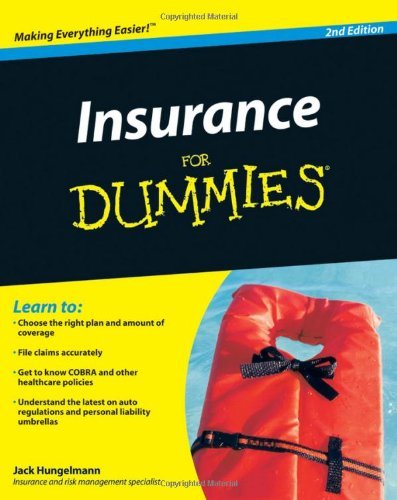
Insurance For Dummies?: Hungelmann, Jack
Whether you’re a homeowner or ... need on: ... Author Jack Hungelmann <strong>uses his twenty-five years of experience in the insurance industry to make buying insurance as simple as possible</strong>
Check Price on AmazonAuto insurance in Louisiana: required minimum coverage
Louisiana is a “fault” state (the at-fault driver’s liability insurance pays for others’ injuries and damage). To legally drive, you must carry at least:
- Bodily injury liability: $15,000 per person / $30,000 per accident (BI liability pays for injuries you cause to others.)
- Property damage liability: $25,000 per accident (PD liability pays for damage you cause to others’ property.)
You’ll see this written as 15/30/25. These are legal minimums — not recommendations. A single crash can easily exceed them. Many drivers choose higher limits such as 50/100/50 or 100/300/100 for stronger protection.
Other coverages to know (optional unless your lender/lessor requires them):
- Collision (pays to repair or replace your car after a crash, minus your deductible — the amount you pay out of pocket before insurance kicks in)
- Comprehensive (covers non-crash damage like theft, flood, hail, and hurricane debris, minus your deductible)
- Medical payments, or “MedPay” (helps pay medical bills for you and your passengers, regardless of fault)
- Uninsured/underinsured motorist, or UM/UIM (covers your injuries if you’re hit by a driver with little or no insurance)
Louisiana-specific rules worth knowing:
- UM/UIM: Insurers must offer UM/UIM in amounts that match your liability limits unless you reject it in writing. Given Louisiana’s meaningful share of uninsured drivers (often around 11–13% depending on the year), UM/UIM is typically a smart buy.
- “No Pay, No Play”: If you drive uninsured and you’re hit by an insured at-fault driver, Louisiana law limits what you can collect (you may be barred from the first $15,000 of bodily injury and $25,000 of property damage). Carrying proof of insurance protects you here.
- Proof of insurance: You can use an electronic ID card on your phone. Law enforcement also checks a state database to verify active coverage.
- SR-22: After certain violations (like a DUI), you may need an SR-22 filing (proof of financial responsibility your insurer files with the state). It’s not extra insurance, but it often increases your premium for about three years.
Tip: Laws and limits can change. Confirm current requirements with a licensed agent or the Louisiana Department of Insurance.
For a refresher on what each coverage does before you shop, see Understanding Auto Insurance Coverage Types (/auto-insurance/understanding-auto-insurance-coverage-types).
Average car insurance rates in Louisiana by age, vehicle, and driving record
Let’s set expectations. Actual costs vary by driver, vehicle, and ZIP code — and Louisiana ZIPs vary a lot. But here are ballpark ranges for a clean-driving adult with typical limits, based on market patterns we see across the state. Use this to sanity-check your quotes, not as a promise of pricing.
Statewide, good-driver estimates:
- Minimum coverage: typically $90–$170 per month ($1,080–$2,040 per year)
- Full coverage (liability plus comp/collision): typically $180–$330 per month ($2,160–$3,960 per year)
By age (clean record, standard car):
- 18–20: Minimum $250–$450/mo; Full $450–$800/mo
- 25: Minimum $100–$190/mo; Full $190–$340/mo
- 35–45: Minimum $90–$170/mo; Full $180–$320/mo
- 65: Minimum $95–$180/mo; Full $185–$330/mo
By driving record (35-year-old baseline):
- One speeding ticket: often +15–25% for 3 years
- At-fault property damage crash: often +30–50%
- DUI: often +60–100% (plus SR-22 requirement)
By vehicle type (same driver, same limits):
- Older, non-luxury sedan: may be 10–20% less than average
- New pickup or large SUV: often 5–15% more than average
- Luxury/performance car: often 30–70% more than average
- Many EVs: can be 10–25% higher due to repair costs, though advanced safety features sometimes offset a bit
By location (very rough tendencies):
- New Orleans and Baton Rouge: commonly 15–40% higher than the state average due to claim frequency, litigation, and theft rates
- Shreveport, Lafayette, and some Northshore suburbs: often closer to, or slightly below, the state average
Real-world example: Say you’re a 35-year-old non-smoker in Metairie with a clean record, driving a 2019 Honda Accord, 12,000 miles/year. For 100/300/100 liability, $500 comprehensive/collision deductibles, and UM/UIM, you might see quotes cluster from roughly $175 to $280 per month — but zip code, credit, and insurer appetite can swing this higher or lower.
Factors that affect Louisiana auto insurance premiums
Insurers price your policy based on risk — how likely you are to have a claim and how expensive that claim could be. In Louisiana, these factors usually matter most:
- Where you garage your car: Coastal and urban parishes tend to see higher prices due to storm, theft, and crash frequency.
- Driving history: Tickets, crashes, and major violations (like DUI) move the needle significantly.
- Credit-based insurance score: In most cases, better credit correlates to lower rates. Not all insurers weigh it the same.
- Vehicle: Repair costs, safety features, theft rates, and horsepower all feed the model.
- Annual mileage and commute: More miles driven typically equals more exposure.
- Coverage limits and deductibles: Higher liability limits and lower deductibles cost more; the reverse costs less.
- Prior insurance and gaps: Continuous coverage can earn discounts; lapses can spike rates.
- Claims environment: Louisiana’s legal and medical cost environment can increase average claim severity, which flows into premiums.
- Weather risk: Hurricanes, flood, and hail risk make comprehensive coverage more valuable — and sometimes pricier — especially near the coast.
How to compare and get the cheapest auto insurance in Louisiana
Here is what actually matters when choosing and saving on coverage in Louisiana:
- Set a smart baseline before you get quotes
- Liability limits: Consider at least 50/100/50 — and often 100/300/100 if you have a home, savings, or higher income to protect. Liability covers others when you’re at fault.
- UM/UIM: Strongly consider matching your liability limits. With a meaningful share of uninsured drivers, this is often the best “value per dollar” in Louisiana.
- Deductibles: Choosing a $500 or $1,000 deductible on comp/collision can reduce premiums. Pick a number you could truly pay tomorrow.
- Add-ons you’ll actually use: Rental reimbursement (pays for a rental car while yours is in the shop), roadside/towing, and gap coverage (covers the “gap” between a car loan/lease balance and the insurer’s payout after a total loss) can be practical depending on your situation.
- Compare quotes the right way
- Get 3–5 quotes at the same time, using identical limits/deductibles. The fastest way to see what you’d actually pay is to compare quotes from multiple carriers.
- Shop both national brands and regionals. Different companies favor different ZIPs, vehicles, and profiles.
- Re-shop at key moments: after a ticket falls off, when you move, when your teen gets a license, or when your car loan is paid off.
Helpful: Start with our Car Insurance Quotes page to compare options side-by-side (/auto-insurance/car-insurance-quotes-compare-rates).
- Use Louisiana-friendly savings levers
- Bundle home and auto (multi-policy). This is often one of the biggest discounts in the state.
- Enroll in telematics/driver monitoring if you’re a smooth, low-mileage driver. Programs track behaviors (like hard braking and nighttime driving) and can produce a discount, typically after a trial.
- Raise comp/collision deductibles if you’d keep the car after a fender-bender and can afford the higher out-of-pocket.
- Pay-in-full and autopay/paperless can shave a few percent.
- Keep continuous coverage. Even a short lapse can trigger higher rates.
- Mind your credit. Improving your credit profile over time can lower premiums with many insurers.
- Don’t go too cheap on coverage Louisiana’s minimums can run out fast. One serious crash can blow past 15/30/25. Paying a little more for 100/300/100 and UM/UIM often protects your savings, wages, and future insurability better than squeezing dollars out of liability.
CTA: Want a quick reality check on your price? Compare 3–5 real quotes in minutes — it’s the only way to see your actual cost in your ZIP. Try our Cheap Auto Insurance guide to stack discounts before you shop (/auto-insurance/cheap-auto-insurance-lower-premiums-get-quotes).
Louisiana-specific discounts and savings opportunities
Insurers don’t all advertise the same discounts, but in Louisiana you’ll typically find:
- Multi-policy and multi-car discounts
- Safe driver and accident-free discounts (often after 3–5 claim-free years)
- Telematics/usage-based discounts (safe habits tracked via app or device)
- Good student and teen driver training discounts
- Defensive driver course discounts (especially for mature drivers; must be state-approved)
- Anti-theft and safety feature discounts (alarm, immobilizer, advanced driver assistance)
- Early shopper, pay-in-full, automatic payments, and paperless billing
- Affinity discounts (employers, alumni associations, credit unions — varies by insurer)
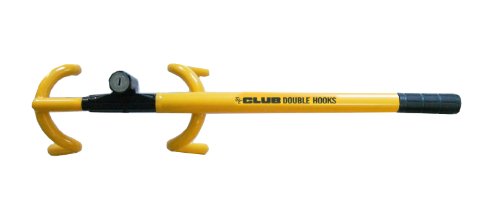
Winner International The Club 3000 Twin Hooks Steering Wheel Lock, Yellow : Automotive
View on AmazonTip: Ask each insurer to run a “discount check.” Many will surface smaller savings you didn’t know existed (low mileage, homeowner status, occupation, or continuous insurance).
Filing a claim in Louisiana: what to expect
If you’re in a crash or suffer storm damage, here’s the typical flow:
- Safety first, then documentation
- Move to a safe spot, call 911 if needed.
- Exchange info and take photos/video of damage, vehicles, plates, the scene, and weather/road conditions.
- Get a police report number. In most cases, it helps your claim — especially if injuries or disputes exist.
- Notify your insurer promptly
- Many policies require “prompt” notice. Report even if you think the other driver is at fault.
- If you have comprehensive (for storm, flood, theft, or debris damage), file right away so an adjuster can inspect before repairs.
- Coverage triggers to know
- Liability covers others if you’re at fault.
- Collision covers your car after a crash, minus your deductible.
- Comprehensive covers non-crash damage (hurricanes, flood, hail, theft), minus your deductible.
- UM/UIM may step in if the other driver lacks enough insurance.
- Rental reimbursement and towing/roadside apply if you added them to your policy.
- Estimates and repairs
- An adjuster will inspect or ask for photos. You’ll receive an estimate based on prevailing local labor rates and parts. You can choose your repair shop in most cases.
- Total loss: If repairs approach the car’s value, your insurer may declare a total loss and pay actual cash value (the market value just before the loss), minus your deductible and any lien. Louisiana law defines when a vehicle is a total loss; your adjuster will explain how it applies to your car.
- Special Louisiana considerations
- Hurricanes and floods: Document waterlines, interior damage, and any electronics affected. Don’t start major repairs before the adjuster sees the vehicle unless safety requires it. Save receipts for emergency fixes.
- Diminished value: If you’re not at fault, Louisiana generally allows third-party claims for loss in value after repairs. Insurers handle these differently; ask your adjuster what evidence they need.
- Lawsuit timing: Louisiana’s window to file a lawsuit after an auto accident is typically one year from the date of the crash. Insurance claim deadlines can be much sooner under your policy, so start early.
Questions during the process? A licensed Louisiana agent can walk you through options and help you avoid pitfalls with recorded statements, repair shop selection, and negotiating a total loss value.
FAQ: common questions about Louisiana car insurance
Is Louisiana a no-fault state? No. Louisiana is a fault (tort) state. The at-fault driver’s liability coverage pays for others’ injuries and damage.
What are the minimum auto insurance limits in Louisiana? 15/30/25 for liability: $15,000 bodily injury per person, $30,000 per accident, $25,000 property damage per accident.
Do I really need UM/UIM in Louisiana? It’s optional, but in most cases it’s worth it. With a meaningful share of uninsured/underinsured drivers, UM/UIM can cover your injuries and lost wages when the other driver’s insurance can’t.
Why are rates so high here? Higher claim frequency and severity, legal and medical cost trends, weather risk (hurricanes, flood), and theft rates all contribute. Your personal profile still drives your specific price.
How much is full coverage in Louisiana? For a clean-driving adult, many quotes cluster around $180–$330 per month, but ZIP, vehicle, credit, and insurer appetite create wide swings. Always compare your own quotes.
Can my credit affect my premium? Yes, in most cases. Insurers can use credit-based insurance scores in Louisiana, though how much it matters varies by company.
What is an SR-22 and when is it required? An SR-22 is a state filing proving you carry minimum insurance. It’s often required after serious violations (like a DUI) for about three years. It’s not extra coverage, but it usually raises your rate.
Is flood damage to my car covered by homeowners insurance? No. Flood damage to your car is typically covered under your auto policy’s comprehensive coverage, subject to your deductible.
I just bought a car. Is there a grace period? Most policies include a short grace window (often 7–30 days) to add a newly acquired vehicle, but details vary. Call your insurer before driving off the lot if you can.
Can I use non-owner car insurance in Louisiana? Yes. Non-owner policies provide liability coverage when you occasionally drive cars you don’t own. They can also help you maintain continuous coverage.
Your next step
- The fastest way to see what you’d actually pay is to compare quotes from 3–5 carriers using the same limits and deductibles. Start here: Car Insurance Quotes — Compare Rates & Get Personalized Quotes Fast (/auto-insurance/car-insurance-quotes-compare-rates).
- Want local help? See Car Insurance Near Me to find agents and compare local quotes (/auto-insurance/car-insurance-near-me-compare-local-quotes-agents-fast).
- Need a coverage refresher or a savings checklist first? Try our guides: Understanding Auto Insurance Coverage Types (/auto-insurance/understanding-auto-insurance-coverage-types) and Cheap Auto Insurance: How to Lower Your Premiums & Get Quotes (/auto-insurance/cheap-auto-insurance-lower-premiums-get-quotes).
If you have unique circumstances — a teen driver, a classic car, or a recent DUI — a quick call with a licensed Louisiana agent can help you set the right coverage and surface company-specific discounts you might otherwise miss.

Garmin Dash Cam 47, 1080p and 140-degree FOV, Monitor Your Vehicle While Away w/New Connected Features, Voice Control, Compact and Discreet, Includes Memory Card : Electronics
View on AmazonRecommended Resources
Insurance For Dummies?: Hungelmann, Jack
Whether you’re a homeowner or ... need on: ... Author Jack Hungelmann <strong>uses his twenty-five years of experience in the insurance industry to make buying insurance as simple as possible</strong>
Garmin Dash Cam 47, 1080p and 140-degree FOV, Monitor Your Vehicle While Away w/New Connected Features, Voice Control, Compact and Discreet, Includes Memory Card : Electronics
Wide 140-degree lens records 1080p ... online Vault to view and share later · <strong>The Parking Guard feature monitors activity around your parked vehicle and alerts if an incident is detected</stro
Winner International The Club 3000 Twin Hooks Steering Wheel Lock, Yellow : Automotive
The Club'S Patented Self-Locking Feature Locks With One Pull. Keyless Locking, for ease of use ... The Club 3000 Twin Hooks Steering Wheel Lock is <strong>a part of The Club line of quality produ
Related Articles
- Home Insurance in Louisiana: Coverage, Costs & Best Companies
- Auto Insurance in Arkansas: Rates, Requirements & How to Save
- Auto Insurance in Hawaii: Rates, Requirements & How to Save
- Auto Insurance in Nevada: Rates, Requirements & How to Save
- Auto Insurance in Mississippi: Rates, Requirements & How to Save
- Auto Insurance in California: Rates, Requirements & How to Save
- Auto Insurance in Kentucky: Rates, Requirements & How to Save
- Auto Insurance in New York: Rates, Requirements & How to Save