
How Much Is Homeowners Insurance? Average Costs, By State & How to Save
You just got a quote and the numbers seem high. Is that normal? If you’re asking how much is homeowners insurance, here’s the short answer: it depends heavily on where you live, your home’s rebuild cost, your roof, your claims history, and even your credit in many states. Below we’ll give you national averages, state-level context, a simple way to estimate your own premium, and smart ways to save—without cutting the coverage you actually need.
Note: Prices and examples below are illustrative. Actual rates vary by home, insurer, and state rules. For a deeper dive into what a standard policy covers, see What Does Home Insurance Cover? (/home-insurance/what-does-home-insurance-cover)
How much is homeowners insurance? Quick answer and national averages
- Typical national range: In most cases, a standard homeowners policy (often called an HO-3) for a home with around $300,000 in dwelling coverage and a $1,000–$2,500 deductible (your out-of-pocket cost before insurance pays) runs roughly $1,500–$2,500 per year nationally. Many homeowners pay more or less depending on risk.
- Monthly ballpark: About $125–$210 per month for that same mid-range scenario—again, location and home details can swing this a lot.
- Why the wide range? Catastrophe exposure (hurricanes, hail, wildfire), local rebuilding costs, roof age/material, and your personal profile (claims, credit-based insurance score where allowed) all matter.
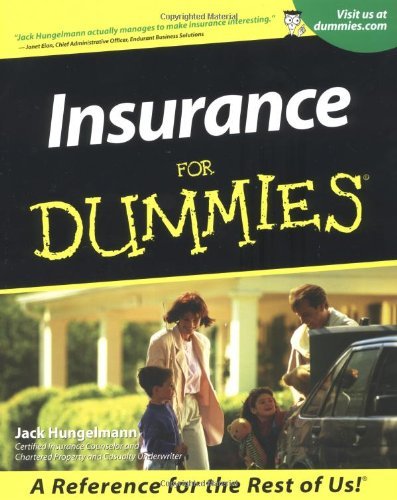
Insurance for Dummies: Hungelmann, Jack
<strong>Manage life, health, and disability risks</strong> ― explore individual and group policies, understand Medicare basics, and evaluate long-term disability and long-term-care insurance ...
Check Price on AmazonIf you want a full refresher on coverages and how to right-size them before you price-shop, bookmark Homeowners Insurance: A Complete Guide to Coverage, Costs & Quotes (/home-insurance/homeowners-insurance-guide-coverage-costs-quotes)
Key factors that determine your premium
Think of your home insurance price as a reflection of two things: how likely something is to happen and how expensive it would be to fix.
- Location and catastrophe risk: Insurers price higher in areas prone to wind/hail, hurricanes, wildfire, or severe winter storms. Proximity to a fire station or hydrant also matters. Some coastal ZIP codes have special wind or named-storm deductibles (a percentage of your dwelling limit instead of a flat dollar amount).
- Rebuild cost, not market price: Your dwelling coverage is based on what it costs to rebuild your home today (materials and labor), not what you could sell it for. Higher replacement cost means a higher premium.
- Construction and roof: Fire-resistant or wind-rated materials can help; older roofs or wood shake roofs usually cost more. Roof age is a big rating input—many carriers increase rates once roofs pass 10–15 years.
- Claims history: Prior home claims (even small ones) typically raise your rate and can reduce your eligibility with some insurers. Claims tend to affect pricing for 3–5 years.
- Credit-based insurance score: In many states, insurers can use a version of your credit history to help predict insurance risk. Better credit-based insurance scores generally mean lower rates; some states restrict this practice.
- Deductible: Higher deductibles lower your premium because you take on more of the small losses. A $2,500 deductible typically costs less than $1,000—just be sure you can comfortably cover it if you file a claim.
- Coverage choices and endorsements: Replacement cost on personal property (pays to replace with new items) costs more than actual cash value (depreciated value). Adding water backup, scheduled jewelry, or extended replacement cost raises price but adds valuable protection.
- Occupancy and use: Rental or short-term rental homes, home-sharing, or a home-based business can mean different (often higher) pricing and different policy forms.
Average homeowners insurance cost by state — relative table and notes
Insurers constantly update rates by ZIP code and even neighborhood. Rather than lock you into outdated dollar figures, here’s a practical, state-by-state look at how pricing typically compares to the U.S. average today, plus what often drives it. Use this to set expectations before you shop.
| State | Typical level vs. U.S. average | Why it often trends this way |
|---|---|---|
| AL | Higher | Coastal wind/hail, hurricane exposure in the south, roof age/material mix |
| AK | Lower–Average | Lower catastrophe frequency, higher rebuild costs offset |
| AZ | Average–Higher | Wildfire in some regions, monsoon hail/wind, rapid rebuild cost growth |
| AR | Higher | Severe convective storms, hail, tornado risk |
| CA | Higher in wildfire zones; Lower–Average elsewhere | Wildfire exposure, insurer capacity; separate earthquake coverage common |
| CO | Higher | Hail, wildfire, elevated rebuild costs at altitude |
| CT | Average | Coastal wind in shoreline areas, older housing stock in parts of the state |
| DE | Average | Some coastal wind exposure, moderate claim severity |
| FL | Highest | Hurricane and wind risk; special named-storm deductibles are common |
| GA | Average–Higher | Coastal wind risk in the southeast, hail/storms inland |
| HI | Average–Higher | Hurricane/volcano-adjacent risks in parts, higher rebuild costs |
| IA | Average | Hail and tornado risk varies by county |
| ID | Lower–Average | Wildfire exposure in some areas; otherwise relatively moderate |
| IL | Average | Hail/wind in northern and central IL; mine subsidence endorsements in some counties |
| IN | Average | Hail/tornado exposure varies; older housing stock in some cities |
| KS | Higher | Hail and tornado risk; roof claims drive costs |
| KY | Average–Higher | Storm/hail/tornado in valleys; older homes in some regions |
| LA | Highest | Gulf hurricane exposure, flood-adjacent risks (flood not covered by homeowners) |
| MA | Average | Coastal wind exposure on Cape/Islands, strong building codes help |
| MD | Average | Coastal wind on the Bay; suburban fire protection usually strong |
| ME | Lower–Average | Winter weather; lower claim frequency in rural areas |
| MI | Lower–Average | Lower catastrophe frequency, strong fire protection near metro areas |
| MN | Higher | Hail and severe winter; roof/ice dam issues |
| MO | Average–Higher | Hail/tornado corridors; mix of older roofs |
| MS | Higher | Gulf wind/hurricane exposure in coastal counties |
| MT | Average–Higher | Wildfire exposure and rising rebuild costs |
| NC | Average–Higher | Coastal wind on the Outer Banks; inland risk more moderate |
| ND | Lower–Average | Lower population density; winter weather; some hail |
| NE | Higher | Hail/tornado alley; roof claims |
| NH | Lower–Average | Winter weather; generally moderate catastrophe risk |
| NJ | Average–Higher | Coastal wind risk; higher rebuild costs near NYC metro |
| NM | Average | Wildfire/drought exposures vary; some hail |
| NV | Lower–Average | Lower catastrophe frequency; rising rebuild costs in metros |
| NY | Average–Higher | Coastal wind on Long Island; higher rebuild costs downstate |
| OH | Lower–Average | Moderate catastrophe activity; competitive market |
| OK | Highest | Tornado/hail frequency; wind/hail deductibles common |
| OR | Lower–Average | Wildfire in some regions; otherwise moderate risk |
| PA | Average | Hail/wind varies; mine subsidence in certain counties |
| RI | Average–Higher | Coastal wind exposure; higher rebuild costs |
| SC | Higher | Hurricane/wind risk along the coast; hail inland |
| SD | Higher | Hail/wind in plains; lower density increases costs in some areas |
| TN | Average | Storm/hail varies by region; competitive markets in metros |
| TX | Higher | Coastal wind/hail, inland hail belt; separate windstorm pools on the coast |
| UT | Lower–Average | Hail/wildfire pockets; otherwise moderate risk |
| VA | Average | Coastal wind in Tidewater; competitive inland |
| VT | Lower–Average | Winter weather; generally low catastrophe frequency |
| WA | Average | Wildfire pockets; earthquake risk (separate policy) |
| WI | Lower–Average | Hail/winter weather; competitive market |
| WV | Average | Rural fire protection; older homes in some areas |
| WY | Average–Higher | Hail/wind in plains; higher rebuild costs in resort areas |
State regulation notes you’ll encounter as you shop:
- Special catastrophe deductibles: In many coastal states, you’ll see hurricane, named-storm, or wind/hail deductibles listed as a percentage (e.g., 2%) of your dwelling coverage instead of a flat amount. That can mean paying several thousand dollars out of pocket for those perils before insurance kicks in.
- Residual/last-resort markets: Some high-risk areas rely on state-backed or residual markets when private insurers won’t write coverage. Examples include state wind or FAIR Plans. These policies can be more expensive and bare-bones.
- Wildfire mitigation credits: Western states increasingly support discounts for “home hardening” (fire-resistant roofs, cleared defensible space). Ask your agent how to document these.
- Separate policies for excluded perils: Standard homeowners policies don’t cover flood or earthquake. Coastal and seismic states frequently recommend separate policies.
Want localized details? See our deep dives for Florida (/home-insurance/home-insurance-in-florida-coverage-costs-best-companies) and Massachusetts (/home-insurance/home-insurance-in-massachusetts-coverage-costs-best-companies).
Sample premium breakdown and a quick way to estimate yours
Let’s walk through a realistic example so you can see how the math often works. This is not a quote—just an illustration of how carriers price.
Say you have a 1,900 sq. ft. home with a replacement cost of $350,000, a 10-year-old architectural shingle roof, no claims in 5 years, and you’re in a suburban ZIP code with some hail risk. You want a $2,000 deductible.
- Base rate by area and rebuild cost
- A quick rule of thumb is a “rate per $1,000 of dwelling coverage.” In moderate-risk areas, you might see $4–$6 per $1,000; higher-risk areas might be $6–$10+.
- Example starting point: $5 per $1,000 × 350 (for $350,000) = $1,750 annual base premium.
- Adjust for roof age/material
- 10-year-old architectural shingles: small increase vs. a brand-new roof. Add ~5% (varies widely): $1,750 × 1.05 = $1,837.50
- Adjust for claims history
- No recent claims: many carriers apply a claim-free discount. Subtract ~5%: $1,837.50 × 0.95 = $1,745.63
- Adjust for credit-based insurance score (where allowed)
- Good credit tier: sometimes another ~5–10% savings. Use 7% here: $1,745.63 × 0.93 = $1,623.43
- Add common endorsements
- Water backup ($5k limit) and extended replacement cost on the dwelling might add, say, $120 total.
- New subtotal: ~$1,743.43
- Apply bundle and protective device discounts
- Bundle with auto (often 10%–20%, varies). Use 12% here: $1,743.43 × 0.88 = $1,533.22
- Monitored alarm/water-leak sensor: say 3% more: $1,533.22 × 0.97 = $1,487.22
Illustrative annual premium: about $1,480–$1,550 in this scenario.
Mini calculator you can use right now
- Pick your area risk tier: Low ($2.50–$4.00 per $1,000), Medium ($4.00–$6.00), High ($6.00–$10.00+)
- Multiply your home’s estimated replacement cost (not market value) by the rate per $1,000
- Adjust ±5–20% for roof age/material, +0–15% for prior claims, and −0–20% for bundle/discounts
- Choose a deductible you can afford: moving from $1,000 to $2,500 can often save 5–15% (varies heavily by insurer and state)
Again, these are ballparks. The fastest way to see what you would actually pay is to compare quotes from 3–5 carriers for the same coverage set.
Ways to lower your homeowners insurance premium (without underinsuring)
- Raise your deductible (the amount you pay out of pocket before insurance pays): If you can comfortably handle a $2,500 deductible, you’ll typically save versus $1,000. Don’t go higher than your emergency fund supports.
- Bundle home and auto: One of the biggest single discounts. Ask the home and auto both to be quoted with and without bundle so you can see the net effect.
- Install protective devices: Monitored security systems, water-leak shutoff valves, and smart smoke detectors can earn meaningful credits.
- Replace or upgrade your roof: A new impact-resistant roof can reduce wind/hail losses and often earns a discount. Provide the roof’s material, rating, and completion date to your insurer.
- Document updates: Electrical, plumbing, HVAC, and roof updates reduce risk. Keep receipts and permit info handy when you shop.
- Avoid small claims: Frequent small claims can cost more in surcharges than they pay out. Consider paying out-of-pocket for minor damage below or near your deductible.
- Improve your credit profile (where allowed): Paying bills on time and reducing revolving balances can help your credit-based insurance score over time.
- Right-size personal property coverage: Know the limit that makes sense for your belongings—and whether it’s replacement cost or actual cash value.
- Schedule high-value items: Jewelry, fine art, and collectibles often need separate scheduling. While this can add premium, it prevents surprises and sometimes lets you lower broader limits elsewhere.
- Ask about wind mitigation or wildfire-hardening credits: Especially relevant in coastal and wildfire-prone states.
- Pay-in-full, autopay, and paperless: Small but easy discounts that add up.
- Shop annually: Each insurer updates rates and risk models regularly. A 20-minute refresh can find savings—particularly after a new roof or major updates.

SimpliSafe 8 Piece Wireless Home Security System - Optional 24/7 Professional Monitoring - No Contract - Compatible with Alexa and Google Assistant , White : Electronics
View on Amazon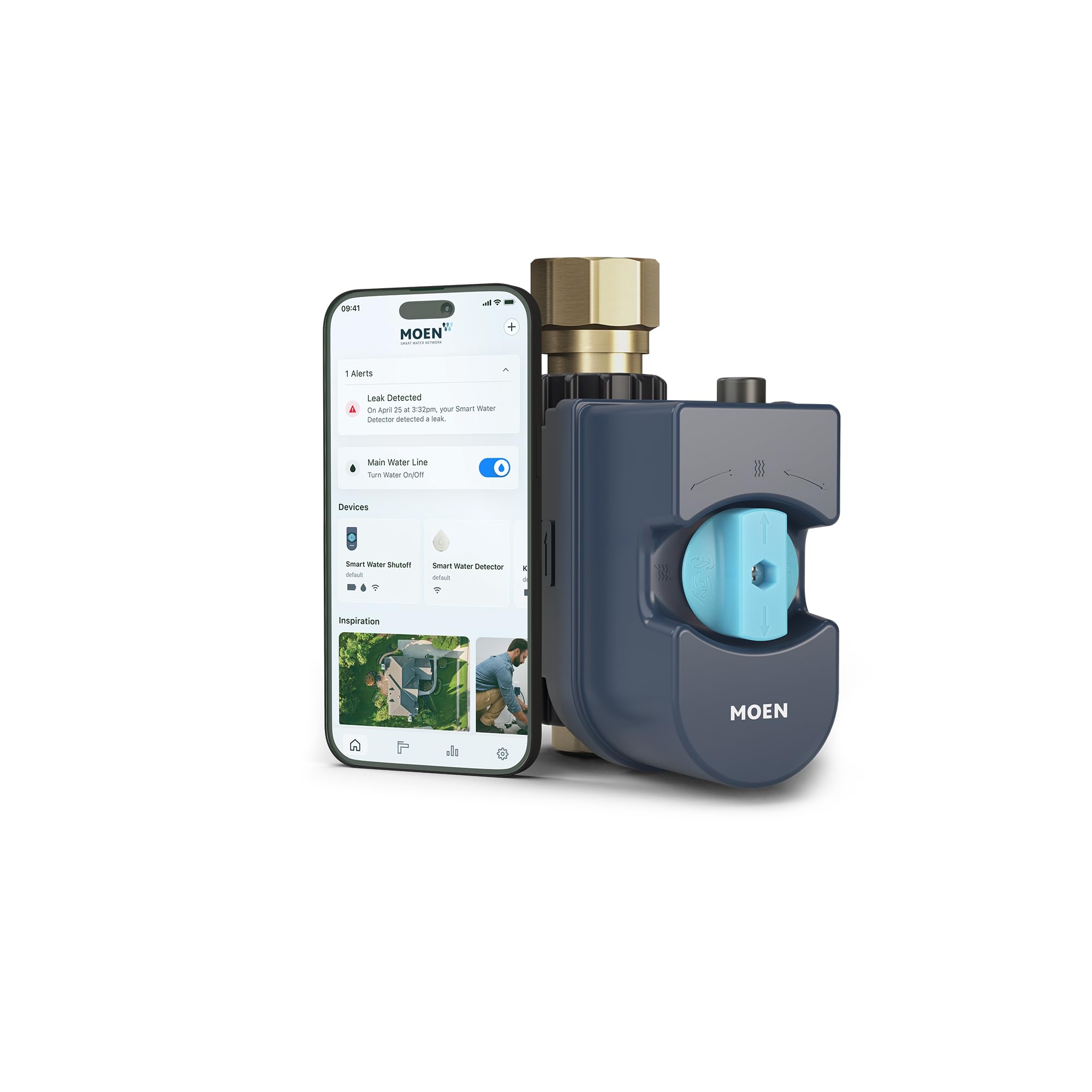
Moen Flo Smart Water Monitor and Automatic Shutoff Sensor, Wi-Fi Water Leak Detector for 3/4-Inch Diameter Pipe, 900-001 - Tub And Shower Faucets - Amazon.com
View on AmazonIf price is your top priority, use our checklist in How to Find the Cheapest Homeowners Insurance (Get Quotes & Save) (/home-insurance/cheapest-homeowners-insurance)
When you might pay more
- Natural-disaster zones: Coastal hurricane belts, hail alleys, wildfire interfaces, and quake-prone regions often carry higher base rates and special deductibles.
- Older or specialty homes: Knob-and-tube wiring, galvanized or polybutylene plumbing, old roofs, or custom finishes can increase premiums—or limit which carriers will write your policy.
- Short-term rentals and landlord risks: If you rent out your home (even occasionally), you may need a different policy form and pay more due to increased liability and property risk.
- High-liability features: Pools without enclosures, trampolines, and certain dog breeds can raise liability costs or require higher liability limits (the part that protects you if you’re sued).
- Multiple prior claims: Even not-at-fault weather claims can impact price. Some insurers are stricter than others about recent loss history.
How to compare quotes and next steps
The smartest way to answer “how much is homeowners insurance for me?” is to collect apples-to-apples quotes from 3–5 carriers. Here’s how to do it fast and right.
What to gather before you quote
- Property details: Address, year built, square footage, construction type, roof age/material, number of stories.
- Safety info: Distance to fire hydrant and station, protective devices (alarm, water shutoff, smoke/CO detectors).
- Updates: Dates and scope of roof, electrical, plumbing, and HVAC updates.
- Coverage preferences: Your desired deductible; replacement cost vs. actual cash value for personal property; liability limit (often $300k–$500k or more); endorsements like water backup.
- Claims history: Losses in the last 5 years for this property and for you as a policyholder.
- Current policy: Declarations page if you have one—helps match coverage apples-to-apples.
How to compare, like a pro
- Keep coverage consistent: Same dwelling limit, deductible, personal property valuation, and key endorsements across all quotes.
- Look at roof and wind/hail deductibles: These can differ quietly between quotes and swing your out-of-pocket costs.
- Check sublimits and exclusions: Jewelry, firearms, business property, and short-term rental use can be limited without endorsements.
- Verify financial strength and claims support: Third-party ratings and customer reviews help. Price matters, claims service matters more when things go sideways.
- Ask about discounts you qualify for but weren’t applied: Bundles, new roof, protective devices, pay-in-full.
CTA: Ready to see your real number? The fastest way to find what you’d actually pay is to compare quotes from 3–5 carriers on the same day. Start with a baseline from your current insurer, then add at least two national carriers and one regional carrier.
If you want help choosing coverages before you quote, our Homeowners Insurance Guide 2026 — Compare Quotes, Coverage & Costs (/home-insurance/home-insurance-guide-2026) walks through each line item in plain English.
Tip: A licensed insurance agent can help tailor coverage and shop the market for you—especially useful if you have a complex home, a coastal ZIP code, or prior claims.
FAQs
Does the law require homeowners insurance?
- Typically, no. There’s usually no state law requiring it for owner-occupied homes. But if you have a mortgage, your lender will require proof of coverage and may set minimums (like a deductible cap or requiring wind/hail coverage in your area).
Will filing a claim raise my rate?
- Often, yes. A claim can trigger a surcharge or remove a claim-free discount for 3–5 years. Weather-only claims can still impact pricing. Multiple claims in a short period are more likely to raise rates or prompt nonrenewal.
How much dwelling coverage do I need?
- Aim for the home’s full replacement cost—the cost to rebuild with current materials and labor—not the market value. Many insurers run a replacement-cost estimator; keep it updated when you remodel.
What deductible should I choose?
- Pick the highest deductible you can comfortably cover in cash. Higher deductibles typically mean lower premiums but more out-of-pocket for smaller losses. In some areas, you’ll also have separate wind/hail or hurricane deductibles.
Does homeowners insurance cover floods or earthquakes?
- Standard policies do not cover flood or earthquake. You can buy separate flood insurance (often through the National Flood Insurance Program or private carriers) and separate earthquake coverage in seismic regions.
What does my mortgage company actually require?
- Lenders typically require: active coverage at or above your loan balance (often tied to replacement cost), your lender listed as mortgagee, and proof of insurance (a binder or declarations page) before closing. Some set deductible caps or require certain endorsements in high-risk areas.
How can I get proof of insurance fast?
- Once you bind coverage, your insurer or agent can send your declarations page and mortgagee clause directly to your lender—often same-day.
Final CTA: Gather your home details, decide on a comfortable deductible, and compare quotes from at least three insurers today. Ten minutes of smart shopping can easily surface better coverage, a better price—or both.
Recommended Resources
Insurance for Dummies: Hungelmann, Jack
<strong>Manage life, health, and disability risks</strong> ― explore individual and group policies, understand Medicare basics, and evaluate long-term disability and long-term-care insurance ...
Moen Flo Smart Water Monitor and Automatic Shutoff Sensor, Wi-Fi Water Leak Detector for 3/4-Inch Diameter Pipe, 900-001 - Tub And Shower Faucets - Amazon.com
Moen Flo Smart Water Monitor and Automatic Shutoff Sensor, <strong>Wi-Fi Water Leak Detector for 3/4-Inch Diameter Pipe</strong>, 900-001 - Tub And Shower Faucets - Amazon.com
SimpliSafe 8 Piece Wireless Home Security System - Optional 24/7 Professional Monitoring - No Contract - Compatible with Alexa and Google Assistant , White : Electronics
No wiring or drilling required. Or contact SimpliSafe directly if you need help installing your system. <strong>1 FREE month of professional monitoring for fast police response when you need it most</
Related Articles
- How Much Is Car Insurance? Average Costs, Factors & Ways to Save
- How to Find the Cheapest Homeowners Insurance (Get Quotes & Save)
- Home Insurance in Mississippi: Coverage, Costs & Best Companies
- Homeowners Insurance in Texas: Coverage, Costs & Get Quotes
- Home Insurance in Florida: Coverage, Costs & Best Companies
- Home Insurance in Ohio: Coverage, Costs & Best Companies
- Home Insurance in Georgia: Coverage, Costs & Best Companies
- Home Insurance in New Jersey: Coverage, Costs & Best Companies