
Affordable Car Insurance for Young Adults: Practical Ways to Lower Your Premiums
You plugged your info into a quote form and the number made your eyes pop. Is that normal? For most new drivers, yes—affordable car insurance for young adults can feel out of reach at first. The good news: there are practical moves you can make this week to bring premiums down, and smart choices that keep dropping your costs over time.
Below, I’ll break down why rates start high, what you can change quickly, which coverages to pick (and skip), and how to compare quotes the right way. I’ll also share typical savings ranges—always remember that actual rates vary by state, insurer, driving history, and the car you drive.
Why young adults pay higher premiums (and what you can fix)
Insurers price based on risk they can measure. Young adults generally pay more because of:
- Age and experience: Less time behind the wheel means less data about safe driving and a statistically higher crash rate. Most companies reduce surcharges gradually after about 3–5 years of clean driving.
- Limited driving history: Few years insured, few miles driven, or gaps in coverage can all push rates up.
- Vehicle choice: Sporty or high-performance cars cost more to repair or replace. Safety tech and theft risk also matter.
- Location and mileage: Heavier traffic zones, higher accident or theft rates, and longer commutes raise premiums.
- Credit-based insurance score (in most states): Your credit profile (not your credit line or APR) can influence rates. Some states restrict or ban this—rules vary by state.
- Recent tickets or claims: Even a minor at-fault accident can lift premiums significantly for 3–5 years.
What you can change now vs. over time
Change this year:
- The car you drive (safer, cheaper-to-repair models)
- Your deductible (the amount you pay out of pocket before insurance kicks in)
- Optional coverages you carry (where it’s safe to trim)
- Discounts you qualify for (good student, telematics, low mileage)
- Policy setup (bundling, paying in full, paperless, autopay)
Change over time:
- Driving record (no tickets, no at-fault claims)
- Credit profile (on-time payments, low utilization)
- Longevity with a carrier (some reward tenure)
Cost-saving strategies that actually work (with typical impact)
You don’t have to do everything. Pick two or three high-impact moves first, then reassess every six months.
1) Stay on a parent or guardian’s policy if eligible
If you live at the same address or are a full-time student away at school, you can often stay on a parent/guardian policy. Because the household risk is spread across multiple drivers and vehicles, the total cost per driver is often lower.
- Typical impact: 10%–30% lower than buying a solo policy, sometimes more. Rules vary by insurer and state.
- Watchouts: Be transparent about where the car is garaged (kept overnight) and who drives which vehicle most. Misreporting can lead to denied claims.
2) Choose a safer, cheaper-to-insure car
Insurance follows the car’s risk profile. Models with strong safety ratings, widely available parts, and moderate repair costs tend to be cheaper to insure than turbocharged or luxury trims.
- What to look for: Compact sedans and small SUVs with standard safety tech (automatic emergency braking, lane assist), high IIHS/NCAP ratings, and low theft rates.
- Typical impact: 5%–15% on collision and comprehensive combined; total premium differences between models can exceed 20%–50%.

VIOFO Dual Dash Cam, 2K 1440P 60fps+1080P 30fps Front and Rear Dash Camera with Wi-Fi GPS, Parking Mode, Emergency Recording, Super Capacitor, Motion Detection (A129 Plus Duo) : Electronics
View on Amazon3) Raise your deductibles (when emergency savings allow)
Your deductible is what you pay before insurance pays for collision (your car hits something) and comprehensive (theft, vandalism, hail) claims. Higher deductibles mean you’re taking on more small-claim risk, which lowers your premium.
- Common move: $500 to $1,000 deductible.
- Typical impact: 10%–30% off collision/comprehensive portions. Liability costs don’t change.
- Rule of thumb: Only raise deductibles to a level you can cover in cash today.
4) Drop optional coverages you don’t need
This one requires judgment.
- Collision: Consider dropping if your car is older and fully paid off, and the annual cost of collision is close to 10% or more of the car’s actual cash value (ACV). Example: If a 2010 sedan is worth $3,000 and you pay $350–$450/year for collision, the math may favor dropping it.
- Comprehensive: Often cheaper than collision and still useful for fire, theft, glass, and weather damage. Many drivers keep comprehensive even when dropping collision.
- Rental reimbursement and roadside: Nice-to-haves. If you have access to a backup car or roadside through a credit card or automaker, you might skip these.
- Lender rules: If your car is leased or financed, the lender typically requires collision and comprehensive (and sometimes gap insurance, which covers the difference between your loan balance and the car’s value after a total loss). Do not remove required coverages.

NOCO Boost GB40: 1000A UltraSafe Jump Starter – 12V ...
View on Amazon5) Bundle your policies
Insurers often discount when you hold multiple policies with them.
- Pairing with renters insurance is a common win for young adults. Renters coverage can be very affordable and the multi-policy discount can outweigh its cost in some cases.
- Typical impact: 5%–25% off auto, depending on the company.
- Explore renters options here if you’re not covered yet: Renters Insurance: Compare Quotes & Get the Right Coverage Today
6) Try telematics or usage-based insurance
Telematics programs use a smartphone app or plug-in device to track driving behavior—things like hard braking, speed relative to limits, time of day, and mileage. Safer driving usually earns a discount.
- Typical impact: 5%–10% sign-up discount; safe drivers may see 10%–30% after a few months. Some insurers apply surcharges for risky scores—read the fine print.
- Privacy: You’re sharing driving data. Most insurers explain what they collect and how long they keep it. Opt out if you’re uncomfortable.
7) Stack every discount you can reasonably qualify for
- Good student: Often a B average (3.0 GPA) or dean’s list. Typical impact: 5%–20%.
- Driver training/defensive driving course: Especially valuable if you’re newly licensed. Typical impact: 5%–15% depending on state rules.
- Low mileage: If you drive under 7,500–10,000 miles per year, ask for it. Typical impact: 5%–10%.
- Student away at school (without a car): If you live 100+ miles from home, many carriers reduce your premium for the months you’re away.
- Pay in full, autopay, paperless: 2%–10% combined.
- Affinity/professional group: Alumni associations or employers sometimes have negotiated rates.
Choosing the right coverage level (spend smart, protect what matters)
Let’s quickly define the core coverages so the tradeoffs are clear:
- Liability coverage: Pays others if you cause injury or property damage. It’s expressed as split limits like 100/300/50, meaning $100,000 per person and $300,000 per accident for bodily injury, and $50,000 for property damage. Higher limits protect you from paying out of pocket after a serious crash.
- Collision coverage: Pays to repair or replace your car after a crash, regardless of fault (subject to your deductible).
- Comprehensive coverage: Pays for non-crash events like theft, hail, fire, vandalism, and broken glass (subject to deductible).
- Uninsured/underinsured motorist (UM/UIM): Helps cover your injuries and, in some states, your car if the other driver has no insurance or not enough.
- Personal Injury Protection (PIP) or Medical Payments (MedPay): Helps with medical bills for you and your passengers, regardless of fault. PIP may also cover lost wages in some states.
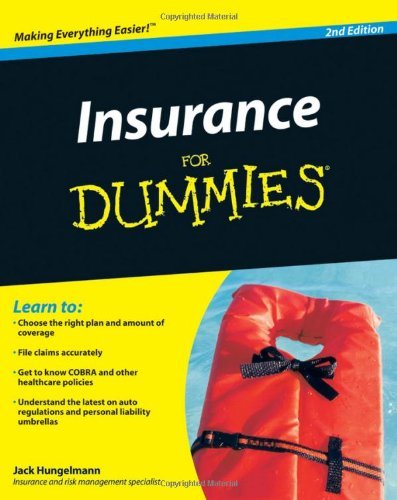
Insurance For Dummies?: Hungelmann, Jack
Whether you’re a homeowner or ... need on: ... Author Jack Hungelmann <strong>uses his twenty-five years of experience in the insurance industry to make buying insurance as simple as possible</strong>
Check Price on AmazonFor a deeper dive into how each piece works, see: Understanding Auto Insurance Coverage Types
State minimums vs. recommended protection
- State minimum liability is designed to make coverage legal, not necessarily adequate. Minimums like 25/50/25 can be exhausted quickly with today’s medical and repair costs.
- A practical target for many young adults is 100/300/50 for liability, if your budget allows. If you have assets (savings, a car you own, future wages), higher liability limits add meaningful protection.
When to carry collision and comprehensive
- You must carry them if your car is financed or leased—your lender requires it.
- Consider keeping both if your car’s ACV is more than a few thousand dollars or you can’t easily replace it after a total loss.
- Consider dropping collision (maybe keeping comprehensive) on older, paid-off cars when the annual premium approaches 10% or more of the car’s value.
Do you need UM/UIM and PIP/MedPay?
- UM/UIM is valuable in states with high uninsured rates and for drivers who want extra protection if hit by someone with too little insurance. It’s often affordable relative to the protection it adds.
- PIP/MedPay can help if you have a high-deductible health plan or limited health insurance. In no-fault states, PIP is often required.
Real-world examples (illustrative only—rates vary)
- Say you’re a 22-year-old in Ohio, driving a paid-off 2014 Toyota Corolla. Moving liability from state minimums to 100/300/50 might add, say, $15–$30/month with some insurers, while dropping collision on that older car could save $20–$40/month. Net, you might pay roughly the same while carrying much better protection for others.
- You’re 24 with a financed 2022 Subaru Crosstrek. You likely need collision and comprehensive, and your lender may recommend gap insurance. Raising your deductibles to $1,000 and enrolling in telematics could offset a chunk of the higher premium while keeping strong coverage.
How to compare quotes and find the best deal
Comparing quotes is where most savings show up, because different insurers price the exact same driver very differently.
What to gather before you shop
- Your driver’s license number and driving history (tickets/accidents with approximate dates)
- Vehicle info: VIN, mileage, safety features, where it’s garaged
- Current declarations page (shows your existing limits and deductibles)
- Annual mileage estimate and commute details
- Discount proof: GPA/transcript, defensive driving certificate, student-away status
- Any required filings (like SR-22), if applicable
Where and how to compare
- Use an online quote tool to see multiple rates side by side. This is the fastest way to understand your real price range and which carriers like your profile. Start here: Car Insurance Quotes: Compare Rates & Get Personalized Quotes Fast
- Check a couple of top insurers directly too, especially if you want their telematics program.
- Try both 6- and 12-month policy terms. Some carriers price the 12-month term more favorably, which locks your rate longer.
Read the policy details (the boring part that saves money later)
- Match limits and deductibles across quotes—apples to apples.
- Check exclusions and endorsements: Are rideshare or delivery driving excluded? Any named-driver exclusions?
- Look for perks that matter: accident forgiveness, OEM parts coverage, disappearing deductibles, glass-only deductible.
- Confirm fees and cancellation terms. Most policies are prorated if you switch midterm, but a few use short-rate penalties.
Timing and negotiating tips
- Ask for an “early shopper” discount by starting your policy 7–10 days before the effective date.
- Re-quote after life changes: turning 21 or 25, moving ZIP codes, changing vehicles, graduating, or improving credit.
- If you complete a defensive driving course or your telematics score improves, ask the carrier to re-rate the policy at renewal.
Call-to-action that respects your time: The fastest way to see what you would actually pay is to compare quotes from 3–5 carriers. You can do that in minutes here: Compare Car Insurance: Best Coverage and Price Today
Long-term moves that steadily lower your premium
Think of these as compounding habits. They don’t feel flashy, but they work.
- Keep a clean record: Tickets and at-fault accidents often affect premiums for 3–5 years. If you can avoid small, questionable claims, you may preserve your claim-free discounts.
- Improve your credit (where allowed): On-time payments and lower card balances can reduce your insurance score impact over 6–12 months.
- Take an approved defensive driving course every few years: In many states, it refreshes discounts and may remove minor violations from consideration (state rules vary).
- Right-size your coverage at each renewal: As your car ages or your finances improve, adjust deductibles and optional coverages.
- Shop at least once a year: New discounts and updated risk models can swing prices. Loyalty helps with some carriers, but shopping keeps them honest.
- Know when to switch carriers: If your renewal jumps for no clear reason, a clean driving record plus comparable coverage elsewhere is a strong case to move. Make sure the new policy is active before canceling the old one to avoid a lapse.
Common pitfalls to avoid
- Lying about garaging address or primary driver. It can void claims.
- Letting coverage lapse. Gaps often trigger surcharges when you restart.
- Dropping liability too low. One serious crash can outstrip state minimums quickly, putting your savings and wages at risk.
- Removing required coverages on a financed/leased vehicle. Your lender can force-place expensive coverage if you do.
A quick example of stacking smart savings
You’re 23, clean record, driving a 2017 Honda Civic you own outright. You:
- Move to 100/300/50 liability
- Keep comprehensive, drop collision based on the car’s value
- Raise your comprehensive deductible to $1,000
- Add telematics and a defensive driving course
- Bundle with an inexpensive renters policy
Result: While individual results vary, many drivers see their total premium stabilize or drop despite carrying stronger liability coverage—and they build a pathway for lower rates year after year.
Talk to a licensed agent if you want a second set of eyes
A good agent can spot unclaimed discounts, suggest a safer deductible, or flag a coverage gap for your situation. Regulations and discount eligibility also vary by state, so personalized advice helps.
Ready to take the next step? Compare personalized quotes side by side, then fine-tune coverages and discounts before you buy. Start here: Car Insurance Quotes: Compare Rates & Get Personalized Quotes Fast
Affordable car insurance for young adults is not about luck—it’s about stacking the right moves: the right car, the right deductibles, only the coverages you need, and a competitive quote every year. Do that, and the numbers usually start moving in your favor.
Recommended Resources
Insurance For Dummies?: Hungelmann, Jack
Whether you’re a homeowner or ... need on: ... Author Jack Hungelmann <strong>uses his twenty-five years of experience in the insurance industry to make buying insurance as simple as possible</strong>
VIOFO Dual Dash Cam, 2K 1440P 60fps+1080P 30fps Front and Rear Dash Camera with Wi-Fi GPS, Parking Mode, Emergency Recording, Super Capacitor, Motion Detection (A129 Plus Duo) : Electronics
Buy VIOFO Dual Dash Cam, 2K 1440P 60fps+1080P 30fps Front and Rear Dash Camera with <strong>Wi-Fi GPS, Parking Mode</strong>, Emergency Recording, Super Capacitor, Motion Detection (A129 Plus Duo): On
NOCO Boost GB40: 1000A UltraSafe Jump Starter – 12V ...
Find portable jump starters for emergency preparedness. Browse options with intelligent protection systems and extended battery life.
Related Articles
- Cheapest Car Insurance for Young Drivers: How to Cut Your Rates
- Car Insurance for 18-Year-Olds: Costs, Discounts & How to Get Quotes
- Best Car Insurance for New Drivers: Top Picks & How to Save
- Cheap Life Insurance for Young Adults: How to Get Affordable Coverage without Overpaying
- Auto Insurance for New Drivers: Coverage, Costs, and Smart Ways to Save
- Affordable Auto Insurance for Families: Smart Ways to Cut Costs Without Sacrificing Protection
- How to Lower Car Insurance: 15 Smart Ways to Cut Your Premiums
- Cheap Auto Insurance: How to Lower Your Premiums & Get Quotes