
Affordable Travel Insurance for Travelers: Get Smart Coverage Without Overpaying
You’re looking for affordable travel insurance for travelers because you want real protection without paying for fluff. The trick isn’t finding the absolute cheapest plan; it’s choosing smart coverage that fits your trip and your risk. Here’s what actually matters, how to compare plans side-by-side, and practical ways to lower your premium without creating gaps that come back to bite you.
If you’re new to the basics, bookmark our quick primer: Travel Insurance: Common Questions Answered.
What “affordable” really means for travel insurance
“Affordable” should mean good value—adequate protection for your specific trip at a fair price—not just the lowest sticker. Start by knowing the core coverages and which you truly need.

How to Be the World's Smartest Traveler (and Save Time, Money, and Hassle): Elliott, Christopher
Leading travel expert and USA Today columnist Christopher Elliott <strong>shares the smartest ways to travel in this tip-filled guide from National Geographic</strong>.
Check Price on AmazonEssential coverages to know
- Travel medical insurance: Pays for doctor visits, hospital stays, and prescriptions if you get sick or injured abroad. Aim for at least $100,000 per person for international trips; many travelers feel better at $250,000. If you rely on Medicare, know that it typically doesn’t cover you outside the U.S., so this becomes essential.
- Emergency medical evacuation: Pays to transport you to the nearest adequate facility or back home when medically necessary. Look for $250,000–$500,000 or more, especially for cruises, remote areas, or countries with limited medical infrastructure.
- Trip cancellation/interruption: Reimburses nonrefundable trip costs (flights, tours, hotels) if you cancel or cut your trip short for a “covered reason” (for example, serious illness, injury, a family member’s death, severe weather). Set the limit equal to your prepaid, nonrefundable amount at risk.
- Baggage/personal effects and baggage delay: Covers lost, stolen, or damaged bags and essentials if your bags are delayed. Check per-item sublimits, which often cap expensive items like electronics or jewelry.
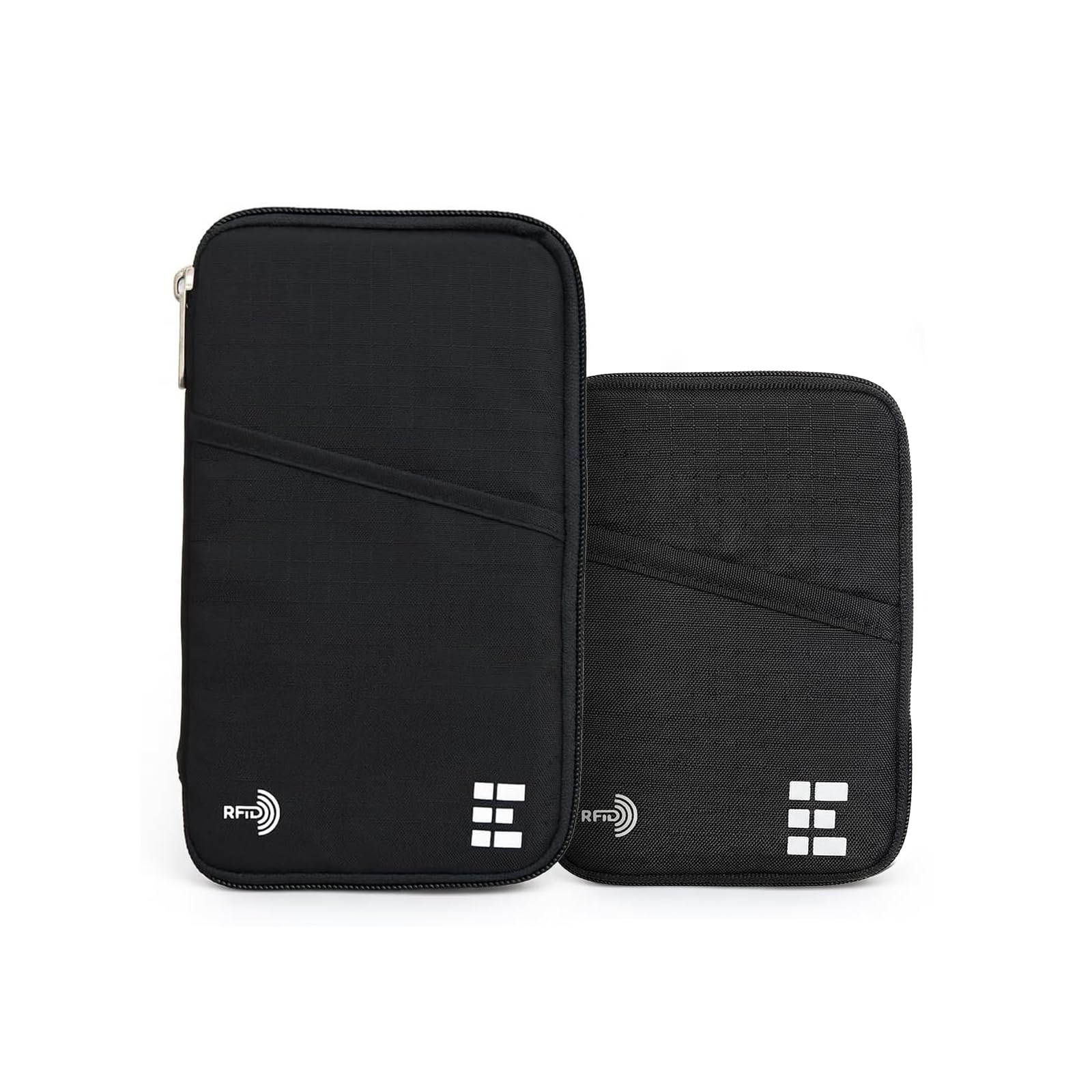
Amazon.com | Zero Grid RFID Family Passport Holder for up to 6 Passports, Large Zippered Wallet for Men & Women, Fits Cards, Cash, ID, Sim Card, AirTag; Premium & Compact Travel Document Holder - Midnight Black | Passport Wallets
View on AmazonNice-to-have (but not must-have for everyone): rental car damage waiver, travel delay benefits, and accidental death and dismemberment (AD&D). Skip these if you already have solid coverage elsewhere or you can absorb the cost of a delay out of pocket.
What drives the price
In most cases, comprehensive travel insurance costs about 4%–10% of your insured trip cost. A $2,000 trip might run $80–$200, depending on:
- Age: Older travelers typically pay more.
- Destination: Higher medical costs or evacuation complexity raise rates.
- Trip length and total prepaid, nonrefundable cost: More days and higher trip costs increase premiums.
- Activities: Adventure sports, cruising, or remote travel usually cost more.
- Coverage limits and add-ons: Higher limits, “Cancel For Any Reason” (CFAR), or a pre-existing condition waiver often raise the price.
Travel medical–only plans (no trip cancellation) can be very budget-friendly—often $2–$5 per person, per day for younger travelers. Annual multi-trip plans can also be cost-effective if you take several trips a year.
How to prioritize for value
- International trips: Emphasize medical and evacuation limits. Bumping medical from $50,000 to $250,000 often adds modest cost but big peace of mind.
- Expensive, prepaid trips: Prioritize trip cancellation/interruption matching what you’ve actually paid and can’t get refunded.
- Domestic trips with good health insurance: You may scale back medical coverage, focusing on trip protection benefits.
- Credit card coverage in play: If your card includes decent trip cancellation, you can buy a cheaper medical/evacuation-only plan to fill the biggest gap. Confirm details—card coverage limits are often smaller than stand-alone policies.
How to compare affordable travel insurance for travelers
Think of comparing policies like reading the nutrition label on food—focus on what’s inside, not the front-of-package buzzwords.
What to look for (policy elements that matter)
- Coverage limits (per person vs. per trip): Make sure medical, evacuation, and cancellation limits reflect your needs and aren’t shared across your entire party unless you’re okay with that.
- Deductible: The amount you pay out of pocket before insurance kicks in. Higher deductibles typically lower the premium; make sure you can actually afford the deductible in a worst-case scenario.
- Exclusions: Situations the policy doesn’t cover, such as high-risk sports, alcohol- or drug-related incidents, routine care, or certain weather events. Read this section closely.
- Pre-existing condition coverage and look-back period: Without a waiver, policies typically exclude recent changes in your health or medication during a 60–180 day “look-back” window. A waiver often requires buying within 14–21 days of your first trip deposit and insuring the full prepaid trip cost.
- Covered reasons for cancellation: Examples commonly include serious illness or injury, death in the family, home uninhabitable, or job loss. “Fear of travel” is not covered. CFAR is the only way to cancel for almost any reason (it costs extra and usually pays 50%–75% back if you cancel by a set deadline).
- Provider networks and primary vs. secondary coverage: Some plans are “primary,” meaning they pay first. “Secondary” plans pay after any other insurance. Primary can simplify claims.
- Assistance services: 24/7 global assistance to coordinate care, arrange evacuations, and help replace documents. This is crucial in real emergencies.
- Sub-limits and triggers: Look for per-item caps on baggage and details like “trip delay benefits start after 6–12 hours.”
How to read a quote without getting lost
- Start with the Schedule of Benefits: This is the summary table of coverage limits and deductibles.
- Open the Certificate of Insurance: The full policy wording with definitions, exclusions, and claim requirements. Search for your specific concerns (pregnancy, COVID-19, high-altitude trekking, cruises, strike/weather disruptions).
- Confirm the assistance company and contact details: You want a 24/7 number you can call collect from abroad.
- Verify time-sensitive benefits: If you need a pre-existing condition waiver or CFAR, buy within the required window from your first trip payment.
Real-world trade-off scenarios
Scenario A: $2,000 week in Mexico, 35-year-old, non-smoker • Plan A ($90): $100,000 medical, $250,000 evacuation, $2,000 cancellation, secondary coverage, $250 deductible • Plan B ($115): $250,000 medical, $500,000 evacuation, primary coverage, $0 deductible What a savvy traveler does: If budget allows, Plan B’s higher medical/evac and primary coverage are strong value for a modest premium bump—especially outside the U.S.
Scenario B: Domestic business trip, $800 in prepaid costs • You already have robust domestic health insurance. Your primary risk is change fees or a brief delay. • Consider a lower-cost plan with minimal cancellation, solid trip interruption/delay, and skip high medical limits you don’t need domestically.
Scenario C: 30 days in Southeast Asia, budget backpacker • Medical-only plan ($2–$4/day) with $100,000–$250,000 medical and $250,000+ evacuation often covers the biggest risks at low cost. • If you have no large prepaid expenses, you can skip cancellation to save money.
Rates vary by age, state, trip details, and insurer. Use examples only as a guide.
Smart ways to cut costs without losing protection
- Compare at least 3–5 carriers: The fastest way to see what you would actually pay is to compare quotes from multiple reputable insurers. Prices and features differ more than you’d think.
- Buy at the right time: Purchasing soon after your first trip payment can unlock a pre-existing condition waiver and access to CFAR. Waiting often doesn’t make it cheaper and can limit options.
- Choose annual vs. single-trip when it makes sense: If you travel 3–4+ times per year, an annual multi-trip policy can be a better value. Check trip length caps (often 30–45 days per trip).
- Right-size cancellation: Only insure the prepaid, nonrefundable amounts you’d actually lose. Don’t include costs you can cancel for credit or rebook without a penalty.
- Use your credit card benefits strategically: Many premium cards include trip cancellation/interruption and rental car coverage when you pay with the card. Often they don’t include substantial medical/evacuation benefits, so pair the card’s protection with a low-cost medical/evac plan.
- Raise your deductible: If you can cover a $250–$500 deductible out of pocket, you may reduce premiums—especially on medical-only plans.
- Skip add-ons you don’t need: CFAR can add 40%–60% to your premium. Great if you truly need flexibility; unnecessary if your plans are firm.
- Family pricing and kids included: Some family plans cover children at no extra charge when traveling with insured adults. If you’re planning a family trip, it’s worth comparing plans built for families. See our guide: Best Travel Insurance for Families — Compare Coverage, Costs & Top Picks.
- Group and loyalty discounts: Traveling with a group? Some insurers offer discounts when you insure everyone together.
- Work with a licensed broker: A good broker can match your trip and budget to the right plan and flag gotchas you might miss.
Risk-based recommendations and red flags
Who should buy what (typical, not one-size-fits-all)
- Budget backpacker with minimal prepaid costs • Focus on medical ($100,000–$250,000) and evacuation ($250,000+). Consider a medical-only plan to keep costs low. If you’re a student traveler, see: Affordable Travel Insurance for Students: Find the Right Coverage Without Overpaying.

Adventure Medical Kits Ultralight & Watertight Medical Kit Pro - Emergency First Aid Kit with Laerdal CPR Mask, Irrigation Syringe, Wound Closure Strips & More
View on AmazonFamily vacation with prepaid flights, rental, and tours • Comprehensive plan with cancellation/interruption equal to what you’ve prepaid, plus strong medical/evacuation. Look for “kids included” pricing and generous trip delay benefits (for meals/lodging when travel goes sideways). Also see: Best Travel Insurance for Families — Compare Coverage, Costs & Top Picks.
Senior traveler or anyone with stable pre-existing conditions • Comprehensive plan purchased within the time window to secure a pre-existing condition waiver. Choose higher medical/evacuation limits and primary coverage for simpler claims.
Business traveler (domestic or short international) • Emphasize trip interruption/delay and medical/evacuation for international legs. If your employer provides some benefits, coordinate and avoid overlapping coverage.
Cruise or remote/adventure travel • Upgrade evacuation limits ($500,000+), verify ship-to-shore evacuation is covered, and confirm adventure sports aren’t excluded. Cheaper plans often fall short here.
Situations where “cheap” is usually the wrong move: remote destinations with limited care, high-cost cruises, older travelers, expensive prepaid tours, or when you need a pre-existing condition waiver. In these cases, underinsuring medical/evacuation or buying bare-minimum cancellation can be a very costly false economy.
Red flags and fine print to watch
- Low medical limits (for example, $10,000) or evacuation limits under $100,000 for international trips—often inadequate.
- Reimbursement-only evacuation with no coordination: You want 24/7 assistance to arrange and pay providers directly when possible.
- No pre-existing condition waiver available or confusing eligibility rules: If you need it, buy within the stated window and insure the full trip cost.
- High per-item baggage sublimits (for example, $250 per item) when traveling with pricey electronics or gear.
- Vague or limited “covered reasons” for cancellation: If the list is short, you may not be protected for common scenarios.
- Exclusions that matter for your trip: Alcohol/drug-related incidents; pregnancy/childbirth; mental health events; high-altitude trekking, scuba beyond limits, or motorbike riding without proper license/helmet; war or civil unrest; strikes and severe weather with tight timing rules.
- Claims hoops: Short filing deadlines or extensive documentation requirements. Keep receipts, medical records, police reports, and travel delay proof.
Quick example: picking value over price
Say you’re a 40-year-old traveling to Italy for 10 days with $3,500 in nonrefundable costs. You see two quotes:
- Low-cost plan: $140, $50,000 medical, $100,000 evacuation, secondary coverage, $3,500 cancellation.
- Better-value plan: $175, $250,000 medical, $500,000 evacuation, primary coverage, $3,500 cancellation.
For $35 more, you meaningfully reduce the biggest financial risks (medical/evac), which is typically the smarter trade-off overseas.
What to do next
- Gather your details: traveler ages, destinations, trip dates, prepaid nonrefundable costs, medical concerns, and activities.
- Check what you already have: health insurance coverage abroad, credit card travel protections, and any employer benefits.
- Compare at least 3–5 carriers: The fastest way to see what you would actually pay is to line up quotes side-by-side and focus on limits, deductibles, exclusions, and time-sensitive benefits.
- Buy early if you need special protections: Pre-existing condition waivers and CFAR are usually only available shortly after your first trip payment.
- Ask a pro: A licensed agent or broker can help tailor a plan to your needs and budget. This guide is educational; for recommendations specific to your situation, consult a licensed professional.
Ready to find your fit? Compare quotes today, then pick the plan that balances cost and protection for your trip. And if you want to brush up on basics while you shop, keep this handy: Travel Insurance: Common Questions Answered.
Recommended Resources
How to Be the World's Smartest Traveler (and Save Time, Money, and Hassle): Elliott, Christopher
Leading travel expert and USA Today columnist Christopher Elliott <strong>shares the smartest ways to travel in this tip-filled guide from National Geographic</strong>.
Amazon.com | Zero Grid RFID Family Passport Holder for up to 6 Passports, Large Zippered Wallet for Men & Women, Fits Cards, Cash, ID, Sim Card, AirTag; Premium & Compact Travel Document Holder - Midnight Black | Passport Wallets
RFID Protection: Wallet <strong>includes 7 RFID blocking sleeves to help protect passports and cards from unauthorized scans while traveling domestically or internationally</strong>.
Adventure Medical Kits Ultralight & Watertight Medical Kit Pro - Emergency First Aid Kit with Laerdal CPR Mask, Irrigation Syringe, Wound Closure Strips & More
Adventure Medical Kits Mountain ... Medical Kit Ultralight/Watertight Medical Kit .7 - <strong>Up to 3 People, Up to 3 Days - Includes Bandages, Blister Essentials & More</strong> - Perfect for Hi
Related Articles
- Affordable Travel Insurance Options: How to Find Budget Coverage That Still Protects You
- Affordable Travel Insurance for Students: Find the Right Coverage Without Overpaying
- How to Save on Travel Insurance: Smart Ways to Cut Premiums Without Losing Essential Coverage
- Top-Rated Travel Insurance Companies Compared: Which Plan Is Right for Your Trip?
- How to Choose the Right Travel Insurance: A Practical Guide to Coverage, Cost, and Claims
- Best Travel Insurance for Families — Compare Coverage, Costs & Top Picks
- Cheap Life Insurance for Young Adults: How to Get Affordable Coverage without Overpaying
- Finding Affordable Health Insurance: Smart Ways to Lower Costs and Get Covered