
Life Insurance for Young Adults: Why to Buy Now, What to Choose, and How to Save
You might be wondering: I’m young, healthy, and just getting my finances in order—do I really need life insurance? Here’s the truth about life insurance for young adults: it can be surprisingly affordable, and buying early locks in lower premiums for decades. If someone would be financially affected by your death—or you want to protect your future insurability—this is worth a serious look.
Below, we’ll cover why buying now can be smart, which policy types fit most young adults, how much coverage to consider, and how to shop without overpaying.
Why life insurance matters for young adults
Let’s translate the real reasons people in their 20s and 30s typically buy:
- Co-signed or private student loans: Federal student loans are usually discharged if you die, but private student loans may not be—and co-signers (often parents) can be on the hook. A modest policy can protect them.
- Income replacement for a partner or dependents: If you share rent, a mortgage, or childcare costs, life insurance can replace years of your income so your partner can cover bills and keep plans on track.
- Final expenses: Funeral and related costs can run $7,000–$15,000 depending on location and choices. A small policy can prevent that burden landing on family.
- Locking in lower premiums: Premiums (the amount you pay each month or year) are based partly on age and health. Buying in your 20s or early 30s typically means lower, level premiums for the entire term.
- Protecting future insurability: If your health changes later, qualifying can get harder or more expensive. A policy today can offer guaranteed coverage for years—and some term policies let you convert to permanent insurance later without another medical exam.
Tip: If you’re still deciding on timing, see our guide on When Should I Get Life Insurance?
Common misconceptions that hold people back
- “I’m young, so I don’t need it.” If anyone relies on your income—or you have co-signed debt—life insurance has a job to do right now. Even if no one relies on you yet, buying while you’re healthy is often the cheapest way to cover future needs.
- “My employer coverage is enough.” Group life insurance through work (often 1–2x salary) is a nice bonus but rarely matches real needs. It also usually ends if you leave the job. Consider owning your own policy you can take anywhere.
- “It’s too expensive.” In most cases, healthy non-smokers in their 20s can get $250,000–$500,000 of term life (coverage for a set period) for the price of a few streaming subscriptions per month. Rates vary by age, health, state, and insurer, but it’s often more affordable than people think.
Which policy types work best for young adults
Life insurance comes in two main flavors: term life and permanent life. Here’s how they generally fit when you’re young and price-sensitive.
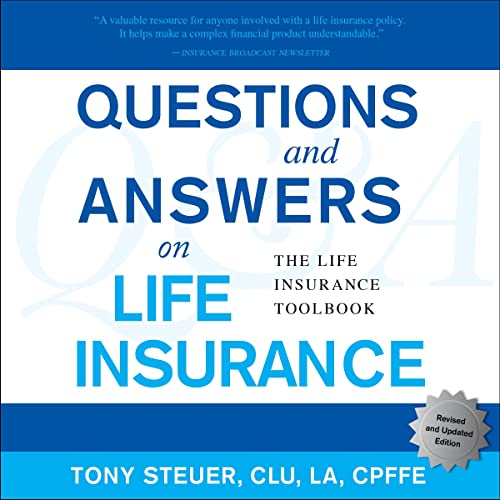
Questions and Answers on Life Insurance: Steuer, Tony
*Amazon Best Seller in Life Insurance* Questions and Answers on Life Insurance is <strong>an extremely useful and one of a kind resource for anyone looking for a simple way to understand life insuranc
Check Price on AmazonTerm life insurance (the go-to for most young adults)
- What it is: Coverage for a specific period—say 10, 20, or 30 years—called the term length. If you die during the term, your beneficiaries receive the death benefit (the payout amount). If you outlive the term, the policy ends.
- Why it works: It’s typically the most coverage for the lowest cost. You can match the term to big obligations like raising kids, paying off a mortgage, or covering a partner’s rent while they build their career.
- Who it fits: Most young adults, especially if budget is a priority and the need is temporary (income replacement while you’re working).
Convertible term (term now, option to go permanent later)
- What it is: A term policy with a conversion option—a built-in right to switch to a permanent policy (like whole life) without another medical exam, typically before the end of the term or a set age (often 65–70).
- Why it matters: It protects your future insurability. If your health changes or you decide you want lifelong coverage later, you can convert based on your original health rating. Premiums will increase when you convert (permanent insurance costs more), but you avoid medical uncertainty.
- Who it fits: Anyone who wants term pricing today but the flexibility to keep some coverage for life down the road.
Entry-level permanent options (for lifelong needs or forced savings)
- What they are: Policies like whole life or guaranteed universal life that can last your entire life, not just a term. Whole life also builds cash value (savings you can access), though it comes with higher premiums. Guaranteed universal life focuses on lifelong coverage with typically little to no cash value, often at a lower cost than whole life.
- Why people choose them: To cover lifelong needs (like final expenses, leaving an inheritance, or special needs planning) or to build forced savings. Just know you’ll pay significantly more than term for the same death benefit.
- Who they fit: Young adults with stable budgets who want a small permanent base—say $25,000–$100,000—for lifelong needs, possibly alongside a larger term policy.
If you’re still weighing the tradeoffs, our explainer on Term vs. Whole Life Insurance breaks it down in plain English.
Riders worth considering (optional add-ons)
- Accelerated death benefit: Allows access to part of the death benefit if you’re diagnosed with a qualifying terminal illness. Often included at no extra cost.
- Waiver of premium: If you become totally disabled (as defined in the policy), the insurer pays your premiums so the policy stays in force.
- Child rider: Provides a small death benefit for current or future children under one rider.
- Guaranteed insurability or conversion: Lets you increase coverage or convert term to permanent without new medical underwriting (the health review insurers use to set your rate).
How to choose coverage amount and budget-friendly options
There’s no single “right” number, but these simple methods help you land in the ballpark.
Quick methods for sizing coverage
- Income multiple: Aim for 10–15x your annual income for income replacement. Example: $60,000 salary × 10 = $600,000 of coverage.
- The DIME method: Add up Debt, Income replacement (years your family would need support), Mortgage or rent, and Education costs. Example:
- Debt (private student loans, credit cards): $25,000
- Income (5 years × $60,000): $300,000
- Mortgage/rent support (3 years × $24,000): $72,000
- Education (future child fund placeholder): $50,000
- Total: ~$447,000 (round to $450,000 or $500,000 for simplicity)
Other factors to include:
- Current and co-signed debts
- Future obligations (planned kids, caregiver support for parents)
- Childcare and education costs
- Spousal or partner support needs, especially if one partner is building a career or in school
- Existing life insurance through work or elsewhere (subtract it, but don’t rely on it long-term)
Real-world affordability examples (typical ranges)
Rates vary by age, health, tobacco use, state, and insurer. But to set expectations, here’s what healthy, non-smoking applicants often see for level-premium term life:
- 25-year-old non-smoker, $500,000 for 20 years: commonly in the ~$15–30/month range
- 30-year-old non-smoker, $500,000 for 20 years: commonly in the ~$20–40/month range
- 35-year-old non-smoker, $500,000 for 20 years: commonly in the ~$25–50/month range
These are not quotes—just ballpark ranges. Your actual rate depends on medical history, build (height/weight), family history, medications, driving record, and more. The fastest way to see what you would actually pay is to compare quotes from 3–5 top-rated carriers the same day.
For more on stretching your dollar, see Affordable Term Life Insurance: How to Get the Right Coverage for Less.
What to look for when comparing quotes
- Level premiums: Your price stays the same for the full term (10, 20, 30 years). Most term policies are level, but confirm it.
- Conversion option: If you want the ability to convert later without a new medical exam, check the conversion window and eligible permanent products.
- Financial strength: Look for carriers with strong ratings (e.g., AM Best A- or better) so they’re likely to be around when you need them.
- Built-in living benefits: Accelerated death benefit is often included; some companies offer more robust versions.
- Policy fees and minimums: Small differences can add up over decades.
Practical buying guidance and maintenance tips

Fireproof Document Bag
View on AmazonHow to shop: online vs. agent, and when to use each
- Online marketplaces: Great for quickly comparing multiple carriers, term lengths, and coverage amounts side by side. You can often complete the application digitally and, in some cases, skip the medical exam if you qualify.
- Independent agents or brokers: Helpful if you have health nuances, a complex need (like layering term with permanent), or want help reading the fine print. Independent means they can shop multiple insurers for you, not just one brand.
For a deeper walkthrough, see our guide: Life Insurance: How to Choose the Right Policy and Get Quotes
Call to action: Want to sanity-check the numbers for your age and health? The fastest way to see your real price is to compare quotes from 3–5 carriers in one go. It’s free and non-binding.
Medical exam basics (and how to potentially skip it)
- Exam or no-exam: Some applicants qualify for accelerated underwriting—no medical exam—based on health history and data checks. If an exam is needed, it’s typically a brief nurse visit.
- Tips for the best reading: Schedule in the morning, hydrate well for a week, avoid heavy exercise and alcohol 24–48 hours before, limit caffeine, and fast if instructed. Always answer questions honestly; misstatements can jeopardize a future claim.
Ways to lower your premium without gutting coverage
- Choose a term that matches your highest-need years: 20 or 30 years is common. Shorter terms cost less but may end too soon if you plan for kids or a mortgage later.
- Right-size the amount: Buy enough to do the job, but don’t overbuy. You can always add more coverage later with a new policy if life changes.
- Ladder policies: Instead of one big policy, stack smaller terms (e.g., $500,000 for 30 years + $500,000 for 20 years). As needs drop, so does your total coverage—and your cost.
- Improve health factors: Quitting nicotine, maintaining a healthy weight, and managing blood pressure and cholesterol can lead to better risk classes. Many carriers require 12+ months nicotine-free for non-smoker rates.
- Pay annually if cash flow allows: Annual premiums can be 3–8% cheaper than monthly, depending on the insurer.
- Compare broadly: Each insurer prices risk differently. A quick comparison can reveal meaningful savings for the same coverage.
Smart questions to ask before you apply
- Are the premiums level for the entire term?
- What are the conversion rules (deadline, eligible products)?
- What riders are included by default? What’s optional and what do they cost?
- What’s the insurer’s financial strength rating?
- Are there any exclusions relevant to me (high-risk hobbies, travel plans)?
- How long is the contestability period (usually 2 years when the insurer can investigate misstatements) and what happens then?
Beneficiary basics (and easy mistakes to avoid)
- Name both a primary and a contingent beneficiary (who’s next in line if the primary can’t receive the payout).
- Consider how minors will receive funds: Life insurers generally can’t pay directly to a minor. You may want to name a custodian under your state’s UTMA/UGMA or set up a trust—ask a licensed attorney for guidance.
- Avoid naming your estate if possible: That can force the payout through probate, which can delay access and expose funds to creditors. When in doubt, get legal advice.
- Keep beneficiary information current after marriage, divorce, or a new child.

Smead Life Documents Drawer Kit (92015)
View on AmazonWhen to update or convert your policy
- Major life changes: New job, marriage, a new baby, buying a home, or becoming a caregiver are common triggers to increase coverage.
- Conversion windows: If you have a convertible term policy and want lifelong coverage, mark the conversion deadline (often before age 65–70 or a set policy year). Consider converting a portion to keep some permanent coverage while keeping the bulk as cost-effective term.
- Replacing policies: Don’t cancel existing coverage until the new policy is approved and in force. Overlap for a month if needed to avoid gaps.
Common pitfalls to avoid
- Waiting too long and paying more each year you delay (or risking a health change that makes you ineligible).
- Relying only on employer life insurance that vanishes when you change jobs.
- Underinsuring because a small premium looks nice today—only to leave your partner short later.
- Not disclosing medications, nicotine, or hazardous activities; misstatements can lead to denial of a claim.
- Letting a policy lapse by missing payments; set autopay and keep your contact info updated.
Example scenarios for young adults
- The recent grad with co-signed debt: You’re 24 with $30,000 in private loans co-signed by a parent and a partner who shares rent. A $250,000–$300,000 20-year term policy could clear debt and give your partner runway to stay housed. Often very affordable for healthy non-smokers in their early 20s (rates vary).
- The couple planning kids in 2–3 years: You’re 28, both working, saving for a home. A $500,000–$750,000 30-year term with a strong conversion option covers the child-raising window and gives you the chance to convert a slice later for lifelong coverage.
- The single high-earner: You’re 32 and healthy, maxing retirement accounts with no dependents yet. You may still lock in $500,000–$1,000,000 of term because it’s cheap today and protects future insurability. If you never need it, you’ve still bought peace of mind at a historically low price.
Your next step
- If you’re even considering it, get quotes. Seeing real numbers tailored to your age and health is the easiest way to decide. Compare 3–5 carriers the same day to spot outliers.
- Prefer to talk it through? A licensed independent agent can help you zero in on the right term length, coverage amount, and carriers based on your health profile and goals.
Second call to action: Ready to see your options? Spend 5–10 minutes comparing quotes. If a policy makes sense, you can lock in your rate and start protection as soon as it’s approved.
Note: This guide is educational. For personalized recommendations, speak with a licensed agent or financial professional who can review your specific situation and state rules.
Recommended Resources
Questions and Answers on Life Insurance: Steuer, Tony
*Amazon Best Seller in Life Insurance* Questions and Answers on Life Insurance is <strong>an extremely useful and one of a kind resource for anyone looking for a simple way to understand life insuranc
Smead Life Documents Drawer Kit (92015)
... The life documents drawer kit (filing contents only) <strong>helps you organize and store Key life documents such as wills & trusts, Health care directives, investment and Retirement plans, ma
Fireproof Document Bag
Discover document organizers with fireproof and waterproof protection. Choose from multiple styles designed for home, office, and travel security needs.
Related Articles
- Cheap Life Insurance for Young Adults: How to Get Affordable Coverage without Overpaying
- When Should I Get Life Insurance? A Clear Guide to Timing
- Life Insurance for Seniors Over 70: Options, Costs & How to Buy
- Affordable Life Insurance for Seniors: How to Find Low-Cost, Appropriate Coverage
- Affordable Car Insurance for Young Adults: Practical Ways to Lower Your Premiums
- Why Life Insurance Matters: How to Protect Your Family and Finances
- Term Life Insurance for Parents: How Much to Buy, Which Policy to Choose, and How to Save
- Why Insurance Matters for Everyone: Protect Your Health, Income, and Assets