
Finding the Right Renters Insurance: How to Choose Coverage, Save Money, and Protect Your Belongings
You want to protect your stuff without overpaying. Finding the right renters insurance comes down to knowing what you own, the risks around you, and how policies actually work when something goes wrong. This guide walks you through coverage choices, limits and deductibles, price drivers, and how to compare companies—so you can buy confidently.
Pro tip: the fastest way to see what you would actually pay is to compare quotes from 3–5 carriers. Rates vary by state, building type, and your personal profile, so examples here are just that—examples.
Step 1: Size up your risks and coverage needs
Before you shop, get clear on what you’re insuring and what could go wrong. This is the part most people skip—and it’s why they end up underinsured.
Estimate the value of your personal property
Personal property coverage protects your belongings (furniture, clothes, electronics) if they’re stolen or damaged by a covered event. Start with a quick home inventory:
- Walk room-to-room with your phone and record video of your stuff.
- List big-ticket items with rough prices (TV, laptop, couch, bike, musical instruments). Keep receipts if you have them.
- Don’t forget what’s in closets, the kitchen, and storage.
Typical ranges: Many renters fall between $20,000 and $50,000 of belongings, but it varies. If you’re a minimalist with used furniture, you might be closer to $15,000. If you’ve outfitted a two-bedroom with quality gear, you could be $60,000+.
Example: You’re a 28-year-old in Denver with a roommate. You tally roughly $32,000 in belongings (bedroom set $2,500, couch $1,000, TV $800, laptop $1,500, clothes $7,000, kitchen gear $2,000, bike $1,200, other $16,000). You’d likely want at least a $35,000–$40,000 personal property limit to give yourself a cushion.
Consider your liability exposure (including roommates and pets)
Personal liability coverage protects you if you accidentally cause bodily injury or property damage to others and you’re legally responsible. Think:
- Your dog bites a neighbor in the hallway.
- A guest trips in your kitchen and needs surgery.
- You accidentally start a fire that damages other units.
Roommates: A standard renters policy typically covers the “named insured” (you) and resident relatives—NOT unrelated roommates. Each roommate usually needs their own policy unless your insurer allows adding a roommate via endorsement (an add-on that changes your base policy). Even then, shared policies can get messy at claim time. Separate policies are usually cleaner.
Pets: Some insurers exclude certain dog breeds or have lower liability limits for bites. Ask specifically about your animal. Exotic pets are often excluded.
How much liability? Many renters choose $300,000–$500,000. It’s often a small price jump from $100,000 to $300,000 and can be worth it for peace of mind.
Weigh local risk factors
Your location influences what losses are likely—and what your base policy covers:
- Theft and vandalism: Higher-crime ZIP codes may warrant stronger security and awareness of your deductible (the amount you pay out of pocket before insurance pays a covered claim).
- Weather: Wind, hail, or wildfire exposure can affect pricing and may have special deductibles.
- Flood and earthquake: Standard renters insurance typically excludes flood (rising water from outside) and earthquake. You may need a separate flood policy or an earthquake endorsement/standalone policy depending on your state.
Check landlord requirements
Landlords often require proof of renters insurance, commonly with at least $100,000 liability. Some ask to be listed as an “additional interest” (they get policy notices) or “additional insured” (they’re covered under your policy). Those are very different. Many landlords simply need additional interest; only add a landlord as additional insured if your insurer and lease require it and you understand what it changes.
Core renters insurance coverages explained
Renters policies (often called HO-4) bundle several coverages. Here’s what actually matters when choosing.
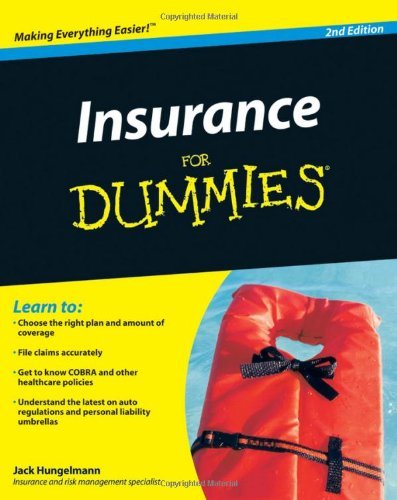
Insurance For Dummies?: Hungelmann, Jack
Whether you’re a homeowner or ... need on: ... Author Jack Hungelmann <strong>uses his twenty-five years of experience in the insurance industry to make buying insurance as simple as possible</strong>
Check Price on AmazonPersonal property: Replacement cost vs. actual cash value
- Replacement cost value (RCV) pays to replace an item with a new one of similar kind and quality—no depreciation for age/wear.
- Actual cash value (ACV) pays the depreciated value (what it’s worth today used).
RCV usually costs a bit more but saves headaches at claim time. With ACV, that 5-year-old TV might get a $150 payout versus $600–$800 under RCV. Most people prefer RCV for renters policies.
Personal liability
Covers legal defense and settlements if you’re found responsible for injury to others or damage to their property. It doesn’t cover your own injuries or your stuff. Typical options: $100,000 to $500,000+.
Medical payments to others
A small, no-fault coverage that helps with minor medical bills for guests injured in your place, regardless of who’s at fault. Think $1,000–$5,000. It’s not a substitute for liability if you’re sued.
Loss of use (also called additional living expense)
Pays extra living costs if a covered loss makes your home uninhabitable—hotel stays, short-term rentals, meals beyond your normal grocery budget. Limits are often a percentage of your property coverage or a set dollar amount.
Real example: A kitchen fire forces you out for three weeks. Your policy covers $2,100 for a hotel and $400 in extra meal costs. Save receipts; this coverage is reimbursement-based.
Optional add-ons and when to consider them
- Water backup: Covers damage if water backs up from a drain or sump—usually excluded without this endorsement. Commonly $5,000–$25,000 limits.
- Scheduled personal property: Specifically insures high-value items (jewelry, watches, cameras) for their appraised value, often with no deductible. Consider if any single item exceeds your policy’s sublimit (more on sublimits below). See our guide to Renters Insurance for High-Value Items: What to Insure, How to Cover It, and When to Schedule.
- Identity theft/credit monitoring: Modest cost for help if your identity is stolen.
- Earthquake: Endorsement or standalone policy depending on your state and insurer.
- Flood: Typically a separate policy (through the NFIP or private market). Standard renters insurance almost never covers flooding from outside water.

Govee WiFi Water Leak Detector 3 Packs, Leak Alert with Remotely Email/APP Push and Sound Alarm, Smart Water Sensor with 100dB Adjustable Alarm, Suit for Home and Basement - Amazon.com
View on AmazonLimits, deductibles, sublimits, and endorsements: how to set them
Here’s how payouts really work after a claim—and how to avoid surprises.
Choosing adequate limits
- Personal property limit: Total cap for your belongings. Add up your inventory and add 10–20% as a cushion. If you own specialized gear (musical instruments, photography equipment), check sublimits.
- Liability limit: Consider at least $300,000 if you can afford it. If you have significant assets or higher risk (dog, frequent hosting), consider $500,000. An umbrella policy (a separate policy that provides extra liability coverage above your renters policy) can also be an option if you need more—ask a licensed agent.
- Loss of use: Look for enough to cover a few weeks to a couple months of alternate housing in your area. Some policies use “actual loss sustained” for a period (pays what you actually spend, up to a time limit); others set a dollar max.
Picking a deductible
Your deductible is what you pay before insurance pays on a covered property claim. Common deductibles: $250, $500, $1,000. Higher deductibles usually mean lower premiums, but don’t choose a deductible you couldn’t comfortably pay tomorrow.
Example trade-off: Say your premium is $16/month with a $500 deductible and $13/month with a $1,000 deductible. You’d save $36/year by going higher. If you filed a $1,500 theft claim, your payout difference would be $500 with the lower deductible vs. $1,000 with the higher. Decide based on your emergency fund and claim likelihood.
Watch the sublimits
A sublimit is a smaller cap within your property limit for certain categories—like jewelry, firearms, cash, bicycles, or collectibles. It’s often $1,500–$2,500 for jewelry theft, for example.
Payout example with sublimits:
- You have $40,000 personal property with replacement cost and a $500 deductible.
- Your apartment is burglarized; $6,000 of items are stolen, including a $4,000 engagement ring and $2,000 of electronics.
- Jewelry theft sublimit is $1,500. Electronics have no special sublimit.
- Claim calculation: $1,500 (jewelry) + $2,000 (electronics) = $3,500, minus $500 deductible = $3,000 paid. You’re short $1,500 on the ring. Scheduling the ring (listing it separately via endorsement with its own limit) could have covered the full amount, often with no deductible.
Endorsements fill common gaps
Endorsements change or add coverage to your base policy. Popular ones include:
- Scheduled property for jewelry, watches, art, instruments
- Water backup
- Increased limits for business property (for freelancers using equipment at home)
- Special coverage for e-bikes or high-end bicycles if your insurer offers it
What drives price—and proven ways to save
Renters insurance is typically affordable, but pricing varies.
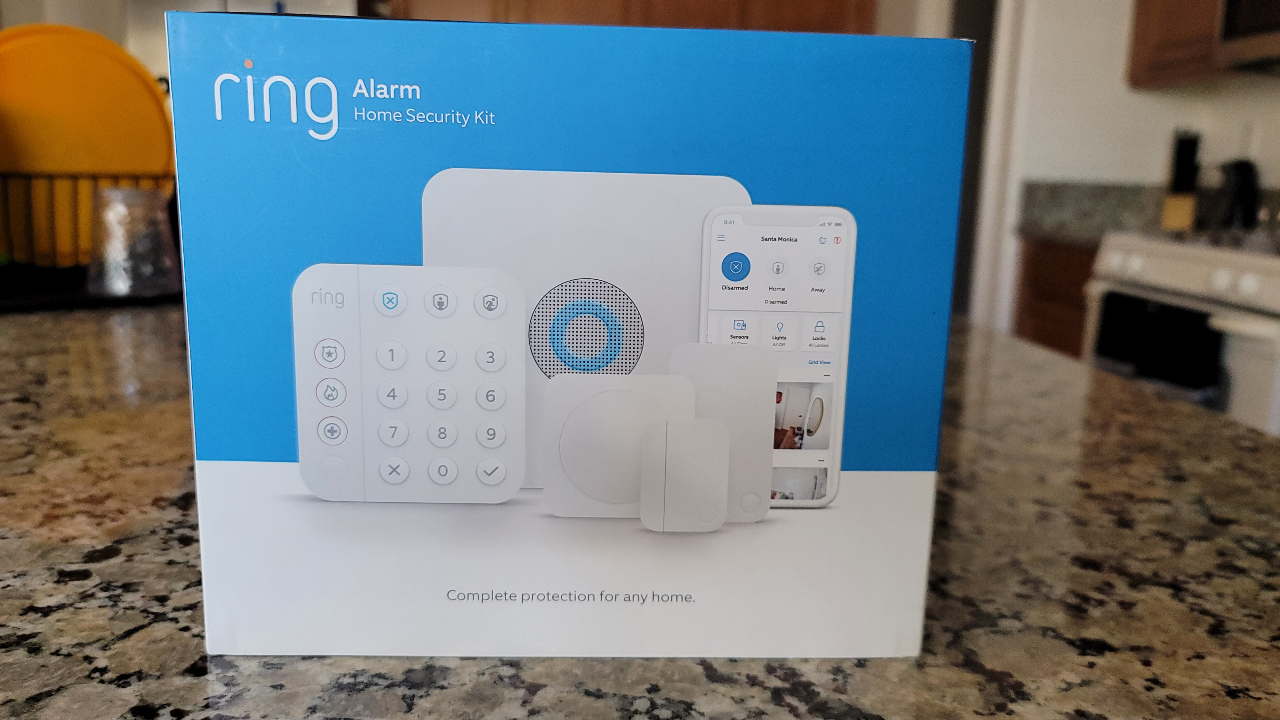
Ring Alarm 8-piece kit (2nd Gen) – home security system
<strong>24/7 Professional Monitoring</strong> If a break-in or emergency is detected, we’ll request emergency response.² <strong>24/7 Professional Monitoring</strong> · If a break-in or emergency is d
Check Price on AmazonKey rating factors insurers often use:
- Location: ZIP code risk (theft, weather), proximity to a fire station, building construction and security features
- Coverage choices: Higher limits and replacement cost increase price; higher deductibles lower it
- Claims history: Prior property claims can raise costs (insurers check databases like CLUE)
- Credit-based insurance score: In most states, insurers use a credit-based score to predict claim likelihood—not your lending score, but correlated. A stronger score typically lowers premiums. Some states restrict or ban its use.
- Household details: Pets, smoking, and number of residents can factor in
Discounts commonly available:
- Bundle with auto: Often the biggest discount if you also carry auto insurance
- Security: Monitored alarm, smoke detectors, deadbolts, sprinkler systems, gated building
- Autopay/paperless and pay-in-full discounts
- Claims-free and loyalty discounts
- Affinity or employer group discounts (varies by insurer)
Want ballpark numbers? See real examples and cost drivers in How Much Is Renters Insurance? Average Costs, Factors & Real Examples. For hands-on ways to trim your bill without weakening protection, check How to Save on Renters Insurance: Smart Ways to Lower Your Premium.
Smart savings trade-offs:
- Raising your deductible can make sense if you’d only file larger claims.
- Sticking with replacement cost is often worth the extra few dollars a month.
- Don’t gut your liability to save $10 a year. Liability is usually the best value in the policy.
Call to action: Ready to see your actual price? Compare multiple carriers side-by-side here: Renters Insurance: Compare Quotes & Get the Right Coverage Today. A 5-minute quote check often reveals $5–$10/month differences for the same limits.
Finding the right renters insurance: how to compare quotes and carriers
Here is what actually matters when choosing a company and policy.
What to look for
- Financial strength: Aim for A- or better from A.M. Best (indicates the insurer’s ability to pay claims).
- Claims handling reputation: Scan third-party reviews (J.D. Power, NAIC complaint index) and recent customer feedback for your state.
- Replacement cost on contents: Confirm your quote is for replacement cost, not actual cash value.
- Clear sublimits and endorsements: Know the jewelry/theft sublimit; add a schedule for high-value items if needed.
- Water backup availability: It’s a common real-world claim, but often excluded without an endorsement.
- Liability details: Check dog-breed restrictions and whether roommates can be added (and if it’s wise).
- Loss of use terms: Is it a dollar limit or “actual loss sustained” for a time period?
- Exclusions: Look for short-term rental exclusions (hosting on platforms), business property limits, mold limits, and vacancy clauses (reduced coverage if you’re away too long).
- Fees and service: Any policy fees? App quality? 24/7 claims reporting? Human support when needed?
Red flags:
- The quote seems much cheaper but uses actual cash value, a very high deductible, or very low liability.
- Vague answers about dog liability or jewelry limits.
- No water backup option and you’re in a building with older plumbing.
Apples-to-apples quote comparison checklist
When you compare, keep these the same across carriers so you can really judge price and service:
- Personal property limit (e.g., $40,000)
- Deductible (e.g., $500 or $1,000)
- Liability (e.g., $300,000 or $500,000)
- Replacement cost on contents (on vs. off)
- Same endorsements (e.g., water backup $10,000, scheduled jewelry $5,000)
Real-world scenarios to pressure-test your policy
- Kitchen fire: Smoke damages your furniture and walls. Property coverage pays to replace your belongings (subject to deductible). Loss of use pays hotel costs while repairs happen. If you caused the fire and the landlord sues for building damage, liability responds (up to limits).
- Dog bite: Your dog bites a neighbor. Liability can cover medical bills and legal costs; some insurers exclude certain breeds—confirm before you buy.
- Bike theft: Your $1,800 e-bike is stolen from the garage. Some policies cover bikes fully under personal property; others have sublimits or exclude motorized bikes. You may need a special endorsement.
- Jewelry loss: You lose a $3,500 ring at the gym. Theft may be covered subject to the jewelry sublimit; mysterious disappearance may not be—unless it’s scheduled.
Step-by-step: Buy the right policy with no gaps
- Build your inventory
- Video your space; list high-value items and estimated costs; save serial numbers if available.
- Set your initial targets
- Property limit: Your total belongings + 10–20% buffer (e.g., $32,000 tally → choose $40,000).
- Liability: Start at $300,000; consider $500,000 if you have assets/pets or host gatherings.
- Deductible: Choose an amount you can pay tomorrow ($500 or $1,000 are common).
- Coverage type: Select replacement cost on contents.
- Identify needed add-ons
- Water backup (common in older buildings).
- Schedule high-value items (jewelry, cameras, instruments). Learn how scheduling works here: Renters Insurance for High-Value Items: What to Insure, How to Cover It, and When to Schedule.
- Flood or earthquake if relevant (usually separate policies or special endorsements).
- Gather details for quotes
- Address, building type, year built, safety features (sprinklers, alarm), prior claims.
- Landlord requirements (minimum liability, additional interest vs. additional insured).
- Compare 3–5 quotes side-by-side
- Keep limits, deductible, and endorsements identical across quotes.
- Ask about dog liability, roommate rules, and any breed or animal exclusions.
- Confirm sublimits and whether your valuables need scheduling.
- Read the exclusions page
- Look specifically for short-term rental exclusions, water damage nuances, mold, and vacancy clauses.
- Finalize and set up your policy
- Pick an effective date before move-in/lease start.
- Add your landlord as additional interest if required.
- Enroll in autopay/paperless to capture discounts.
- Save your digital proof of insurance for your landlord.
- Review annually or after life changes
- New roommate? New dog? Bought a pricey bike or ring? Update your policy.
- Re-shop quotes at renewal if your rate jumps or your needs change.
If your situation is complex (valuable collections, frequent short-term rentals, high dog liability concerns), it’s worth speaking with a licensed agent who can compare carriers and endorsements for your exact scenario.
Want a quick, accurate price check?
The most reliable way to finish finding the right renters insurance is to run a few quotes with the same limits and deductible. Start here and compare in minutes: Renters Insurance: Compare Quotes & Get the Right Coverage Today.
And if cost is your sticking point, use these proven tactics to trim your bill without creating gaps: How to Save on Renters Insurance: Smart Ways to Lower Your Premium and get a feel for typical price ranges in your area with real examples: How Much Is Renters Insurance? Average Costs, Factors & Real Examples.
—
Note: Coverage availability, pricing, and discounts vary by state and insurer. Examples are illustrative only. Always review your policy documents and consult a licensed agent for personalized advice.
Recommended Resources
Insurance For Dummies?: Hungelmann, Jack
Whether you’re a homeowner or ... need on: ... Author Jack Hungelmann <strong>uses his twenty-five years of experience in the insurance industry to make buying insurance as simple as possible</strong>
Ring Alarm 8-piece kit (2nd Gen) – home security system
<strong>24/7 Professional Monitoring</strong> If a break-in or emergency is detected, we’ll request emergency response.² <strong>24/7 Professional Monitoring</strong> · If a break-in or emergency is d
Govee WiFi Water Leak Detector 3 Packs, Leak Alert with Remotely Email/APP Push and Sound Alarm, Smart Water Sensor with 100dB Adjustable Alarm, Suit for Home and Basement - Amazon.com
Govee WiFi Water Leak Detector 3 Packs, <strong>Leak Alert with Remotely Email/APP Push and Sound Alarm, Smart Water Sensor with 100dB Adjustable Alarm, Suit for Home and Basement</strong> - Amazon.co
Related Articles
- Get the Best Renters Insurance: Coverage, Costs, and Smart Savings
- How to Find the Right Renters Insurance: Coverage, Costs, and Buying Tips
- Best Home Insurance for Renters: Compare Coverage, Cost & Top Picks
- How to Lower Your Renters Insurance Premiums: Smart Savings Strategies and Trade-Offs
- Understanding Renters Insurance Coverage: What It Covers, How Much You Need, and How to File a Claim
- What Does Renters Insurance Cover? Coverage, Limits, Exclusions & Add‑Ons Explained
- Is Renters Insurance Worth It? A Practical Guide to Decide
- How to Save on Renters Insurance: Smart Ways to Lower Your Premium