
Renters Insurance for High-Value Items: What to Insure, How to Cover It, and When to Schedule
You’ve got a few pricey things you really care about — an engagement ring, a vintage guitar, maybe a limited-edition watch or a camera setup that wasn’t cheap. You keep hearing that “your renters insurance has limits.” So what’s actually covered, what isn’t, and when do you need extra protection? This guide explains renters insurance for high-value items in plain English, with practical steps to make sure you’re not underinsured.
What counts as a high-value item — and why standard renters coverage can fall short
When we say “high-value items,” we’re talking about things that are expensive to replace or that have category-specific limits inside a renters policy. Common categories include:
- Jewelry and watches
- Fine art and antiques
- Collectibles (coins, stamps, sports cards, sneakers, wine)
- High-end electronics and camera gear
- Musical instruments and pro audio equipment
- Silverware, furs, firearms
Here’s the catch: even if your overall personal property limit is high — say $30,000 or $50,000 — most renters policies include “sublimits” (smaller caps within your policy) for certain categories, especially for theft. A sublimit is a maximum the insurer will pay for that type of item, regardless of your main limit.
Typical sublimits you’ll see (these vary by insurer and state):
- Jewelry and watches (theft): often $1,000–$2,500 total, sometimes per loss or per item
- Firearms (theft): often $2,500–$5,000 total
- Silverware/precious metals (theft): often $2,500–$10,000 total
- Cash: often $200–$500
- Securities/valuable papers: often around $1,500
- Business property (used for work): often $2,500 on premises, and lower off premises
Electronics aren’t always sublimited, but claims still face your deductible (the amount you pay out of pocket before insurance kicks in) and must be caused by a covered peril (like theft or fire). Some carriers also have special limits or conditions for computers or camera equipment. If you take gear off premises frequently, you’ll want to double-check your policy’s off-premises coverage terms.
How to know if an item needs extra coverage:
- Its value is higher than your policy’s sublimit for that category (e.g., a $6,000 ring with a $1,500 jewelry theft sublimit)
- It’s one-of-a-kind or hard to price (art, antiques, collectibles)
- You carry it with you regularly (increasing loss risk)
- Your policy pays Actual Cash Value by default (more on that next), and you want Replacement Cost
- You use it for paid work (some “business property” restrictions can apply)
If any of these ring true, it’s time to look at scheduling the item or buying a standalone policy.
Renters insurance for high-value items: coverage options and how they work
There are three main paths to better coverage. You can mix and match depending on what you own.
Insurance for Dummies: Hungelmann, Jack
<strong>Manage life, health, and disability risks</strong> ― explore individual and group policies, understand Medicare basics, and evaluate long-term disability and long-term-care insurance ...
Check Price on Amazon1) Raise your personal property coverage and/or add replacement cost
- Higher personal property limit: This raises the total your policy could pay after a big loss (like a fire), but it doesn’t remove category sublimits. It’s useful overall but won’t fix a $1,500 jewelry sublimit.
- Replacement Cost coverage: Many renters policies default to Actual Cash Value (ACV), which deducts for depreciation (what your item is worth today, used). Replacement Cost pays what it would cost to buy a new equivalent item without subtracting depreciation. Adding a Replacement Cost endorsement (an add-on to your policy) typically costs a bit more but can be worth it, especially for electronics and furniture.
Defined terms:
- Actual Cash Value (ACV): payout equals the item’s current value after age/wear are factored in.
- Replacement Cost (RC): payout equals the cost to buy a comparable new item, no depreciation deducted.
2) Schedule specific items with an endorsement (a rider/floater)
A “scheduled personal property” endorsement (sometimes called a rider or floater) lists valuable items individually on your policy with their own limit and usually broader protection. Key advantages:
- Sublimits don’t apply to the scheduled item
- Often worldwide coverage (on and off premises)
- Often $0 deductible for that item
- Broader causes of loss, sometimes including “mysterious disappearance” (losing a ring without a known cause), depending on the insurer
- You lock in a specific value based on an appraisal, receipt, or agreed value (an amount you and the insurer agree to before a loss)
You can also schedule items “blanket style” — one limit applied to a class of items (e.g., all jewelry up to a total of $10,000 with per-item caps). Blanket scheduling can be easier for multiple mid-priced pieces, but individual scheduling is better for one or two high-ticket pieces.
3) Buy a standalone policy
Standalone coverage can make sense when:
- You have significant value in one category (e.g., jewelry, fine art, high-end instruments)
- Your renters carrier won’t schedule the item or coverage is too limited/pricey
- You want specialized features (e.g., coverage while performing professionally, shipping coverage for collectibles, or coverage for pairs and sets of jewelry)
Examples include jewelry insurers, fine art carriers, and music/instrument insurers. These policies often include worldwide coverage, accidental damage, and $0 deductibles. Pricing varies by item type, security (safe, alarm), claims history, and your state.
Off-premises coverage and travel
Standard renters policies usually cover your belongings off premises, but there can be limits (often 10% of your personal property limit) or narrower causes of loss. Scheduled and standalone policies typically provide broader worldwide coverage — very helpful if you travel with jewelry, cameras, or instruments. Always ask if theft from a vehicle is covered and what security steps are required.
Deductibles and how payouts are calculated
- Unscheduled personal property claim: Your deductible applies. If your deductible is $1,000 and your $1,500 camera is stolen, you’d typically net $500.
- Scheduled item claim: Often $0 deductible and paid up to the scheduled amount, subject to policy terms. If your $8,000 ring is scheduled for $8,000, you can typically recover up to that amount.
- Replacement Cost timing: Many policies pay ACV first and reimburse the difference up to RC after you replace the item and submit receipts (timelines vary). Scheduled items may pay agreed value up front.
Documentation, proof-of-value, and how claims really work
For high-value items, paperwork matters. Insurers need to verify what you owned, its condition, and its value.
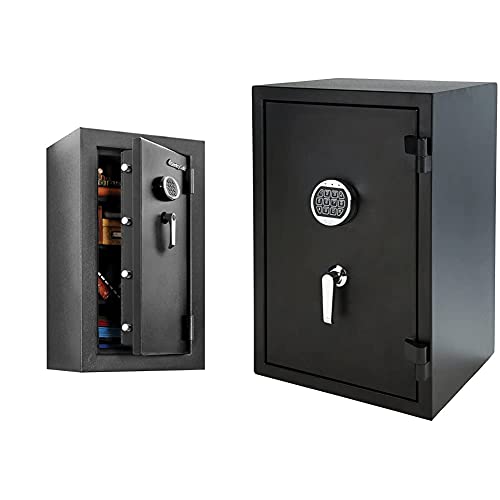
SentrySafe Waterproof and Fireproof Alloy Steel Digital Safe Box for Home with Code Button Keypad, 1.23 Cubic Feet, 17.8 x 16.3 x 19.3 Inches (exterior), SFW123GDC - Gun Safes And Cabinets - Amazon.com
View on AmazonWhat to document now (before a loss):
- Receipts or proof of purchase (digital copies are fine)
- Appraisals for jewelry, art, and antiques (often required for scheduling; many carriers want appraisals updated every 2–3 years)
- Photos and videos of each item, close-ups of serial numbers, gemstone grades, and distinguishing features
- An inventory list with make/model/serial numbers and current estimated value
- Storage and security details (e.g., safe model, alarm system, climate control for instruments)
How to add (schedule) an item to your renters policy:
- Contact your carrier or agent and request a “scheduled personal property” endorsement
- Provide an appraisal or receipt (insurers often require appraisals for items above a threshold, like $5,000)
- Submit photos and a description (carat/clarity/color for jewelry; artist/title/medium/size for art; make/model/serial for electronics)
- Choose either individual scheduling or a blanket schedule (if offered)
- Review the premium quote, coverage territory (worldwide?), and deductible (many are $0)
- Confirm whether mysterious disappearance is covered and how pairs/sets are handled (e.g., one earring lost — will they replace the pair?)
Common reasons claims are reduced or denied — and how to avoid them:
- Lack of proof: No receipts, appraisal, or photos. Prevention: Create and store a digital inventory now.
- Wear and tear or gradual deterioration: Most policies exclude this. Prevention: Maintenance records for instruments; proper storage.
- Unexplained loss (mysterious disappearance) not covered: Some policies exclude it unless you schedule the item. Prevention: Add a rider that includes this coverage.
- Business use: Using gear for paid gigs can change coverage. Prevention: Disclose professional use and get the right policy.
- Off-premises exclusions/limits: Loss from a car or international travel may be limited. Prevention: Confirm territory and theft-from-vehicle terms.
- Incorrect valuations: Underinsuring a piece can cap your payout. Prevention: Get current appraisals; review values every 1–2 years.
Pro tip: Back up your inventory and appraisals to the cloud. After a loss, you’ll save days of stress.
Decision-making: when to schedule, what it costs, and how to compare options
Let’s make this practical. The right move depends on the item’s value, risk, and your policy’s deductible and sublimits.
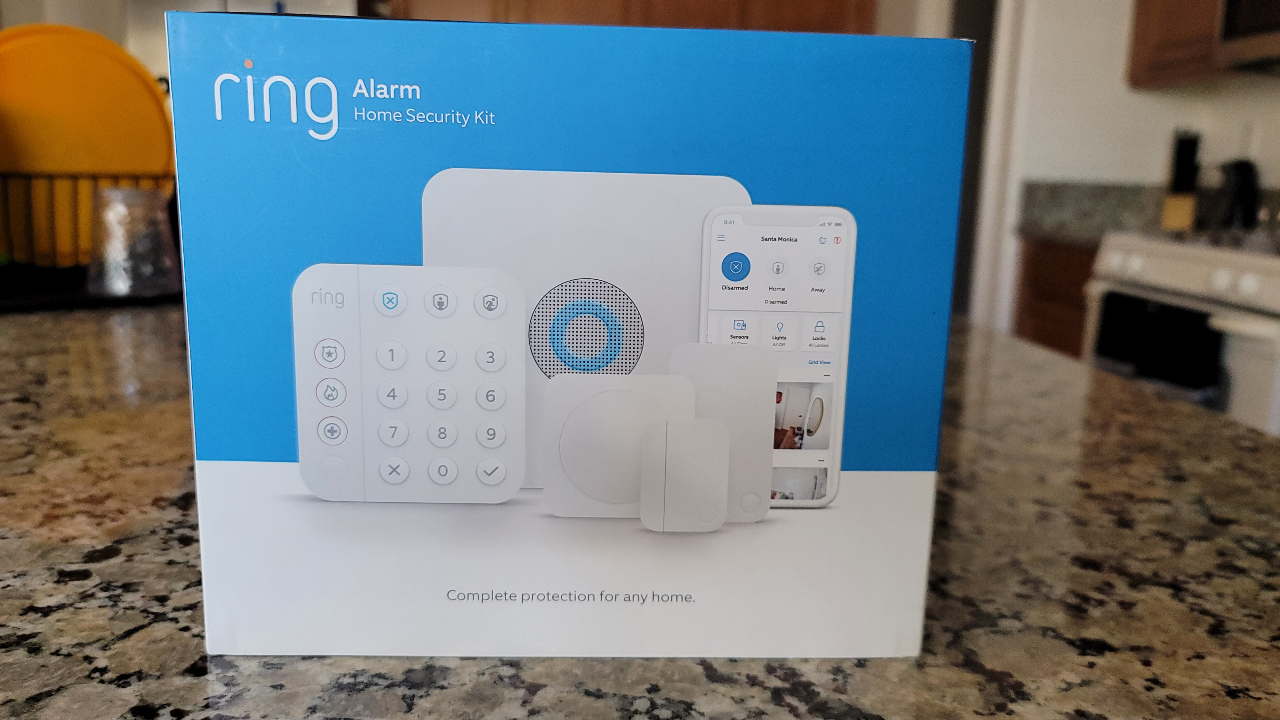
Ring Alarm 8-piece kit (2nd Gen) – home security system
View on AmazonStep 1: Estimate replacement cost
- Jewelry: Get a recent appraisal from a reputable jeweler or gemologist; values can change with metal and diamond markets.
- Electronics/cameras: Use current retail prices for equivalent models; include lenses and accessories.
- Art/collectibles: Gather gallery sales, auction results, or collector price guides; note provenance and condition.
- Instruments: Check brand/model used and new prices; include cases and custom modifications.
Step 2: Check your renters policy
- Personal property limit and whether it’s Replacement Cost or Actual Cash Value
- Category sublimits (especially for jewelry, firearms, silverware, collectibles, cash)
- Off-premises limit (often 10% of your personal property limit, but varies)
- Deductible
Step 3: Run the math with simple examples
Example A: Unscheduled camera vs. scheduling
- You have a $2,000 camera kit
- Policy has a $1,000 deductible; no special camera sublimit
- Theft from your car is covered, but deductible applies
- A claim would likely pay $1,000 (minus deductible) — not ideal
- Scheduling the kit for $2,000 with a $0 deductible could cost, for example, $20–$40 per year per $1,000 of value (roughly 1%–2% annually), so about $20–$40 per $1,000 — $40–$80 per year total depending on your state and insurer
Example B: Engagement ring
- Appraised at $8,000; jewelry theft sublimit is $1,500
- Without scheduling, a theft claim might max at $1,500
- Scheduling at the appraised value with $0 deductible typically runs about 1%–2% of value per year (some carriers higher or lower). That’s roughly $80–$160 per year, depending on your location, security (safe, alarm), and claims history.
Rates vary by carrier, state, item type, and security features. Some insurers offer discounts if you keep jewelry in a UL-rated home safe or if you have a monitored alarm.
Step 4: Decide between scheduling vs. a standalone policy
- Schedule on renters if: you have a few items, you want convenience and $0 deductible, and your carrier includes mysterious disappearance.
- Consider a standalone policy if: you have many high-value pieces, travel frequently, want specialized perks (pairs/sets coverage, professional-use coverage, shipping protection), or your renters carrier’s pricing/limits aren’t a fit.
When adding items affects premiums
- Each scheduled item adds a small premium based on type, value, and risk factors.
- Multiple items may qualify for “blanket” scheduling rates or volume pricing.
- Changing your deductible on the base policy doesn’t usually affect scheduled item deductibles (often already $0), but it does impact unscheduled claims.
How to compare options (What to Look For)
- Sublimits and definitions: What are the theft limits for jewelry, firearms, silverware, collectibles? How is “collectible” defined?
- Valuation method: Is your base policy ACV or RC? Are scheduled items agreed value or RC?
- Deductibles: $0 on scheduled items? What about unscheduled claims?
- Causes of loss: Does the rider include accidental damage and mysterious disappearance?
- Off-premises and worldwide coverage: Any limits for travel or theft from vehicles?
- Business/pro use: Are gigs, performances, or professional shoots covered or excluded?
- Pairs and sets: If one earring is lost, will the policy replace the set?
- Appraisal rules: Age of appraisal accepted? Update frequency?
- Claim support: How does the insurer handle replacement — cash payout, repair, or you choose the jeweler/vendor?
The fastest way to see what you would actually pay is to compare quotes from 3–5 carriers. You can start by checking renters insurance quotes and coverage options here: Renters Insurance: Compare Quotes & Get the Right Coverage Today.
Real-world scenarios to make this concrete
The traveling photographer: You’re a 32-year-old renter in Colorado with $4,000 of camera gear you take on hikes and flights. Your renters deductible is $1,000. Scheduling the kit with $0 deductible and worldwide coverage typically costs a modest annual premium compared to the risk of a single theft wiping out your equipment budget.
The newly engaged couple: In New York, your $9,500 ring exceeds your policy’s $1,500 jewelry theft sublimit. Scheduling the ring at the appraised value could cost around 1%–2% annually. If “mysterious disappearance” is included, you’re protected if the ring is lost rather than stolen — something the base policy often excludes.
The vintage guitar owner: You gig on weekends in Texas. Standard renters may limit or exclude business/pro use. A standalone instrument policy could cover performances, transit, and accidental damage, typically with specialized repair networks and coverage for accessories.
Note: Costs above are illustrative; actual pricing varies by insurer, state, your security setup, and claims history. Always review a quote’s details.
Documentation refresh: simple checklist you can do this weekend
- Photograph each valuable item (front/back/close-ups)
- Save receipts and appraisals to a cloud folder
- Record serial numbers and distinguishing marks
- Note storage and security details
- Ask your insurer/agent about scheduling and appraisal requirements
- Calendar a reminder to revisit values annually (markets change)
When to bring in a licensed agent or specialist
- You own fine art with provenance or a growing collection with complex valuation
- You use items for professional work or performances
- You’ve had a prior claim or live/travel in higher-risk areas
- You want to evaluate umbrella insurance for extra liability (separate from property coverage) — especially helpful if you host often or have higher net worth. For more on liability protection, see our guide: Umbrella Insurance Guide: Do You Need Extra Liability Coverage?
A licensed agent can help you sort out sublimits, endorsements, and whether a standalone policy is smarter for your situation.
Quick FAQ
- Do I need an appraisal to schedule jewelry? Typically yes for higher-value pieces (often $5,000+), and many carriers require updates every 2–3 years.
- Are scheduled items covered worldwide? Often yes, but confirm policy territory and any country exclusions.
- If I lose one earring, will they pay for a new pair? Ask about “pairs and sets” coverage — not every policy does this.
- Is accidental damage covered? Scheduling or standalone policies often include it; base renters policies usually don’t.
- What if I buy a new ring tomorrow? Some carriers automatically cover newly acquired jewelry for 30–90 days if you already have jewelry scheduled — amounts vary. Notify your insurer promptly.
Your next smart step
If you own even one high-value item, it’s worth 10 minutes to check your policy’s sublimits and get a quote to schedule it. The difference between a $1,500 sublimit and an $8,000 scheduled value can be the difference between replacing your item and paying mostly out of pocket. Compare personalized renters options here: Renters Insurance: Compare Quotes & Get the Right Coverage Today.
Friendly reminder: Insurance terms and availability vary by state and insurer. This guide is educational — for advice tailored to your situation, speak with a licensed agent.
Recommended Resources
Insurance for Dummies: Hungelmann, Jack
<strong>Manage life, health, and disability risks</strong> ― explore individual and group policies, understand Medicare basics, and evaluate long-term disability and long-term-care insurance ...
SentrySafe Waterproof and Fireproof Alloy Steel Digital Safe Box for Home with Code Button Keypad, 1.23 Cubic Feet, 17.8 x 16.3 x 19.3 Inches (exterior), SFW123GDC - Gun Safes And Cabinets - Amazon.com
<strong>SentrySafe Medium Gray Fireproof Safe and Waterproof Safe Box with Dial Combination, Home Security for Money, Documents, or other Valuables</strong>, 1.23 Cubic Feet, SFW123DSB
Ring Alarm 8-piece kit (2nd Gen) – home security system
<strong>24/7 Professional Monitoring</strong> If a break-in or emergency is detected, we’ll request emergency response.² <strong>24/7 Professional Monitoring</strong> · If a break-in or emergency is d
Related Articles
- Finding the Right Renters Insurance: How to Choose Coverage, Save Money, and Protect Your Belongings
- Is Renters Insurance Worth It? A Practical Guide to Decide
- What Does Renters Insurance Cover? Coverage, Limits, Exclusions & Add‑Ons Explained
- Get the Best Renters Insurance: Coverage, Costs, and Smart Savings
- Renters Insurance for College Students — Coverage, Cost & How to Buy
- Understanding Renters Insurance Coverage: What It Covers, How Much You Need, and How to File a Claim
- How to Find the Right Renters Insurance: Coverage, Costs, and Buying Tips
- Best Home Insurance for Renters: Compare Coverage, Cost & Top Picks