
Health Insurance in Kentucky: Plans, Costs & How to Enroll
You want clear, local answers: what health insurance in Kentucky actually costs, which options you qualify for, and the deadlines you can’t miss. Here’s a practical guide to plans, prices, Medicaid rules, and how to enroll on Kentucky’s marketplace (kynect), with examples so you can ballpark your own costs. Rates vary by age, county, tobacco use, plan, and household income — but this will get you oriented fast.
Your health insurance options in Kentucky
Kentucky residents typically have six paths to coverage. The right one depends on your job, income, health needs, and whether you qualify for federal help.

Get What's Yours for Medicare - Revised and Updated: Maximize Your Coverage, Minimize Your Costs (The Get What's Yours Series): Moeller, Philip
Get What's Yours for Medicare - Revised and Updated: <strong>Maximize Your Coverage, Minimize Your Costs</strong> (The Get What's Yours Series) [Moeller, Philip] on Amazon.com. *FREE* shippi
Check Price on AmazonEmployer-sponsored coverage (through work): If your employer offers a plan, it’s usually the simplest route. You’ll pay part of the monthly premium (the amount you pay each month to keep coverage) via payroll. If your employer plan is considered affordable and meets minimum value, you generally won’t qualify for premium subsidies on the marketplace.
Kentucky marketplace (kynect) — ACA plans: These are Affordable Care Act–compliant plans you can compare and buy on the state’s exchange, kynect. Plans cover essential health benefits and preexisting conditions. Most people who buy here qualify for federal subsidies that lower premiums and sometimes out-of-pocket costs. Several insurers typically participate in Kentucky; availability varies by county and year.
Medicaid and KCHIP (children’s coverage): Kentucky expanded Medicaid, so adults with limited income can qualify. Kids can qualify through KCHIP (Kentucky Children’s Health Insurance Program). Enrollment is year-round if you’re eligible.
Medicare (age 65+ or certain disabilities): If you’re approaching 65 or have qualifying disabilities or ESRD, compare Original Medicare with Medicare Advantage and Part D drug plans. You can still use kynect for help navigating options, but Medicare enrollments have their own timelines.
Catastrophic plans (under 30 or hardship): These ACA plans offer lower premiums and very high deductibles (the amount you pay out of pocket before insurance starts paying). They don’t qualify for premium subsidies, so many people find a Bronze plan with subsidies is a better deal.
Short-term or non-ACA alternatives: Short-term plans can be cheap, but they often exclude preexisting conditions, can cap benefits, and may not cover services like maternity or mental health. They’re not a substitute for comprehensive coverage in most cases. If you consider one, read the exclusions closely.
New to insurance terms? This quick refresher helps when comparing plans: deductible (what you pay before the plan pays), copay (a flat fee for a service, like $30 for a doctor visit), coinsurance (a percentage you pay after the deductible, like 20%), and out-of-pocket maximum (the most you’ll pay in a year for covered, in-network care — once you hit it, the plan pays 100% for the rest of the year). For more foundational concepts, see our plain-English primer: Health Insurance Basics: Plans, Terms, and How to Choose.
Average health insurance premiums in Kentucky (by plan type and age)
Let’s set expectations. Marketplace premiums in Kentucky vary by county and plan, but these pre-subsidy ranges are typical for 2024–2025 filings for a non-smoker. Your actual price can be lower after subsidies.
Bronze plans (lower premiums, higher deductibles):
- Age 21–29: $230–$350/month
- Age 40: $320–$480/month
- Age 60: $700–$1,050/month
Silver plans (middle ground; only Silver unlocks cost-sharing reductions if you qualify):
- Age 21–29: $300–$450/month
- Age 40: $420–$650/month
- Age 60: $900–$1,300/month
Gold plans (higher premiums, lower deductibles):
- Age 21–29: $360–$520/month
- Age 40: $500–$760/month
- Age 60: $1,050–$1,500/month
How subsidies change the math: Most Kentuckians buying on kynect receive an advance premium tax credit (a federal discount applied to your monthly bill). The discount is based on your household income, family size, and the cost of the benchmark Silver plan where you live. Here are illustrative examples (not quotes):
Example A: 28-year-old in Jefferson County making $28,000/year
- Benchmark Silver pre-subsidy: ~$380/month
- Estimated subsidy: ~$170/month
- You might see Bronze options under $100/month and some Silver plans around $200–$230/month
Example B: 40-year-old in Fayette County, family of 3, income $58,000/year
- Benchmark Silver pre-subsidy: ~$1,150/month
- Estimated subsidy: ~$700/month
- Net premiums might be ~$250–$400/month for a Silver plan, depending on insurer and deductible
Example C: 60-year-old in Daviess County making $35,000/year
- Benchmark Silver pre-subsidy: ~$1,150/month
- Estimated subsidy: could cover most of the benchmark premium
- You may find multiple Silver or even some Gold plans under $150/month
These are ballparks. Your quote will depend on your exact county, plan, and income — the fastest way to see what you would actually pay is to compare quotes from 3–5 carriers on kynect or with a licensed broker.
Kentucky Medicaid eligibility and enrollment
Kentucky is a Medicaid expansion state. That means many adults qualify based on income alone. Key points:
Income thresholds (most common categories; actual limits adjust slightly each year):
- Adults (19–64): up to 138% of the federal poverty level (FPL)
- Pregnant individuals: typically up to around 200% FPL, with 12 months postpartum coverage
- Children (KCHIP/Medicaid): generally up to roughly 200%–213% FPL, depending on age
- Other categories (aged, blind, disabled) have different rules and asset tests
Timing: You can apply year-round. If eligible, coverage can be effective retroactively in some cases or the first of the month after approval.
How to apply: Through kynect (online, phone, or with in-person help via “kynectors”), or through your local Department for Community Based Services (DCBS) office. You’ll typically need proof of identity, Kentucky residency, income, and household members.
Using benefits: Kentucky Medicaid uses managed care plans (private insurers administering Medicaid benefits). After approval, you’ll choose a plan and primary care provider. If you don’t choose, one may be assigned — you can usually switch within a set window.
If your income rises during the year and you lose Medicaid, you’ll qualify for a 60-day special enrollment period on the marketplace to pick an ACA plan, often with sizable subsidies.
Kentucky health insurance marketplace: open enrollment and special periods
Kentucky’s marketplace, kynect, follows a familiar schedule:
Open Enrollment: Typically November 1 through January 15. Enroll by mid-December for coverage starting January 1; enroll by mid-January for February 1 starts. Kentucky, as a state-based marketplace, can set slightly different dates, so always check current year timelines.
Special Enrollment Periods (SEP): You generally have 60 days after a qualifying life event to enroll or change plans, and in many cases up to 60 days before the event. Common SEPs include:
- Loss of coverage (for example, losing employer insurance or Medicaid)
- Moving to Kentucky or moving within Kentucky to a new rating area
- Marriage or divorce
- Birth, adoption, or gaining a dependent
- Significant income change affecting subsidy eligibility
Low-income SEP: If your income is at or below 150% FPL and you qualify for premium tax credits, you may have an ongoing SEP in many states. Kentucky’s marketplace policies can vary by year — check kynect or a licensed agent to see if this is available when you apply.
American Indians and Alaska Natives enrolled in a federally recognized tribe can make monthly changes to marketplace plans.
Pro tip: Losing Medicaid or CHIP? Start your marketplace application as soon as you receive your redetermination notice to avoid a coverage gap.
How to compare and choose the best health plan in Kentucky
Here is what actually matters when choosing among Kentucky plans on kynect or through a broker:
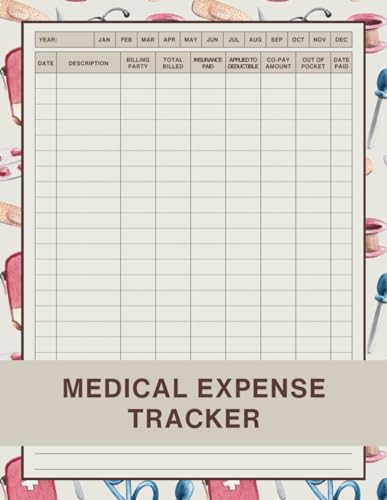
Medical Expense Tracker: A Record Logbook for Keeping Track Your Medical Spending, Bills, and Payment All in One Place | Health Expense Organizer: Media, Tylissa A.: Amazon.com
View on AmazonCheck your doctors and hospitals: Make sure your preferred primary care doctor, specialists, and nearby hospitals are in-network (the group of providers that have contracted with your plan). Out-of-network care typically costs much more and may not be covered at all for HMO or EPO plans.
Understand network types:
- HMO (Health Maintenance Organization): You choose a primary care doctor and usually need referrals; no out-of-network coverage except emergencies. Often lower premiums.
- EPO (Exclusive Provider Organization): Similar to HMO but may not require referrals. No out-of-network coverage except emergencies.
- PPO (Preferred Provider Organization): More flexible; you can see out-of-network providers at higher cost. Usually higher premiums.
Look at the total yearly cost, not just the premium: Estimate care you actually use. Add up the premium plus your likely out-of-pocket costs (deductible, copays, coinsurance) to see your all-in spend. The out-of-pocket maximum (the cap on your in-network spending for the year) protects you in a bad year.
Pick the right metal level for your situation:
- Bronze: Lower premiums, higher deductibles — good for light users who want a safety net.
- Silver: Middle premiums and deductibles — and the only level that offers cost-sharing reductions (extra discounts on deductibles and copays) if your income is up to 250% FPL.
- Gold: Higher premiums but lower out-of-pocket costs — good if you anticipate regular care or expensive prescriptions.
Prescriptions: Check the plan’s formulary (the list of covered drugs) and your medication’s tier. Higher tiers usually mean higher copays or coinsurance. Some plans require prior authorization.
Specialists you need: If you see mental health, cardiology, OB/GYN, or other specialists, confirm in-network availability near you. Rural Kentucky counties can have narrower networks — verify before you enroll.
Consider an HSA-eligible plan if you save for care: An HSA (health savings account) pairs with a qualifying high-deductible plan and lets you set aside pre-tax dollars for medical expenses. Great for healthy households that want to build a cushion.
Extra benefits and care management: Telehealth, behavioral health access, wellness perks, and chronic condition programs can be worth a few extra dollars a month if you’ll use them.
Customer service and claims: Look up reviews or ask a broker about insurer responsiveness. A slightly higher premium can be worth it if billing and approvals are smoother.
Need a primer before you shop? This walkthrough can help you decode terms while you compare: Health Insurance Basics: Plans, Terms, and How to Choose.
Call-to-action: The fastest way to see what you would actually pay is to compare quotes from 3–5 carriers. A licensed Kentucky agent or kynect’s online tool can surface your lowest-cost options in minutes and confirm your doctor and drug coverage.
Kentucky-specific subsidies and financial assistance
Federal premium tax credits (APTC): These lower your monthly premium on marketplace plans based on your income and the benchmark plan in your county. Enhanced subsidies under recent federal law are currently available through 2025 (Congress may extend them again). Many middle-income families in Kentucky now qualify.
Cost-sharing reductions (CSR): If your income is up to 250% FPL and you enroll in a Silver plan, you may get lower deductibles, copays, and out-of-pocket maximums automatically.
Medicaid and KCHIP: If your income fits, these programs provide comprehensive coverage with little to no premium and very low out-of-pocket costs.
State-funded premium subsidies: Kentucky does not currently offer additional state-funded premium discounts beyond federal APTC/CSR. Kentucky does invest in consumer assistance (“kynectors”) to help you enroll at no cost.
Provider and community assistance: Nonprofit hospitals must offer financial assistance policies on eligible services. Federally Qualified Health Centers (FQHCs) and community clinics may use sliding-fee scales for primary care regardless of insurance status.
COBRA and state continuation: If you lose job-based coverage, you may qualify for COBRA (continuing the same plan, usually for 18 months; you pay the full cost). Kentucky also has state continuation options for some smaller employer plans; rules vary. Compare COBRA costs with marketplace plans — with subsidies, a marketplace plan can be far cheaper.
Be cautious with non-ACA alternatives: Farm bureau–style health plans and short-term policies may have medical underwriting, exclude preexisting conditions, and cap benefits. They can leave big gaps. Carefully review exclusions before enrolling.
FAQ: common questions about Kentucky health insurance
Is there a penalty for not having health insurance in Kentucky?
- No. Kentucky does not have a state individual mandate. There’s no state penalty, and the federal penalty was reduced to $0. That said, going uninsured is risky — one ER visit can wipe out savings.
When does my coverage start if I enroll during Open Enrollment?
- Enroll by mid-December for a January 1 start. Enroll after that (but by the January deadline) for a February 1 start. For Special Enrollment, start dates depend on when you select a plan — many take effect the first of the following month.
I’m losing Medicaid after redetermination. What are my options?
- You have a 60-day Special Enrollment Period to buy a marketplace plan, often with large subsidies. Start your application as soon as you get your notice to avoid a gap.
I just moved to Kentucky. Can I enroll now?
- Yes. A permanent move to Kentucky that gives you access to new plans typically triggers a 60-day SEP. You may need to show proof of prior coverage.
Are dental and vision included?
- Pediatric dental and vision are covered in all ACA plans. Adult dental/vision are usually separate add-on plans.
Will my marketplace plan cover mental health and substance use treatment?
- Yes. Mental health and substance use disorder services are essential health benefits in ACA-compliant plans. Check network availability of therapists and programs near you.
Can my college student stay on my plan?
- Usually yes, until age 26 on most family plans. If they live far from home, confirm in-network providers near their campus, or consider a student plan.
Are there ACA plan choices in every Kentucky county?
- Most counties have multiple marketplace plans, but the number of insurers varies year to year. Rural areas may have narrower networks — verify your doctors before you enroll.
Are short-term plans a good idea here?
- They can fill a brief gap, but they often exclude preexisting conditions and key benefits. If you can qualify for a Special Enrollment Period, an ACA plan is usually safer.
How do copays, coinsurance, and deductibles work together?
- You’ll often pay copays (flat fees) for routine visits before meeting your deductible. For other services, you pay the negotiated amount until you hit your deductible, then coinsurance (a percentage). Once you reach the out-of-pocket maximum, the plan pays 100% of covered, in-network services for the rest of the year.
A note on getting personalized advice
A licensed Kentucky health insurance agent or kynect “kynector” can walk you through plans and subsidies at no cost to you — helpful if you have doctors or medications you want to keep or if your household has mixed coverage (for example, one spouse on Medicare, the other on the marketplace).
Your next best step
- Gather your details: ages of household members, ZIP code, preferred doctors and prescriptions, and your estimated 2025 household income.
- Compare options on kynect or with a licensed broker and request quotes from 3–5 carriers. It’s the fastest, most accurate way to see your real price after Kentucky-specific factors and federal subsidies.
- Double-check networks and drug coverage, then enroll before your deadline.

Personal Medical Records Organizer, Healthcare Records Organizer, Healthcare Notebook, Caregiver, Medical Journal, Patient Care, Patient Support, Binder - My Care Case
View on AmazonIf you’re also reviewing your overall insurance budget this year, our guide to auto coverage can help you find savings specific to the Bluegrass State: Auto Insurance in Kentucky: Rates, Requirements & How to Save.
Friendly reminder: All price examples here are illustrative. Actual costs vary based on your age, county, tobacco use, plan selection, and household income. Always review the Summary of Benefits and Coverage and ask a licensed agent if you’re unsure how a plan pays for a service you use often.
Recommended Resources
Get What's Yours for Medicare - Revised and Updated: Maximize Your Coverage, Minimize Your Costs (The Get What's Yours Series): Moeller, Philip
Get What's Yours for Medicare - Revised and Updated: <strong>Maximize Your Coverage, Minimize Your Costs</strong> (The Get What's Yours Series) [Moeller, Philip] on Amazon.com. *FREE* shippi
Personal Medical Records Organizer, Healthcare Records Organizer, Healthcare Notebook, Caregiver, Medical Journal, Patient Care, Patient Support, Binder - My Care Case
What's Inside - <strong>MY CARE CASE</strong>: 12 Customizable calendars for track your appointments 32 “Physician Pages” to gather critical information 5 Pre-printed “Medical History” pages for
Medical Expense Tracker: A Record Logbook for Keeping Track Your Medical Spending, Bills, and Payment All in One Place | Health Expense Organizer: Media, Tylissa A.: Amazon.com
<strong>Medical Spending Record</strong>: A Logbook for Keeping Track Your Medical Expenses, Bills, and Payment All in One Place | Health Expense Organizer
Related Articles
- Health Insurance in Kansas: Plans, Costs & How to Enroll
- Health Insurance in Ohio: Plans, Costs & How to Enroll
- Health Insurance in Delaware: Plans, Costs & How to Enroll
- Health Insurance in Indiana: Plans, Costs & How to Enroll
- Health Insurance in Nebraska: Plans, Costs & How to Enroll
- Health Insurance in Arkansas: Plans, Costs & How to Enroll
- Health Insurance in Tennessee: Plans, Costs & How to Enroll
- Health Insurance in Hawaii: Plans, Costs & How to Enroll