
Auto Insurance in Texas: Rates, Requirements & How to Save
You just got a quote for auto insurance in Texas and the number looks high. Is that normal? What coverage do you actually need to be legal here, and how do you avoid overpaying? This guide breaks down Texas requirements, typical rates, and smart ways to compare so you can buy with confidence.
Note: Rates and rules can change. Examples below are estimates — your actual price will vary based on your profile, vehicle, city, and insurer.
Texas auto insurance requirements and minimum coverage
Texas is an at-fault state, which means the driver who causes a crash is responsible for damages. To drive legally, you must prove financial responsibility — most people do this with liability insurance.
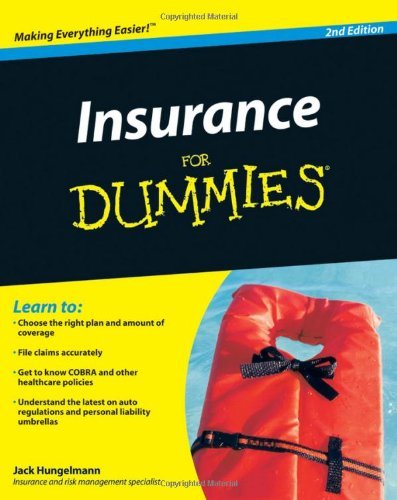
Insurance For Dummies?: Hungelmann, Jack
Whether you’re a homeowner or ... need on: ... Author Jack Hungelmann <strong>uses his twenty-five years of experience in the insurance industry to make buying insurance as simple as possible</strong>
Check Price on Amazon- Bodily injury liability: 30/60 — $30,000 per person, $60,000 per accident for injuries you cause to others
- Property damage liability: 25 — $25,000 per accident for damage you cause to others’ property
You’ll often see this written as “30/60/25.” Liability covers other people if you’re at fault; it does not repair your car.
What Texas insurers must offer (you can decline in writing):
- Personal Injury Protection (PIP): Helps with medical bills and lost wages for you and your passengers, regardless of fault. Insurers must offer at least $2,500 in PIP; many Texans choose $5,000–$10,000. PIP is different from a deductible — your deductible is the amount you pay out of pocket before your coverage (like collision) starts paying.
- Uninsured/Underinsured Motorist (UM/UIM): Pays if you’re hit by a driver with no insurance or not enough insurance. Many Texans carry UM/UIM because not everyone on the road is properly insured.
Common optional coverages:
- Collision: Pays to repair or replace your car after a crash, regardless of fault (after your deductible).
- Comprehensive: Covers non-collision losses like theft, hail, flood, fire, or hitting an animal (after your deductible). With Texas hail and flood risk, this is a popular add-on.
- Medical Payments (MedPay): Similar to PIP but only covers medical bills (no lost wages).
- Rental reimbursement and towing: Convenience coverages that cost a few dollars a month.
Other ways to meet Texas financial responsibility (rare): A $55,000 cash or securities deposit with the state or county, a surety bond filed with the DPS, or qualifying for a self-insurance certificate (generally for fleets). Most drivers use a standard auto policy.
Proof of insurance: Texas accepts electronic ID cards on your phone. Keep your proof available for police stops, registration, and after an accident.
Want a refresher on how each coverage works? See our explainer: Understanding Auto Insurance Coverage Types.
Average cost of auto insurance in Texas
Texas rates vary widely by city and driver profile. Houston and parts of the Gulf Coast tend to be higher due to traffic density, weather risk, and claims frequency. Smaller metros and rural areas can be lower.
Here are ballpark ranges many Texas drivers see in recent market surveys and filings (your price may be higher or lower):
By coverage level (clean record, good credit, typical car):
- Minimum required coverage: about $45–$95 per month ($540–$1,140 per year)
- Full coverage (liability plus collision and comprehensive): about $120–$230 per month ($1,440–$2,760 per year)
By age (full coverage, clean record):
- Teens (16–19): $300–$600 per month
- Early 20s: $170–$320 per month
- 30s–50s: $120–$230 per month
- 60s: $110–$210 per month
By vehicle type (full coverage, clean record):
- Safe family sedan (e.g., Toyota Camry): often on the lower end of the range
- Pickup trucks and SUVs (e.g., Ford F-150): mid-range, but can trend higher due to repair costs and theft risk
- Sports or luxury cars: higher premiums due to higher repair/replacement costs and performance profiles
By driving record (30s, full coverage):
- Clean record: $120–$230 per month
- One at-fault accident: often 25%–50% higher at next renewal
- DUI/DWI: can be 60%–100% higher, plus an SR-22 filing requirement in many cases
Real-world example: Say you’re a 35-year-old non-smoker in Austin with a clean record, driving a 2019 Honda Accord and parking in a garage. For $100,000/$300,000/$50,000 liability limits, $500 deductibles on collision and comprehensive, and $50,000/$100,000 UM/UIM, you might see full-coverage quotes anywhere from roughly $135 to $210 per month depending on the insurer. If you raise deductibles to $1,000, you could see $10–$25 per month in savings — but be sure you can comfortably pay that deductible after a loss.
If you’re moving from a neighboring state, requirements and rates will differ. See our nearby state guides: Auto Insurance in Oklahoma: Rates, Requirements & How to Save and Auto Insurance in Louisiana: Rates, Requirements & How to Save.
What affects Texas auto insurance premiums
Insurers price risk based on many data points. In Texas, these factors typically matter most:
- Location (ZIP code): Densely populated areas with more traffic and theft (parts of Houston, Dallas–Fort Worth) usually cost more. Coastal and hail-prone areas can push comprehensive premiums up.
- Driving record: Accidents, tickets, and especially DUI/DWI convictions can significantly raise rates for 3–5 years or more.
- Credit-based insurance score: Texas allows the use of credit-based factors in most cases. Improving your credit profile can lead to lower premiums over time.
- Vehicle type and value: Newer, expensive, high-performance, or frequently stolen models cost more to insure.
- Coverage and deductibles: Higher liability limits cost more; higher deductibles generally lower the price of collision/comprehensive.
- Annual mileage and commute: More miles usually means more exposure to claims.
- Prior insurance and lapses: A lapse in coverage can lead to a surcharge.
- Age and household: Young drivers cost more; adding a teen can increase a household’s premium substantially. Some carriers weigh marital status.
- Discounts and telematics: Usage-based programs that monitor driving can lower rates for safe, low-mileage drivers.
How to compare and get the cheapest auto insurance in Texas
The fastest way to see what you would actually pay is to compare quotes from 3–5 carriers — ideally a mix of national brands and strong regional insurers. Before you shop, set a coverage target so you’re comparing apples to apples.
Recommended process
- Decide on liability limits. Many Texas families choose at least 100/300/50 to better protect savings and income. It’s not unusual to see 250/500/100 with a teen driver or higher assets.
- Add UM/UIM. With real-world rates of uninsured or underinsured drivers, UM/UIM can be valuable protection for you and your passengers.
- Choose PIP or MedPay. PIP at $2,500–$10,000 can help with medical bills and lost income after a crash, regardless of fault.
- Set physical damage coverage. If your car is financed or leased, collision and comprehensive are typically required. Pick deductibles you could comfortably pay tomorrow (commonly $500–$1,000).
- Gather your details. VIN(s), driver’s license numbers, current coverages, annual mileage, and any safety/anti-theft features.
- Quote 3–5 companies on the same day. Use the same limits and deductibles so you can truly compare.
- Ask about telematics. Many carriers offer a 5%–10% participation discount up front and larger savings if you consistently drive safely.
- Bundle and build your discount stack. Home/renters, multi-vehicle, safe driver, paperless, pay-in-full — these add up.
- Check claims reputation. Price matters, but so does service. Look for strong claims handling and local repair networks.
- Review at every renewal. Texas rates move — shopping every 12 months can keep you near the market’s best price for your profile.
What to look for (beyond price)
- Generous rental reimbursement limits if you depend on your vehicle daily
- Newer-car coverages: new car replacement or OEM parts preferences
- Accident forgiveness or diminishing deductibles if you want long-term stability
- Clear guidance on non-OEM parts and shop choice (Texas lets you pick your repair shop)
- Strong Texas weather claims handling (hail/flood) and roadside assistance options
Helpful next step: Get personalized quotes now. The single most reliable way to find your best rate for auto insurance in Texas is to compare 3–5 real quotes with the same coverage settings.
Texas-specific discounts and savings opportunities
While discounts vary by insurer, these are commonly available in Texas:
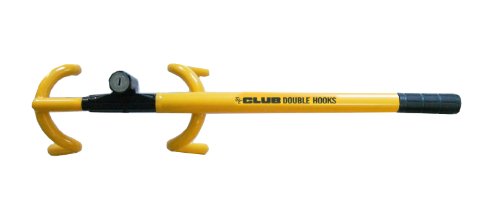
Winner International The Club 3000 Twin Hooks Steering Wheel Lock, Yellow : Automotive
View on Amazon- Defensive driving course discount: Completing a Texas-approved course (TDLR-approved) can reduce premiums with many carriers — especially helpful for older drivers.
- Driver education/student discounts: Teens and young adults who complete driver ed and keep a B average (or better) often get meaningful breaks.
- Telematics/usage-based programs: Safe braking, gentle acceleration, daylight driving, and fewer miles can translate to ongoing savings.
- Multi-vehicle and multi-policy: Bundling auto with home or renters is one of the most reliable ways to reduce your total bill.
- Vehicle safety/anti-theft: Anti-lock brakes, airbags, passive restraints, trackers, and alarm systems can help.
- Low-mileage and commute: If you work from home or drive less than average, make sure your annual miles reflect that.
- Military/veteran and professional/affinity groups: Some insurers offer special pricing for certain occupations or memberships.
- Pay-in-full, auto-pay, and paperless: Small discounts that stack.
Pro tip: Ask your insurer to re-run your discount eligibility at each renewal — new telematics or bundling options may have launched since your last term.
Filing a claim in Texas: what to expect
If you’re in a crash:
- Safety first. Move to a safe spot if you can. Call 911 if there are injuries, suspected impairment, or vehicles are not drivable.
- Document. Exchange insurance and contact info, take photos/videos of damage, scene, and plates, and get witness names if available.
- Notify. Report the claim to your insurer promptly. Many carriers have apps to upload photos and schedule inspections.
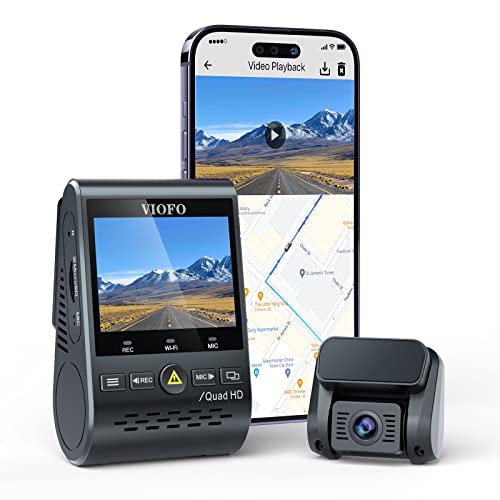
VIOFO Dual Dash Cam, 2K 1440P 60fps+1080P 30fps Front and Rear Dash Camera with Wi-Fi GPS, Parking Mode, Emergency Recording, Super Capacitor, Motion Detection (A129 Plus Duo) : Electronics
View on AmazonYour rights and timelines in Texas
- Prompt payment deadlines: Generally, your insurer must acknowledge your claim within about 15 days of notice, request any needed information, and accept or deny the claim within 15 business days after receiving all requested items. If more time is needed, they must explain and may extend within set limits. Once a claim is approved, payment typically follows within a few business days. Exact timelines can vary by circumstance and law; ask your adjuster for your claim’s specific deadlines.
- You choose the repair shop. Insurers can’t force you to use a particular shop, though they may recommend preferred partners with guarantees.
- Parts: Policies may allow the use of non-OEM parts if they’re of like kind and quality. If OEM parts matter to you, ask about optional endorsements.
- Deductibles: For collision/comprehensive claims, your deductible applies. For third-party claims (when you’re not at fault and file with the other driver’s insurer), no deductible should apply.
- Total loss: If repairs approach your car’s actual cash value (ACV), the insurer may declare a total loss and pay ACV minus your deductible.
- Diminished value: If another driver is at fault, you may seek diminished value (the post-repair loss in market value). It’s not automatic; documentation helps.
Tip: Keep every receipt (towing, rental, emergency repairs) and share them with your adjuster promptly.
FAQ: common questions about Texas car insurance
Is Texas a no-fault state?
- No. Texas is an at-fault (tort) state. The at-fault driver’s liability insurance pays for others’ injuries and property damage up to policy limits.
What are the minimum Texas auto insurance requirements?
- 30/60/25 liability. Insurers must also offer PIP and UM/UIM — you can reject them in writing. Minimum limits may not cover a serious accident; many drivers choose higher limits.
Do I need SR-22 insurance in Texas after a violation?
- If your license is suspended for certain violations (like DUI/DWI or driving without insurance), the state may require an SR-22 — a certificate your insurer files to prove you carry at least the minimum insurance. It’s typically required for about two years; any lapse can restart the clock. SR-22 itself isn’t a type of insurance, but it often raises your rates because of the underlying violation.
How long do tickets and accidents affect my Texas rates?
- Minor tickets often impact premiums for about three years. Accidents and serious violations (especially DUI/DWI) can affect rates longer. Each insurer weighs these differently.
Is rideshare driving (Uber/Lyft) covered by my policy?
- Not by default. You typically need a rideshare endorsement to close coverage gaps when your app is on but you haven’t accepted a ride yet. Ask your insurer about their rideshare option.
Do I need insurance to register a car in Texas?
- Yes. You must show proof of financial responsibility (usually an auto policy meeting 30/60/25) to register. Electronic proof is acceptable.
Are hail and flood covered in Texas?
- Your liability coverage won’t repair your car. You need comprehensive coverage for hail, flood, theft, and other non-collision damage (subject to your deductible).
What happens if I’m hit by an uninsured driver?
- If you carry UM/UIM, it can pay for your injuries and property damage up to your limits. PIP can also help with medical costs and lost wages. Without UM/UIM, you may have to pursue the at-fault driver personally.
Can I use out-of-state insurance as a new Texas resident?
- You need insurance that meets Texas minimums to register your car. Most people switch to a Texas policy when they register (generally within about 30 days of moving). Check with the Texas DPS or county tax office for current rules.
Will my windshield repair be free?
- Some carriers waive the comprehensive deductible for chip repairs (not full replacements). Ask your carrier how they handle glass claims.
What if I can’t find coverage?
- Texas has a fallback option: the Texas Automobile Insurance Plan Association (TAIPA) offers minimum coverage if you’ve been denied by multiple insurers. Rates are typically higher than the standard market.
Your next step
- Set your target coverages (liability limits, UM/UIM, PIP amount, deductibles).
- Get quotes from 3–5 carriers on the same day, using the same settings.
- Ask about defensive driving, telematics, and bundling to stack discounts.
Ready to see what you’d actually pay? Comparing a handful of real quotes is the quickest, most reliable way to find the best deal on auto insurance in Texas.
If your situation is complex (young drivers, rideshare, prior claims), consider speaking with a licensed Texas agent who can match your coverage needs and budget.
Recommended Resources
Insurance For Dummies?: Hungelmann, Jack
Whether you’re a homeowner or ... need on: ... Author Jack Hungelmann <strong>uses his twenty-five years of experience in the insurance industry to make buying insurance as simple as possible</strong>
VIOFO Dual Dash Cam, 2K 1440P 60fps+1080P 30fps Front and Rear Dash Camera with Wi-Fi GPS, Parking Mode, Emergency Recording, Super Capacitor, Motion Detection (A129 Plus Duo) : Electronics
Buy VIOFO Dual Dash Cam, 2K 1440P 60fps+1080P 30fps Front and Rear Dash Camera with <strong>Wi-Fi GPS, Parking Mode</strong>, Emergency Recording, Super Capacitor, Motion Detection (A129 Plus Duo): On
Winner International The Club 3000 Twin Hooks Steering Wheel Lock, Yellow : Automotive
The Club'S Patented Self-Locking Feature Locks With One Pull. Keyless Locking, for ease of use ... The Club 3000 Twin Hooks Steering Wheel Lock is <strong>a part of The Club line of quality produ
Related Articles
- Auto Insurance in Tennessee: Rates, Requirements & How to Save
- Home Insurance in Texas: Coverage, Costs & Best Companies
- Homeowners Insurance in Texas: Coverage, Costs & Get Quotes
- Auto Insurance in Arizona: Rates, Requirements & How to Save
- Cheapest Car Insurance in Texas: Compare Rates & Get Quotes Today
- Auto Insurance in California: Rates, Requirements & How to Save
- Auto Insurance in Louisiana: Rates, Requirements & How to Save
- Auto Insurance in Georgia: Rates, Requirements & How to Save