
How Does Life Insurance Work? A Clear, Step-by-Step Guide
You just want a straight answer: how does life insurance work, and what will it actually do for your family? Here’s the short version. Life insurance is a contract that pays your chosen person (your beneficiary — the person or people you name to receive the money) a lump sum (the death benefit — the amount paid when you die) in exchange for you paying regular premiums (the bill you pay to keep the policy active). Below, we’ll walk through how it all fits together, what to buy, and how to avoid the common mistakes people regret later.
The phrase “how does life insurance work” shows up everywhere, but the mechanics are simple. You pay a premium, the insurer takes on the risk of paying a death benefit, and the policy can include extra features like riders (add-ons you can buy for extra benefits) or cash value (a savings-like component in certain policies). Let’s break it down with real numbers and clear steps.
What life insurance is — and who actually needs it
Life insurance is a financial safety net. You pay premiums, and if you pass away while the policy is in force, your beneficiary receives the death benefit, typically income tax-free. That money can replace lost income, pay off a mortgage, handle childcare, cover final expenses, or protect a business.
Who typically needs it:
- Parents or anyone supporting dependents
- Homeowners with a mortgage
- Couples where one person relies on the other’s income
- People with co-signed debts (like private student loans)
- Small business owners with partners or key employees
- Caregivers who provide unpaid labor your family would otherwise need to pay for
If no one would be financially affected by your death, you may not need much (or any) life insurance. But needs change — marriage, kids, a new house, or a business can trigger the need for coverage.
Key components: premiums, beneficiaries, death benefit, cash value
- Premiums: The amount you pay to keep coverage active. Level premiums (the amount stays the same each year) are common with term life, while some permanent policies can have flexible premiums you can adjust within limits.
- Beneficiaries: The people, trust, or entity you name to receive the death benefit. You can name a primary beneficiary and contingents (backups if the primary can’t receive the money). Keep this updated after major life events.
- Death benefit: The lump sum paid when you die while covered. It can be level (stays the same) or, in some policies, increasing (grows with cash value or by a fixed percentage).
- Cash value: A savings-like account inside certain policies (permanent life insurance). It grows tax-deferred (you don’t pay taxes on growth each year) and can be accessed via withdrawals (taking money out) or policy loans (borrowing against your policy). Not all policies have cash value — term life generally does not.

Smead Life Documents Organizer Kit (92010), Black
View on AmazonCommon riders (optional add-ons):
- Accelerated death benefit: Lets you access part of the death benefit if you develop a qualifying terminal or critical illness.
- Waiver of premium: If you meet the policy’s definition of disability, the insurer pays your premiums so coverage stays in force.
- Child rider: Small term coverage for children.
- Term conversion: Lets you convert a term policy to a permanent policy without new medical underwriting (re-qualifying with health checks), usually within a set window.
Types of life insurance: term, whole, universal, variable — pros and cons
Different policies fit different goals and budgets.
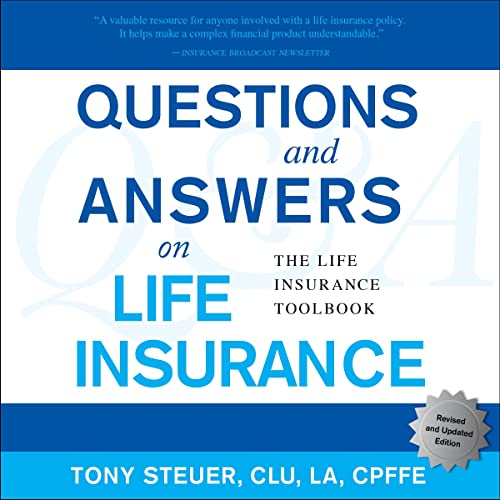
Questions and Answers on Life Insurance: Steuer, Tony
*Amazon Best Seller in Life Insurance* Questions and Answers on Life Insurance is <strong>an extremely useful and one of a kind resource for anyone looking for a simple way to understand life insuranc
Check Price on AmazonTerm life insurance
- What it is: Coverage for a set term (often 10, 20, or 30 years). If you die during the term, it pays the death benefit. If you outlive the term, coverage ends unless you renew or convert.
- Why people pick it: It’s typically the most coverage per dollar — ideal for income replacement during working years.
- Considerations: Premiums are generally level for the term, then jump if you renew. Most policies offer conversion to a permanent policy during a specific period.
- Learn more: What Is Term Life Insurance? A Clear Guide to Coverage & Costs
Whole life insurance
- What it is: Permanent coverage that lasts your entire life if you pay required premiums. Builds guaranteed cash value (the policy’s savings component) at a schedule stated in the policy.
- Why people pick it: Predictable premiums, guaranteed death benefit, guaranteed cash value growth.
- Considerations: Typically higher premiums than term for the same death benefit; surrender charges (fees if you cancel early) may apply.
- Learn more: Whole Life Insurance Explained: Benefits, Costs, and How to Buy
Universal life insurance (UL)
- What it is: Permanent coverage with flexible premiums and an adjustable death benefit. Cash value growth is based on credited interest, an index strategy (indexed UL), or subaccounts (variable UL).
- Why people pick it: Flexibility to adjust premiums and coverage within policy limits.
- Considerations: Requires monitoring. If credited interest is low or charges increase, you may need to pay more to keep the policy in force.
Variable life insurance (VUL)
- What it is: Permanent coverage where cash value is invested in subaccounts similar to mutual funds. Value can go up or down with market performance.
- Why people pick it: Market exposure and potential for higher growth.
- Considerations: Investment risk — cash value and possibly the death benefit can fluctuate. These are securities; they’re sold by prospectus. Carefully review fees and risks with a licensed professional.
Trying to decide between term and whole? This guide walks through the trade-offs: Term vs. Whole Life Insurance: Which Is Right for You?
How underwriting and premiums are determined
Underwriting is how an insurer evaluates your risk and sets your premium. Think of it as the insurer asking: What is the likelihood we’ll pay a claim during the coverage period?
What’s typically considered:
- Age and sex: Younger applicants generally pay less; females typically pay less than males for the same coverage, reflecting actuarial life expectancy.
- Health: Medical history, height/weight, blood pressure, cholesterol, diabetes, heart conditions, cancer history, and family history. Some policies require a paramedical exam (a brief health check with labs); others use accelerated underwriting (no medical exam) based on data.
- Lifestyle: Tobacco or nicotine use, marijuana, alcohol history, high-risk hobbies (scuba, rock climbing, aviation), and occupation hazards.
- Records and data checks: Prescription history databases, motor vehicle records, and prior insurance application reports may be reviewed.
- Coverage amount and policy type: Larger coverage and permanent policies usually mean higher premiums.
Health classes and pricing
- You’ll be placed in a risk class such as Preferred Plus, Preferred, Standard, or a table rating (an extra percentage added to the Standard rate for certain health risks). Nicotine users often have distinct tobacco rates.
Realistic example (rates vary widely — these are ballpark figures, not quotes):
- Say you’re a 35-year-old non-smoker in Texas looking for $500,000 of 20-year term life. You might see monthly premiums roughly in the $20–$35 range for top health classes. At age 45, the same coverage might be more like $40–$70. If you use nicotine or have health conditions, prices can be higher. Your actual rate depends on your individual profile and the insurer’s underwriting.
What if you don’t want an exam?
- Many insurers offer no-medical-exam options up to certain amounts using accelerated underwriting. They still review your health and records; skipping the exam doesn’t mean skipping underwriting. Premiums can be very competitive if you’re healthy, but approvals and limits vary by company.
How cash value, loans, and policy surrender work
Permanent policies build cash value — money you can access while alive. Here’s how it usually works:
- Cash value growth: In whole life, growth is guaranteed per the policy, and participating policies may earn dividends (not guaranteed). In UL/IUL/VUL, growth depends on credited interest or market performance. Cash value accumulates tax-deferred.
- Policy loans: You can borrow against your cash value at an interest rate set by the policy. Loans typically aren’t taxable as long as the policy stays in force, but they reduce both cash value and death benefit until repaid. If a policy lapses (ends) with a loan outstanding and you have gains, you could owe income tax on the gain. Talk with a tax professional for personal advice.
- Withdrawals: You can often withdraw up to your basis (the total of premiums you’ve paid) tax-free. Amounts over basis are generally taxable as ordinary income. Rules vary by policy type and whether it’s classified as a Modified Endowment Contract (MEC — a policy funded beyond certain IRS limits). MECs have different tax treatment, especially for loans/withdrawals.
- Surrendering a policy: If you cancel, you’ll typically receive the cash surrender value (cash value minus any surrender charges and loans). Surrender charges are common in the early years of permanent policies.
If you want a deeper dive into permanent coverage choices and costs, start here: Whole Life Insurance Explained: Benefits, Costs, and How to Buy
How to choose coverage: needs analysis, calculator, and common mistakes
Start with the “why” — income replacement, debt payoff, childcare, college, or legacy giving. Then size the policy.
Simple ways to estimate coverage
- Multipliers: Many families use 10–15x annual income as a quick estimate, adjusting up if you have young kids or significant debts.
- The DIME method: Add Debts (excluding mortgage), Income replacement (years needed), Mortgage balance, and Education costs for kids.
- Calculator: For a more tailored number, use our step-by-step coverage tool: How Much Life Insurance Do I Need? Simple Calculator & Step-by-Step Plan
Term or permanent?
- If your main goal is income replacement during working years at the lowest cost, term life typically fits best. If you want lifelong coverage and cash value you can access, consider whole or universal life. Not sure? Compare the trade-offs here: Term vs. Whole Life Insurance: Which Is Right for You?
Common mistakes to avoid
- Buying too little coverage because the cheapest option looks appealing. Underinsuring by $200,000–$500,000 is common and painful later.
- Choosing term length that’s too short (e.g., 10 years when your youngest child is 2). You may face much higher premiums to extend coverage later.
- Naming your estate or a minor child directly as beneficiary. Consider a trusted adult, trust, or custodial arrangement — talk with an attorney for estate-planning advice.
- Relying only on employer-provided life insurance. Group coverage is helpful but often not portable if you change jobs and typically caps at 1–2x salary — usually not enough.
- Delaying. Each birthday and new diagnosis can raise your cost.
State rules and consumer protections — how to check your Department of Insurance
Life insurance is regulated by state law. Core protections typically include:
- Free-look period: A window (often 10–30 days, depending on your state) to review a new policy and cancel for a full refund.
- Grace period: Extra time after a missed premium (often 31 days) to pay and keep coverage active.
- Contestability period: Usually the first two years. If you die during this time, the insurer can review the application for material misstatements (significant inaccuracies). If they find fraud or major omissions, they can deny or adjust the claim.
- Suicide provision: Many policies exclude suicide for the first two years, after which coverage typically applies.
- State guaranty associations: If an insurer becomes insolvent, state guaranty associations may provide limited protection. Coverage limits and rules vary by state. Insurers generally can’t use guaranty association coverage as a selling point.
How to check your state Department of Insurance (DOI)
- Search “YourState Department of Insurance life insurance” to find your regulator’s site.
- Verify the insurer’s license in your state and review complaint data.
- Look up consumer guides, free-look rules, and claim filing resources specific to your state.
How does life insurance work, step by step
- Decide your goal: Income replacement, debt payoff, or lifelong protection.
- Estimate coverage: Use a multiplier, the DIME method, or our calculator.
- Choose policy type: Term for temporary needs; permanent for lifelong needs and cash value.
- Compare quotes: Look at price, guarantees, conversion options, and riders.
- Apply: Complete the application honestly. You may have an exam or qualify for an accelerated (no-exam) process.
- Underwriting: The insurer reviews your health, records, and risk factors.
- Offer: You’ll receive an approval with a final premium and risk class. You can accept, adjust coverage, or decline.
- Policy delivery: Review during your free-look period. Confirm beneficiaries and riders.
- Pay premiums: Keep the policy in force. Set autopay and calendar reminders.
- Keep it current: Update beneficiaries after life events; revisit coverage as needs change.
- Claim process: Your beneficiary submits a claim with a death certificate. Many claims pay within weeks; complex cases can take longer.
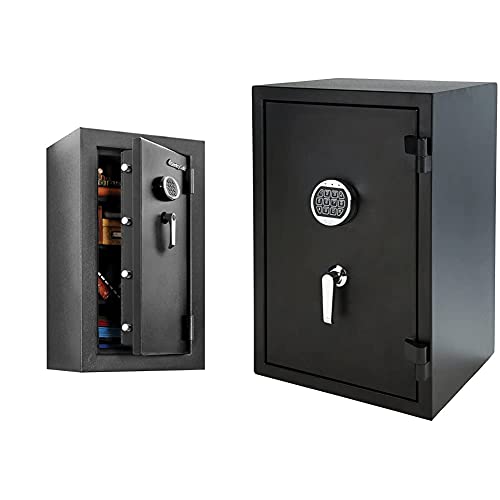
SentrySafe Waterproof and Fireproof Alloy Steel Digital Safe Box for Home with Code Button Keypad, 1.23 Cubic Feet, 17.8 x 16.3 x 19.3 Inches (exterior), SFW123GDC - Gun Safes And Cabinets - Amazon.com
View on AmazonWhat to look for and how to compare quotes
When you compare life insurance, focus on these factors that actually matter:
- Financial strength: Look for strong insurer ratings (e.g., A- or better from A.M. Best). Stronger companies are typically better positioned to pay long-term promises.
- Price per $1,000 of coverage: Compare apples to apples — same coverage amount, term length, and health class.
- Guarantees: For term, confirm level premiums and level death benefit for the entire term. For permanent, understand guaranteed vs. non-guaranteed elements.
- Conversion options: Can you convert term to permanent without new medical underwriting? Until what age/years? This can be a big safety net if your health changes.
- Riders: Do you want accelerated benefits, waiver of premium, or a child rider? Only pay for what you’ll actually use.
- Policy flexibility: For UL/IUL/VUL, learn how premium flexibility works and what happens if credited interest underperforms.
- Service and speed: Ask how long underwriting typically takes and how the company handles claims.
- Transparency: Request an illustration (a projection showing policy charges and values). These are not guarantees, but they help you understand how the policy works under different assumptions.
If you’re ready to compare, this step-by-step guide can help you line up options and request quotes: Life Insurance: How to Choose the Right Policy and Get Quotes
Real-world scenarios
Young family, budget-first: A 30-year-old non-smoking parent earning $70,000 wants income replacement until the kids are grown. They choose a 20- or 30-year term policy for $700,000–$1,000,000. Monthly premiums might be in the $20–$45 range for top health classes, depending on term length and state. Rates vary.
Homeowners with a new mortgage: A couple in their 40s buys a $400,000 home. They each purchase a 20-year term policy around $400,000–$600,000, aligning with mortgage payoff and college timelines. Renewing after 20 years could be expensive, so they choose a term that covers their longest big obligation.
Business partners: Two owners sign a buy–sell agreement funded with permanent life insurance, so if one passes, the survivor can buy their share. They value lifelong coverage and cash value that can support business needs.
Lifelong dependent: A parent of a child with special needs considers whole life to ensure guaranteed lifelong coverage, names a special needs trust as beneficiary, and coordinates with an attorney to protect benefits.
Quick FAQs
Are life insurance proceeds taxable? The death benefit is generally income tax-free to beneficiaries. Interest earned on the death benefit or certain transfers may be taxable. For personal tax advice, consult a tax professional.
How fast are claims paid? Simple claims often pay within a few weeks of receiving the death certificate and required forms. During the contestability period, the insurer may review the application, which can take longer.
Can I have more than one policy? Yes. Insurers look at your total coverage relative to your financial need. Many families stack policies (e.g., a 20-year and a 30-year term) to match changing needs.
What happens if I miss a payment? You typically have a grace period (often 31 days). If not paid by then, the policy can lapse. Permanent policies may use cash value to cover premiums, but that can deplete the policy.
Does life insurance cover suicide? Most policies have a suicide exclusion for the first two years. After that period, suicide is typically covered. Check your policy and state rules.
Can I change beneficiaries? Yes — in most cases, you can change at any time unless you’ve made a beneficiary irrevocable (cannot be changed without that person’s consent).
Professional help when you want it
A licensed life insurance agent can help you compare options, navigate underwriting, and ensure your beneficiaries and riders match your goals. Advice is typically free — agents are compensated by insurers. You’re never obligated to buy.
Your next steps
- Use our calculator to size your coverage: How Much Life Insurance Do I Need? Simple Calculator & Step-by-Step Plan
- Decide on policy type: Start with term unless you have a lifelong need or want cash value; compare here: Term vs. Whole Life Insurance
- Compare quotes and options: Get a few offers and review guarantees, riders, and conversion terms: Life Insurance: How to Choose the Right Policy and Get Quotes
- Apply honestly and respond quickly during underwriting. Use the free-look period to review your policy once issued.
That’s how life insurance works — a simple promise that, if structured well, does a lot of heavy lifting for the people who count on you. If you want a quick refresher on the basics of term coverage, start here: What Is Term Life Insurance?
Recommended Resources
Questions and Answers on Life Insurance: Steuer, Tony
*Amazon Best Seller in Life Insurance* Questions and Answers on Life Insurance is <strong>an extremely useful and one of a kind resource for anyone looking for a simple way to understand life insuranc
SentrySafe Waterproof and Fireproof Alloy Steel Digital Safe Box for Home with Code Button Keypad, 1.23 Cubic Feet, 17.8 x 16.3 x 19.3 Inches (exterior), SFW123GDC - Gun Safes And Cabinets - Amazon.com
<strong>SentrySafe Medium Gray Fireproof Safe and Waterproof Safe Box with Dial Combination, Home Security for Money, Documents, or other Valuables</strong>, 1.23 Cubic Feet, SFW123DSB
Smead Life Documents Organizer Kit (92010), Black
Organizing key life documents helps ... kit <strong>contains a poly file box, 6 colored hanging folders, 24 SuperTab file folders, 9 Viewable quick-fold tabs, 3 label sheets with preprinted labels and
Related Articles
- Why Life Insurance Matters: How to Protect Your Family and Finances
- Life Insurance Beneficiary Rules: What Policyholders Need to Know
- What Is Term Life Insurance? A Clear Guide to Coverage & Costs
- How Much Life Insurance Do I Need? Simple Calculator & Step-by-Step Plan
- Best Life Insurance: Top Picks & How to Choose (2026 Guide)
- Life Insurance and Estate Planning: How to Protect Your Family and Preserve Your Legacy
- Whole Life Insurance Explained: Benefits, Costs, and How to Buy
- Term Life Insurance: Complete Guide to Coverage, Cost & Getting Quotes