
When Should I Get Life Insurance? A Clear Guide to Timing
You’re asking the right question: when should I get life insurance? If you have people who count on your income—or you plan to in the near future—the “when” is usually sooner than you think. Buying earlier typically locks in lower rates and more choices while you’re healthy. Waiting can make coverage costlier or, in some cases, harder to get. This guide lays out exactly how timing works, what to buy at each life stage, and how to get a fair price without overpaying.
Why timing matters: buying early vs. waiting
Life insurance pricing is largely built on risk and time.
- Age-based pricing: Each birthday usually nudges your premium higher. Even a one-year delay can add 4–10% to the price in many cases.
- Health trends: Most of us don’t get medically “better” with time. New diagnoses (hypertension, sleep apnea, anxiety meds) can push you into a pricier health class—or trigger exclusions.
- More options while you’re healthy: When you’re younger and in good health, you’ll typically qualify for more carriers, lower rates, and more policy types (including policies with living benefits or longer conversion windows).
- Compound savings: Locking in a 20- or 30-year level term while you’re young can save thousands over the life of the policy compared to starting later.
A quick reality check: If you don’t have dependents or joint debt, it can be reasonable to wait. But if a partner, child, parent, or co-signer would be harmed financially by your loss, waiting usually costs more than it saves.
Example: Say you’re a 30-year-old non-smoker in good health considering $500,000 of 20-year term. Many carriers (as of 2026) show sample rates in the $18–$28/month range for excellent health. At 40, similar coverage might be $28–$45/month. If a new health issue shows up by 40, you could see $50–$80/month or more. Actual rates vary by carrier, state, and your health profile.
When should I get life insurance? Life stages that trigger buying
Here are the most common “it’s time” moments—if one describes you, getting coverage now is usually wise.
- Getting married or partnering up: If your partner relies on your income or you share rent/mortgage, life insurance can cover housing and living costs if you’re not around.
- Having a baby (or planning to): Childcare, diapers, and later college don’t pay for themselves. Many parents buy right before or soon after a birth or adoption.
- Buying a home: A policy sized to the mortgage protects your co-borrower from losing the home.
- Carrying private student loans or co-signed debt: Life insurance can prevent your co-signer (often a parent) from inheriting the bill.
- Changing jobs or losing employer coverage: Group life through work is a nice perk, but it’s often limited (1–2x salary) and portable only sometimes. If you’re switching employers, buy your own so it follows you.
- Starting or growing a business: Partners often need policies for buy-sell agreements; solo owners use coverage to protect family from business debts.
- Caregiving for a parent or relative: If they rely on you financially, a policy can replace your support.
- Divorce with support obligations: Courts sometimes require life insurance to secure alimony or child support.
- Approaching retirement with a spouse still dependent on your income or pension: Some buy coverage to protect the surviving spouse’s lifestyle or to offset pension “single-life” elections.
A general rule of thumb: If someone would be financially harmed by your death, it’s time.
How to determine how much coverage you need (and when)
Skip guesswork and do a quick needs check. Think in layers:
- Income replacement: How many years would your family need your income? Common targets are 10–15x annual income, but tailor it to your situation.
- Debts and major expenses: Mortgage balance, other debts, childcare, college savings goals, final expenses.
- Existing resources: Emergency fund, investments, spouse/partner’s income, existing life insurance.
A fast start: Use our simple calculator to run the numbers, then refine. It’s quick and grounded in real budgets, not rules of thumb. See: How Much Life Insurance Do I Need? Simple Calculator & Step-by-Step Plan (/life-insurance/how-much-life-insurance-do-i-need-calculator).
When to increase or decrease coverage:
- Expecting a child or big raise: Increase coverage before the event if possible—your healthier “today” self prices better.
- Paying off debts or kids becoming independent: You may be able to step coverage down or let a laddered policy expire.
Scenario: You’re a 35-year-old non-smoker in Texas earning $95,000, with a $350,000 mortgage and a 2-year-old. A common plan is $1,000,000 of 20- or 25-year term to cover income replacement, the mortgage, childcare, and partial college funding. As savings grow and debts shrink, your need drops; you might layer a smaller second policy for the tail end.
Types of policies and how timing affects cost and suitability
Life insurance comes in a few main flavors. Your timing and goals drive the best fit.
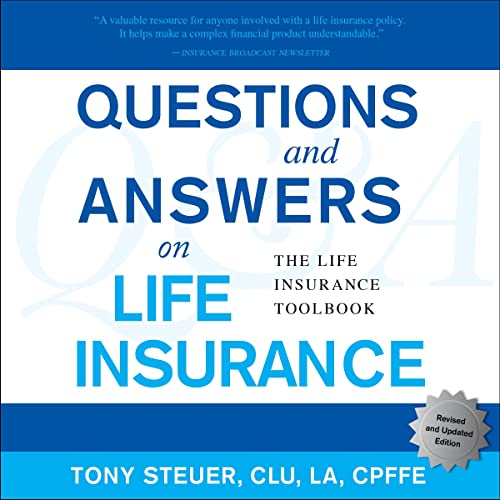
Questions and Answers on Life Insurance: Steuer, Tony
*Amazon Best Seller in Life Insurance* Questions and Answers on Life Insurance is <strong>an extremely useful and one of a kind resource for anyone looking for a simple way to understand life insuranc
Check Price on Amazon- Term life insurance: Coverage for a set period (10–40 years). It’s typically the most affordable way to protect income during working years. Premiums are level for the term. If you die during the term, the policy pays the death benefit to your beneficiary. Learn the basics: What Is Term Life Insurance? A Clear Guide to Coverage & Costs (/life-insurance/what-is-term-life-insurance-guide).
- Whole life insurance: Permanent coverage with a cash value (a savings component that grows tax-deferred). Premiums are higher than term for the same death benefit. It can fit long-term needs like lifelong dependents or estate planning. See: Term vs. Whole Life Insurance: Which Is Right for You? (/life-insurance/term-vs-whole-life-insurance).
- No medical exam term: Streamlined underwriting with no in-person exam; approval can be fast. Good when you need coverage quickly or dislike exams. Pricing can be very competitive for healthy applicants but may be higher for certain health histories. Compare options: No Medical Exam Life Insurance: Compare Providers & Get Quotes (/life-insurance/no-medical-exam-life-insurance-compare-providers-quotes).
- Guaranteed issue (final expense): For seniors or those with significant health issues. No health questions in some cases, but lower coverage amounts and graded benefits (reduced or no full benefit in the first 1–2 years except for accidental death) are common.
How timing changes the equation:
- Term: The earlier you lock in, the cheaper it typically is. If you’re planning kids in two years, buying a 25- or 30-year term now may beat waiting.
- Whole: Starting younger lowers premiums and lets cash value accumulate longer, but make sure you truly need permanent insurance. Don’t overbuy permanent coverage when term can handle temporary needs more efficiently.
- No-exam: Great if you need a policy in place quickly (e.g., before closing on a home). If you have complex health history, a fully underwritten policy (with an exam) may still price better.
Cost factors and tips to get the best rate now
What drives your premium:
- Age and gender: Younger costs less; women typically pay less than men, all else equal.
- Health and build: Blood pressure, cholesterol, BMI, family history, and medications all matter.
- Tobacco and vaping: Any nicotine in the last 12 months can put you in a “tobacco” class, which is much pricier.
- Coverage amount and term length: Bigger benefit and longer term = higher cost.
- Risk hobbies and driving record: DUIs, reckless driving, or hazardous hobbies (skydiving, rock climbing) can increase rates.
Ways to save—without cutting the protection you need:
- Compare multiple carriers: The fastest way to see your real price is to compare quotes from 3–5 carriers. Each company views your health and hobbies a bit differently.
- Pick the right term length: Match coverage to how long your biggest obligations last. Don’t pay for 30 years if 20 realistically covers your risk.
- Consider laddering: Use two policies with different term lengths (e.g., $750K for 20 years plus $250K for 10 years) to match declining needs and reduce total cost.
- Annual billing: Paying annually can shave a few percent off versus monthly.
- Nudge your health class: If you’re close to a better class (e.g., BMI, blood pressure), ask your agent about retesting or timing. Modest improvements can lower your premium.
- Re-shop after improvements: Quit nicotine for 12+ months? Correct a sleep apnea diagnosis with compliant CPAP use? You may qualify for lower rates on a new policy. Don’t cancel existing coverage until the new policy is in force.
If finding an affordable option is the priority right now, this walkthrough can help: Affordable Term Life Insurance: How to Get the Right Coverage for Less (/life-insurance/affordable-term-life-insurance-right-coverage-less).
Quick example: A 32-year-old female non-smoker seeking $750,000 for 20 years might see quotes around $20–$35/month in excellent health; a smoker could see 3–4x that. Rates vary by state and carrier.
State rules, tax issues, and special cases to consider
State rules can subtly change your experience. A few to know:
- Insurable interest and consent: Most states require you to own your policy or give written consent, and the beneficiary must have an “insurable interest” (a real financial stake in your life) at purchase.
- Free-look period: Typically 10–30 days after policy delivery to cancel for a full refund. The exact number varies by state.
- Contestability period: Usually the first 2 years; the insurer can investigate material misstatements on your application. Be complete and truthful.
- Suicide clause: Commonly excludes suicide in the first 1–2 years, depending on state rules.
- Replacement rules: If swapping policies, states generally require a disclosure form and warnings about losing benefits or restarting contestability. Don’t cancel the old policy until the new one is active.
- Community property states (e.g., AZ, CA, ID, LA, NV, NM, TX, WA, WI): Spousal rights can affect beneficiary designations and ownership when premiums are paid with community funds. If married, discuss beneficiary choices with a licensed agent or attorney familiar with your state.
Tax basics (general information, not tax advice):
- Death benefit: Typically income-tax free to beneficiaries.
- Estate inclusion: If you own the policy at death, the death benefit may be included in your taxable estate. High-net-worth households sometimes use an irrevocable life insurance trust (ILIT) to keep proceeds outside the estate.
- Cash value: Grows tax-deferred. Withdrawals above your basis and certain loans can be taxable; modified endowment contracts (MECs) have different tax treatment.
- Business policies: Premiums are generally not deductible; proceeds may be taxable in specific employer-owned situations unless notice-and-consent rules are followed. Consult a tax professional.
Special cases:
- Covering minor children: Parents can own small policies or riders. For larger legacy planning, consider ownership/beneficiary setup carefully.
- Divorce decrees: Courts often require proof of coverage and beneficiary maintenance; set calendar reminders to keep it current.
- Military and hazardous occupations: Some carriers price or underwrite differently—shop carriers that are friendly to your profile.
- Seniors and impaired risk: Guaranteed issue or final expense may be appropriate, but understand graded benefits and higher per-dollar costs.
When to review, update, or replace your policy
Treat life insurance like a living part of your plan. Review after any big change, or at least every 2–3 years.
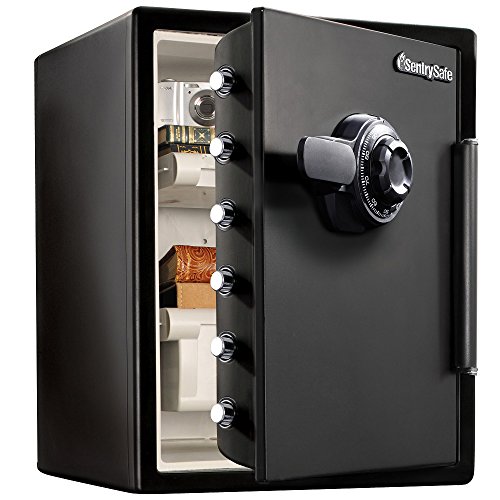
SentrySafe Medium Gray Fireproof Safe and Waterproof Safe Box with Dial Combination, Home Security for Money, Documents, or other Valuables, 1.23 Cubic Feet, SFW123DSB - Hotel Safes - Amazon.com
View on AmazonUpdate your coverage when:
- You add a child, buy a home, or your income jumps
- You take on or pay off major debt
- You divorce or remarry (update beneficiaries immediately)
- Your health meaningfully improves or worsens
- You’re within a few years of a term policy’s end
Replacing a policy can make sense if you can materially lower premiums for the same or better coverage, or if you want features like longer conversion periods. Watch for:
- New contestability and suicide periods starting over
- Surrender charges and potential taxes if replacing permanent policies
- Loss of rider benefits you still need
If your term policy is convertible (lets you switch to a permanent policy without a new medical exam) note the conversion deadline—often age 65–70 or a set number of years into the term. If you might need lifelong coverage, mark that date.
How to get quotes and next steps
The fastest way to see what you would actually pay is to compare life insurance quotes from 3–5 carriers. No single company is cheapest for everyone.

The Life Book Document Organizer, Binder for Important Documents, 2026 New The Folio in Case I Die Binder, Family Emergency Planner, End of Lifeorganizer Paper File Folio Organizer with Labels (Pink)
View on AmazonWhat to look for when comparing quotes:
- Health class assumptions: Are quotes using a realistic class for you (e.g., Preferred vs. Standard)?
- Term length fit: Does the term comfortably cover your mortgage years, your youngest child’s path to independence, and income replacement period?
- Conversion options: How long can you convert term to permanent without new medical underwriting?
- Financial strength: Aim for A- (Excellent) or better from AM Best when possible.
- Policy features you’ll use: Accelerated death benefit for terminal illness, child riders, waiver of premium (if disabled), or living benefits.
Simple checklist to get started:
- Decide on your primary goal (income replacement, mortgage payoff, childcare/college, legacy)
- Estimate coverage using the calculator above
- Choose a term length that matches your obligations
- Gather basic info: height/weight, medications, family health history, driving record
- Compare quotes from at least 3–5 carriers (independent agents can help)
- Apply honestly; answer all medical and lifestyle questions clearly
- Keep the policy that fits your budget and needs—not just the lowest sticker price
Helpful deep dives as you compare:
- How Much Life Insurance Do I Need? Simple Calculator & Step-by-Step Plan (/life-insurance/how-much-life-insurance-do-i-need-calculator)
- Term vs. Whole Life Insurance: Which Is Right for You? (/life-insurance/term-vs-whole-life-insurance)
- Affordable Term Life Insurance: How to Get the Right Coverage for Less (/life-insurance/affordable-term-life-insurance-right-coverage-less)
- No Medical Exam Life Insurance: Compare Providers & Get Quotes (/life-insurance/no-medical-exam-life-insurance-compare-providers-quotes)
- What Is Term Life Insurance? A Clear Guide to Coverage & Costs (/life-insurance/what-is-term-life-insurance-guide)
CTA: Ready to see real numbers? Compare quotes from 3–5 top-rated carriers now. It takes about 5–10 minutes, and you’ll quickly see how buying today versus waiting affects your price.
A quick word on advice
Life insurance is regulated at the state level and very personal. A short conversation with a licensed, independent agent can surface carrier nuances that online quote forms miss—especially if you have health history, a hazardous job, or questions about policy ownership and beneficiaries in your state.
Bottom line: If you’re wondering “when should I get life insurance,” the answer is typically “as soon as someone depends on you—or before that if you know they will.” Lock in what you need at a price you can keep, then review as life changes.
Second CTA: Take 10 minutes today to compare quotes from a handful of strong carriers. You’ll know your options, your likely price, and whether waiting makes sense—or not—for your situation.
Recommended Resources
Questions and Answers on Life Insurance: Steuer, Tony
*Amazon Best Seller in Life Insurance* Questions and Answers on Life Insurance is <strong>an extremely useful and one of a kind resource for anyone looking for a simple way to understand life insuranc
SentrySafe Medium Gray Fireproof Safe and Waterproof Safe Box with Dial Combination, Home Security for Money, Documents, or other Valuables, 1.23 Cubic Feet, SFW123DSB - Hotel Safes - Amazon.com
Enhance the security of your home or office with the SentrySafe Waterproof and Fireproof Gray Safe Box, <strong>model SFW123DSB</strong>. Constructed from high-strength alloy steel, this durable safe
The Life Book Document Organizer, Binder for Important Documents, 2026 New The Folio in Case I Die Binder, Family Emergency Planner, End of Lifeorganizer Paper File Folio Organizer with Labels (Pink)
<strong>The Life Book Document Organizer</strong> - Binder for Important Documents, The Folio in Case I Die Binder, Family Emergency Planner, End of Lifeorganizer Paper File Folio Organizer with Label
Related Articles
- Life Insurance for Young Adults: Why to Buy Now, What to Choose, and How to Save
- How Much Life Insurance Do I Need? Simple Calculator & Step-by-Step Plan
- Term Life Insurance: Complete Guide to Coverage, Cost & Getting Quotes
- Why Life Insurance Matters: How to Protect Your Family and Finances
- How Does Life Insurance Work? A Clear, Step-by-Step Guide
- Affordable Term Life Insurance: How to Get the Right Coverage for Less
- Best Life Insurance: Top Picks & How to Choose (2026 Guide)
- Why Insurance Matters for Everyone: Protect Your Health, Income, and Assets