
Life Insurance vs Savings Account: Protection or Liquidity — Which Should You Choose?
You’re weighing life insurance vs savings account and wondering which one actually solves your problem. Here’s the simple truth: a savings account gives you liquidity (easy access to cash for emergencies). Life insurance gives your family protection (a tax-advantaged lump sum if you die). They do very different jobs—and in many cases, you’ll want both.
Life Insurance vs Savings Account: What Each Is Designed to Do
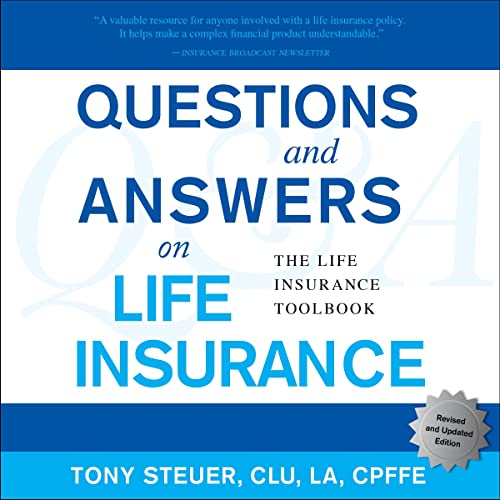
Questions and Answers on Life Insurance: Steuer, Tony
*Amazon Best Seller in Life Insurance* Questions and Answers on Life Insurance is <strong>an extremely useful and one of a kind resource for anyone looking for a simple way to understand life insuranc
Check Price on AmazonLife insurance (protection and income replacement)
Life insurance pays a death benefit (a lump sum paid to your beneficiary—the person you name to receive the money) if you die while covered.
- Term life insurance: Coverage for a set period (typically 10–30 years). You pay a premium (the amount you pay the insurer, monthly or annually). If you die during the term, your beneficiary gets the death benefit. There’s no cash value (no savings component), which is why term is generally the most affordable way to buy a large amount of coverage. If you outlive the term, the policy ends. Learn how term compares with permanent policies here: Term vs. Whole Life Insurance: Which Is Right for You?
- Permanent life insurance (whole life, universal life): Designed to last your entire life, with higher premiums. It builds cash value (a savings-like account inside the policy that grows tax-deferred). You can access cash value via withdrawals or a policy loan (borrowing against your policy; interest accrues and unpaid loans reduce the death benefit). Permanent insurance is often used for lifelong needs or estate planning.
Primary purpose: Replace income, pay a mortgage, cover childcare/college, or provide liquidity for dependents and heirs.
Savings account (liquidity and emergency funds)
A savings account holds cash you can reach quickly. High-yield savings accounts at online banks typically offer higher APYs (annual percentage yield—the interest you earn including compounding) than traditional branch banks. Funds are usually FDIC- or NCUA-insured (federal insurance on bank or credit union deposits) up to legal limits.
Primary purpose: Build an emergency fund, cover short-term goals, and park cash you can’t risk in the market.
If you’re deciding between life insurance vs savings account, think “protection vs liquidity.” They’re complements, not substitutes.
For help picking a strong, low-fee account, see: Savings Accounts: How to Choose the Best Account & Get Top Rates and current picks: Best High-Yield Savings Accounts in 2026.
Financial Mechanics and Outcomes: Premiums, Interest, Returns, Fees, Inflation
What you pay and what you get
- Life insurance premium: The price you pay for a promise of a future death benefit. With term, most or all of your premium buys pure insurance; there’s no cash value. With permanent policies, part of your premium goes to fees and insurance costs, and part to cash value.
- Savings contribution: Money you deposit grows by earning interest. Your balance is accessible, and you can add or withdraw funds.
Expected returns
- Savings accounts: APYs change with market rates. In recent years, competitive high-yield accounts have often paid around 4–5% APY at peaks, but rates vary widely and can drop. Always check current rates.
- Term life: There’s no “investment return” if you live. The value is the protection—your loved ones get, say, $500,000 if you die during the term.
- Permanent life cash value: Growth is tax-deferred and depends on the policy type (fixed interest, index-linked crediting, or dividends in participating whole life). Long-term internal rates of return often land in the low-to-mid single digits after fees, and typically look modest in the early years. Returns and dividends are not guaranteed (beyond contractual minimums in some policies) and vary by insurer and policy design.
Plain-English takeaway: Savings accounts are better for near-term, predictable, low-risk growth and quick access. Permanent life can build long-term, tax-advantaged value, but it’s expensive early on and not a substitute for an emergency fund.
Fees and friction
- Life insurance: Permanent policies include mortality charges (the cost of insurance), administrative fees, and often surrender charges (a fee if you cancel or withdraw too much in the early years). These can significantly reduce early cash value. Term life has fewer moving parts and generally no cash value or surrender issues.
- Savings account: Usually no monthly fee at online banks. You may see minimum balance requirements at some institutions. There are no surrender charges.
Surrender values and access timeline
- Life insurance: The surrender value (what you’d receive if you cancel) in a permanent policy is typically much lower than total premiums paid in the first several years due to fees. It can take 7–15 years for the cash value to “catch up,” depending on policy type and funding level. Term has no surrender value.
- Savings account: Your balance is your balance. Withdrawals are straightforward, though some banks limit certain types of transfers per month.
Inflation impact
- Savings account: If inflation runs higher than your APY over time, your real (inflation-adjusted) return may be negative. Rates can adjust upward when market rates rise, but they can also fall.
- Life insurance: A level death benefit loses purchasing power over decades unless you buy an increasing benefit or inflation rider (an optional feature that raises coverage, usually for an added cost). Cash value growth may or may not outpace inflation depending on the policy and era.
A simple numbers snapshot
Say you’re a healthy 35-year-old non-smoker in Texas.
- A $500,000, 20-year level term policy might run roughly $20–35 per month from A-rated carriers, depending on health and other factors. Rates vary by insurer and your personal profile; medical conditions, medications, driving history, and even your build can move the price.
- If you instead put $30/month into a high-yield savings account at a steady 4% APY for 20 years, you’d deposit $7,200 and could end with roughly $10,800, assuming steady rates and monthly compounding. Real-world rates will fluctuate.
What does that mean? The savings account builds a modest, liquid cushion. The term policy provides a large benefit if the worst happens—money your family could use to pay off debt or replace income.
Risk, Access, and Liquidity Differences
How quickly do beneficiaries or you get money?
- Life insurance: After a claim and approval, beneficiaries typically receive the death benefit in a few weeks. There’s a two-year contestability period (a window when the insurer can review the application for misstatements). Suicide clauses also apply in early years in many states. Exclusions are limited (for example, fraud). While payouts are usually prompt, they are not instant.
- Savings account: You can usually move funds within minutes to days, depending on the bank and transfer method. That makes savings better for day-to-day emergencies.

SentrySafe Black Fireproof and Waterproof Safe, File Folder and Document Box with Key Lock, Ex. 14.3 x 15.5 x 13.5 inches, HD4100 - Amazon.com
View on AmazonWithdrawal restrictions and penalties
- Savings account: The old federal Reg D limit of six withdrawals per month has been lifted, but banks may still impose limits or fees on excessive transfers. There’s no market-risk penalty for taking money out.
- Life insurance: Accessing permanent policy cash value takes more steps. Withdrawals may reduce the death benefit and can trigger taxes if you withdraw more than your cost basis (the total premiums you’ve paid in). Loans accrue interest and reduce the death benefit if not repaid; in certain scenarios, a loan can cause the policy to lapse and create a taxable event.
Loans and emergencies
- Policy loan: Convenient but not cost-free. The insurer charges loan interest, which compounds. If the loan plus interest grows larger than the cash value, the policy can lapse, potentially creating taxes on the gain. Good for planned liquidity needs, not as your first line of defense for broken water heaters and surprise car repairs.
- Savings: Ideal for emergencies. Keep 3–6 months of expenses in a high-yield savings account so you don’t need to borrow or use high-interest credit.
Taxes, Rules, and Underwriting Considerations
Taxes
- Life insurance death benefit: Generally income-tax-free to beneficiaries under U.S. tax law (Internal Revenue Code Section 101(a)). Exceptions exist (for example, transfer-for-value scenarios). Any interest paid by the insurer on delayed proceeds is taxable to the beneficiary.
- Cash value growth: Grows tax-deferred. Withdrawals are typically tax-free up to your basis; above that, gains are taxed as ordinary income. Policy loans are generally tax-free while the policy stays in force, but if the policy lapses or is surrendered with a loan outstanding, the gain may be taxable.
- MEC rules: A Modified Endowment Contract (MEC) is a policy that’s overfunded beyond IRS limits. MEC withdrawals/loans are taxed on a LIFO basis (gains out first) and can face a 10% penalty if you’re under 59½.
- Savings account interest: Taxed annually as ordinary income. Your bank reports it on Form 1099-INT. State taxes may apply depending on where you live.
Regulation and safety nets
- Savings accounts: FDIC or NCUA insurance typically protects deposits up to $250,000 per depositor, per institution, per ownership category.
- Life insurance: Regulated at the state level. State guaranty associations provide limited protection if an insurer fails, but coverage limits vary by state and are not a substitute for FDIC insurance. Insurers cannot market policies based on guaranty association coverage. Focus on insurers with strong financial strength ratings.
Underwriting
- Life insurance requires underwriting (the insurer’s process to evaluate your health, lifestyle, and risk). You may be asked about medical history, medications, and hobbies; some policies require a medical exam, while others use accelerated or simplified underwriting. Premiums are based on age, health, tobacco use, and more. There are guaranteed-issue options (no medical questions) with lower coverage and higher cost.
- Savings accounts require no underwriting. You just open the account.
—
Want to know what life insurance would cost for you specifically? The fastest way is to compare quotes from 3–5 carriers. Start here: Life Insurance: How to Choose the Right Policy and Get Quotes
—
Practical Decision Scenarios and Complementary Strategies
When a savings account should come first
- You don’t have an emergency fund. Build 3–6 months of expenses in a high-yield savings account before locking money into long-term products. This prevents expensive credit card debt when life happens.
- Your goal is within 1–3 years. Down payment, car purchase, wedding fund—use savings for stability and easy access.

Clever Fox Budget Planner - Expense Tracker Notebook. ...
View on AmazonWhen life insurance should be the priority
- You have dependents who rely on your income. Term life is typically the most cost-effective way to protect a mortgage, childcare, and future tuition. A $500,000–$1,000,000 term policy for 20–30 years is common for parents in their 20s–40s, subject to underwriting and budget.
- You have co-signed debt or a partner who would be financially strained without your income. Even if you’re building savings, consider at least a basic term policy while your responsibilities are highest.
When permanent life might fit
- You have a lifelong dependent, estate liquidity needs, or a business succession plan where keeping coverage for life matters. Whole life or guaranteed universal life can make sense here. Understand funding requirements, surrender charges, and realistic long-term returns. Compare against other tax-advantaged tools first.
For a deeper dive on policy types, see: Term vs. Whole Life Insurance: Which Is Right for You?
Using both (a common, practical plan)
- Buy term life for the years others depend on your income.
- Keep 3–6 months of expenses in a high-yield savings account for emergencies.
- Invest long-term in retirement accounts (401(k), IRA) for growth potential; use taxable brokerage for additional goals. Reserve permanent life insurance for specific lifetime needs after you’ve maxed higher-priority, tax-advantaged options.
How to Compare: A Simple Checklist
Ask these questions to decide between life insurance vs savings account—or how to balance both:
- What’s my primary goal? Protection for my family if I die, or cash I can tap any time?
- Who depends on my income, and for how long? If someone would be hurt financially by my death, life insurance moves up the list.
- What’s my time horizon? Under three years favors savings; decades-long legacy or estate needs may point to permanent life.
- How much liquidity do I need? If withdrawing in a pinch is likely, savings wins. Don’t rely on policy loans for emergencies.
- What’s my health and insurability? If you’re healthy, term life is typically very affordable right now. If you have medical conditions, you may still qualify—pricing will vary.
- What’s the real, after-tax, after-inflation return? Savings interest is taxed annually; permanent life growth is tax-deferred but comes with fees and constraints.
- What’s my budget? Can I comfortably fund premiums for the entire term or life of the policy without shortchanging essentials and emergency savings?
- How strong is the institution? Prefer highly rated insurers and FDIC/NCUA-insured banks.
Real-World Snapshots
- New parents, tight budget: A 30-year-old couple with a new baby and a mortgage. They open a high-yield savings account and aim for 4 months of expenses. Each buys a 30-year, $750,000 term policy to cover income replacement through the kids’ college years. Cost is manageable; they skip permanent life for now to keep saving and investing.
- Single professional, no dependents: Focus on a robust emergency fund and retirement accounts. Consider a small, inexpensive term policy if you have co-signed debt or parents who rely on you. Group life at work can be a free or low-cost starter.
- Business owner: Keep operating reserves in savings for payroll and bills. Use term or permanent insurance for key person risk or to fund a buy-sell agreement. Liquidity and protection serve different purposes here.
- Near-retiree supporting a spouse: Term may be expensive at older ages, but coverage can still matter for a few years until pensions/benefits stabilize. Meanwhile, maintain ample cash reserves for healthcare and home repairs. If leaving a legacy is a priority and you can afford it, explore guaranteed universal life with a level death benefit and understand the trade-offs.
What to Look For in Each Option
For life insurance
- Coverage amount and term length that match your obligation timeline
- Financial strength ratings (A.M. Best, S&P, Moody’s) of the insurer
- Clear premiums you can sustain long term
- For permanent policies: guaranteed vs non-guaranteed elements, surrender charge schedule, projected vs guaranteed cash values, internal costs, and flexibility to adjust premiums if needed
- Riders (add-ons) you actually need, such as a waiver of premium (keeps coverage if you’re disabled) or a child rider (small coverage for children)
For savings accounts
- Competitive APY with no teaser traps or heavy requirements
- FDIC or NCUA insurance and easy transfers
- No monthly fees or minimums that could trip you up
- Solid mobile app, fast ACH transfers, and responsive customer support
—
Ready to see your actual life insurance price? Comparing quotes from 3–5 carriers is typically the fastest, most accurate step. Get started here: Life Insurance: How to Choose the Right Policy and Get Quotes
And if your savings rate is low at your current bank, consider moving your emergency fund to a better-paying account: Best High-Yield Savings Accounts in 2026
—
A quick note on advice
This guide is general education, not individualized advice. For personalized recommendations and to understand underwriting outcomes, talk with a licensed insurance agent and, for complex estate or tax situations, a qualified financial or tax professional.
Your next step
- If someone relies on your income, price term life today. A quick quote will show whether coverage fits your budget. Start here: Life Insurance: How to Choose the Right Policy and Get Quotes
- Open a high-yield savings account and set up automatic transfers for your emergency fund: Savings Accounts: How to Choose the Best Account & Get Top Rates
Once those two pillars—protection and liquidity—are in place, you’ll be in a far stronger position to invest for the long term and sleep better at night.
Recommended Resources
Questions and Answers on Life Insurance: Steuer, Tony
*Amazon Best Seller in Life Insurance* Questions and Answers on Life Insurance is <strong>an extremely useful and one of a kind resource for anyone looking for a simple way to understand life insuranc
Clever Fox Budget Planner - Expense Tracker Notebook. ...
<strong>Manage finances with a comprehensive budget planner</strong>. Track expenses, organize bills, set savings goals, and review progress - all in one structured book.
SentrySafe Black Fireproof and Waterproof Safe, File Folder and Document Box with Key Lock, Ex. 14.3 x 15.5 x 13.5 inches, HD4100 - Amazon.com
Whether you’re looking for a ... needs. <strong>Crafted with advanced fireproof and waterproof technology, the SentrySafe HD ensures that your documents and valuables remain intact even in the face of
Related Articles
- Why Life Insurance Matters: How to Protect Your Family and Finances
- Life Insurance and Estate Planning: How to Protect Your Family and Preserve Your Legacy
- Term vs. Whole Life Insurance: Which Is Right for You?
- Money Market Accounts vs. Savings Accounts: Which Is Better for Your Cash?
- How to Save on Life Insurance: Practical Ways to Lower Your Premiums
- How Does Life Insurance Work? A Clear, Step-by-Step Guide
- Life Insurance for Young Adults: Why to Buy Now, What to Choose, and How to Save
- How to Switch Life Insurance Policies Without Losing Coverage or Cash Value