
Savings Accounts: How to Choose the Best Account & Get Top Rates
You’re staring at a list of savings accounts and rate ads that all sound great—until you notice the fine print. What actually matters, and how do you get a top rate without getting trapped by fees or gimmicks? Here’s the practical playbook to choosing a savings account you’ll feel good about six months from now.
What is a savings account? Key features that matter
A savings account is a deposit account for your short- to medium-term cash goals that pays interest—quoted as APY (annual percentage yield)—and typically lets you access funds quickly. In most cases, savings accounts are federally insured up to legal limits, and your money is available without the volatility of investments.
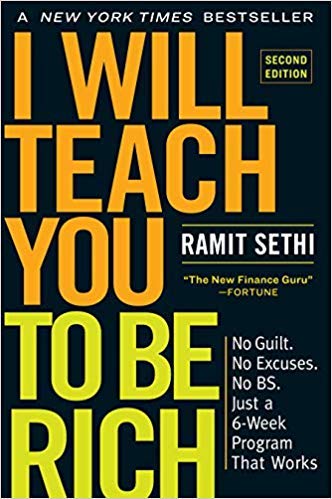
I Will Teach You to Be Rich: No Guilt. No Excuses. Just a 6-Week Program That Works (Second Edition)
<strong>The groundbreaking New York Times bestseller that taught a generation how to earn more, save more, and live a rich life</strong>—now in a revised 2nd edition. Personal finance expert Ramit Set
Check Price on Amazon- APY (annual percentage yield): APY is the standardized way banks show your interest rate, including the effect of compounding (interest on interest). Higher APY generally means more earnings, but always confirm it’s true APY—some ads highlight a “rate” that doesn’t include compounding.
- Liquidity: Liquidity means how easily you can access your money. Savings accounts are liquid—you can transfer to checking or withdraw cash—but some banks still cap certain types of withdrawals to manage costs.
- FDIC/NCUA insurance: Most bank savings accounts are FDIC-insured (Federal Deposit Insurance Corporation) up to $250,000 per depositor, per bank, per ownership category. Credit union accounts are typically NCUA-insured (National Credit Union Administration) with the same limits.
Where savings accounts shine: storing emergency funds, short-term goals (like a vacation in six months), and any cash you can’t afford to risk in the market.
Types of savings accounts: pick the right fit
Not all savings accounts are created equal. Here’s how the main types differ and when each can make sense.
Online high-yield savings accounts (HYSAs)
- What they are: Internet-only banks or divisions of larger banks that offer higher APYs than most branches due to lower overhead.
- Typical APY: Often several times higher than brick-and-mortar accounts. Rates change over time and vary by bank.
- Best for: Maximizing yield with low fees. Great for emergency funds and goals with flexible timelines.
Tip: If you’re rate-shopping, start here. Many of the consistently top yields are from online banks. See also our round-up of the Best High-Yield Savings Accounts in 2026 for current leaders and features (/banking/best-high-yield-savings-accounts-2026).
Brick-and-mortar bank savings
- What they are: Traditional banks with branches. Convenience for cash deposits and in-person help.
- Typical APY: Lower than HYSAs, though occasional promos pop up.
- Best for: People who need regular cash deposits or want a one-stop branch relationship. Consider pairing with a strong checking account at the same bank for easy transfers and ATM access. If you’re optimizing your day-to-day banking setup, here’s a guide: How to Choose the Best Checking Account (/banking/how-to-choose-best-checking-account).
Money market accounts (MMAs)
- What they are: Savings-like accounts that sometimes include check-writing or debit access. MMAs are typically FDIC- or NCUA-insured if held at a bank or credit union.
- Typical APY: Can be competitive with HYSAs, but often require higher minimum balances.
- Best for: Savers who want check access without moving funds to checking, and who can maintain required minimums.
Kids’ and teen savings
- What they are: Custodial or joint accounts designed for minors, with parental oversight and limits.
- Typical APY: Varies widely; some credit unions offer strong youth rates.
- Best for: Teaching saving habits and giving kids a safe place to park allowance or summer-job money.
Certificates of Deposit (CDs)
- What they are: Time deposits that pay a fixed rate for a set term (e.g., 6 or 12 months). Withdraw early and you’ll typically pay an early withdrawal penalty.
- Typical APY: Often higher than standard savings when you commit to a term.
- Best for: Cash you won’t need until a specific date. If you’re deciding between CDs and savings, this breakdown helps: CDs vs. High-Yield Savings: Where to Put Your Money (/banking/cds-vs-high-yield-savings).
How to compare savings accounts: the criteria that actually move the needle
When two accounts look similar, this checklist separates the winners from the frustrations.
1) APY vs. compounding details
- Look for the actual APY (which already includes compounding). If a bank lists a “rate” and an “APY,” use APY to compare apples-to-apples.
- Compounding frequency (daily vs. monthly) matters for the underlying rate—but APY normalizes it. If two APYs are equal, you’ll earn roughly the same over a year.
- Watch for promotional APYs that drop after a few months or require hoops (like making a certain number of card transactions tied to a checking account).
2) Fees and fee waivers
- Monthly maintenance fees: Many HYSAs are $0. Branch banks may charge $3–$15 unless you keep a minimum balance or meet activity requirements.
- Excessive transaction fees: Some banks charge if you make more than a set number of certain withdrawals in a statement cycle.
- Inactivity/dormant fees: If you stop using the account, you could be charged or the account could be closed.
- Wire/statement fees: Rarely deal-breakers, but note them.
3) Minimums and balance tiers
- Minimum opening deposit: Ranges from $0 to $2,500+. If you’re starting small, prioritize accounts with no minimums.
- Balance to earn top APY: Some banks pay the headline rate only on certain tiers (e.g., up to $50,000).
4) Transaction limits and access
- Transaction limits: The old federal Reg D limit (6 certain withdrawals per month) was lifted, but many banks still enforce similar caps. ATM withdrawals usually don’t count, but check your bank’s policy.
- Transfer speed: External ACH transfers typically take 1–3 business days. Some banks offer same-day or instant transfers between linked accounts.
- Cash access: If you need frequent cash deposits, a branch bank or an online bank with cash deposit options through retail partners may matter.
5) Digital experience and tools
- Mobile app reliability: Look for well-rated apps, mobile check deposit, and strong security (biometrics, 2FA).
- Sub-accounts or “buckets”: Helpful for organizing goals (emergency fund, vacation, car insurance).
- Alerts and automations: Interest postings, balance alerts, and scheduled transfers keep you on track.

Yubico - YubiKey 5 NFC - Multi-Factor authentication (MFA) Security Key and passkey, Connect via USB-A or NFC, FIDO Certified - Protect Your Online Accounts : Electronics
View on Amazon6) Customer support and policies
- Service hours: 24/7 chat or phone can be clutch when something goes sideways.
- Holds and limits: Know new-account holds, daily transfer caps, and check-deposit availability timelines.
- Fintech partners: If a fintech app offers a savings account through a partner bank, find out who actually holds your deposits and where the FDIC coverage lives.
Safety and regulations: how to verify your money is protected
Your first line of defense is federal insurance plus a bank or credit union in good standing. Here’s how to check.
- FDIC insurance at banks: Coverage up to $250,000 per depositor, per institution, per ownership category. Joint accounts, revocable trusts, and certain other categories can increase coverage. Use FDIC BankFind to verify a bank’s FDIC certificate and exact name. If you’re over the limit, consider spreading funds across multiple banks or ownership categories.
- NCUA insurance at credit unions: Same $250,000 limits via the National Credit Union Share Insurance Fund (NCUSIF). Verify via the NCUA’s credit union locator.
- Fintech and sweep programs: Some apps place your money at one or more partner banks, sometimes “sweeping” deposits across several to extend FDIC coverage. Ask for the full list of program banks and how your balance is allocated. Make sure your name is on the underlying deposit records for coverage.
- State rules to watch: Unclaimed property (escheatment) laws vary by state. If your account is inactive for a set period (often 3–5 years), the bank may send funds to the state for safekeeping. Keep your contact info current and perform a small transaction periodically to keep the account active.
- How to spot red flags: If a “bank” can’t provide an FDIC or NCUA certificate number, or the name on your statements doesn’t match the insured institution you verified, pause and dig deeper before depositing.
Real examples and side-by-side comparison
Rates change frequently, but these ballpark examples show how different savings options typically stack up. Your actual offers will vary by bank, balance, and timing.
- Online high-yield savings: Commonly competitive APYs with $0 monthly fees and low or no minimums. If you kept $10,000 in a HYSA at a 4.50% APY for a year, you’d earn roughly $450 before taxes, assuming the rate didn’t change.
- Brick-and-mortar savings: Convenience and ATM networks, but often very low APYs. At 0.05% APY on $10,000, you’d earn about $5 in a year.
- Money market accounts: Can match or beat HYSAs, especially with larger balances, but may require $5,000–$25,000 minimums.
- Short-term CDs: Often pay more than savings for 6–12 months but lock your money. If you might need to bail early, the penalty could wipe out the rate advantage.
Recommended “best fit” picks by goal
- Emergency fund (3–6 months of expenses): Online HYSA with $0 fees, fast transfers, and buckets for organization.
- Big purchase in 6–18 months (wedding, car, moving fund): HYSA or a mix of HYSA plus a 6–12 month CD if your date is firm.
- Down payment in 1–3 years: Consider a CD ladder (staggered maturities) plus a HYSA for flexibility.
- Kids and teens: Youth savings at a credit union or online bank with parental controls and automatic transfers.
- Frequent cash deposits: Branch bank savings paired with a solid checking account for ATM and teller access.
How to open a savings account and move money
Opening is typically quick—10–15 minutes online if you have your info handy. Here’s the step-by-step.
- Choose your bank or credit union
- Compare APY, fees, minimums, access, and insurance. If you want current top-yield options, review the Best High-Yield Savings Accounts in 2026 (/banking/best-high-yield-savings-accounts-2026).
- Gather required documents
- Identification: Driver’s license, state ID, or passport.
- Tax ID: SSN or ITIN.
- Address and contact info: Physical address (no P.O. box for primary), email, and phone.
- Employment and funding info: Employer or occupation and routing/account number for your existing bank if you’ll link it.
- Apply online or in person
- Complete the application, consent to disclosures, and accept terms. You may undergo ChexSystems screening (a banking history report). It’s usually not a credit report and typically doesn’t affect your credit score.
- Fund your account
- ACH transfer (link your external bank): Often free; first transfer may take 1–3 business days. Some banks require micro-deposit verification.
- Wire transfer: Fast but may have fees at the sending or receiving bank.
- Mobile check deposit: Convenient, but new-account holds are common (e.g., several business days) until funds become available.
- Cash deposit: Usually only at branches or via partner retailers.
- Set up automations
- Schedule automatic transfers on payday to build your balance without thinking about it.
- Create buckets or sub-accounts for separate goals.
Tips to avoid holds and fees
- For your first funding, consider “pushing” money from your existing bank to the new savings via ACH; your current bank may release funds faster than a “pull” into a brand-new account.
- Ask for higher transfer limits once your account is established.
- Keep activity on the account (a small monthly transfer works) to avoid dormant status.
- Turn off paper statements if they trigger a fee.
Savings strategies to maximize returns
You don’t need a finance degree to squeeze more value from savings accounts—just a few habits that compound over time.

Clever Fox Budget Planner - Expense Tracker Notebook. ...
View on Amazon- Laddering to protect rate risk: If you’re using CDs, build a ladder (e.g., 6-, 12-, and 18-month terms) so a portion matures regularly. This helps you reinvest at new rates without locking all your cash at once. You can also ladder across different HYSAs to stay under FDIC/NCUA limits and pivot if a bank cuts rates.
- Automate contributions: Set a fixed transfer on payday. Even $50–$200 consistently can add up quickly, especially at higher APYs.
- Right-size your emergency fund: Typically 3–6 months of essential expenses; closer to 9–12 months if you have variable income, are self-employed, or have dependents.
- Use buckets: Label sub-accounts for car insurance, medical deductible, home repairs, travel—whatever you need. Clear labels reduce the temptation to dip into your emergency fund for non-emergencies.
- Keep cash you’ll truly need in the next 1–2 years out of the market: Savings accounts and short-term CDs avoid market swings. If you prefer flexibility, a HYSA is usually the safer pick.
- Taxes on interest: Interest from savings accounts is typically taxable as ordinary income at the federal level and may be taxable at the state level, depending on where you live. Expect a 1099-INT if you earn $10 or more in interest (and sometimes even if you earn less).
Example: If you build a $20,000 emergency fund and your HYSA pays 4.25% APY for a full year, you’d earn roughly $850 in interest before taxes. Actual earnings vary because banks can change variable APYs at any time.
What to watch for: common pitfalls
- Teaser rates that fall off a cliff: If the top APY requires adding a checking account with monthly debit transactions or expires after three months, do the math on your effort vs. benefit.
- Minimum balance traps: If you need $10,000 to earn the headline APY but will hover around $3,000, look elsewhere.
- Transfer bottlenecks: Some banks have low daily/monthly transfer limits or long holds on large deposits. If you might need to move funds fast, verify policies before opening.
- Inactivity and escheatment: Make a small transfer every few months to keep the account active and your contact info current.
- Over-insurance exposure: Keep combined balances under $250,000 per depositor, per bank, per ownership category—or spread across institutions/ownership types.
FAQs about savings accounts
- Are online banks safe? Typically yes, if they’re FDIC-insured (or NCUA for credit unions) and you verify the institution. Many online banks are divisions of large, established institutions.
- Will opening a savings account hurt my credit? In most cases, no. Banks often use ChexSystems (a deposit account report) rather than a hard credit inquiry.
- How many savings accounts can I have? As many as you need. Multiple accounts can help you organize goals and stay under insurance limits.
- Are money market accounts FDIC-insured? If offered by a bank, yes, typically up to $250,000 per depositor, per bank, per ownership category. Money market mutual funds are different—they are investments and not FDIC/NCUA-insured.
- Are rates guaranteed? Variable savings APYs can change at any time. CDs generally lock a rate for the term but charge penalties for early withdrawal.
- Do banks still limit withdrawals to six per month? The federal Reg D limit was lifted, but many banks still enforce their own limits or fees. Check your bank’s policy.
How to compare options now (fast and realistic)
The fastest way to see what you would actually earn is to compare rates and features from 3–5 banks on the same day. Look at APY, fees, transfer limits/speeds, and insurance details side-by-side. If you’re ready to dive in, start with current leaders here: Best High-Yield Savings Accounts in 2026 (/banking/best-high-yield-savings-accounts-2026).
Prefer an all-in-one setup? If you’re also replacing your checking account for smoother transfers and ATM access, this walkthrough can help you choose well: How to Choose the Best Checking Account (/banking/how-to-choose-best-checking-account).
Note: For personalized guidance, consider speaking with a licensed banker or a fiduciary financial advisor who can tailor recommendations to your situation and state-specific rules.
Your next step
If you’ve been settling for a near-zero rate, this is low-hanging fruit. Take 10 minutes to compare 3–5 savings accounts, confirm FDIC/NCUA coverage, and open the one that checks your boxes. Set an automatic monthly transfer, label your goals, and you’ve just given yourself a quiet but powerful financial upgrade.
CTA: Compare top savings rates and features from vetted banks and credit unions today. It’s the quickest way to match a real APY, fee policy, and transfer speed to your actual needs.
Recommended Resources
I Will Teach You to Be Rich: No Guilt. No Excuses. Just a 6-Week Program That Works (Second Edition)
<strong>The groundbreaking New York Times bestseller that taught a generation how to earn more, save more, and live a rich life</strong>—now in a revised 2nd edition. Personal finance expert Ramit Set
Yubico - YubiKey 5 NFC - Multi-Factor authentication (MFA) Security Key and passkey, Connect via USB-A or NFC, FIDO Certified - Protect Your Online Accounts : Electronics
Yubico - Security Key C NFC - Basic Compatibility - Multi-Factor authentication (MFA) Security Key and passkey, Connect via USB-C or NFC, FIDO Certified · Yubico - YubiKey 5 Nano A - Multi-Factor auth
Clever Fox Budget Planner - Expense Tracker Notebook. ...
<strong>Manage finances with a comprehensive budget planner</strong>. Track expenses, organize bills, set savings goals, and review progress - all in one structured book.
Related Articles
- Best Savings Account Rates 2026: How to Compare the Top Options
- Best Banks for Savings Accounts in 2026: Top APY, No-Fee & Mobile Picks
- How to Choose the Best Checking Account
- Best Checking Accounts With No Fees: How to Compare Your Top Options
- Best Online Banks 2026: Top Picks for Fees, APY, and Everyday Banking
- Best CD Rates in 2026: How to Compare the Top Offers
- Best Joint Bank Accounts: How to Compare Top Options and Choose the Right One
- Money Market Accounts vs. Savings Accounts: Which Is Better for Your Cash?