
How to Switch Life Insurance Policies Without Losing Coverage or Cash Value
You’re thinking about changing your policy, but you don’t want to risk a lapse in protection or lose money you’ve built up. Here’s how to switch life insurance policies the smart way — keeping coverage in place and protecting any cash value you’ve accumulated.
Before you make any move, remember: rates vary by age, health, lifestyle, state, and insurer. This guide is general education. For personalized advice, speak with a licensed agent and, for tax matters, a qualified tax professional.
Does Switching Make Sense? Start With Your Needs
Switching isn’t always about chasing a lower premium. It’s about aligning your coverage with your life today — and where you’re headed.
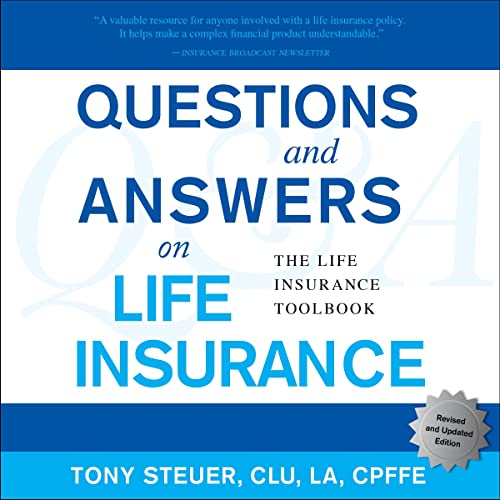
Questions and Answers on Life Insurance: Steuer, Tony
*Amazon Best Seller in Life Insurance* Questions and Answers on Life Insurance is <strong>an extremely useful and one of a kind resource for anyone looking for a simple way to understand life insuranc
Check Price on Amazon- Coverage amount: Do you still have the right death benefit (the amount your beneficiaries receive when you die)? If your mortgage, income, or family size grew, your original amount may be too small. If debts are paid down and kids are launched, you might need less.
- Term length: For term life (coverage for a set period like 10, 20, or 30 years), check how many years you have left and whether that still covers your obligations. If you need longer protection, you may supplement with a new policy rather than replace the old one.
- Riders: Riders are optional add-ons, like an accelerated death benefit (access part of your payout if you’re terminally ill), waiver of premium (your premium is waived if you become disabled), or child rider (limited coverage for children). If a rider you value can’t be replicated, keeping your current policy can make sense.
- Life changes: Marriage, a new baby, buying a home, a divorce, starting a business, or caregiving for parents typically trigger a review.
- Affordability: If premiums are straining your budget, switching to a more efficient policy — or adjusting coverage — can help, though you should watch for new fees or reset periods.
- Health changes: If your health has declined since you bought your policy, replacing it may increase your premiums or risk denial. In that case, keeping or converting what you have could be safer.
When to Keep or Supplement Instead of Replace
- You have an attractive rate class: Your underwriting class (the health/risk rating the insurer assigns you, like Preferred Plus, Preferred, or Standard) is very favorable and your health is the same or worse today. Replacing may cost more.
- You’re mid-way through a term at a low premium: Add a small second term policy to cover new needs and keep the old one.
- You have valuable riders: Some older policies include robust riders (for example, strong chronic illness or long-term care riders) that are hard to match now.
- You have a whole life or universal life policy with meaningful cash value (the savings component that grows tax-deferred): Replacing could trigger surrender charges or lose guarantees. Consider using a partial 1035 exchange (more on that shortly), a reduced paid-up option (stop paying premiums, keep a smaller guaranteed benefit), or trimming death benefit instead of a full replacement.
Real-world example: Say you’re a 35-year-old non-smoker in Texas with a $500,000 20-year term bought five years ago. You’ve since had a second child and purchased a larger home. You might keep the original policy (15 years remaining) and add a new $500,000 20- or 30-year term for layered protection. This typically costs less than replacing the entire $500,000 with a brand-new 30-year term, and you avoid resetting all guarantees and new contestability periods on the full amount.
For a refresher on how policies work and ways to size your coverage, see How Does Life Insurance Work? A Clear, Step-by-Step Guide (/life-insurance/how-does-life-insurance-work-step-by-step-guide) and Life Insurance: How to Choose the Right Policy and Get Quotes (/life-insurance/life-insurance-choose-right-policy-get-quotes).
How to Compare Offers When Switching
When you compare, don’t just look at the monthly price. Line up contracts side-by-side and look under the hood.
- Premiums now and later: For term, premiums are typically level. For universal life (flexible permanent coverage), see current and guaranteed costs. For whole life (permanent coverage with guaranteed death benefit and cash value), check base premium and paid-up additions. If an illustration shows lower premiums “assuming 5%,” that’s non‑guaranteed.
- Underwriting class: This is the risk category assigned after underwriting (health review). A Preferred Non-Tobacco class at Insurer A isn’t identical to Insurer B’s “Super Preferred.” The class you actually receive drives the final price.
- Guaranteed vs. non‑guaranteed elements: Guarantees include minimum interest credits or guaranteed death benefit. Non‑guaranteed elements include dividends (not guaranteed payments some mutual insurers may declare) and credited interest above the guaranteed floor on universal life.
- Riders: Confirm availability, cost, and definitions. “Chronic illness” or “critical illness” riders can vary a lot in triggers and payouts. If you rely on a rider in your current policy, make sure a new one matches or improves it.
- Cash value behavior (permanent policies): Review guaranteed cash value growth, dividend history (remember, past results don’t guarantee future performance), and the breakeven timeline. New permanent policies usually start with low first-year cash value due to upfront costs.
- Surrender charges: Many permanent policies have surrender charges (a fee if you cancel or withdraw early) that phase out over 10–15 years. Replacing a policy still within its surrender period can be costly.
- Loan provisions: If you borrow against cash value, check loan interest rates, whether the policy is direct recognition (dividends adjust on loaned amounts), and what happens if loans accrue. Unmanaged loans can cause a policy to lapse and trigger taxes.
- Insurer financial strength: Look for strong ratings from A.M. Best, S&P, or Moody’s. Financial strength typically matters more for long-term guarantees and dividend-paying policies.
If you’re weighing term vs. whole or universal life as part of your switch, these explainers can help: Term vs. Whole Life Insurance: Which Is Right for You? (/life-insurance/term-vs-whole-life-insurance) and Whole Life Insurance Explained: Benefits, Costs, and How to Buy (/life-insurance/whole-life-insurance-explained-benefits-costs-how-to-buy).
CTA: The fastest way to see what you might actually pay is to compare quotes from 3–5 carriers at once. Start with our guide to getting apples-to-apples quotes: Life Insurance: How to Choose the Right Policy and Get Quotes (/life-insurance/life-insurance-choose-right-policy-get-quotes).
Taxes and Cash Value: 1035 Exchanges, Surrenders, and Loans
Switching policies that have cash value adds a tax layer. Here’s what typically matters — and where a tax professional is worth their fee.
What is a 1035 Exchange?
A 1035 exchange (named after Internal Revenue Code Section 1035) allows you to move the cash value from one life insurance policy to a new life insurance policy (or to a non-qualified annuity) without current taxation on the gain, as long as IRS rules are followed. Key points:
- Like-for-like: Life insurance to life insurance is generally eligible. You can also exchange life insurance to an annuity, but not the other way around.
- Ownership and insured must match: Typically, the owner and the insured person must be the same on both the old and new contracts.
- Direct transfer only: Funds should move directly from the old insurer to the new insurer. Don’t take a check payable to you.
- Loans complicate things: If your old policy has an outstanding loan, how that loan is handled in the exchange matters. Carrying the loan to the new policy may be allowed, but extinguishing the loan during the exchange can create taxable income (often called “boot”). Get tax advice before proceeding.
- MEC risk: Funding a new policy too aggressively can create a Modified Endowment Contract (MEC), changing how distributions are taxed (generally, gains first, with penalties before age 59½). Ask the insurer or agent how the new policy will perform under the 7‑pay test to avoid accidental MEC status.
Tax Consequences of Surrendering a Policy
If you cancel (surrender) a policy for its cash value rather than doing a 1035 exchange, the gain is typically taxable as ordinary income. Your taxable gain is the cash surrender value minus your cost basis (usually, premiums paid minus dividends received). Surrender charges can reduce the amount you receive, but they don’t reduce taxable gain dollar-for-dollar if you still have a gain.
If you have a loan and the policy is surrendered or lapses, the outstanding loan can be treated as a distribution — potentially creating a tax bill even if you don’t receive cash. This is a common and painful surprise.
What About Dividends and Paid-Up Additions?
With participating whole life, dividends are not guaranteed. If you exchange or surrender, you typically forfeit future dividends. Paid-up additions (PUAs) you’ve purchased increase both cash value and death benefit; make sure your new policy structure (or an exchange) accounts for this value. A partial 1035 exchange can sometimes move PUA value into a new contract while leaving the base policy intact, depending on the carrier’s rules.
Bottom line: If you’re considering any move involving cash value, loans, or dividends, loop in a tax professional and an experienced independent agent before you sign.
How to Switch Life Insurance Policies Without Gaps: Step-by-Step
The golden rule: get the new coverage fully in force before you cancel the old policy. Here’s a safe sequence that typically works.
- Pre-check your health profile and quote range
- Talk with an independent agent who can pre-screen your health and lifestyle (build, blood pressure, cholesterol, medications, family history, driving record, aviation/scuba, nicotine) with multiple carriers. This helps predict your likely underwriting class before you apply.
- Get preliminary quotes for your target coverage amount and term length or permanent design. Rates vary by state and carrier.
- Apply for the new policy
- Complete the application and health questionnaire. Depending on the insurer and amount, you may have a medical exam or you may qualify for accelerated underwriting (no exam, but data checks like prescription history and MVR still apply).
- If available, opt for temporary coverage during underwriting via a conditional receipt or Temporary Insurance Agreement (TIA). This is short‑term coverage that can protect you while the application is processed, subject to specific conditions and limits spelled out in the receipt.
- Wait for approval and place the new policy in force
- Review the offer, including the underwriting class, riders, and final premium. If acceptable, pay the first premium and complete any delivery requirements so the new policy is active.
- If you were rated worse than expected (for example, Standard instead of Preferred), you can reassess whether replacing still makes sense — or keep the old policy and decline the new one.
- Coordinate the replacement or transfer
- If you’re replacing a term policy with a new term: Once the new policy is active, submit a written request to cancel the old one. Keep a few weeks of overlap to be safe.
- If you’re converting term to permanent with the same insurer: Use your conversion privilege (a feature in many term policies that lets you switch to permanent coverage without a new medical exam, within a set window). Conversions typically preserve your original underwriting class but at permanent-cost rates.
- If you’re moving cash value: Complete the insurer’s 1035 exchange forms so funds move directly between companies. Do not cancel the old policy or take a check payable to you until the exchange is confirmed.
- Update beneficiaries, ownership, and pay method
- Confirm your beneficiary designations (who gets the payout) on the new policy. Coordinate ownership if you use a trust, business, or spouse as owner. Mismatched ownership can create tax issues.
- Set up premium payments (monthly or annual). Annual often costs slightly less overall.
- Close out the old policy
- After you see the new policy is active and, if applicable, the 1035 exchange is complete, cancel the old contract. Keep documentation of the replacement and any state-required forms.
Pro tip: Many states require a “replacement” form that discloses the pros and cons of switching. Your agent should provide and file it. This protects you by forcing a side-by-side comparison.
Common Pitfalls to Avoid
- Medical underwriting risk: If your health worsened since your original purchase, a new policy could cost more or be declined. Never cancel the old policy until the new one is 100% in force.
- Contestability and suicide periods reset: The first two years of a new policy are the contestability period (the insurer can review your application in case of a claim). Suicide exclusions also reset according to the policy. Replacing restarts those clocks.
- Losing valuable riders: Some older policies have strong chronic illness, long-term care, or guaranteed insurability riders that may not be available now. Verify rider definitions and costs before switching.
- Surrender charges and new front-loaded costs: Permanent policies often carry surrender fees for 10–15 years. New policies also have upfront expenses, so you may reset the clock on cash value growth.
- Policy loans and tax traps: Surrendering or lapsing a policy with a loan can create taxable income. Plan loan handling before any move.
- MEC status: Funding a new policy too quickly can create a Modified Endowment Contract with less favorable tax treatment on distributions.
- Reinstatement isn’t guaranteed: If you cancel and have second thoughts, reinstatement typically requires evidence of insurability within a limited window — and it’s not guaranteed.
- Insurer strength: Don’t chase price alone. Favor insurers with strong financial strength for long-term promises.
Quick Checklist for a Smooth Switch
- Clarify your coverage goal: amount, term length or permanent, and any must-have riders.
- Price it out with 3–5 carriers to estimate your likely underwriting class and premium.
- Keep current coverage active while you apply and underwrite the new policy.
- Use temporary coverage (conditional receipt/TIA) if available while you wait.
- Review guarantees vs. non‑guaranteed elements, surrender charges, and loan provisions.
- For cash value policies, decide: 1035 exchange, partial exchange, reduced paid-up, or surrender.
- Confirm handling of any outstanding policy loans before you move a dollar.
- Complete all replacement/1035 paperwork; insist on a direct transfer.
- Activate the new policy, then cancel the old policy — never the other way around.
- Update beneficiaries and ownership, and set up premium payments.
- Keep copies of everything; note new contestability/suicide period dates.

SentrySafe Black Fireproof and Waterproof Safe, File Folder and Document Box with Key Lock, Ex. 14.3 x 15.5 x 13.5 inches, HD4100 - Amazon.com
View on Amazon
ThinkTex Accordion File Organizer, 12 - Pocket Expanding File Folders for Paper Receipts, Bills & Taxes Organizer, Letter/A4 Size Document Holder for School, Office, Home with tabs-Pinkish Purple
View on AmazonExamples: How Switching Might Play Out
Term-to-term supplement: A 35-year-old non-smoking parent with a $500,000 20-year term (15 years left) wants more protection after a new baby. Keeping the existing policy and adding a new $500,000 30-year term often provides layered coverage at a reasonable combined cost. Actual premiums vary, but many healthy applicants in this scenario pay roughly what a single $1,000,000 30-year policy might cost — sometimes less — while preserving the old contract’s established guarantees.
Term conversion to permanent: A 45-year-old with a term policy nearing its end wants lifelong coverage for estate or final expenses. Using the policy’s conversion privilege typically avoids a new medical exam and preserves the original underwriting class. The new permanent premium will be higher than term, but the process reduces underwriting risk.
Whole life with cash value and a loan: A 55-year-old has $80,000 cash value and a $25,000 loan on a whole life policy but wants to lower premiums. Options include a reduced paid-up change (no more out-of-pocket premiums, smaller guaranteed death benefit), a 1035 exchange to a Guaranteed Universal Life policy to lock in a lifetime death benefit (watch loan handling and MEC risk), or a 1035 to an annuity for income needs. A tax advisor should review potential loan tax exposure if the old policy is surrendered or lapses.
If you want a deeper dive into permanent policies and dividends before deciding, see Whole Life Insurance Explained: Benefits, Costs, and How to Buy (/life-insurance/whole-life-insurance-explained-benefits-costs-how-to-buy).
When to Bring In a Pro
- You have cash value, dividends, or loans and are weighing a 1035 exchange.
- You’re unsure how riders compare across contracts.
- You have estate planning needs (trust ownership, business buy-sell, or key person coverage).
- You tried quoting and got mixed results; pre-underwriting guidance can save time.
Independent agents can shop multiple carriers and help you avoid one-carrier blind spots. A fee-only financial planner or tax professional can coordinate the policy decision with your broader financial plan and tax picture.
CTA: Ready to compare? Use our side-by-side guide to request quotes and see likely underwriting classes before you make a move: Life Insurance: How to Choose the Right Policy and Get Quotes (/life-insurance/life-insurance-choose-right-policy-get-quotes). If you’re still weighing product types, Term vs. Whole Life Insurance (/life-insurance/term-vs-whole-life-insurance) can help you narrow the path.
Your Next Step
- If you’re 80% sure switching makes sense, get pre-screened for underwriting and line up quotes from 3–5 carriers.
- If you have cash value, ask specifically about 1035 exchange options and whether a partial exchange or reduced paid-up change could meet your goals.
- Keep your current policy active until your new policy is delivered, in force, and — if applicable — the 1035 exchange is complete.
You don’t have to navigate this alone. A quick conversation with a licensed independent agent and a tax pro can help you switch without losing coverage or cash value — exactly the goal.
Recommended Resources
Questions and Answers on Life Insurance: Steuer, Tony
*Amazon Best Seller in Life Insurance* Questions and Answers on Life Insurance is <strong>an extremely useful and one of a kind resource for anyone looking for a simple way to understand life insuranc
ThinkTex Accordion File Organizer, 12 - Pocket Expanding File Folders for Paper Receipts, Bills & Taxes Organizer, Letter/A4 Size Document Holder for School, Office, Home with tabs-Pinkish Purple
... <strong>EcoStash Accordion File Organizer</strong>, 12-Pocket Wheat Straw Expanding File Folder, Portable Monthly Bill & Tax Receipt Organizer, Letter/A4 Size Document Holder with Colorful Tab
SentrySafe Black Fireproof and Waterproof Safe, File Folder and Document Box with Key Lock, Ex. 14.3 x 15.5 x 13.5 inches, HD4100 - Amazon.com
Whether you’re looking for a ... needs. <strong>Crafted with advanced fireproof and waterproof technology, the SentrySafe HD ensures that your documents and valuables remain intact even in the face of
Related Articles
- How to Save on Life Insurance: Practical Ways to Lower Your Premiums
- How to Find Cheap Life Insurance: Smart Ways to Lower Your Premiums Without Sacrificing Coverage
- Life Insurance and Estate Planning: How to Protect Your Family and Preserve Your Legacy
- Best Whole Life Insurance Plans: Top Picks and How to Choose
- How to Lower Life Insurance Premiums: A Practical Guide to Discounts & How to Qualify
- Whole Life Insurance Explained: Benefits, Costs, and How to Buy
- Life Insurance vs Savings Account: Protection or Liquidity — Which Should You Choose?
- Life Insurance: How to Choose the Right Policy and Get Quotes