
Home Insurance vs Renters Insurance: Key Differences, Real-World Examples, and Which One You Need
You’re comparing home insurance vs renters insurance and want a straight answer: what’s the difference, who needs which policy, and how much do they actually cost? Here’s the clear, no-fluff breakdown so you can pick the right coverage with confidence.
What Each Policy Is For: Owners vs. Tenants
Home insurance is designed for people who own the structure where they live. The most common policy is called an HO-3 (a standard homeowners policy). It protects the house itself (the “dwelling”), other structures on the property (like a detached garage or fence), your belongings, your personal liability, and additional living expenses if you can’t live at home during repairs.
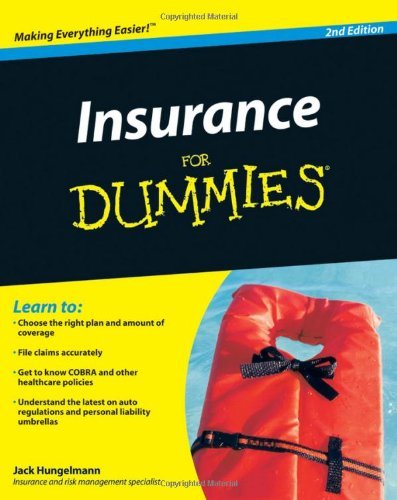
Insurance For Dummies?: Hungelmann, Jack
Whether you’re a homeowner or ... need on: ... Author Jack Hungelmann <strong>uses his twenty-five years of experience in the insurance industry to make buying insurance as simple as possible</strong>
Check Price on AmazonRenters insurance is built for tenants who do not own the building. The most common form is HO-4. It does not cover the building at all—that’s your landlord’s job. Instead, renters insurance covers your personal property (your stuff), your personal liability (if you accidentally cause injury or damage), and additional living expenses if a covered loss makes your rental uninhabitable.
Core purpose in one line:
- Home insurance (HO-3): Protects the building you own, your belongings, your liability, and your loss-of-use costs.
- Renters insurance (HO-4): Protects your belongings, your liability, and your loss-of-use costs—not the building.
If you want a deeper dive into homeowners coverages, see What Does Home Insurance Cover? What Does Home Insurance Cover?
Home Insurance vs Renters Insurance: Coverage Side-by-Side
Dwelling or Building Coverage
- Home insurance: Includes dwelling coverage—money to repair or rebuild the home’s structure after a covered loss (like fire or wind). It also includes coverage for “other structures” such as sheds, fences, and detached garages.
- Renters insurance: No dwelling or building coverage. The landlord’s policy covers the building. Renters are not responsible for insuring the structure.
Personal Property (Your Stuff)
- Home insurance: Covers your belongings inside the home and, typically, anywhere in the world (limited amounts off-premises). Coverage is usually subject to your personal property limit, and certain categories (like jewelry or collectibles) have “sublimits” (smaller caps within your overall limit).
- Renters insurance: Also covers your belongings, generally on and off the premises. You choose a personal property limit that reflects the value of what you own.
Key term explained: Sublimits are category caps, like $1,500 for jewelry theft. If you own more than that in a category, you can “schedule” items (add specific coverage for named high-value items) for higher limits.
Liability Coverage
- Both policies include personal liability coverage—money for legal defense and settlements if you’re found legally responsible for injuries or property damage to others. Example: your dog bites a visitor, or your kid breaks a neighbor’s window.
Key term explained: Liability coverage is not about injuries to you; it’s about your legal responsibility to others. Medical payments coverage, a separate small coverage, can pay for minor injuries to guests regardless of fault.
Additional Living Expenses (ALE), also called Loss of Use
- Both policies can pay for increased living costs if a covered loss makes your home or apartment uninhabitable—think short-term rentals, meals, laundry, and extra transportation while repairs are underway. There are dollar limits and time limits, so check your policy.
Replacement Cost vs. Actual Cash Value (ACV)
- Replacement cost coverage pays to replace an item with a new one of like kind and quality, without subtracting for depreciation (wear and tear). Example: if your five-year-old TV is stolen, replacement cost aims to buy you a comparable new TV.
- Actual cash value (ACV) subtracts depreciation. That same five-year-old TV would be valued at what it’s worth used, not new.
Both home and renters policies can be written with replacement cost for personal property, but ACV is still common—especially on basic renters policies. You can typically upgrade to replacement cost for a modest increase in premium.
Common Exclusions
Both home and renters insurance commonly exclude:
- Flood (rising water from outside your home)
- Earthquake and earth movement
- Routine wear and tear, maintenance issues, and mold caused by neglect
- Sewer or sump pump backup (unless you add an endorsement)
You can often buy separate policies or endorsements to fill these gaps (more on that below).
Who Needs Which Policy? Real-World Scenarios
Scenario 1: Fire Damages a House You Own
- What happened: A kitchen fire damages cabinets, walls, and smoke seeps through the house.
- With home insurance (HO-3): Dwelling coverage pays to repair the structure; personal property coverage helps replace damaged belongings; ALE covers hotel or rental costs if you can’t stay in the home during repairs; liability is not typically involved unless someone else is injured.
- With renters insurance (HO-4): Not applicable—you’re not the owner. If this were a rental unit you live in and a fire occurred, your renter’s policy would cover your belongings and ALE, while the landlord’s policy pays for building repairs.
Scenario 2: Stolen Belongings in an Apartment
- What happened: A thief breaks in and steals jewelry and a laptop.
- Home insurance (if you own the home): Personal property coverage applies, subject to your deductible (the amount you pay out of pocket before insurance kicks in) and any sublimits (for example, jewelry might be capped at $1,500 unless scheduled).
- Renters insurance: Same as above—your belongings are covered up to your chosen limit and subject to sublimits and your deductible. The landlord’s insurance won’t cover your personal items.
Battery Doorbell Plus | Video Doorbell Camera | Amazon
View on AmazonScenario 3: A Guest Is Injured at Your Place
- What happened: A friend trips on a loose rug, breaks a wrist, and sues.
- Home or renters insurance: Personal liability coverage can pay for legal defense and settlements if you’re found negligent. Medical payments coverage may help with initial medical bills regardless of fault.
Scenario 4: Windstorm Damages a Rental Building Roof
- What happened: A storm rips shingles off your apartment building; rain leaks into your unit and soaks your couch.
- Landlord’s building policy: Repairs the roof and structure.
- Your renters policy: Covers your damaged couch and other belongings; ALE might step in if your unit is unlivable during repairs.
Cost and Financial Implications
Typical premium ranges vary widely by state, insurer, construction type, claims history, and credit-based insurance scores (where allowed by law). But general ballparks can help you budget.
- Renters insurance: Often $12–$25 per month for a basic policy with $20,000–$30,000 in personal property coverage and $100,000–$300,000 in liability, depending on your state and profile. For more details and examples, see How Much Is Renters Insurance? How Much Is Renters Insurance? Average Costs, Factors & Real Examples
- Homeowners insurance: Commonly ranges from about $900 to $2,500+ per year, depending on your location, replacement cost of the dwelling, roof age, claims history, and more. Coastal states and high-risk areas can see much higher premiums.
How your deductible shapes out-of-pocket costs:
- A higher deductible (say, $2,000 instead of $500) typically lowers your premium but increases what you pay when you file a claim. Example: If a covered loss causes $8,000 in damage and your deductible is $1,000, you pay $1,000 and the insurer pays up to $7,000 (subject to limits).
- For frequent small losses, a low deductible reduces your out-of-pocket but costs more in premium. Many homeowners choose $1,000–$2,500 deductibles to keep premiums manageable.
Price drivers you can influence:
- For homeowners: Roof condition, home updates (electrical, plumbing, HVAC), protective devices (monitored alarms), and opting for wind/hail or hurricane deductibles where available.
- For renters: The amount of personal property coverage you choose, whether you add replacement cost, endorsements (like water backup), and your deductible.
Price drivers you can’t fully control:
- Location risk (wildfire, wind, hail, crime, proximity to coast)
- Market conditions and reinsurance costs
- Prior claims (yours and sometimes at the property address)
Bottom line on value: Renters policies are typically inexpensive for the protection they provide. Home policies cost more because they insure the structure—which is usually the most expensive asset in the picture.
Key Add-Ons and When They Make Sense
- Flood insurance: Standard home and renters policies exclude flood (rising water from outside). If you’re in a Special Flood Hazard Area or even a lower-risk zone with heavy rain history, consider a separate flood policy through the National Flood Insurance Program (NFIP) or private flood insurers.
- Earthquake coverage: Excluded on most standard policies. Consider it in seismic regions; often sold as a separate policy or endorsement, with higher deductibles.
- Water backup/sump overflow endorsement: Covers damage from water backing up through sewers or drains—a common exclusion. Worth considering in older buildings or homes with basements.
- Scheduled valuables: If you own high-value items (jewelry, watches, art, collectibles), ask about “scheduling” them—adding itemized coverage for higher limits and, often, broader causes of loss. Renters with valuables should absolutely look into this. For a detailed walkthrough, see Renters Insurance for High-Value Items Renters Insurance for High-Value Items: What to Insure, How to Cover It, and When to Schedule
- Equipment breakdown (homeowners): Can cover major systems like HVAC or appliances due to mechanical breakdown, which standard policies exclude.
- Ordinance or law (homeowners): Helps pay increased costs to bring older parts of the home up to current building codes after a covered loss.
Common misconceptions to avoid:
- “My landlord’s policy covers my stuff.” It doesn’t. That policy covers the building; your renters policy covers your belongings.
- “Flood from heavy rain is covered.” Flood (rising surface water) is excluded; sudden and accidental water damage from inside your home (like a burst pipe) is typically covered, subject to terms and deductibles.
- “I don’t own much; I don’t need renters insurance.” Replacing clothes, furniture, and electronics adds up fast. Even a minimalist can own $10,000+ in property—and liability coverage is a sleeper value if someone gets hurt.
How to Compare Policies and Get the Right Fit
When comparing home insurance vs renters insurance—or quotes within each type—focus on these practical checks:
- Coverage limits that match reality
- Homeowners: Make sure the dwelling limit is set to the home’s full replacement cost (what it costs to rebuild, not the market value). Many insurers use replacement cost estimators—verify the details (square footage, finishes, roof type).
- Renters: Inventory your belongings. A quick phone video walkthrough helps. Choose a personal property limit that realistically replaces your items, not just a round number.
- Replacement cost on personal property
- Ask to upgrade from ACV to replacement cost. The extra premium is usually modest and pays off at claim time.
- Deductible choice that fits your emergency fund
- Pick a deductible you could comfortably pay tomorrow. Don’t choose a deductible so high that you’d delay necessary repairs.
- Adequate liability limits
- $300,000 is a common starting point for both homeowners and renters. Consider $500,000 if you host often, have a dog breed flagged by insurers, or have higher assets to protect.
- Important endorsements
- Homeowners: Water backup, ordinance or law, equipment breakdown (if available), extended or guaranteed replacement cost on the dwelling when possible.
- Renters: Scheduled valuables, water backup, and higher liability limits.
- Claims support and policy flexibility
- Look for strong customer service, clear coverage explanations, and transparent claims handling. If you live in a catastrophe-prone area, ask how the policy treats special deductibles (wind/hail, named storm, hurricane).
The fastest way to see what you would actually pay is to compare quotes from 3–5 carriers. If you’re shopping for homeowners coverage, start here: Homeowners Insurance: A Complete Guide to Coverage, Costs & Quotes. If you’re renting, you can compare options here: Renters Insurance: Compare Quotes & Get the Right Coverage Today
Practical Cost Examples
- A 3-bedroom home in a non-coastal suburb might see $1,200–$2,000 per year for homeowners insurance with a $1,000 deductible and $300,000 liability, depending on roof age, local weather risk, and credit/claims history. In coastal or wildfire-prone states, premiums can be substantially higher.
- A renter in a mid-size city might pay $14–$22 per month for $25,000 personal property, $300,000 liability, and a $500–$1,000 deductible. Adding replacement cost on contents might bump the premium a few dollars a month.
Actual rates vary by individual circumstances, underwriting, and state regulations. Always confirm personalized quotes.
Quick Reference: Which One You Need
- You own the home or condo you live in: You need homeowners insurance (condo owners usually need HO-6, which is similar but tailored to condos). The lender will typically require it if you have a mortgage.
- You rent a house, apartment, or room: You need renters insurance (HO-4). Your landlord may require it in the lease; even if not, it’s typically worth it for the belongings and liability coverage.
If you’re still unsure, speak with a licensed agent who can review your situation, state rules, and lender or lease requirements.
Frequently Asked “Gotchas” and How to Avoid Them
- Underinsuring the dwelling (homeowners): If your dwelling limit is too low, you could face a coverage shortfall. Ask about extended replacement cost options.
- Ignoring sublimits: Jewelry, firearms, cash, and collectibles often have low category caps. Schedule high-value items to get proper coverage.
- Skipping water backup: This is one of the most common uncovered losses. Consider the endorsement if available.
- Not documenting belongings: A quick home inventory—photos or a video—speeds claims and helps you choose the right limits.
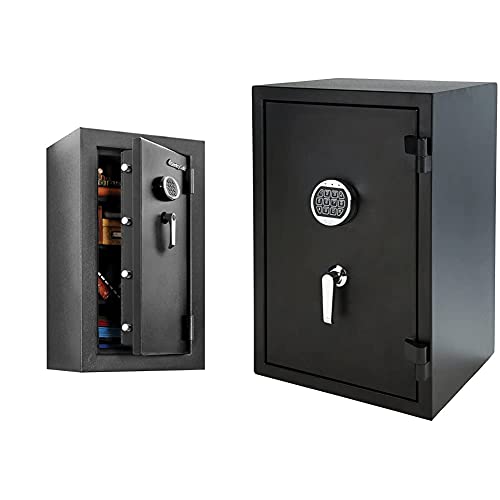
SentrySafe Waterproof and Fireproof Alloy Steel Digital Safe Box for Home with Code Button Keypad, 1.23 Cubic Feet, 17.8 x 16.3 x 19.3 Inches (exterior), SFW123GDC - Gun Safes And Cabinets - Amazon.com
View on AmazonReady to See Your Price?
Comparing quotes for home insurance vs renters insurance is the only way to know your real cost. It usually takes 10–15 minutes per quote. Try to compare at least 3–5 carriers side-by-side, keeping coverage limits and deductibles consistent. For renters, you can start here: Renters Insurance: Compare Quotes & Get the Right Coverage Today
For deeper details on what homeowners policies include, see: What Does Home Insurance Cover?
Getting Personalized Advice
Insurance isn’t one-size-fits-all. Depending on your state, property type, and risk tolerance, the right setup can look different. A licensed agent can help you fine-tune limits, choose endorsements, and compare carriers.
Your Next Step
- If you own your place, review your dwelling limit, deductible, and endorsements, then compare quotes: Homeowners Insurance: A Complete Guide to Coverage, Costs & Quotes
- If you rent, pick a realistic personal property limit and get quotes with replacement cost on contents: Renters Insurance: Compare Quotes & Get the Right Coverage Today
The bottom line on home insurance vs renters insurance: homeowners policies protect the building plus your belongings and liability; renters policies protect your belongings and liability—not the building. Choose based on whether you own or rent, then customize coverage and compare quotes to fit your budget and risk tolerance.
Recommended Resources
Insurance For Dummies?: Hungelmann, Jack
Whether you’re a homeowner or ... need on: ... Author Jack Hungelmann <strong>uses his twenty-five years of experience in the insurance industry to make buying insurance as simple as possible</strong>
Battery Doorbell Plus | Video Doorbell Camera | Amazon
<strong>Battery Doorbell Plus</strong> shows you more so you’ll know what’s happening at your front door, and can interact with visitors, from wherever you are. See more of who stops by and check in o
SentrySafe Waterproof and Fireproof Alloy Steel Digital Safe Box for Home with Code Button Keypad, 1.23 Cubic Feet, 17.8 x 16.3 x 19.3 Inches (exterior), SFW123GDC - Gun Safes And Cabinets - Amazon.com
<strong>SentrySafe Medium Gray Fireproof Safe and Waterproof Safe Box with Dial Combination, Home Security for Money, Documents, or other Valuables</strong>, 1.23 Cubic Feet, SFW123DSB
Related Articles
- Best Home Insurance for Renters: Compare Coverage, Cost & Top Picks
- What Does Renters Insurance Cover? Coverage, Limits, Exclusions & Add‑Ons Explained
- How Much Is Renters Insurance? Average Costs, Factors & Real Examples
- How to Find the Right Renters Insurance: Coverage, Costs, and Buying Tips
- Finding the Right Renters Insurance: How to Choose Coverage, Save Money, and Protect Your Belongings
- Understanding Renters Insurance Coverage: What It Covers, How Much You Need, and How to File a Claim
- Mortgage vs Home Insurance — What Every Homebuyer Needs to Know
- Get the Best Renters Insurance: Coverage, Costs, and Smart Savings