
Home Insurance in Indiana: Coverage, Costs & Best Companies
You’re shopping for home insurance in Indiana and the quotes feel all over the place. Is that normal? What does a solid policy actually include for a Hoosier home, and how much should you budget? Here’s what really matters so you can compare confidently, avoid common pitfalls, and get the right coverage at a fair price.
Home Insurance in Indiana: What’s Required and What’s Typically Covered
First, a quick relief: homeowners insurance isn’t required by Indiana law. But if you have a mortgage, your lender will require it to protect the home that secures the loan. Even if you own your home outright, most people keep coverage because one major storm or fire can undo years of savings.

Insurance for Dummies: Hungelmann, Jack
<strong>Manage life, health, and disability risks</strong> ― explore individual and group policies, understand Medicare basics, and evaluate long-term disability and long-term-care insurance ...
Check Price on AmazonMost Indiana homeowners carry an HO-3 (special form) policy, which typically includes:
- Dwelling coverage (Coverage A): Pays to rebuild or repair your home’s structure after a covered loss. Your limit should match the home’s reconstruction cost (what it costs to rebuild, not the market value). Insurers use estimating tools; supply details like square footage, roof type, and updates for accuracy.
- Other structures (Coverage B): Sheds, fences, detached garages. Typically 10% of your dwelling limit.
- Personal property (Coverage C): Your belongings. Standard policies often use ACV (actual cash value — replacement cost minus depreciation) unless you add replacement cost coverage (pays to replace new for old). Ask for replacement cost on contents; it’s a small premium bump with big value.
- Loss of use (Coverage D): Extra living expenses if you can’t live at home during repairs — hotel, short-term rental, meals beyond normal costs.
- Personal liability (Coverage E): Covers you if you’re legally responsible for injuries or property damage to others. Many Hoosier homeowners choose $300,000–$500,000. Consider a $1M umbrella if you have significant assets or a pool/trampoline.
- Medical payments to others (Coverage F): Small no-fault payments for minor injuries on your property, typically $1,000–$5,000.
- Deductible: The amount you pay out of pocket before insurance kicks in. In Indiana, you may see a standard flat deductible (like $1,000) and sometimes a separate wind/hail deductible, which can be a flat amount or a percentage of your dwelling limit (e.g., 1%). Percentage deductibles can significantly change your out-of-pocket after storms — know what you’re signing.
Common add-ons Indiana homeowners consider:
- Water/sewer backup and sump pump overflow: Covers damage from backed-up drains or sump failures — a common headache in heavy rains. Pick a realistic limit ($10,000–$25,000 is common; higher is available).
- Service line coverage: Pays to repair buried water, sewer, or power lines from the street to your home.
- Equipment breakdown: Covers costly failures of HVAC and major systems.
- Ordinance or law: Pays the extra cost to bring older parts of your home up to current code after a covered loss. Consider 25%–50% of Coverage A if your home is older.
- Scheduled personal property: Adds broader coverage and no deductible for high-value items like jewelry, firearms, or collectibles.
- Roof surface loss settlement: Some policies default to ACV on older roofs; ask for replacement cost if available, and whether impact-resistant (Class 4) shingles earn a discount.
Indiana-specific considerations:
- Mine subsidence (southwestern counties): Certain counties in southwestern Indiana have a history of underground mining. Many insurers must offer optional mine subsidence coverage there. If you’re in counties like Gibson, Pike, Warrick, Vanderburgh, Knox, Sullivan, Greene, Vigo, Clay (and several neighbors), ask your agent whether you’re in an eligible or recommended area.
- Earthquake endorsement: Indiana’s Wabash Valley Seismic Zone creates a low-to-moderate earthquake risk. Standard policies exclude earthquakes; you can add an endorsement.
- Flood insurance: Flooding (water rising from outside) is excluded from homeowners policies. Consider a separate flood policy through the NFIP or private markets if you’re near rivers like the Wabash, White, Tippecanoe, St. Joseph, or Ohio, or in urban flood-prone zones.
Want a quick refresher on the core parts of a policy? See: What Does Home Insurance Cover?
Average Home Insurance Costs in Indiana by Home Value and Location
Rates vary widely based on your home’s construction, roof age, claim history, credit-based insurance score, distance to a fire station/hydrant, and county-level storm risk. That said, here are typical annual premium ranges we see in many parts of Indiana for well-maintained, single-family homes with a $1,000–$2,500 deductible and good credit. Your quotes may fall outside these ranges — they’re examples, not guarantees.
By home value (reconstruction cost proxy):
- $200,000 home: roughly $900–$1,600 per year
- $300,000 home: roughly $1,100–$2,000 per year
- $500,000 home: roughly $1,800–$3,200 per year
By location (illustrative ranges for a $300,000 home):
- Indianapolis/Marion County: $1,200–$2,100 (urban theft risk and older housing stock in some neighborhoods can push higher)
- Fort Wayne/Allen County: $1,000–$1,800 (often competitive, especially for newer subdivisions)
- Evansville/Vanderburgh and surrounding southwestern counties: $1,300–$2,300 (tornado/wind exposure and mine-subsidence areas can influence pricing)
- South Bend/St. Joseph and Elkhart area: $1,100–$1,900 (lake-effect weather, hail, and winter losses factor in)
- Lake and Porter Counties (NW Indiana): $1,200–$2,200 (older roofs/homes and theft rates can affect quotes)
- Bloomington/Monroe County: $1,100–$1,900 (student rentals and short-term rentals may require different policy forms and pricing)
A quick example: Say you own a 2,000 sq. ft., 2010-built home in Hamilton County with a 5-year-old roof, no claims, and a $1,500 deductible. You might see quotes between $1,100 and $1,700 from mainstream carriers. Move that same profile to Vanderburgh County with a 12-year-old roof and add a separate 1% wind/hail deductible, and quotes could shift to $1,400–$2,200. Insurers price risk differently — which is why comparing 3–5 companies usually reveals a meaningful spread.
Indiana-Specific Risks: Weather and Regional Factors
Indiana’s losses are driven mostly by severe convective storms — the spring-to-summer mix of wind, hail, and tornadoes — and winter weather. Here’s how those play into coverage and pricing:

Moen Flo Smart Water Monitor and Automatic Shutoff Sensor, Wi-Fi Water Leak Detector for 3/4-Inch Diameter Pipe, 900-001 - Tub And Shower Faucets - Amazon.com
Moen Flo Smart Water Monitor and Automatic Shutoff Sensor, <strong>Wi-Fi Water Leak Detector for 3/4-Inch Diameter Pipe</strong>, 900-001 - Tub And Shower Faucets - Amazon.com
Check Price on Amazon- Tornadoes and straight-line wind: Peak in April–June but can happen any time. Expect insurers to look closely at roof condition and age; older roofs may be subject to ACV settlements or higher deductibles.
- Hail: Northern and central Indiana see regular hail events. Impact-resistant shingles can reduce future damage and may earn a discount.
- Heavy rain and flash flooding: Drainage backups and sump pump failures are common claim triggers. Standard policies exclude external flood — consider a flood policy and add sewer/water backup to your home policy.
- Winter storms and ice dams: Insulation and ventilation matter. Ask your insurer how ice-dam damage is handled and whether preventative upgrades affect pricing.
- Freeze and burst pipes: Keep heat on during cold snaps, especially in older or rural homes. Smart water-leak sensors can qualify for discounts.
- Mine subsidence: In parts of southwestern Indiana, ground movement from old mines can damage foundations. Consider the optional coverage if you’re in an affected area.
- Earthquake: Low-probability, higher-severity risk in the Wabash Valley Seismic Zone. If you want this protection, you’ll need an earthquake endorsement, often with a separate percentage deductible.
- Rural factors: Distance to a fire station or hydrant influences your ISO Public Protection Class (PPC) and your premium. If you’re in a rural area with volunteer fire service, make sure your agent has the exact distance to the nearest hydrant — it can change your rate tier.
How to Compare Home Insurance Quotes in Indiana
The fastest way to see what you would actually pay is to compare quotes from 3–5 carriers. Here’s how to make those quotes truly apples to apples:
- Nail down an accurate reconstruction cost
- Provide updates (roof, electrical, plumbing, HVAC), square footage, foundation type, and special features. Ask each carrier for their calculated replacement cost number and review it for reasonableness.
- Pick a deductible strategy that fits your savings
- $1,000–$2,500 is common. Consider separate wind/hail deductibles carefully; a 1% deductible on a $350,000 home means $3,500 out of pocket for a hail claim. If that’s too high, ask about a flat wind/hail option and the premium difference.
- Match key coverages on every quote
- Personal liability: Compare $300,000 vs $500,000. The jump to $500,000 often costs only a few dollars per month.
- Contents coverage: Replacement cost on personal property is worth pricing in.
- Water/sewer backup: Pick a limit (e.g., $10,000 or $25,000) and use the same number on each quote.
- Roof settlement: Confirm replacement cost vs ACV and any roof-surfacing schedule for older shingles.
- Ordinance or law: Especially important for homes built before 2000.
- Understand underwriting red flags
- Dog liability restrictions, pools/trampolines, wood-burning stoves, and roof age can affect eligibility or price. Disclose them upfront to avoid cancellations later.
- Credit-based insurance score matters in Indiana
- Indiana allows insurers to use credit-based insurance scores. Check your credit for errors and consider bundling to offset pricing if your credit is still improving.
- Vet the insurer, not just the price
- Financial strength (A- or better from AM Best), claim satisfaction, and local adjuster presence matter. Ask an agent about actual claim experiences in your county.
Helpful deep-dive on shopping smart: Home Insurance Guide 2026 — Compare Quotes, Coverage & Costs
Call-to-action: Want real numbers? Compare quotes from 3–5 Indiana carriers with the same deductible and key endorsements. It’s usually the quickest way to save without cutting essential coverage.
Discounts and Bundling Opportunities for Indiana Homeowners
Most carriers in Indiana offer a similar menu of discounts. Not all stack, and eligibility varies by company, but these are worth asking about:
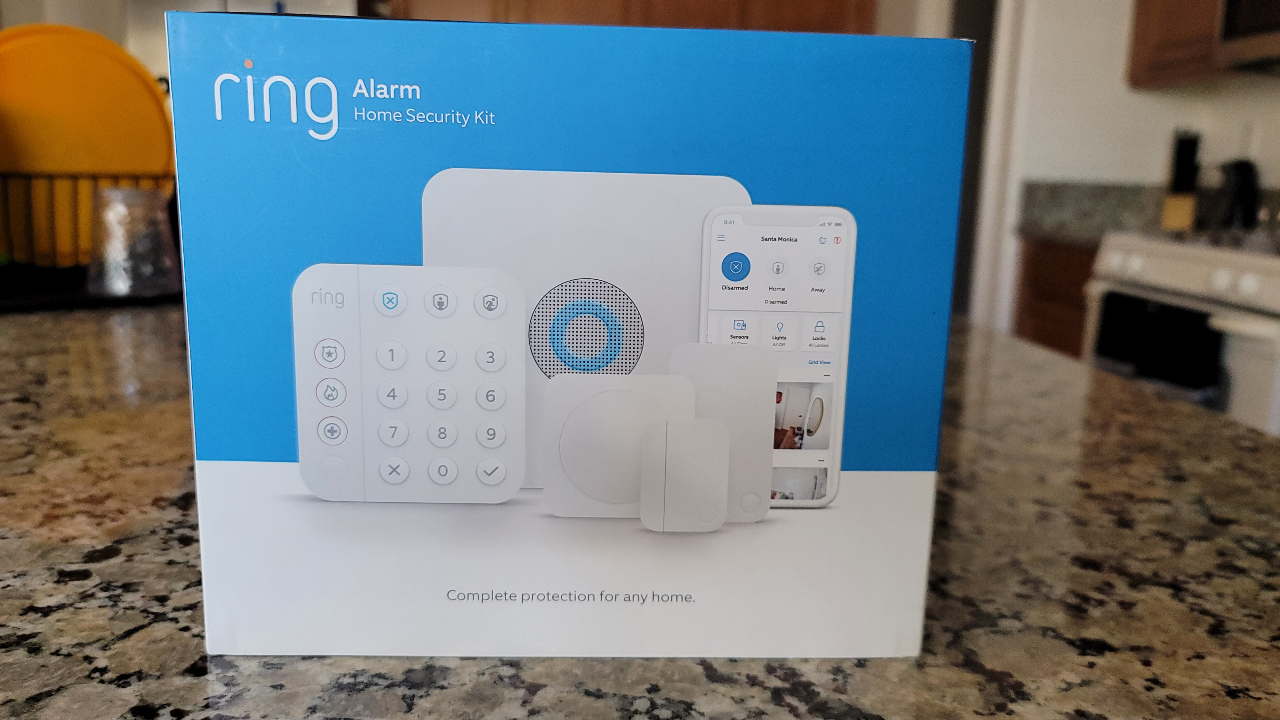
Ring Alarm 8-piece kit (2nd Gen) – home security system
View on Amazon- Home + Auto bundle: Often the largest discount. If you drive in-state, pricing your auto with the same company can trim both premiums. If you’re exploring a bundle, see also: Auto Insurance in Indiana: Rates, Requirements & How to Save
- Newer home or renovation discounts: Roof replacements, updated wiring (copper, not knob-and-tube), modern plumbing (PEX/copper vs. polybutylene), and new HVAC can all lower risk.
- Protective devices: Central burglar/fire alarms, monitored smoke/CO detectors, water-leak sensors, and automatic shutoff valves.
- Claim-free and loyalty: Longer periods without claims can reduce premiums; some carriers offer diminishing deductibles or accident forgiveness.
- Impact-resistant (Class 4) shingles: Particularly valuable in hail-prone counties.
- Paperless, autopay, paid-in-full: Small but easy savings.
- Mature homeowner: Some carriers offer discounts for homeowners above a certain age.
Pro tip: Ask your agent to run the bundle both ways (home as primary with auto added and vice versa). Some companies give a richer discount to one line, so the order can change the total.
Filing a Home Insurance Claim in Indiana
When something happens, here’s a practical, consumer-first way to navigate the process:
- Safety and mitigation first
- Shut off water, board up broken windows, and prevent further damage. Keep receipts — reasonable emergency repairs are typically covered.
- Document everything
- Take timestamped photos/videos of damage and the cause (e.g., hailstones, fallen limb). Create an itemized list of damaged property.
- Check your deductible versus likely damage
- If the loss is borderline, consider asking your agent hypothetically how a small claim could impact future rates before you file. One weather claim usually isn’t a big deal, but multiple small claims in a short span can raise premiums.
- Report the claim promptly
- Provide your policy number, time/date, and a short description. For theft or vandalism, file a police report.
- Meet the adjuster and review the estimate
- Walk them through all damages. If your policy pays replacement cost, you’ll often receive an initial ACV payment, with “recoverable depreciation” paid after repairs. Ask what documentation they need to release the holdback.
- Choose reputable, licensed Indiana contractors
- After hailstorms, “storm chasers” show up quickly. Get multiple bids, verify licenses and insurance, and be cautious about signing “assignment of benefits” or “direction to pay” documents you don’t understand.
- Use your policy’s dispute options if needed
- Many policies include an appraisal clause. If you can’t agree on scope or price, you and the insurer can each hire an appraiser and, if necessary, an umpire to resolve the difference. You can also contact the Indiana Department of Insurance for help if you feel your claim isn’t handled fairly.
Best Home Insurance Companies in Indiana: How to Choose
“Best” depends on your home, budget, and service preferences, but these categories can help you narrow the field:
- Strong agent networks and claims reputation: Auto-Owners, Erie, State Farm
- Competitive bundles with broad availability: State Farm, Allstate, American Family, Nationwide
- Great for military families (eligibility required): USAA
- Good for older or higher-value homes with custom features: Chubb, Cincinnati Insurance (availability varies; often via independent agents)
- Rural/farm-adjacent properties and outbuildings: Indiana Farm Bureau Insurance
- Flexible endorsements and pricing levers: Travelers, Nationwide
Use independent agents to compare several of these carriers side by side. Always verify availability in your ZIP code and ask about roof settlement terms, wind/hail deductibles, water backup limits, and any dog breed or trampoline restrictions.
FAQ: Common Questions About Indiana Homeowners Insurance
Is homeowners insurance required in Indiana?
- Not by state law. But lenders typically require it. Even without a mortgage, most homeowners keep coverage to protect against catastrophic losses.
How much is home insurance in Indiana?
- For many standard homes, quotes often fall between about $1,100 and $2,000 per year for a $300,000 dwelling limit with a $1,000–$2,500 deductible. Prices vary with location, roof age, credit, and coverage choices.
Are wind and hail covered in Indiana?
- Typically yes, but some policies have a separate wind/hail deductible (flat or percentage). Read the declarations page closely and ask whether your roof is covered at replacement cost or ACV.
Do I need flood insurance in Indiana?
- If your home is in a FEMA Special Flood Hazard Area or near rivers/low-lying land, strongly consider it. Flood is excluded from standard policies. Even outside high-risk zones, affordable preferred-risk policies may be available.
Does home insurance cover sump pump failure or sewer backup?
- Not by default. You can add a water/sewer backup endorsement and choose a limit (e.g., $10,000–$50,000). It’s one of the most common and useful add-ons in Indiana.
What deductible should I choose?
- Pick the highest deductible you could comfortably pay tomorrow. Consider your tolerance for a separate wind/hail deductible — a 1% deductible on a $400,000 home means $4,000 out of pocket after a hailstorm.
Are certain dog breeds excluded?
- Some insurers restrict liability for specific breeds or animals with a bite history. Disclose pets upfront; your agent can place you with a more flexible carrier if needed.
How does roof age affect my premium?
- Newer roofs typically lower your rate and may qualify for replacement cost settlement. Older roofs may be settled at ACV or subject to higher wind/hail deductibles.
What is mine subsidence insurance — and do I need it?
- It covers ground movement from old underground mines. If you live in designated southwestern counties, ask your agent whether it’s available or recommended for your address.
I rent out a room or host short-term rentals in Bloomington or Indianapolis. Am I covered?
- Standard homeowners policies often exclude business/short-term rental activity. You may need a specific endorsement or a different policy form (landlord or homeshare).
Your Next Step
- Quick win: Gather your current policy’s declarations page, note your roof age and any recent updates, then compare quotes from 3–5 Indiana carriers with the same deductible and key endorsements (water backup, roof settlement, ordinance/law).
- Want tailored guidance? A licensed local agent can help you set a realistic reconstruction cost, explain wind/hail deductibles, and flag county-specific risks like mine subsidence.
Call-to-action: The fastest way to see what you’d actually pay for home insurance in Indiana is to compare side-by-side quotes from multiple carriers. Keep coverage terms identical, then choose the company that balances price, coverage, and claims reputation.
Note: Insurance pricing and availability change frequently and vary by individual circumstances. For personalized recommendations, consult a licensed Indiana agent.
Recommended Resources
Insurance for Dummies: Hungelmann, Jack
<strong>Manage life, health, and disability risks</strong> ― explore individual and group policies, understand Medicare basics, and evaluate long-term disability and long-term-care insurance ...
Moen Flo Smart Water Monitor and Automatic Shutoff Sensor, Wi-Fi Water Leak Detector for 3/4-Inch Diameter Pipe, 900-001 - Tub And Shower Faucets - Amazon.com
Moen Flo Smart Water Monitor and Automatic Shutoff Sensor, <strong>Wi-Fi Water Leak Detector for 3/4-Inch Diameter Pipe</strong>, 900-001 - Tub And Shower Faucets - Amazon.com
Ring Alarm 8-piece kit (2nd Gen) – home security system
<strong>24/7 Professional Monitoring</strong> If a break-in or emergency is detected, we’ll request emergency response.² <strong>24/7 Professional Monitoring</strong> · If a break-in or emergency is d
Related Articles
- Auto Insurance in Indiana: Rates, Requirements & How to Save
- Home Insurance in Illinois: Coverage, Costs & Best Companies
- Health Insurance in Indiana: Plans, Costs & How to Enroll
- Life Insurance in Indiana: What Residents Need to Know
- Home Insurance in Idaho: Coverage, Costs & Best Companies
- Home Insurance in Ohio: Coverage, Costs & Best Companies
- Home Insurance in Kentucky: Coverage, Costs & Best Companies
- Home Insurance in Nebraska: Coverage, Costs & Best Companies