
FDIC Insurance Explained: What It Covers, Limits, and How It Protects Your Money
You hear “FDIC insured” every time a bank ad runs, but what does that actually mean for your money? If you’ve wondered how FDIC insurance works, what it covers, and how much protection you really have, you’re in the right place.
Below, we break down FDIC insurance in plain English, show you how the $250,000 limit actually applies, what’s not covered (this trips up a lot of people), and how to double-check that all your cash is protected—without guesswork.
FDIC Insurance Explained
FDIC insurance is a federal guarantee that protects depositors if an FDIC‑insured bank fails. “Insured” means the bank participates in the Federal Deposit Insurance Corporation program and pays into it, so if the bank goes under, the FDIC steps in to make customers whole—up to legal limits.
- Protection applies to covered deposits (your money in eligible bank accounts), not to investments.
- The standard coverage limit is $250,000 per depositor, per insured bank, per ownership category. “Per ownership category” means how the account is titled—single, joint, certain retirement accounts, and certain trust accounts. Each category has its own separate $250,000 coverage per bank.
If you remember one thing, make it this: FDIC insurance protects cash deposits up to $250,000 per depositor, per bank, per ownership category. You can often expand protection above $250,000 by using multiple banks or different ownership categories—more on that below.
Tip: If you find any insurance terms unfamiliar, keep our quick reference handy: see our Insurance Glossary (plain‑English definitions of “coverage,” “beneficiary,” and more). Insurance Glossary: Key Terms You Need to Know
What FDIC Insurance Covers and Coverage Limits
Covered account types (what’s protected)
FDIC insurance typically covers deposits at FDIC‑insured banks, including:
- Checking accounts and NOW accounts (interest‑bearing checking)
- Savings accounts
- Money market deposit accounts (bank savings-type accounts; not to be confused with money market mutual funds)
- Certificates of deposit (CDs), including many brokered CDs issued by insured banks
- Cashier’s checks, money orders, and other official items issued by your bank
Coverage applies to principal plus accrued interest through the date the bank fails, up to your insurance limit.
Ownership categories and the $250,000 standard limit
“Per depositor, per bank, per ownership category” is where most people get lost, so let’s translate:
- Per depositor: You personally get your own coverage limits (separate from your spouse, business, or trust).
- Per bank: Your coverage is calculated separately at each FDIC‑insured bank. Two different branches of the same bank count as one bank; two different banks give you two sets of coverage.
- Per ownership category: Accounts titled the same way at the same bank are combined for coverage purposes. Major categories include:
- Single accounts (owned by one person): Up to $250,000 total at that bank
- Joint accounts (two or more co‑owners, each with equal rights): Up to $250,000 per co‑owner at that bank
- Certain retirement accounts (like IRAs) that hold deposits (e.g., IRA CDs): Up to $250,000 per person at that bank
- Trust accounts (revocable or irrevocable, including Payable‑on‑Death/“POD”): Generally insured based on the number of unique beneficiaries, often at least $250,000 per unique beneficiary, per owner, at that bank, subject to FDIC rules and documentation
- Business accounts (corporations, LLCs, partnerships): Up to $250,000 per legal entity at that bank, separate from the owners’ personal accounts

Make Your Own Living Trust: Clifford Attorney, Denis
Denis Clifford, a graduate of Columbia Law School, where he was an editor of The Law Review, is a lawyer who specializes in estate planning. He is the author of many Nolo titles including Quick and Le
Check Price on AmazonNote on trusts: The FDIC modernized and simplified trust coverage rules in 2024. The big idea remains that coverage for trust deposits is based on qualifying beneficiaries and proper titling/records. Large or complex trusts can have coverage well above $250,000, but it depends on the details. When in doubt, use the FDIC’s estimator tool or ask your bank to help verify.
Real‑world coverage scenarios
Scenario A: Single account at one bank
- You keep $220,000 in a savings account in your name only at Bank A. If Bank A fails, you’re fully insured because you’re under the $250,000 limit for the single ownership category at that bank.
Scenario B: Joint account plus singles at one bank (married couple)
- Alex has $250,000 in a single account at Bank B.
- Jordan has $250,000 in a single account at Bank B.
- They also share a joint checking account at Bank B with $500,000.
- Coverage at Bank B: Alex single $250,000 (fully insured) + Jordan single $250,000 (fully insured) + Joint $500,000 (insured because it’s $250,000 per co‑owner). Together, they’re fully insured for $1,000,000 at the same bank because the money is spread across separate ownership categories.
Scenario C: Spreading funds across banks
- You keep $300,000 in single accounts but split it: $200,000 at Bank C and $100,000 at Bank D. You’re fully insured because each bank calculates coverage separately and you’re under $250,000 at each.
Scenario D: POD/beneficiary accounts
- You have a POD (Payable‑on‑Death) savings account at Bank E listing two unique beneficiaries. Generally, your coverage in the trust/POD category could be at least $500,000 at that bank ($250,000 per unique beneficiary), assuming proper documentation and FDIC rules are met.
What FDIC Insurance Does Not Cover (Common Misconceptions)
FDIC insurance protects deposits, not investments or everything a bank sells. It does not cover:
- Stocks, bonds, mutual funds, exchange‑traded funds (ETFs)
- Money market mutual funds (different from money market deposit accounts)
- Annuities, even if purchased at a bank
- Crypto assets and stablecoins
- Safe deposit box contents
- Losses from theft or fraud on your account (those are typically handled under banking laws like Regulation E for unauthorized electronic transfers, not FDIC insurance)
- Insurance policies or securities products offered through the bank’s brokerage arm
- Credit union deposits (those are generally insured separately by the NCUA—National Credit Union Administration—through the National Credit Union Share Insurance Fund, with similar $250,000 limits)
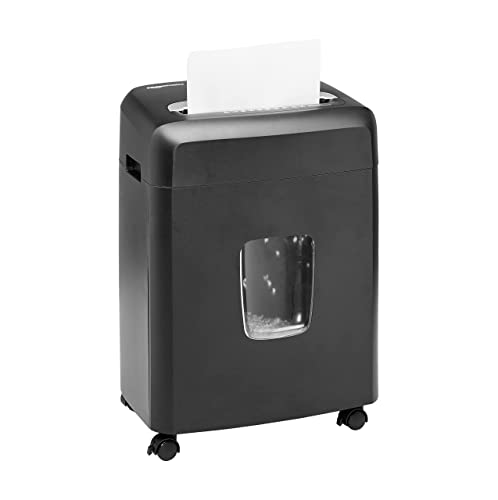
Amazon Basics 12 Sheet (new model) Micro Cut Paper ...
View on AmazonGray areas you should verify:
- Payment apps and digital wallets: Some services place your funds at partner banks in “pass‑through” accounts, which may be eligible for FDIC coverage if certain conditions are met. Coverage isn’t automatic—check the app’s disclosures, which partner bank(s) they use, and whether your funds are in a qualifying deposit account in your name or via pass‑through structures.
- Prepaid cards: Many are issued by banks, and underlying funds may be held at insured banks. Coverage can depend on proper registration and recordkeeping. Ask the issuer for specifics.
- Brokered CDs: When a brokerage places your CD with an FDIC‑insured bank, you generally get FDIC coverage up to $250,000 per bank, per ownership category. But if you hold multiple brokered CDs issued by the same bank across accounts, those totals combine for FDIC limits.
How FDIC Insurance Works If a Bank Fails
If your bank fails, you usually don’t need to file a claim. Here’s what typically happens:
Bank closure and FDIC appointment
- Regulators close the bank and appoint the FDIC as receiver. This often happens on a Friday after business hours.
Payoff or purchase‑and‑assumption (P&A)
- The FDIC either:
- Pays depositors directly up to insured limits (a “deposit payoff”), or
- Finds a healthy bank to assume the deposits (a P&A). In a P&A, your accounts are transferred to the new bank, often over a weekend, so you can access your money by the next business day.
- The FDIC either:
Access to funds
- Typically, insured depositors have access to their funds by the next business day. Debit cards and online banking may resume under the new bank. Outstanding checks may clear.
CDs and interest
- Your insured principal and accrued interest through the date of failure are protected up to your coverage limit. Early withdrawal penalties are often waived for CDs from a failed bank, but confirm details in the FDIC’s information for that bank.
What if you’re over the limit?
- Amounts above your insured limit are considered “uninsured.” The FDIC, as receiver, may pay periodic dividends as the bank’s assets are sold. You may recover some portion over time, but there’s no guarantee of full recovery for uninsured amounts.
How you’ll be notified
- The FDIC usually posts details on its site and mails information to customers. Keeping your mailing address and email current with your bank helps ensure you receive updates.
What to Look For When Checking Your FDIC Coverage
1) Verify the bank is FDIC‑insured
- Use the FDIC’s BankFind Suite (a public lookup tool) or ask your bank directly. Look for the official FDIC sign at branches and on the bank’s website.
2) Count by ownership category—not by number of accounts
- Multiple accounts in the same ownership category at the same bank are combined for coverage. For example, two single savings accounts in your name at Bank A share one $250,000 limit.
3) Make sure your account titles and beneficiaries are correct
- For joint accounts, all co‑owners must have equal rights (each can withdraw) to qualify as a joint category.
- For POD/beneficiary accounts, ensure beneficiaries are properly named in the bank’s records. “Beneficiary” means the person(s) who inherit the funds upon your death. Missing or outdated beneficiary records can reduce coverage.
- For trusts, confirm the titling (e.g., “Jane Doe Revocable Trust”) and that the bank has current records. Coverage depends on documentation and qualifying beneficiaries.
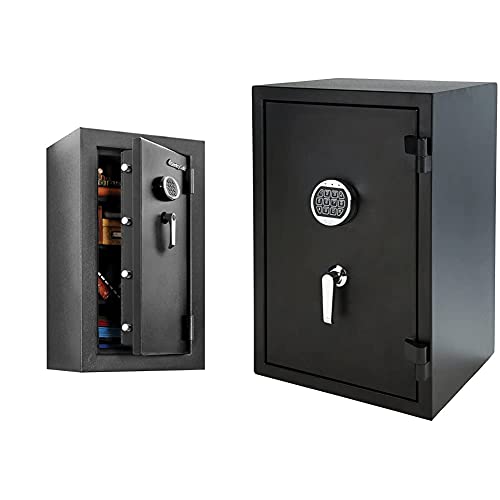
SentrySafe Waterproof and Fireproof Alloy Steel Digital Safe Box for Home with Code Button Keypad, 1.23 Cubic Feet, 17.8 x 16.3 x 19.3 Inches (exterior), SFW123GDC - Gun Safes And Cabinets - Amazon.com
View on Amazon4) Special cases that can change your coverage math
- Retirement accounts: Only deposit products inside IRAs (like CDs or savings) are FDIC‑insured in the “certain retirement accounts” category. Stocks, mutual funds, or annuities in an IRA are not FDIC‑insured.
- Business vs. personal: A properly titled business account (e.g., ABC LLC) is insured separately from your personal accounts, up to $250,000 per bank for the business entity.
- Payment apps and prepaid cards: Ask where your funds are held, how they’re titled, and whether pass‑through coverage applies to you specifically.
- Brokered CDs: Track which issuing bank each CD comes from. If several CDs point to the same bank, they aggregate toward that bank’s FDIC limit for you.
5) Strategies to maximize coverage (without moving your whole life around)
- Use multiple banks: Splitting large cash balances across more than one FDIC‑insured bank creates a new $250,000 limit per bank, per category.
- Leverage ownership categories: Combine single, joint, and qualifying trust/POD accounts to expand coverage at the same bank. A married couple can often insure well over $1 million at one bank by using single, joint, and POD accounts correctly.
- Add qualifying beneficiaries to POD/trust accounts: In most cases, each unique beneficiary increases coverage for that ownership category at that bank (subject to FDIC rules and proper documentation).
- Consider brokered CDs carefully: Buying CDs issued by different FDIC‑insured banks through a brokerage can multiply coverage—just track issuing banks and ownership categories.
- Keep records current: Names, beneficiaries, and titles must match what the bank has on file. Outdated records can undercut your coverage.
Need a refresher on insurance concepts like “coverage limits” and “beneficiaries”? Our Insurance Basics for Beginners can help you build the big picture while you fine‑tune the details. Insurance Basics for Beginners: What to Know Before You Buy
—
Ready to protect more than just your cash? While you’re tightening up FDIC coverage, it’s a smart time to pressure‑test your broader safety net. The fastest way to see what you’d actually pay for home, auto, or life insurance is to compare quotes from 3–5 carriers. A few minutes can reveal real savings and better coverage.
FAQs: Quick Answers About FDIC Insurance
- Is FDIC insurance automatic? Yes. If your bank is FDIC‑insured and your funds are in covered deposit accounts, you’re insured up to the legal limits—no enrollment needed.
- Does FDIC insurance have a deductible? No. There’s no deductible (the amount you pay out of pocket before insurance kicks in). Coverage applies up to your limit; amounts above that are uninsured.
- How fast will I get my money if my bank fails? In most cases, insured funds are available by the next business day, often through a transfer to a healthy bank. Timelines can vary depending on the resolution method.
- Are credit union deposits FDIC‑insured? No. Most credit unions are insured by the NCUA, with similar standard $250,000 limits, but it’s a separate system.
- Does FDIC insurance cover fraud or identity theft losses? Not directly. Those issues are usually handled under electronic funds transfer laws and your bank’s policies, not FDIC insurance.
When To Get Personalized Help
- Talk to your bank: Ask them to walk through your account titles and beneficiaries and to help you confirm coverage using the FDIC’s estimator tool.
- Complex trusts or large balances? Consider consulting your estate attorney and asking the bank to coordinate documentation so your coverage reflects your intent.
- Insurance questions beyond your bank accounts? A licensed insurance agent can help you right‑size auto, home, or life coverage for your situation.
For a broader look at why insurance sits alongside your emergency fund as a financial essential, see Why Insurance Matters. Why Insurance Matters for Everyone: Protect Your Health, Income, and Assets
Next Steps
- Verify your bank is FDIC‑insured and confirm your current account titles and beneficiaries.
- Map your balances by ownership category at each bank. If any category is over $250,000 at a single bank, adjust by using additional banks or categories.
- If you’re unsure, ask your bank to help you run the FDIC estimator for your situation.
- While you’re at it, get free, personalized insurance quotes to make sure the rest of your financial life is protected. Comparing 3–5 carriers is typically the fastest way to see real prices and coverage differences.
Note: This article is for general education. FDIC rules can be nuanced, especially for trusts and special accounts. Coverage depends on your specific facts and proper titling/documentation, and rules can change. Always confirm details with your bank or the FDIC, and consult qualified professionals for legal or estate‑planning questions.
Recommended Resources
Make Your Own Living Trust: Clifford Attorney, Denis
Denis Clifford, a graduate of Columbia Law School, where he was an editor of The Law Review, is a lawyer who specializes in estate planning. He is the author of many Nolo titles including Quick and Le
SentrySafe Waterproof and Fireproof Alloy Steel Digital Safe Box for Home with Code Button Keypad, 1.23 Cubic Feet, 17.8 x 16.3 x 19.3 Inches (exterior), SFW123GDC - Gun Safes And Cabinets - Amazon.com
<strong>SentrySafe Medium Gray Fireproof Safe and Waterproof Safe Box with Dial Combination, Home Security for Money, Documents, or other Valuables</strong>, 1.23 Cubic Feet, SFW123DSB
Amazon Basics 12 Sheet (new model) Micro Cut Paper ...
Micro Cut · Strip Cut · Height · Up to 9.9 in · 10.0 to 15.9 in · 16.0 to 21.9 in · 22.0 in & above · Premium Brands · Premium Brands · Depth · Up to 3.9 in · 4.0 to 6.9 in · 7.0 to 9.9 in · 10.0
Related Articles
- Home Insurance Deductibles Explained: How They Work and How to Choose
- Business Insurance Types Explained: What Each Policy Covers and How to Choose
- How Business Insurance Protects Your Company: Key Benefits and What They Cover
- Insurance Companies Explained: How They Work and How to Choose
- Frequently Asked Insurance Questions: Key Answers Consumers Need
- What Is Comprehensive Insurance? A Plain‑Language Guide
- What Is Liability Insurance? Types, Coverage, and Who Needs It
- Why Insurance Matters for Everyone: Protect Your Health, Income, and Assets