
Affordable Business Liability Coverage: Get the Right Protection for Less
You’re trying to protect your business without overpaying. Smart. The goal of affordable business liability coverage is simple: get the right protection for the risks you actually face, at a price that makes sense for your size and industry. This guide breaks down what’s covered, what drives the cost, how to lower premiums without creating gaps, and how to shop quotes the right way.
Tip: If you run into unfamiliar terms, keep this handy: our Insurance Glossary (plain-English definitions for common terms).
What “affordable business liability coverage” really includes
When we talk about affordable business liability coverage, we’re talking about policies that protect your business if someone claims you caused injury, property damage, or a financial loss — without buying extras you don’t need. Here are the core policy types most small businesses consider:
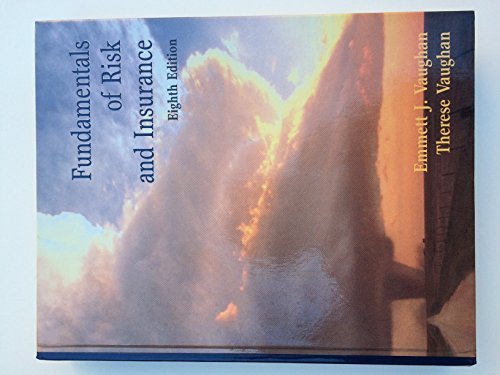
Fundamentals of Risk and Insurance: Vaughan, Emmett J.
Emmett J. Vaughan ... Fundamentals of Risk and Insurance, 11th Edition <strong>presents a thorough and comprehensive introduction to the field of insurance while emphasizing the consumer</strong>.
Check Price on AmazonGeneral liability insurance (GL)
- What it covers: Third-party bodily injury (someone slips and gets hurt at your shop), third-party property damage (you accidentally damage a client’s property), and advertising/personal injury (like libel or slander).
- How it’s structured: Typically has a per-occurrence limit (the max the insurer pays for a single claim) and a general aggregate limit (the max the insurer pays in total for all claims during the policy period). Many small businesses choose $1 million per occurrence / $2 million aggregate.
- Key exclusions: Professional services (work that requires specialized advice is usually excluded), damage to your own property, workers’ injuries, pollution, and electronic data. These can surprise people; read the exclusions list carefully.
- Common endorsements:
- Additional insured (extends your policy to cover a client, landlord, or general contractor for your work when they’re named on your policy).
- Primary and noncontributory (your insurer pays first without seeking contribution from the additional insured’s policy).
- Waiver of subrogation (your insurer won’t try to recover money from the party who caused the loss). These three endorsements often appear in contracts and can impact your premium.
- Hired and non-owned auto (adds liability coverage when employees use personal or rented vehicles for business).
Professional liability (errors & omissions, or E&O)
- What it covers: Claims that your professional advice or service caused a client a financial loss — for example, an IT consultant’s recommendation leads to downtime, or a bookkeeper’s mistake causes penalties.
- Claims-made vs. occurrence: E&O is typically written on a claims-made form (the policy that’s active when the claim is made is the one that responds). Watch the retroactive date (the earliest date your past work is covered). Gaps between policies can erase prior acts coverage.
- Key exclusions: Fraud, intentional wrongdoing, and sometimes failure to maintain specific procedures if required by the policy.
- Watch for: A “consent to settle” clause and “hammer clause” (limits how much the insurer will pay if you refuse a recommended settlement). Ask how that works.
Product liability
- What it covers: Claims that a product you make, distribute, or sell injured someone or damaged property (think a faulty device causing burns, or contaminated food causing illness).
- Where it lives: Often included in general liability but can be excluded for higher-risk products or extended via specialized product liability policies.
- Key endorsements/exclusions: Designated products exclusions, foreign-manufactured goods, or imported items may change pricing and availability. A separate product recall endorsement can help with recall costs but is usually an extra charge.
Employers’ liability and workers’ compensation
- Workers’ compensation covers employee injuries and illnesses that arise out of work. It pays medical bills and a portion of lost wages.
- Employers’ liability (Part B of a workers’ comp policy) covers lawsuits by employees for work-related injuries not covered by the workers’ comp exclusive remedy. Limits are often set at $100,000 per accident / $500,000 policy aggregate, but you can choose higher.
- State rules: Workers’ comp requirements vary by state and by number of employees. In some states, you need it as soon as you hire your first employee; in Texas, most private employers can opt out. Check your state’s rules.
Cyber liability (data breach and privacy)
- What it covers: Costs to respond to a data breach or cyberattack — forensic IT, notification, credit monitoring, ransomware response — and liability if customer data is exposed.
- Key underwriting factors: Use of multi-factor authentication (MFA), data backups, endpoint protection, and employee phishing training. Better controls can mean better pricing and broader coverage.
- Watch for: Sublimits for ransomware, funds transfer fraud, and business interruption. Make sure they’re meaningful for your operations.

Yubico - YubiKey 5C NFC - Multi-Factor authentication (MFA) Security Key and passkey, Connect via USB-C or NFC, FIDO Certified - Protect Your Online Accounts : Electronics
View on AmazonA quick word on key terms
- Deductible: The amount you pay out of pocket before insurance kicks in.
- Defense inside vs. outside limits: If defense costs are inside the limit, legal expenses reduce the amount left to pay settlements. Outside means legal costs don’t erode your policy limit.
- Blanket additional insured: Automatically covers certain partners or clients as additional insureds without naming them individually — useful if you have many contracts.
Common cost-affecting exclusions and endorsements to know
- Professional services exclusion in GL: If you advise clients, you need E&O because GL won’t cover professional mistakes.
- Designated work or location exclusions: Can carve out exactly the projects or sites you most need covered. Read carefully.
- Liquor liability: Usually excluded unless you add it (important for bars, restaurants, or events).
- Abuse and molestation, assault and battery: Often excluded for certain industries (childcare, hospitality), but can sometimes be added with underwriting.
- Cyber and electronic data exclusions in GL: Don’t mistake GL for cyber coverage; add a cyber policy or endorsement if you store customer data.
For a deeper dive into terminology, see our Insurance Glossary: Key Terms You Need to Know (plain-English definitions).
What drives the price — and what “affordable” usually looks like
Insurers price liability coverage on exposure — the chance and size of a potential loss. The main levers are:
- Industry/classification: A coffee shop has different risks than a roofing contractor. Higher hazard classes cost more.
- Revenue and payroll: More sales and more employees generally mean more exposure, which increases premium. Some policies use revenue (GL, product, E&O) while others use payroll (workers’ comp) as a rating basis.
- Claims history: Prior claims or frequent incidents raise rates. Insurers look at “loss runs” (a report of your past claims).
- Location: Legal environment, weather, crime, and medical costs vary by state and even by ZIP code.
- Coverage limits and deductibles: Higher limits cost more. Choosing a higher deductible (the amount you pay before insurance responds) can lower premium.
- Contract requirements and endorsements: Primary/noncontributory wording, waiver of subrogation, or strict additional insured terms can add cost.
- Risk controls: Safety programs, written procedures, cybersecurity hygiene — all can earn credits.
Typical small-business price ranges (not quotes, just ballparks; actual costs vary by state, industry, revenue, and history):
- General liability ($1M/$2M limits):
- Low-risk professional office (consultant/coach): typically $400–$800 per year.
- Retail shop/cafe: typically $600–$1,500 per year.
- Contractors/trades: commonly $1,000–$2,500+ per year, depending on trade and gross receipts.
- Professional liability (E&O):
- Solo consultant or small agency: typically $500–$1,500 per year for $1M limits.
- IT/technology services: commonly $800–$2,000+ depending on contracts and revenue.
- Product liability:
- Low-risk, U.S.-sourced products: often $1,000–$3,000+ per year for small volumes.
- Imported or higher-hazard products: $2,500–$5,000+ and may require specialized carriers.
- Cyber liability:
- Micro to small businesses: typically $500–$2,500 per year for $250k–$1M in limits, driven heavily by your security controls.
- Employers’ liability (with workers’ comp): Often included in workers’ comp pricing; increasing Part B limits may add a few hundred dollars. Workers’ comp itself varies widely by state and class.
Real-world scenarios
- Example 1: A 4-person marketing agency, $650k revenue, no claims.
- GL $1M/$2M: around $500–$900/year.
- E&O $1M: around $700–$1,200/year.
- Cyber $250k–$500k: around $600–$1,200/year.
- Combined: roughly $1,800–$3,300/year.
- Example 2: A small residential electrician, $900k revenue, 6 employees, clean history.
- GL $1M/$2M with additional insured/primary-noncontributory: $1,200–$2,200/year.
- Workers’ comp: varies by state; could range from $8,000–$20,000+ based on payroll and class rate.
- Add hired/non-owned auto: +$150–$350/year.
- Example 3: An e-commerce seller importing kitchen gadgets, $500k revenue.
- GL with products: $1,200–$2,500/year depending on product risk and manufacturing controls.
- Consider product recall endorsement: +$250–$750/year depending on limits.
These ranges help you judge affordability versus underinsurance. If a quote is far below these ballparks, check for exclusions or very low sublimits. If far above, ask what risk factors the carrier sees and what you can change.
Proven ways to lower premiums without creating gaps
There are legitimate ways to reduce cost while keeping essential protection. Focus on credits and smart structure, not just stripping coverage.

Notrax 109 Brush Step Carpeted Indoor/Outdoor Entrance Mat for Home or Office, 2' x 3', Absorbent Slip Resistant Heavy Duty Entry Mat, Brown, 109S0023BR : Industrial & Scientific
View on AmazonBundle policies with a Business Owner’s Policy (BOP): A BOP typically packages general liability and commercial property (your stuff and your space) with business income coverage at a discounted rate. Many microbusinesses save versus buying separately. If you’re exploring broader savings across small-business policies, see Affordable Business Insurance Options: Smart, Budget-Friendly Coverage for Small Businesses.
Choose higher deductibles thoughtfully: A higher deductible (the amount you pay before insurance responds) can lower your premium. Pick a number you can actually afford on a bad day — not just the cheapest price on paper.
Tighten contracts and risk transfer:
- Use customer contracts with clear scopes of work, limitation of liability, and mutual indemnity/hold harmless language (your attorney can help tailor this).
- Collect certificates of insurance (COIs) from vendors and subcontractors, naming your business as additional insured where appropriate.
- Require waivers of subrogation and primary/noncontributory wording when you’re hiring subs. This shifts risk upstream and can reduce your loss exposure.
Implement risk management programs:
- Safety training, documented procedures, incident logs, and regular inspections demonstrate control and can earn credits.
- For cyber: enable multi-factor authentication (MFA), maintain secure, tested backups, use endpoint protection, and run phishing training. Carriers increasingly require these for preferred pricing.
Improve premises and product safety:
- Anti-slip mats, well-marked exits, lighting, and regular maintenance lower slip-and-fall frequency.
- For products: quality control documentation, vendor agreements, and traceable lot coding can open doors to more carriers and better rates.
Workers’ comp cost savers that help liability too:
- Accurate payroll classifications, experience mod reviews, and a return-to-work program reduce both comp costs and your overall claims profile.
Pay annually and ask about credits: Many carriers offer a paid-in-full discount. Ask about association, alarm/sprinkler, and multi-policy credits.
Keep your losses clean: Quick reporting, cooperating on claims, and fixing root causes after incidents can prevent repeat losses that drive up renewal pricing.
Ready to see your actual numbers? The fastest way to find out what you would pay is to compare quotes from 3–5 carriers. Here’s how to do it efficiently: How to Get Business Insurance Quotes: What to Ask, What to Provide, and How to Compare.
Your shopping playbook: compare coverage, not just price
A low premium that fails when you need it is not affordable — it’s expensive. Here’s how to shop smart.
What to look for when comparing quotes
- Limits and structure:
- Are you getting $1M per occurrence / $2M aggregate on GL? Are defense costs outside the limit (better) or inside (less protection)?
- For E&O and cyber, what’s the retroactive date (earliest date of covered past work)? Any gap can leave prior work uninsured.
- Exclusions and sublimits:
- Look for designated work or product exclusions, cyber/data exclusions in GL, contractual liability carve-backs, and assault/battery or abuse/molestation exclusions if relevant to your operations.
- Check sublimits for things like products/completed operations, personal/advertising injury, cyber extortion, business interruption, and funds transfer fraud.
- Required endorsements for contracts:
- Additional insured, waiver of subrogation, and primary/noncontributory — confirm they’re included as blanket where feasible, and ask whether there’s an additional premium.
- Claims handling and defense:
- Does the policy allow you to select from a panel of approved defense counsel? Is there a consent-to-settle or hammer clause in E&O/cyber?
- Deductibles and retentions: Verify the deductible (your out-of-pocket before insurance responds) and make sure it aligns with your cash cushion.
Smart questions to ask an agent or broker
- Based on my operations, what exclusions concern you and why? How can we address them without overspending?
- Are defense costs inside or outside the limits for each policy?
- For E&O/cyber, what’s my retroactive date and what happens at renewal to keep prior acts coverage intact?
- What risk management steps would most improve my pricing with your carriers?
- Can we structure blanket additional insured and waiver of subrogation endorsements to meet most contracts?
- Are there minimum earned premiums or fees I should know about if I cancel midterm?
Red flags that often signal “too cheap to be true”
- A quote far below market with broad-sounding marketing but lots of fine-print exclusions (especially “designated work” or “prior work” exclusions).
- Defense costs inside the limit with low total limits.
- A surplus-lines carrier with no clear reason (surplus lines can be fine, but you should understand why admitted carriers declined).
- Unclear or missing retroactive dates on claims-made policies.
- High minimum earned premium or nonrefundable fees.
Check the insurer’s financial strength and service
- Financial ratings: Look for A- or better from A.M. Best (a common rating agency that evaluates an insurer’s ability to pay claims).
- Claims reputation: Ask about average response times, local adjusters, and 24/7 reporting.
- Loss control support: Many carriers offer free safety resources, contract reviews, and cyber training — those add value beyond price.
When to consult a broker or attorney
- Broker: If your industry is specialized, you’ve had claims, or you need help marketing to multiple carriers at once, a commercial insurance broker can be worth it. They understand which carriers like your type of risk and how to negotiate terms.
- Attorney: Before you sign contracts with indemnity/hold harmless requirements, or if you’re drafting your own client agreements, have an attorney align the language with your insurance. A small tweak (like matching your limitation of liability to your insurance limits) can avoid uninsured exposures.
State/legal minimums you might need to meet
- Workers’ compensation is required in most states when you have employees (the threshold varies by state and business type). Some states also require coverage for contractors and part-time staff.
- Commercial auto liability is required if you title vehicles in the business name; personal auto policies generally exclude business use beyond incidental errands.
- Certain professions (e.g., architects, lawyers, some healthcare roles) may have E&O requirements set by licensing boards or clients.
- General liability usually isn’t mandated by law, but landlords, clients, and general contractors often require it by contract.
How to keep your coverage affordable year after year
- Review annually: Confirm revenues, payroll, and operations so you’re not overpaying for exposures you no longer have — or underreporting and risking a painful audit.
- Update endorsements: If contract requirements changed, update your additional insured/waiver/primary-noncontributory wording in one sweep.
- Track certificates: Keep COIs from vendors and subs current; expired documents can come back to bite you during claims.
- Document safety and training: Keep logs; you may get credits at renewal.
- Compare at renewal: Even if you like your carrier, a quick market check every 2–3 years keeps pricing honest.
Want more ways to trim cost without losing essential protection? See Affordable Business Insurance Options: Smart, Budget-Friendly Coverage for Small Businesses.
The fastest smart next step
Getting tailored quotes is the only way to know what you’ll actually pay. Most small businesses get the best results by comparing 3–5 carriers side by side. If you’re ready, here’s a simple, step-by-step process to request, review, and compare proposals: How to Get Business Insurance Quotes: What to Ask, What to Provide, and How to Compare.
A quick note: This guide gives general information. For personalized advice, speak with a licensed insurance agent or broker who understands your state and industry. They can help you balance cost and protection based on your specific contracts, operations, and risk tolerance.
What to do now:
- Make a quick list of your operations, annual revenue/payroll, and any contracts with insurance requirements.
- Decide on target limits (most start with GL $1M/$2M; add E&O or cyber if you advise clients or store data).
- Compare quotes from multiple carriers, focusing on exclusions, endorsements, and defense cost treatment — not just price.
Do that, and you’ll be well on your way to truly affordable business liability coverage — protection that fits your business and your budget.
Recommended Resources
Fundamentals of Risk and Insurance: Vaughan, Emmett J.
Emmett J. Vaughan ... Fundamentals of Risk and Insurance, 11th Edition <strong>presents a thorough and comprehensive introduction to the field of insurance while emphasizing the consumer</strong>.
Yubico - YubiKey 5C NFC - Multi-Factor authentication (MFA) Security Key and passkey, Connect via USB-C or NFC, FIDO Certified - Protect Your Online Accounts : Electronics
Yubico - YubiKey 5 NFC - Multi-Factor authentication (MFA) Security Key and passkey, Connect via USB-A or NFC, FIDO Certified - Protect Your Online Accounts · Yubico - YubiKey 5Ci - Multi-Factor authe
Notrax 109 Brush Step Carpeted Indoor/Outdoor Entrance Mat for Home or Office, 2' x 3', Absorbent Slip Resistant Heavy Duty Entry Mat, Brown, 109S0023BR : Industrial & Scientific
Notrax Heritage Rib™ Commercial Indoor Door Mat Office Rugs – 3' x 5' Charcoal Front Door Mat with Double Rib 22oz Yarn, Non-Slip Vinyl Backing – Durable Entryway Rug Made in The USA – 117S0
Related Articles
- Affordable Business Insurance Options: Smart, Budget-Friendly Coverage for Small Businesses
- Understanding Business Liability Insurance: What It Covers, Who Needs It, and How to Choose
- Best Insurance Policies for Small Businesses: Essential Coverage, Costs, and How to Choose
- Commercial Insurance Coverage Basics: Essential Coverages, Costs, and How to Choose
- Affordable Term Life Insurance: How to Get the Right Coverage for Less
- Affordable Travel Insurance for Travelers: Get Smart Coverage Without Overpaying
- Affordable Travel Insurance Options: How to Find Budget Coverage That Still Protects You
- Cheap Life Insurance for Young Adults: How to Get Affordable Coverage without Overpaying