
Health Insurance Marketplace: How to Compare Plans & Get Quotes
You need health coverage, you’ve heard about the Health Insurance Marketplace, and you’re wondering: What do I actually qualify for, how do the subsidies work, and which plan is the best value for my family? This guide breaks it down in plain English. We’ll show you how the Health Insurance Marketplace works, how to estimate your costs, and how to enroll without surprises.
Pro tip: the fastest way to see what you’d actually pay is to compare quotes from 3–5 carriers. Rates vary by age, ZIP code, tobacco use, and income—so real quotes beat guesswork every time.
What the Health Insurance Marketplace Is and How It Works
The Health Insurance Marketplace is the official place to shop for Affordable Care Act (ACA) plans—private health insurance that must cover essential benefits and accept you even if you have pre‑existing conditions. Depending on your state, you’ll apply on HealthCare.gov or your state’s own marketplace. One application screens you for:

Health Insurance and Managed Care: What They Are and How They Work eBook : Kongstvedt, Peter R.: Kindle Store
Peter R. Kongstvedt ... Health Insurance and Managed Care: What They Are and How They Work is <strong>a concise introduction to the workings of health insurance and managed care within the American he
Check Price on Amazon- Premium tax credits (up‑front discounts on your monthly premium, based on income)
- Cost‑sharing reductions (extra help that lowers deductibles and copays on Silver plans)
- Medicaid and CHIP (state programs for low‑to‑moderate income households, especially kids)
What Marketplace plans must include:
- No denial or price hikes for pre‑existing conditions
- 10 essential health benefits (like hospitalization, maternity, mental health, prescriptions)
- Free preventive care in‑network (like annual checkups and vaccines)
- Out‑of‑pocket maximum (a yearly cap on what you pay for covered, in‑network care)
On-exchange vs. off-exchange: “On-exchange” means you buy through the Marketplace and can get subsidies if eligible. “Off-exchange” means you buy directly from a carrier; the plans may be similar, but you cannot use premium tax credits off-exchange.
Effective dates: In most states, if you enroll by the 15th, your plan starts the 1st of the next month. After the 15th, coverage typically starts the following month. Some states have different cutoffs.
Who’s Eligible, Open Enrollment, and Special Enrollment Periods
Eligibility basics:
- You must live in the U.S. and be a U.S. citizen, U.S. national, or lawfully present immigrant.
- You can’t be incarcerated (except pending disposition).
- You generally can’t qualify for premium tax credits if you have other “minimum essential coverage” available that’s considered affordable—like many employer plans, Medicare, or full Medicaid.
Open Enrollment: In most states, Open Enrollment runs roughly November 1 through January 15 (states can set different dates). Enroll during this window to start coverage for the new year.
Special Enrollment Periods (SEPs): Outside Open Enrollment, you can enroll if you have a qualifying life event, such as:
- Losing other qualifying health coverage (for example, job loss or aging off a parent’s plan)
- Moving to a new state or rating area
- Marriage or divorce
- Having or adopting a child
- Gaining eligible immigration status or citizenship
- A substantial change in income that newly qualifies you for help
- For many states, if your income is at or below about 150% of the Federal Poverty Level (FPL), you may qualify for a monthly SEP for Silver plans
American Indians and Alaska Natives enrolled in a federally recognized tribe can enroll or change plans monthly.
How Financial Help Works: Premium Tax Credits & Cost‑Sharing Reductions
Two types of help can substantially lower your costs when you buy through the Health Insurance Marketplace.
- Premium Tax Credits (PTCs)
- What they are: A discount that lowers your monthly premium. You can take it in advance (called APTC) or wait and claim it at tax time. Most people take it in advance so their monthly bill is smaller.
- Who might get them: Households with estimated Modified Adjusted Gross Income (MAGI—your taxable income plus certain add-backs) typically between about 100% and 400% of the FPL may qualify. In recent years, expanded subsidies have sometimes allowed help above 400% FPL; availability can change by year. Always check the current year’s rules.
- How it’s calculated: The Marketplace compares the cost of a benchmark Silver plan in your area to a percentage of your income the law expects you to pay. If the benchmark exceeds that amount, you get a credit to close the gap. Your actual net premium for any plan equals its sticker price minus your credit.
- Reconciliation: At tax time, you’ll file IRS Form 8962 to reconcile the APTC with your actual income. If you estimated too low, you may have to pay some credit back; if you estimated too high, you may get an additional refund. To avoid surprises, report income changes to the Marketplace as they happen.
Employer coverage note: If your employer’s plan is considered “affordable” for you and offers minimum value, you typically won’t qualify for PTCs. Under updated rules, family members may qualify for PTCs if the employer coverage is unaffordable for them, even if it’s affordable for the employee. Affordability thresholds are set annually and are usually around 8%–9% of household income.
- Cost‑Sharing Reductions (CSRs)
- What they are: Extra savings that lower your deductible (the amount you pay before insurance kicks in), copays (fixed dollar amounts for certain services), and out‑of‑pocket maximum (your yearly cap on in‑network costs).
- Who might get them: Households with MAGI up to 250% FPL, with the strongest reductions below 200% FPL.
- Important: CSRs only apply if you enroll in a Silver plan through the Marketplace. If you qualify for CSRs and pick Bronze or Gold, you lose this extra help.
Lawfully present immigrants: If you’re lawfully present but ineligible for Medicaid due to immigration status rules, you may still qualify for Marketplace subsidies even if your income is below 100% FPL.
Plan Types & Key Terms (Premiums, Deductibles, OOP Max, Networks, Formularies)
When you compare Marketplace plans, you’ll see “metal levels” and a lot of jargon. Here’s what actually matters and what each term means in everyday language.
Metal levels (actuarial value = the share the plan pays for the average member):
- Bronze (about 60% AV): Usually the lowest premiums but highest deductibles and out‑of‑pocket costs.
- Silver (about 70% AV, higher if you get CSRs): Middle-of-the-road premiums and cost sharing. If you qualify for CSRs, Silver can act like a much richer plan.
- Gold (about 80% AV): Higher premiums, lower out‑of‑pocket costs for frequent care users.
- Platinum (about 90% AV, rare on individual markets): Highest premiums, lowest costs when you get care.
Key cost terms you’ll see on every plan:
- Premium: What you pay each month to keep the coverage active. This can be lowered by premium tax credits.
- Deductible: The amount you pay out of pocket each year before the plan starts paying for most non‑preventive services. Some services may be covered before the deductible via copays.
- Copay: A fixed dollar amount for a service (e.g., $30 for a primary care visit) that often applies before the deductible for office visits and some drugs.
- Coinsurance: A percentage of the cost you pay after the deductible (e.g., 20% of an MRI). The plan pays the rest.
- Out‑of‑Pocket Maximum (OOP max): The most you’ll pay in a calendar year for covered, in‑network services, including deductibles, copays, and coinsurance. Once you hit it, the plan pays 100% of covered in‑network care for the rest of the year.
Network types (which doctors/hospitals you can use):
- HMO (Health Maintenance Organization): You typically pick a primary care doctor and need referrals to see specialists. No out‑of‑network coverage except emergencies.
- EPO (Exclusive Provider Organization): No referrals needed, but no out‑of‑network coverage except emergencies.
- PPO (Preferred Provider Organization): More flexibility and some out‑of‑network coverage, usually with higher premiums.
Prescription drug coverage:
- Formulary: The plan’s list of covered drugs, organized in tiers (e.g., Tier 1 generic, Tier 2 preferred brand, Tier 3 non‑preferred brand, Tier 4/5 specialty). Lower tiers usually cost less.
- Prior authorization/step therapy: Rules that may require your doctor to get approval or try a lower‑cost drug first. Check these if you rely on specific medications.
Pro tip: If you have regular doctors or medications, check the plan’s provider directory and drug formulary before you enroll. If your doctor is out‑of‑network or your drug isn’t covered affordably, your real costs may be much higher.
How to Compare Marketplace Plans — a Simple Cost Calculator Approach
Here’s the simplest way to compare apples to apples: estimate your total yearly cost for each plan.
Step 1: List your expected care
- Routine: Primary care visits, therapy sessions, prenatal visits, etc.
- Tests/services: Labs, imaging (X‑ray, MRI), outpatient procedures.
- Prescriptions: Name, dose, how often you fill, and the tier if known.
- Possible big events: A surgery, delivery, or hospitalization. You can assign a conservative estimate (like “hit 50% of the OOP max” or “hit the OOP max”) if something major is likely.
Step 2: Pull plan details
- Monthly premium after your estimated tax credit (net premium)
- Deductible, copays, coinsurance, and OOP max
- Network type and whether your providers are in‑network
- Drug copays/coinsurance by tier
Step 3: Do the math
- Annual premium cost = 12 × net premium
- Expected medical spend = add copays for routine items, add coinsurance estimates for bigger items, and cap the total at the OOP max (you’ll never pay more than the OOP max for covered, in‑network care)
- Total yearly cost = annual premium cost + expected medical spend
Say you’re a 35‑year‑old non‑smoker in Texas making $35,000 with no dependents. Depending on your county and the year’s subsidies, you might see something like:
- Bronze Plan B: net premium around $95/month, $8,000 deductible, $9,450 OOP max
- Silver Plan S: net premium around $150/month, $4,000 deductible, $9,100 OOP max
- Gold Plan G: net premium around $230/month, $1,500 deductible, $8,550 OOP max
These are illustrative, not quotes. Actual rates vary by location, age, and income—and change every year.
Now compare three usage scenarios:
Low use (two primary care visits, one Tier 1 generic):
- Bronze B: Premiums $1,140/year + $60 in copays + $60 in generics ≈ $1,260
- Silver S: Premiums $1,800 + $50 × 2 + $10 × 12 ≈ $2,020
- Gold G: Premiums $2,760 + $25 × 2 + $5 × 12 ≈ $3,010 For low use, the cheapest premium usually wins—as long as your meds are covered.
Moderate use (four PCP visits, two specialist visits, one MRI, one preferred brand Rx monthly):
- Bronze B: Premiums $1,140 + MRI largely at full cost until deductible (estimate $600 toward deductible), specialist coinsurance after deductible… you could easily top $2,200–$2,800
- Silver S: Premiums $1,800 + predictable copays for visits, partial coinsurance on MRI ≈ $2,200–$2,600
- Gold G: Premiums $2,760 + lower copays and less coinsurance ≈ $2,900–$3,300 Mid‑range users often find Silver is the sweet spot, especially with CSRs.
High use (planned surgery; assume you hit the OOP max):
- Bronze B: $1,140 premiums + $9,450 max spend = $10,590
- Silver S: $1,800 + $9,100 = $10,900
- Gold G: $2,760 + $8,550 = $11,310 When you’re very likely to hit the OOP max, compare each plan’s OOP max plus annual premiums. Lower OOP max often matters more than the monthly premium.
What to look for when comparing plans:
- Your total yearly cost (not just the monthly premium)
- Your doctors and hospitals in network
- Your prescriptions on the formulary at manageable tiers
- The OOP max if you might have a big claim
- Silver with CSRs if you qualify—often the best value for modest incomes
Helpful next step: get personalized quotes and plan details for your ZIP code and income. Comparing 3–5 carriers side by side is the quickest way to see your likely net premium and benefits.
Step‑by‑Step Enrollment: Documents, Creating an Account, and Choosing a Plan
Here’s a simple checklist to go from “thinking about it” to enrolled.

Fireproof Document Bag
View on AmazonDocuments to gather:
- Social Security numbers (or document numbers for lawfully present immigrants)
- Dates of birth for everyone in your tax household
- Estimated household income for the coverage year (pay stubs, W‑2s, 1099s, or last year’s tax return as a starting point)
- Employer coverage information (if offered): employer’s name, EIN if available, and the cost of the lowest‑priced self‑only plan
- Policy numbers for any current health plans
- Immigration documents if applicable
Create your Marketplace account:
- Go to HealthCare.gov or your state’s Marketplace site, create an account, and verify your identity (online, or by uploading documents if needed).
Complete the application:
- Enter your household members and estimated MAGI (modified adjusted gross income—your taxable income plus specific add‑backs like non‑taxable Social Security). The Marketplace uses this to estimate your premium tax credit.
- Answer questions about employer coverage and recent qualifying life events.
Review eligibility results:
- You’ll see if you’re eligible for APTC, CSR, Medicaid, or CHIP. If you qualify for Medicaid or CHIP, you may be routed to your state agency.
Shop and compare plans:
- Filter by metal level, insurer, network type, and HSA‑eligible plans if you want a Health Savings Account (an HSA lets you put in pre‑tax dollars to pay for qualified medical expenses; it requires a qualifying high‑deductible health plan).
- Check your doctors and prescriptions.
- If you qualify for CSRs, focus on Silver plans to get the extra savings.
Select a plan and submit:
- Choose your plan and confirm how much of your APTC to take in advance. Many people take the full amount to lower monthly premiums, but you can take less if you want a buffer at tax time.
Make your first payment (binder payment):
- Your coverage doesn’t start until you pay the first premium to the carrier. Set up autopay if possible to avoid missed payments.
Coverage start date:
- In most states, enroll by the 15th for a 1st‑of‑next‑month start; enroll after the 15th for the following month. For SEPs tied to life events, dates depend on when you apply and your specific event.
After You Enroll: Payments, ID Cards, 1095‑A, and Year‑End Reconciliation
- ID cards: Your insurer will mail (and often post digital) ID cards within a couple of weeks of your binder payment.
- Grace periods: If you receive APTC and have paid at least one month, you may get up to a 90‑day grace period if you fall behind mid‑year; otherwise, grace periods are often 30 days. Insurers can terminate coverage if premiums remain unpaid—don’t rely on grace periods.
- Using your plan: Pick an in‑network primary care doctor, set up patient portals, and learn which services need referrals or prior authorization (insurer sign‑off before certain care is covered).
- Keep the Marketplace updated: Report income or household changes within 30 days. This helps keep your APTC accurate and avoids tax-time surprises.
- Tax forms: If you got Marketplace coverage, you’ll receive Form 1095‑A in January summarizing premiums and APTC paid. Use it with IRS Form 8962 to reconcile your credit. Keep these with your tax records.
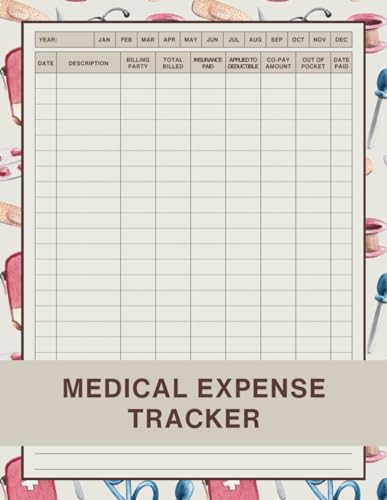
Medical Expense Tracker: A Record Logbook for Keeping Track Your Medical Spending, Bills, and Payment All in One Place | Health Expense Organizer: Media, Tylissa A.: Amazon.com
View on AmazonState Differences, Where to Get Help, and Next Steps
State marketplaces: Some states run their own platforms with slightly different deadlines, plan offerings, and extra state subsidies. Others use HealthCare.gov. A few states also offer public‑option‑style plans or standardized plan designs.
Medicaid/CHIP: Income limits and rules vary by state. If you’re near Medicaid eligibility, check your state’s guidelines—you might qualify for $0 or very low‑cost coverage.
Dental and vision: Many marketplaces sell stand‑alone dental plans and, less commonly, vision plans. Pediatric dental is an essential benefit; adult dental is typically separate.
Where to get free help:
- Licensed health insurance agents and brokers: They can recommend plans that fit your doctors, medications, and budget. There’s no extra cost to you—the insurer pays their commission.
- Certified assisters/navigators: Community‑based help focused on impartial enrollment assistance.
- Carrier customer service: Useful for confirming provider networks and drug coverage.
Quick reality check—what insurers don’t always tell you:
- A low premium with a thin network can be costly if your preferred doctors are out‑of‑network.
- If you qualify for CSRs, a Silver plan may beat a low‑premium Bronze once you factor your real out‑of‑pocket costs.
- Formularies change. Double‑check your medications every year during Open Enrollment.
Ready to see your actual options? Getting personalized quotes is the fastest way to cut through the noise. Compare at least 3–5 carriers for your ZIP code, plug in your estimated income, and review side‑by‑side benefits and networks.
Compliance note: This guide is educational. Actual eligibility and premiums depend on your specific situation and the current year’s rules. Consider speaking with a licensed agent for personalized advice.
Next step you can take today:
- Gather your household info and income estimate
- Check Open Enrollment or SEP dates for your state
- Compare quotes from multiple carriers to see your likely net premiums
- If you qualify for CSRs, focus on Silver plans and verify your doctors and meds before you enroll
CTA: Want help cutting your costs? Request personalized Marketplace quotes and a plan comparison for your ZIP—see your likely net premium and top 3 fits in minutes.
Recommended Resources
Health Insurance and Managed Care: What They Are and How They Work eBook : Kongstvedt, Peter R.: Kindle Store
Peter R. Kongstvedt ... Health Insurance and Managed Care: What They Are and How They Work is <strong>a concise introduction to the workings of health insurance and managed care within the American he
Fireproof Document Bag
Discover document organizers with fireproof and waterproof protection. Choose from multiple styles designed for home, office, and travel security needs.
Medical Expense Tracker: A Record Logbook for Keeping Track Your Medical Spending, Bills, and Payment All in One Place | Health Expense Organizer: Media, Tylissa A.: Amazon.com
<strong>Medical Spending Record</strong>: A Logbook for Keeping Track Your Medical Expenses, Bills, and Payment All in One Place | Health Expense Organizer
Related Articles
- Best Health Insurance for Families: How to Compare Plans and Choose the Right Coverage
- Health Insurance in Louisiana: Plans, Costs & How to Enroll
- Health Insurance in Illinois: Plans, Costs & How to Enroll
- Health Insurance in Nebraska: Plans, Costs & How to Enroll
- Health Insurance in California: Plans, Costs & How to Enroll
- Health Insurance in Rhode Island: Plans, Costs & How to Enroll
- Health Insurance Options for the Self‑Employed: Compare Plans, Costs, and Next Steps
- Finding Affordable Health Insurance: Smart Ways to Lower Costs and Get Covered