
How to Save on Travel Insurance: Smart Ways to Cut Premiums Without Losing Essential Coverage
You want solid protection for your trip, but you also want a fair price. Here is how to save on travel insurance without cutting the core benefits that matter. We will show you where premiums come from, what to trim, and how to compare plans so you pay for protection—not fluff.
Note: Travel insurance pricing varies by traveler age, destination, trip length, total trip cost, and medical history. Use the tips below to target real savings while keeping essential coverage.
How to Save on Travel Insurance: What Actually Lowers Your Cost
Saving on travel insurance starts with right-sizing your coverage, comparing multiple plans, and using timing and discounts to your advantage. The fastest way to see what you would actually pay is to compare quotes from 3–5 carriers for the same trip details. Then adjust deductibles (the amount you pay out of pocket before insurance kicks in) and add-ons to find your best value.

FlyAwayU's Complete Guide to Travel Insurance eBook : Medina, Heidi, Medina, David: Kindle Store
After lots of travel and several travel insurance claims, David and I understand why it's important to have travel insurance. And we are sharing with you what we learned in the <strong>FlyAwayU C
Check Price on AmazonThe core coverages to understand
- Emergency medical: Pays for doctor or hospital care on your trip if you get sick or injured. Many U.S. health plans—especially Medicare—do not cover you abroad, so this can be essential.
- Medical evacuation: Pays to transport you to adequate care or back home if needed. Costs can run into tens of thousands of dollars, especially from remote areas or on cruises.
- Trip cancellation/interruption: Reimburses prepaid, nonrefundable trip costs if you cancel or cut your trip short for a covered reason (like serious illness or a family emergency). “Covered reasons” are listed in the policy—read them closely.
- Baggage and travel delay: Covers lost, stolen, or delayed bags and extra expenses if you are stuck overnight due to a delay.
Other add-ons include adventure sports riders (extra coverage for higher-risk activities), rental car coverage, and Cancel For Any Reason (CFAR), which lets you cancel for reasons not otherwise covered but typically only reimburses 50–75% of prepaid costs.
1) Right-size your coverage to your actual risks
You save the most by matching limits and extras to your trip—not by buying the cheapest plan with big gaps.

Adventure Medical Kits Ultralight & Watertight Medical Kit Pro - Emergency First Aid Kit with Laerdal CPR Mask, Irrigation Syringe, Wound Closure Strips & More
View on AmazonStart with destination, activities, and your health profile
- Destination care costs: Hospital care in Western Europe can be expensive but predictable; evacuation from a remote island or high-altitude trek can be extremely costly. Cruise passengers should prioritize higher medical and evacuation limits because shipboard care is limited and evacuations are pricey.
- Activities: If you plan scuba, backcountry skiing, or high-altitude hiking, you may need an adventure sports rider. If your trip is a city break with museum visits, you likely do not.
- Health profile: Consider any pre-existing conditions (a medical issue you had, were treated for, or had symptoms of before buying the policy). Many insurers waive the pre-existing condition exclusion if you buy shortly after your first trip deposit—often within 10–21 days—so timing matters.
Typical limits (and where you can safely scale)
- Emergency medical: For most international trips, travelers target $100,000–$250,000. Going remote or cruising? Lean higher. For domestic trips where your health plan travels with you, some people choose lower limits to save.
- Medical evacuation: $250,000 is a common baseline; $500,000 is prudent for cruises or remote destinations. For short, urban trips with easy access to care, you might choose $100,000–$250,000 to trim cost.
- Trip cancellation/interruption: Match this to your actual nonrefundable costs. Do not overstate your trip value—insurers reimburse what you truly lose, not a round number.
- Baggage: If you have credit card baggage benefits, you can reduce this limit and avoid duplication. Watch per-item caps (maximum per article); cameras and laptops often have lower sub-limits (smaller caps within a larger benefit).
Example: You are a 35-year-old non-smoker in Texas booking a $3,000 two-week trip to Portugal with no adventure sports. A mid-tier plan with $100,000 medical, $250,000 evacuation, and cancellation matching your $3,000 costs is often the best value. Bumping evacuation to $500,000 may add only a few dollars; doubling baggage might add more than it is worth if your credit card already covers bags.
2) Compare multiple providers—and read the fine print that drives value
Two plans can look identical on the summary page but offer very different protection in the details. Comparing 3–5 providers typically uncovers price differences and better wording.
Price drivers to understand:
- Age: Premiums rise with age, especially after 60.
- Trip length: Longer trips cost more to insure.
- Trip cost insured: Higher nonrefundable amounts increase cancellation premiums.
- Destination: Some regions and cruising carry higher risk loads.
- Medical history: Pre-existing conditions do not always raise the price directly, but they change which policies are suitable and when you must buy to secure a waiver.
How policy wording affects real-world value:
- Covered reasons for cancellation: Illness with a doctor’s note is common; work-related reasons are not always covered unless you add a work extension. Supplier bankruptcy may or may not be covered.
- Look-back period: The time an insurer reviews your medical history for signs of a pre-existing condition, often 60–180 days before purchase. Shorter is more consumer-friendly.
- Primary vs. secondary medical: Primary pays first; secondary pays after other insurance. Primary can make claims smoother and is often worth a small premium.
- Sub-limits: These are caps inside a benefit (e.g., $2,500 baggage total but $500 per item). Sub-limits matter for electronics and jewelry.
What to look for when comparing plans:
- Medical and evacuation limits that match your destination and risk level
- Clear, generous covered reasons for cancellation/interruption
- A pre-existing condition waiver if you need it, and the purchase window to qualify
- Primary medical coverage if you do not want to coordinate with your health plan
- Reasonable deductibles (the out-of-pocket amount you pay before coverage applies)
Helpful resources:
- If you want a step-by-step comparison process, see How to Choose the Right Travel Insurance: A Practical Guide to Coverage, Cost, and Claims: https://findassurance.com/auto-insurance/choosing-the-right-travel-insurance-guide
- For a side-by-side of leading providers and typical strengths, visit Top-Rated Travel Insurance Companies Compared: https://findassurance.com/auto-insurance/top-rated-travel-insurance-companies
Quick, helpful next step: Get quotes from 3–5 carriers for the exact same trip details and coverage targets. The fastest way to see your real price—and spot overpriced add-ons—is to compare side by side.
3) Leverage existing benefits and pick the right plan type
Before you buy a full policy, take inventory of coverage you already have. Duplicating benefits is a common—and avoidable—waste of money.
Where to check first:
- Travel credit cards: Many premium cards include trip cancellation, interruption, baggage delay, and rental car collision damage waiver (CDW) when you pay for travel with the card. Check the guide to benefits for limits and exclusions (what the policy will not cover, such as certain medical conditions or risky activities). Credit card medical coverage abroad is rare; do not assume you have it.
- Health insurance: Some employer plans cover emergency care outside the U.S., but many do not, and Medicare generally does not. Call your plan for details on emergency, evacuation, and out-of-network rules. If you have limited or no coverage abroad, prioritize robust medical and evacuation limits in your travel policy.
- Homeowners or renters insurance: These may cover personal belongings off-premises, sometimes worldwide, but watch the deductible (what you pay before the policy pays) and sub-limits for electronics and jewelry. This can let you buy lower baggage limits in your travel plan.
Choose the plan type that fits how you travel:
- Single-trip plan: Best for one-off vacations with known trip costs.
- Annual/multi-trip plan: Covers multiple trips over a year, typically with a maximum trip length per journey (often 30–90 days). If you take 3 or more trips per year, the per-trip cost is usually lower than buying single-trip each time.
- Family plan: Can reduce the per-person cost if you are traveling with kids. Some plans cover children under a certain age at no extra charge when traveling with insured adults.
- Group plans: Useful for 10+ travelers on the same itinerary; often cheaper per person but may have standard, less flexible terms.
Example: A family of four taking two domestic trips and one international trip this year might save with a family annual plan, especially if kids are included at a discount. But if your international trip involves high-risk activities, confirm the annual plan’s sports coverage is adequate; otherwise, a single-trip plan with a sports rider could be smarter.
For more budget-focused options and trade-offs, see Affordable Travel Insurance Options: How to Find Budget Coverage That Still Protects You: https://findassurance.com/auto-insurance/affordable-travel-insurance-options-budget-coverage
4) Reduce premiums sensibly: dial-in deductibles, drop extras you do not need
A few levers can lower your price without hollowing out your coverage.
- Raise your deductible thoughtfully: A higher deductible (the portion you pay before insurance pays) generally lowers premium. On medical claims, consider whether you could comfortably pay a $250–$500 deductible if needed. For baggage, a deductible can make small claims not worth filing.
- Trim add-ons: Skip adventure sports riders unless you are actually doing the listed activities. Skip rental car CDW if your credit card already covers it and the country accepts that coverage. Remove airline-specific “upgrade” bundles that do not add meaningful protections.
- Rethink CFAR: Cancel For Any Reason helps when your plans are fluid, but it typically costs 40–60% more and reimburses only 50–75% of prepaid costs. If your reasons to cancel are likely covered (e.g., illness, injury, severe weather), CFAR may not be necessary. If your plans truly are uncertain—like a move for work or changing your mind about a cruise—CFAR can be worth it, but buy it within the required window (often 10–14 days after your first trip deposit).
- Set smart coverage caps: Do not overinsure baggage or trip cost. Insure what is actually nonrefundable. Increase medical/evacuation where risk is high; decrease where it is not.
- Verify exclusions now to avoid surprise costs later: Check for alcohol- or drug-related exclusions, pregnancy-related limitations, adventure sports carve-outs, and how “medically necessary” is defined. For pre-existing conditions, look for a waiver and confirm the timing and stability requirements.
Scenario trade-off: You are a 62-year-old traveler on a $5,000 two-week cruise. Keeping medical at $250,000 and evacuation at $500,000 is prudent; dropping CFAR and reducing baggage coverage (because your card covers bags) might save meaningful premium while keeping the big-ticket risks protected.
5) Optimize purchase timing and discounts
Timing can affect both price and eligibility for valuable benefits.
- Buy soon after your first deposit when it makes sense: Purchasing within 10–21 days often unlocks a pre-existing condition waiver (the insurer agrees not to exclude your stable conditions) and may add financial default coverage for your travel supplier. You typically will not pay more for buying early, and you will protect against something happening before your departure.
- Do not buy before you know your nonrefundable costs: You can only insure what you have actually paid or are obligated to pay. Add costs as you book to avoid over- or underinsuring.
- Watch trip-length thresholds: If your trip is near a limit (e.g., 31 vs. 30 days), shortening by a day or choosing an annual plan with a higher per-trip cap can lower price.
- Look for promo codes, loyalty perks, and family pricing: Some insurers quietly offer periodic discounts, email-list codes, or “kids free” promotions. Students and seniors may see category discounts depending on the provider.
- Bundle only when it truly saves: Multi-policy discounts (like bundling with other insurance) are less common for travel insurance than auto/home, but if your provider offers it, compare the bundled price to best-in-market standalone quotes.
Common mistakes that cost travelers money:
- Assuming “any reason” cancellations are covered without CFAR
- Duplicating coverage you already have through a credit card or homeowner policy
- Ignoring per-item baggage caps and electronics exclusions
- Forgetting to add late-booked nonrefundable items (like tours) to your policy
- Buying too late to qualify for a pre-existing condition waiver when you need it
If you want a refresher on what each coverage does before you compare, read What Is Travel Insurance? A Practical Guide to Coverage, Costs, and When You Need It: https://findassurance.com/auto-insurance/what-is-travel-insurance-guide
How to compare and buy—your quick checklist
- List your real risks by destination and activities
- Set target limits for medical and evacuation first; match cancellation to actual nonrefundable costs
- Check existing benefits (credit card, health, homeowners/renters); reduce overlapping coverage
- Get 3–5 quotes with the same trip details and limits; compare look-back periods, covered reasons, and sub-limits
- Adjust deductibles and remove extras you do not need; add CFAR only if your plans are truly uncertain and you can meet the purchase window
- Buy as soon as you have a significant nonrefundable payment to lock in protections and potential waivers
CTA: Ready to see your real price? Compare quotes from multiple top-rated carriers side-by-side here: https://findassurance.com/auto-insurance/top-rated-travel-insurance-companies
Real-world examples (what typically saves vs. what does not)
- City weekend in Canada with a premium travel card: Lower baggage limits (card covers bags), keep medical at $100,000–$150,000, no CFAR. Savings: trimming baggage and skipping CFAR, not slashing medical.
- Two-week trek in Peru with high-altitude hiking: Keep or add adventure sports rider, prioritize evacuation at $500,000. Do not skimp on medical/evac just to save a few dollars; drop baggage extras instead.
- Four trips this year (2 domestic, 2 international), each under 30 days: Price an annual multi-trip plan. The per-trip cost often undercuts four separate single-trip policies.
- Cruise in the Caribbean: Emphasize higher evacuation and medical; consider secondary vs. primary medical trade-offs. Skip rental car coverage if not renting a car; this saves without risk.
A quick word on claims and service
A slightly cheaper plan with slow claims or narrow definitions can cost you more in stress and uncovered losses. Look for:
- 24/7 assistance with a staffed medical team
- Clear claims instructions and online portals
- Positive customer reviews on claims responsiveness (not just sales ratings)
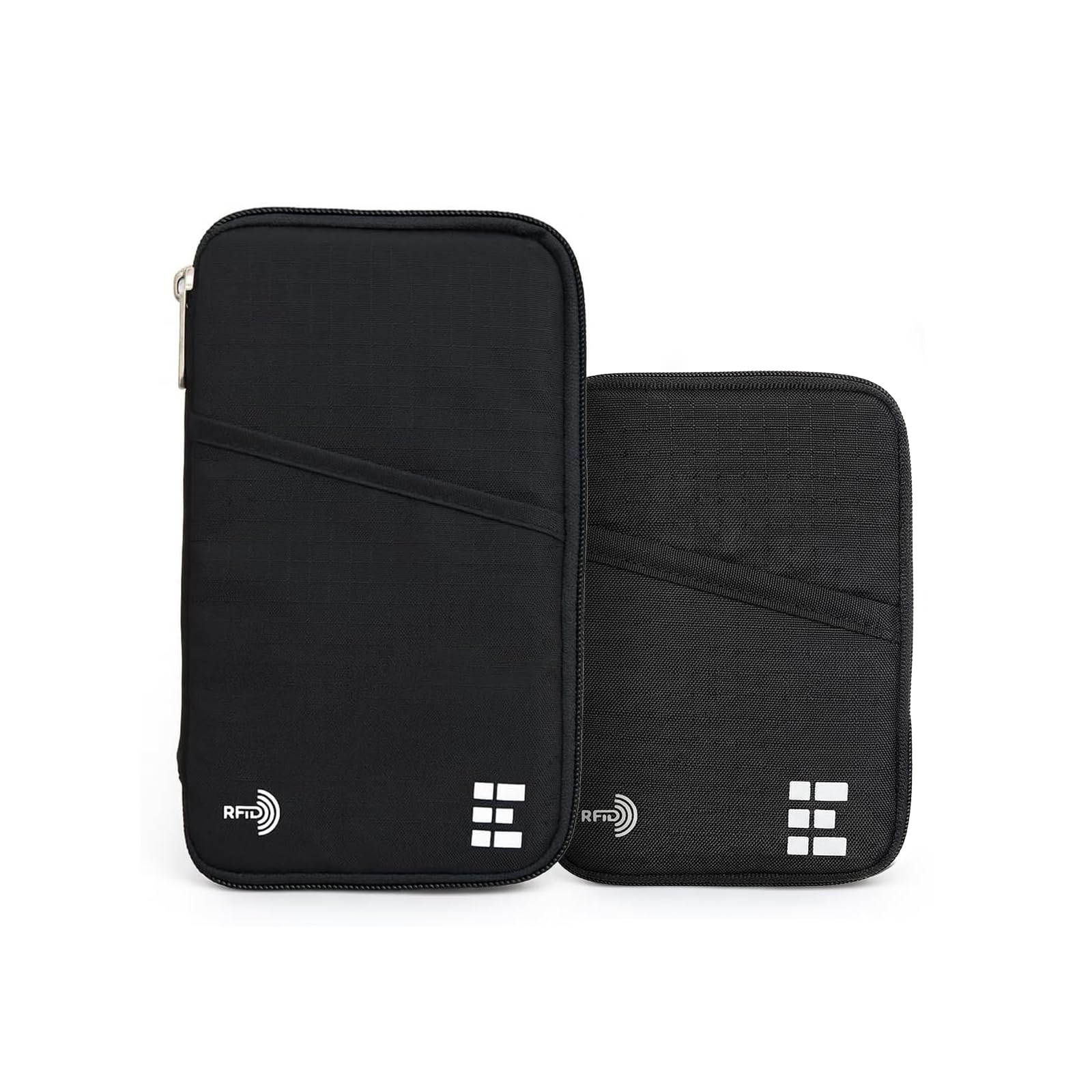
Amazon.com | Zero Grid RFID Family Passport Holder for up to 6 Passports, Large Zippered Wallet for Men & Women, Fits Cards, Cash, ID, Sim Card, AirTag; Premium & Compact Travel Document Holder - Midnight Black | Passport Wallets
View on AmazonWhen to talk to a licensed agent
If you have complex medical history, an expensive cruise, or you are unsure about CFAR, a licensed travel insurance agent can walk you through which policies offer a pre-existing condition waiver, how stability periods work, and where to set limits for your itinerary. Personalized advice can help you save where it is safe—and spend where it truly matters.
Your smart next step
- Gather your trip details (dates, travelers’ ages, nonrefundable costs, destination, planned activities)
- Check your credit card and health plan benefits for overlap
- Compare 3–5 travel insurance quotes with the same coverage targets, then fine-tune deductibles and extras
If you prefer a guided walkthrough of features to compare and common pitfalls, start here: https://findassurance.com/auto-insurance/choosing-the-right-travel-insurance-guide
Remember, the goal is not the absolute cheapest policy—it is the right protection at a fair price. With a few smart moves, you can typically cut costs while keeping the essential safeguards in place.
Recommended Resources
FlyAwayU's Complete Guide to Travel Insurance eBook : Medina, Heidi, Medina, David: Kindle Store
After lots of travel and several travel insurance claims, David and I understand why it's important to have travel insurance. And we are sharing with you what we learned in the <strong>FlyAwayU C
Adventure Medical Kits Ultralight & Watertight Medical Kit Pro - Emergency First Aid Kit with Laerdal CPR Mask, Irrigation Syringe, Wound Closure Strips & More
Adventure Medical Kits Mountain ... Medical Kit Ultralight/Watertight Medical Kit .7 - <strong>Up to 3 People, Up to 3 Days - Includes Bandages, Blister Essentials & More</strong> - Perfect for Hi
Amazon.com | Zero Grid RFID Family Passport Holder for up to 6 Passports, Large Zippered Wallet for Men & Women, Fits Cards, Cash, ID, Sim Card, AirTag; Premium & Compact Travel Document Holder - Midnight Black | Passport Wallets
RFID Protection: Wallet <strong>includes 7 RFID blocking sleeves to help protect passports and cards from unauthorized scans while traveling domestically or internationally</strong>.
Related Articles
- Affordable Travel Insurance for Travelers: Get Smart Coverage Without Overpaying
- Affordable Travel Insurance Options: How to Find Budget Coverage That Still Protects You
- How to Save on Life Insurance: Practical Ways to Lower Your Premiums
- Affordable Travel Insurance for Students: Find the Right Coverage Without Overpaying
- How to Choose the Right Travel Insurance: A Practical Guide to Coverage, Cost, and Claims
- Top-Rated Travel Insurance Companies Compared: Which Plan Is Right for Your Trip?
- How to Find Cheap Life Insurance: Smart Ways to Lower Your Premiums Without Sacrificing Coverage
- Health Insurance with Low Premiums: How to Save Smartly and Avoid Costly Surprises