
Full Coverage Car Insurance Cost: A Complete Guide to Rates & Savings
You typed in “full coverage car insurance cost” because you want a real number you can plan around. Totally fair. Here’s the truth: full coverage isn’t a single product or a fixed price—it’s a package of protections, and your premium (what you pay for insurance) depends on who you are, where you live, and what you drive. This guide cuts through the noise so you can estimate your own cost, see what actually drives it, and find smart ways to save without gutting your coverage.
What “full coverage” car insurance actually means
“Full coverage” isn’t an official insurance term. It’s a common way people describe a policy that includes, at minimum:
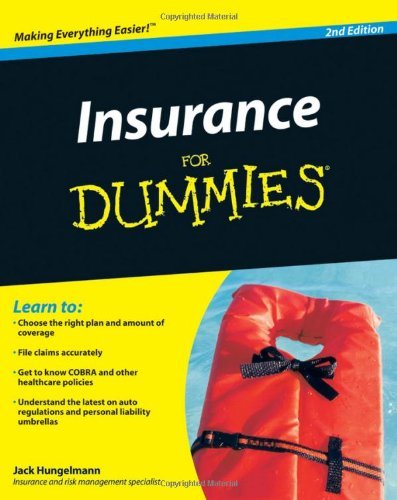
Insurance For Dummies?: Hungelmann, Jack
Whether you’re a homeowner or ... need on: ... Author Jack Hungelmann <strong>uses his twenty-five years of experience in the insurance industry to make buying insurance as simple as possible</strong>
Check Price on Amazon- Liability coverage: Pays others if you cause a crash—bodily injury liability (medical bills, lost wages) and property damage liability (repairs to the other car or things you hit). Your liability limits (the maximum your insurer will pay per person/accident) are shown as numbers like 100/300/50, meaning $100,000 per person, $300,000 per accident for bodily injury, and $50,000 for property damage.
- Collision coverage: Pays to repair or replace your car after a crash, regardless of fault. Comes with a deductible (the amount you pay out of pocket before insurance kicks in), commonly $500 or $1,000.
- Comprehensive coverage: Pays for non-crash events—theft, vandalism, hail, flooding, fire, animal strike. Also has a deductible.
Often but not always included or recommended with “full coverage”:
- Uninsured/underinsured motorist (UM/UIM): If a driver hits you without enough insurance, UM/UIM can cover your injuries and sometimes damage to your car (state rules vary).
- Personal injury protection (PIP) or Medical Payments (MedPay): Helps with medical bills for you and your passengers, regardless of who’s at fault. PIP is required in some “no-fault” states.
Key reminder: “Full coverage” does not mean “everything is covered no matter what.” There are always exclusions and dollar limits. If you want a deeper dive into each part of a policy, see Understanding Auto Insurance Coverage Types (/auto-insurance/understanding-auto-insurance-coverage-types).
How much does full coverage car insurance cost?
Short answer: national averages for full coverage car insurance cost typically land between about $1,700 and $2,500 per year ($140–$210 per month) for a 35–40-year-old driver with a clean record and good credit, driving a common sedan. Many drivers fall outside that range depending on age, state, vehicle, driving history, and credit tier.
Typical price ranges you might see in quotes (your number could be higher or lower):
- Excellent risk profile (clean record, mid-30s+, safe ZIP, strong credit): $95–$160/month
- Average risk profile (minor ticket or average credit): $150–$250/month
- Higher risk profile (young driver, at-fault accident, DUI, or poor credit): $260–$500+/month
For context only, liability-only policies (just the minimum required third-party protection) can be far cheaper—often $45–$100/month for many drivers—because they don’t include collision and comprehensive. If you’re weighing that trade-off, read Liability-Only Car Insurance: Costs, Pros & How to Buy (/auto-insurance/liability-only-car-insurance).
Rates vary by insurer and by state. Two drivers with near-identical profiles can see quotes hundreds of dollars apart. That’s why comparing 3–5 carriers is usually the fastest way to find your best price.
State-by-state cost differences (and why they matter)
Where you garage your car (your primary ZIP code) can swing your full coverage premium by 2–3x. Why? Each state has its own liability minimums, injury claim rules (fault vs. no-fault), repair and medical cost trends, weather risks, theft rates, and litigation environment.
- High-cost states often include parts of the Northeast and coastal metros with high crash frequency, higher medical costs, and more litigation. For example, New Jersey drivers typically see above-average full coverage premiums. If you live there, our New Jersey guide can help: Auto Insurance in New Jersey: Rates, Requirements & How to Save (/auto-insurance/auto-insurance-in-new-jersey-rates-requirements-save).
- Lower-cost states tend to have less congestion, lower claim severity, and lower medical/repair costs. Rural ZIP codes often enjoy lower rates than dense urban cores—sometimes by hundreds per year.
Helpful official resources by state:
- Find your state insurance department (complaints, consumer guides, sometimes sample rates): National Association of Insurance Commissioners (NAIC) directory: https://content.naic.org/state-insurance-departments
- Find your state’s DMV/vehicle agency (proof-of-insurance rules, registration requirements): USA.gov state motor vehicle services: https://www.usa.gov/motor-vehicle-services
A few direct examples (for convenience):
- California Department of Insurance: https://www.insurance.ca.gov/
- Texas Department of Insurance: https://www.tdi.texas.gov/
- New York DMV: https://dmv.ny.gov/
- Florida Highway Safety and Motor Vehicles: https://www.flhsmv.gov/
Note: Some states restrict how insurers price policies. For instance, California, Hawaii, and Massachusetts generally do not allow credit-based insurance scores in auto rating. Rules change, so always confirm with your state DOI.
The key factors that drive your full coverage premium
Insurers price risk. Here’s what usually matters most:

Winner International The Club 3000 Twin Hooks Steering Wheel Lock, Yellow : Automotive
View on Amazon- Age and driving experience: Teen and young adult drivers pay more due to higher claim frequency. Premiums typically ease in your mid-to-late 20s, all else equal.
- Driving record: At-fault accidents, speeding tickets, and DUIs can sharply increase your rate, often for 3–5 years. Safe-driver discounts can stack meaningful savings.
- Vehicle type and value: Newer, higher-value, or performance vehicles cost more to repair or replace. Collision and comprehensive are priced off your car’s value, repair costs, parts/labor availability, and even theft rates.
- Annual mileage and usage: More miles typically equals more exposure to loss. Low-mileage drivers may qualify for usage-based or pay-per-mile discounts.
- Credit-based insurance score (where allowed): In most states, better credit correlates with fewer/lower claims and often lower rates. Some states limit or prohibit using this factor.
- ZIP code/garaging location: Claim frequency, severe weather, theft, vandalism, and local medical/repair costs all feed your rate.
- Coverage limits and deductibles: Higher liability limits and lower deductibles increase premium. Raising your collision/comprehensive deductibles (say from $500 to $1,000) can trim costs, but increases your out-of-pocket if you file a claim.
- Prior insurance and lapses: Continuous coverage can help. Lapses can result in surcharges and fewer discount opportunities.
- Discounts and telematics: Multi-policy, multi-car, good student, defensive driver, and telematics (a program that tracks driving behavior) can shift your price significantly.
Real-world pricing examples (illustrative, not guarantees)
These ballpark ranges assume typical commuting mileage, standard liability limits like 100/300/50, and $500–$1,000 deductibles for collision/comprehensive. Your actual quote will vary by state and insurer.
- Young driver (18-year-old on own policy, clean record, 2018 Honda Civic): $280–$520/month for full coverage in many states. Adding to a parent’s policy can often be cheaper, though it depends on household factors and the parent’s record.
- Family driver (40-year-old, two vehicles, one teen listed, suburban ZIP): $230–$420/month for the household. The second car may add less than expected due to multi-car discounts—especially if it’s older and cheaper to insure.
- High-value car (2023 luxury SUV or EV, $65,000+ MSRP): $220–$380/month for a 35-year-old clean driver. Advanced sensors and parts can raise repair costs, which pushes up collision/comprehensive.
- Low-mileage commuter (mid-30s, 6,000 miles/year, telematics enrolled): $110–$170/month. Usage-based programs can shave 5%–30% for consistently safe, low-mileage driving, depending on the carrier and state.
- Recent at-fault accident (35-year-old, 1 claim in last 12 months): Often +20%–50% vs. clean record pricing for 3+ years, depending on severity and insurer.
Again, these are directional ranges to help you orient. The only way to see your number is to compare live quotes.
Ways to lower your full coverage cost (without leaving yourself exposed)
Tackle the price from multiple angles. Here’s what typically works:

Vantrue N4 Pro S 4K 3 Channel Dash Cam w/Triple STARVIS 2, 4K+1080P+2.5K Front Inside Rear Dash Camera, 4+2.5K Dual Channel, HDR IR Night Vision, Voice Control, Parking Mode, GPS, Wi-Fi, Support 1TB : Electronics
View on Amazon- Compare at least 3–5 carriers: Different companies favor different profiles. A safe driver with a modest commute might see a $60/month swing between carriers with identical coverage.
- Bundle home/renters and auto: Multi-policy discounts can be 10%–25% depending on the company and state. If you’re a homeowner, get a bundled quote.
- Raise your deductibles (carefully): Moving collision/comprehensive deductibles from $500 to $1,000 can save 10%–20% on those coverages. Only do this if you can comfortably cover the higher out-of-pocket after a loss.
- Right-size liability limits: Don’t go bare-minimum. Many drivers choose at least 100/300/50 to protect assets. If you need to trim the bill, ask your agent to model slightly lower limits and explain the trade-offs.
- Enroll in telematics/usage-based programs: Safe braking, modest speeds, daytime driving, and low mileage can earn real discounts. You can usually opt out if you don’t like the results.
- Maintain continuous coverage: Avoid lapses. They can trigger surcharges and limit discount eligibility.
- Ask for every discount: Good driver, good student, alumni/affinity groups, multi-car, defensive driving course, pay-in-full, autopay/paperless. Each one might be 3%–10%.
- Consider the car: If you’re shopping vehicles, get quotes before you buy. A car that’s cheaper to repair or less likely to be stolen can cut your premium.
- Review optional coverages: Roadside assistance or rental reimbursement add value, but if you rarely rent during repairs or have other roadside help, trimming extras can save a few bucks.
- For older cars, consider whether you still need collision/comp: If your car’s cash value is low (say, only a bit more than your deductible), paying for full physical damage coverage may not be cost-effective. Dropping these converts you to “liability-only”—know the risk before you do it. See Liability-Only Car Insurance: Costs, Pros & How to Buy (/auto-insurance/liability-only-car-insurance).
Pro tip: If you’re actively rate-shopping, it’s smart to compare with identical deductibles and limits so you’re looking at apples-to-apples offers.
How to compare quotes: checklist, questions, and mistakes to avoid
This is where most savings are found. Use this quick framework.
Checklist for apples-to-apples quotes:
- Same liability limits (e.g., 100/300/50) across all quotes
- Same collision and comprehensive deductibles (e.g., $500 or $1,000)
- The same optional coverages (UM/UIM, PIP/MedPay, rental reimbursement, roadside)
- The same drivers and vehicles listed, with accurate annual mileage
- The same usage (commute vs. pleasure) and garaging ZIP
Questions to ask each insurer or agent:
- Which discounts are applied now—and which ones am I eligible for but not receiving?
- How much would I save by raising my collision/comprehensive deductibles? What would that mean out of pocket after a common claim?
- Do you offer a telematics or usage-based discount? How does it work in my state?
- If I bundle home/renters, what would my combined price look like—and what coverage differences should I know about?
- How do you handle OEM parts, total-loss thresholds, and deductible waivers for glass claims in my state?
Common mistakes that cost people money:
- Chasing the lowest price with much lower liability limits. One serious crash can blow past state minimums. Protect your assets and future earnings.
- Comparing quotes with different deductibles/limits. You might think Carrier B is cheaper when it’s just thinner coverage.
- Not removing a sold car or a former roommate from the policy. Old data can inflate your premium.
- Ignoring surcharges about to fall off. If a ticket or accident hits its 3-year mark next month, ask the agent to re-run your quote then.
- Forgetting to quote after big life changes: move, marriage, new job with shorter commute, or retired status.
Ready to see real numbers for you? The fastest way to check your full coverage car insurance cost is to compare live quotes from 3–5 carriers side by side. Start here: Compare Car Insurance: Best Coverage and Price Today (/auto-insurance/compare-car-insurance)
A quick note on coverage choices and special cases
- If you finance or lease your car: Your lender will require collision and comprehensive. If your car could be worth less than your loan payoff for a while, ask about gap insurance (covers the difference if your car is totaled and you owe more than its value). Not all carriers include gap; some offer a separate endorsement or you can buy from the lender.
- Driving for rideshare or delivery: You may need a rideshare endorsement so you’re not left exposed between personal and app coverage periods.
- Specialty or classic cars: Consider agreed-value coverage and carriers that focus on collector vehicles.
Next steps: get personalized quotes and choose the right fit
If you take nothing else from this guide, take this: full coverage pricing is personal. Two people on the same block can pay very different amounts.
- Gather your details: VINs, annual mileage, current coverages, any tickets/claims, and your desired liability limits and deductibles.
- Compare at least 3–5 carriers with identical coverage settings.
- Decide on trade-offs: Are you comfortable with a $1,000 deductible to cut premium? Do you want telematics? Is bundling worth it for you?
- Re-shop every 6–12 months, or when life changes (move, new car, new driver).
When you’re ready, start your comparison here to lock in apples-to-apples quotes: Compare Car Insurance: Best Coverage and Price Today (/auto-insurance/compare-car-insurance)
Prefer to talk it through? A licensed agent can walk you through options and state-specific rules and help you weigh deductibles, limits, and discounts based on your situation. Just remember: no one can guarantee a specific rate until your application is fully underwritten.
Frequently asked quick hits
- Is “full coverage” required? No. States require liability. Lenders require collision/comprehensive if you finance.
- What’s a good deductible? Many choose $500 or $1,000. Pick the highest number you can comfortably pay out of pocket after a loss.
- How often should I shop? Typically every 6–12 months, and after tickets/accidents fall off or you move.
- Will one small claim spike my rate? It can. Ask your agent about accident forgiveness options and how your carrier surcharges minor vs. major claims in your state.
If you want more background on coverage options and how each protection works, revisit Understanding Auto Insurance Coverage Types (/auto-insurance/understanding-auto-insurance-coverage-types).
Recommended Resources
Insurance For Dummies?: Hungelmann, Jack
Whether you’re a homeowner or ... need on: ... Author Jack Hungelmann <strong>uses his twenty-five years of experience in the insurance industry to make buying insurance as simple as possible</strong>
Vantrue N4 Pro S 4K 3 Channel Dash Cam w/Triple STARVIS 2, 4K+1080P+2.5K Front Inside Rear Dash Camera, 4+2.5K Dual Channel, HDR IR Night Vision, Voice Control, Parking Mode, GPS, Wi-Fi, Support 1TB : Electronics
[ 24/7 Parking Mode ] The N4 Pro S 3 channel dash cam <strong>provides round-the-clock security for your parked vehicle</strong>. Its buffered motion detection captures footage from 10ss before an eve
Winner International The Club 3000 Twin Hooks Steering Wheel Lock, Yellow : Automotive
The Club'S Patented Self-Locking Feature Locks With One Pull. Keyless Locking, for ease of use ... The Club 3000 Twin Hooks Steering Wheel Lock is <strong>a part of The Club line of quality produ
Related Articles
- Cheap Car Insurance: How to Save on Coverage & Get Fast Quotes
- How Much Is Car Insurance? Average Costs, Factors & Ways to Save
- How Much Car Insurance Do I Need? A Practical Guide to Choosing Coverage
- Term Life Insurance: Complete Guide to Coverage, Cost & Getting Quotes
- Finding Affordable Health Insurance: Smart Ways to Lower Costs and Get Covered
- Auto Insurance in Wyoming: Rates, Requirements & How to Save
- What Is Comprehensive Insurance? A Plain‑Language Guide
- Compare Car Insurance: Best Coverage and Price Today