
Best Credit Cards for Bad Credit: How to Compare the Top Options
You need a credit card but your scores are low. Are there actually good options—and what should you expect to pay? Here’s the straight talk on the best credit cards for bad credit: what “bad credit” means, how these cards differ from standard rewards cards, and how to choose a card that helps you move forward without getting trapped by fees.
What “bad credit” means—and what to expect
In most scoring models, “bad credit” typically means a FICO Score below 580 or a VantageScore in a similar range. If you’re not sure where you stand, start by checking your credit report and score; understanding your score and what’s on your report makes every decision that follows easier. See our explainer on how scores work here: Understanding Your Credit Score: What It Is and How to Improve It.

Credit Repair Kit For Dummies (For Dummies (Business & Personal Finance)): Bucci, Steve
Credit Repair Kit For Dummies (For Dummies (Business & Personal Finance)) [Bucci, Steve] on Amazon.com. *FREE* shipping on qualifying offers. Credit Repair Kit For Dummies (For Dummies (Business &
Check Price on AmazonHere’s what these cards usually look like compared with prime credit cards:
- Higher APRs: Expect regular APRs (the interest rate charged when you carry a balance) often in the 25%–36% variable range. Rates vary by issuer and your profile.
- More (and different) fees: Annual fees are common, and some cards add program/setup fees or monthly maintenance fees. Always read the full fee table.
- Lower credit limits: Starting limits are often $200–$1,000. Your limit may equal a cash deposit for secured cards or be set by the issuer for unsecured cards.
- Approval odds: You’ll see more offers designed for limited or damaged credit, and many issuers let you prequalify (a soft credit check that doesn’t impact your score) before applying. Approval is never guaranteed.
- Fewer perks: You may see limited or no rewards. That’s okay—your goal right now is building a positive payment history and keeping your utilization (how much of your limit you use) low.
Set your expectations this way: the right card is a stepping stone. Used well—on-time payments, low balances—it can help you qualify for stronger terms in 6–12 months.
The main types of credit cards for bad credit
Not all cards for bad credit are alike. Here’s how the big categories compare.
Secured credit cards
A secured card requires a refundable security deposit (typically $200–$500). Your deposit becomes your credit limit, and you use the card like any other: make purchases, get a statement, and pay by the due date.
Pros:
- Higher approval odds compared with unsecured options at the same score range
- Clear path to build history if the issuer reports to all three bureaus (Experian, Equifax, TransUnion)
- Often fewer “gotcha” fees than some subprime unsecured cards
- Many secured cards offer an upgrade path to “graduate” to an unsecured card and get your deposit back
Cons:
- Upfront cash deposit required
- Limits can be low unless you deposit more
- Some secured cards still charge annual fees or foreign transaction fees
If you’re leaning secured, it’s worth scanning our deeper guide: Best Secured Credit Cards: How to Compare the Top Options.
Unsecured starter cards for poor credit
Unsecured means no deposit. These cards are marketed to people with limited, fair, or poor credit. They can be useful if you can’t tie up cash in a deposit, but watch the fee table.
Pros:
- No deposit required—lower upfront cost
- Immediate access (often with digital card numbers) once approved
- Some offer credit line increases with on-time payments
Cons:
- Higher total cost of ownership: annual fees, program/setup fees, and sometimes monthly maintenance fees
- Lower starting limits (e.g., $300) that make it easy to overutilize the card
- APRs at the higher end, making carrying a balance expensive
If you’re just getting started and want a broader look at entry-level cards, see: Best Credit Cards for Beginners: How to Choose the Right Starter Card and How to Choose Your First Credit Card.
Cards designed for “rebuilding” credit
Some issuers (and credit unions) offer specialized “rebuild” programs—secured or unsecured—with built-in tools like free monthly credit score updates, autopay reminders, and credit education.
Pros:
- Purpose-built features: progress trackers, fraud alerts, and credit-building tips
- Often report to all three bureaus by design
- Sometimes include a stated path to graduate after a set number of on-time payments
Cons:
- Fees can still be present (annual, foreign transaction, cash advance)
- Upgrade paths vary; you may need to apply for a different product down the road
How to compare the best credit cards for bad credit
When you’re reviewing offers, focus on total cost, reporting, and a realistic path to better terms—not just the headline APR or the promise of “instant approval.” Here’s a practical checklist.
Deposit requirement (secured cards):
- How much? Commonly $200–$500. Some allow higher deposits to raise your limit.
- Is it refundable and held in an interest-bearing account? Most are refundable; interest policies vary.
Annual fee and setup/maintenance fees:
- Annual fee: $0–$99 is typical in this segment. $0 is ideal if other terms are solid.
- Program/setup fees: Watch for one-time fees ($0–$95+) just to open the account.
- Monthly maintenance fees: Some cards charge $6–$10 per month—these add up quickly.
APR and grace period:
- Purchase APR: Often 25%–36% variable. If you pay in full by the due date, you typically avoid interest thanks to the “grace period” (the time between your statement and due date before interest accrues).
- Cash advance APR and fees: Higher rates and fees apply; cash advances begin accruing interest immediately.
Credit bureau reporting:
- Must report to all three bureaus, monthly. If not, it won’t help you build broadly.
Credit limit and increase policy:
- Starting limit: $200–$1,000 is common. For secured, your deposit often sets the limit.
- Increase policy: Some issuers review after 6 months; check whether increases require additional fees or deposits.
Rewards and perks:
- Nice-to-have, not need-to-have at this stage. A simple 1%–2% cash back is fine if the card’s fees are low and terms are fair. Never chase rewards if it costs you more in fees or interest.
Upgrade path:
- “Graduation” policy: Can you move to an unsecured version and get your deposit back without a new hard inquiry? Is there a timeline (e.g., after 7 on-time payments)?
Credit-building tools:
- Free monthly score, utilization alerts, autopay, and payment reminders reduce risk and help you track progress.
Other fees and terms:
- Late fee, returned payment fee, foreign transaction fee (often 3%), penalty APR (a higher rate if you pay late), and whether there’s a minimum interest charge.
Quick side-by-side cost example
Say you’re choosing between:
- Option A: Secured card with $0 annual fee and a $300 deposit (refundable), APR 28%.
- Option B: Unsecured card with a $75 annual fee, a $95 program/setup fee, and a $300 limit, APR 32%.
If you never carry a balance and keep your spending to $30–$60 per month (10%–20% utilization), Option A’s first-year cost is $0 in fees (your $300 deposit comes back when you upgrade/close in good standing). Option B costs $170 in unavoidable fees the first year, before interest. If cash is tight and you can’t deposit $300 today, Option B might still be workable—but know the actual price of that flexibility.
Choosing the right card for your goal
Different goals call for different cards. Use the pathway that fits your reality today.
Goal: Rebuild credit as quickly and cleanly as possible
- Best fit: A secured card that reports to all three bureaus, charges no monthly maintenance fee, and has either no annual fee or a low one.
- Why: You control your limit via the deposit, and you avoid the “drag” of ongoing fees. Larger deposits (e.g., $500 instead of $200) can help because they make it easier to keep utilization low.
- How to use it: Put one or two small recurring bills on the card (e.g., $25 streaming and $15 wireless add-on), then set autopay for the full statement balance. Keep utilization under 10% if possible.

Saveyon A6 Binder and 12 Clear Envelopes, Budget Binder and Cash Envelopes for Budgeting, Mini Cash Envelope Wallet, Small Budget Planner in Pink, Stay Organized with Style and Efficiency
View on AmazonGoal: Minimize upfront cost (no cash for a deposit)
- Best fit: An unsecured starter card with no setup fee and the lowest possible annual fee.
- Trade-off: You may face a higher APR and a lower starting limit. Avoid cards with monthly maintenance fees if you can.
- How to use it: Keep spending very light (under 10% of limit). Pay the full balance each month to avoid interest. After 6–12 months of perfect payments, ask for a credit line increase or consider applying for a no-fee secured card to accelerate progress.
Goal: Easiest approval odds
- Best fit: Secured cards generally offer higher approval odds than unsecured subprime cards at the same score, because the deposit reduces the issuer’s risk.
- Tip: Use prequalification tools first (soft pull). If you get multiple “prequalified” responses, choose the one with the fewest fees and a clear upgrade path. Prequalification is not a guarantee, but it helps you avoid unnecessary hard inquiries.
Goal: Travel or foreign purchases while building credit
- Best fit: A secured or unsecured card with no foreign transaction fees. These are less common in this segment, so you may compromise on other features to get it.
- Tip: If you can’t find one, use the card domestically for credit-building and use a debit or other payment method abroad to avoid 3% surcharges.
Responsible use: what actually moves your score
Two habits do most of the heavy lifting in your score, especially when you’re rebuilding:
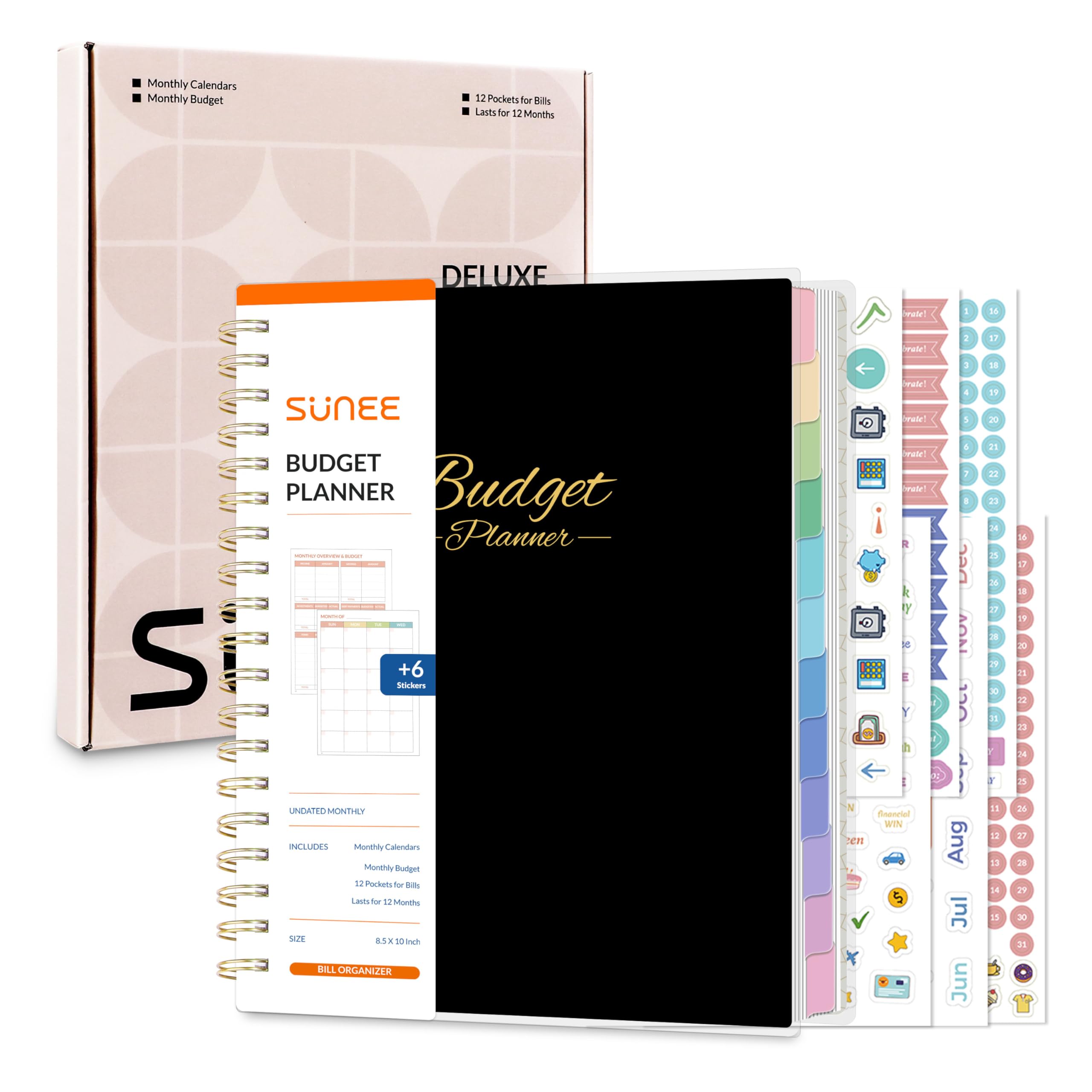
Monthly Bill Payment Organizer: 12 Month Undated | Monthly Bill Planner and Organizer | Bill Payment Tracker | bill tracker notebook | Expense and ... | Expense and Bill Tracker for 9 Years: Rk billers
View on Amazon- On-time payments, every time: Payment history is typically the largest factor in your score. Set autopay for at least the minimum, and calendar your due date so you never miss.
- Low utilization: Utilization is how much of your credit limit you’re using. If your limit is $300, keeping your statement balance under $30–$60 (10%–20%) is a strong habit. Lower is generally better.
Other smart practices:
- Don’t carry a balance if you can avoid it; interest compounds quickly at subprime APRs.
- Avoid cash advances; they start accruing interest immediately and often carry extra fees.
- Keep the account open at least 6–12 months before closing, so you build a thicker credit history.
- Limit new applications; too many hard inquiries in a short time can weigh on your score.
Common pitfalls to avoid
- Monthly maintenance fees: These can turn a “cheap” card into an expensive one. Prefer annual-fee-only or no-fee cards.
- Setup/program fees: An upfront $75–$95 fee is a real cost. Make sure you’re getting something valuable in return.
- Teaser “approval” language: “Instant approval” ads are often marketing. Rely on official prequalification tools from reputable issuers.
- High utilization due to low limits: A $300 limit gets maxed quickly. If you can afford a $500–$1,000 secured deposit, it’s often worth it for utilization breathing room.
- Rewards distractions: A 1% reward isn’t worth a $75 fee if you only spend $300 per year on the card. Do the math.
What progress looks like over time
Every profile is different, but here’s a common arc if you use the card carefully:
- Month 1–3: Establish on-time payments. Keep balances low. You may see small positive movement as your new tradeline reports.
- Month 4–6: Ask about a credit limit increase or graduation criteria if you’ve had perfect payments. Some programs automatically review your account.
- Month 7–12: If your scores have improved and your utilization is low, consider upgrading to an unsecured card or product-changing within the same issuer. Get your secured deposit back when you graduate or close in good standing.
- Beyond 12 months: With solid history, you can compare mainstream no-annual-fee cards and starter rewards cards. At this point, you can expand your toolkit thoughtfully—never all at once.
Alternatives if you’re not ready to apply today
- Become an authorized user: If a trusted family member or partner adds you to a well-managed, long-standing card (low utilization, no late payments), that history may be reported on your file. Make sure their issuer reports authorized users.
- Consider a credit-builder loan: A small loan where the funds are held in a savings account until you finish payments, helping you build payment history.
- Clean up errors: Dispute inaccuracies on your credit reports. Even a single corrected late payment can boost your score.
- Build a cash buffer: If you’re targeting a secured card, set aside the deposit now so you can choose a card with fewer fees and more room to breathe.
How to get personalized options (fast CTA)
The fastest way to see what you would actually pay is to compare prequalified offers from 3–5 issuers. Prequalification uses a soft credit check in most cases and can show your likely APR range, annual fee, and starting limit before you apply. Then you can pick the lowest-fee card with full three-bureau reporting and a clear upgrade path.
If you want more help picking between close contenders, our plain-English overview of choosing a starter card can help: How to Choose Your First Credit Card.
What to look for (your quick checklist)
- Reports to all three bureaus, monthly
- No monthly maintenance fee; low or no annual fee
- Clear upgrade path to an unsecured card (deposit returned at graduation)
- Autopay, payment reminders, and free credit score tracking
- Reasonable APR for the segment (high 20s to mid 30s is common; lower is better)
- Grace period on purchases (so you can avoid interest by paying in full)
- For secured cards: flexible deposit range and easy deposit refund when you graduate
Real-world scenarios
You have a 560 FICO and $400 in savings: A $300–$400 secured card with no annual fee likely gives you the best path. Put a couple of small bills on it, keep utilization under 10%, and set autopay in full. In 6–9 months of on-time payments, many people see enough improvement to qualify for better terms (results vary).
You have a 520 FICO and no spare cash for a deposit: An unsecured card with no setup fee and the lowest annual fee you can find is workable. Keep spending minimal, pay in full monthly, and ask for a credit line increase after 6 months of on-time payments. If fees are high, consider saving toward a secured deposit as a next step.
You’re rebuilding after a bankruptcy discharged 18 months ago: Secured cards from mainstream issuers or community banks/credit unions often offer the cleanest terms. Prequalify first, and verify that they report to all three bureaus. Avoid cards with monthly fees that nibble away at your progress.
For a deeper dive on secured options to anchor your plan, see: Best Secured Credit Cards: How to Compare the Top Options.
A quick note on advice
For personalized guidance, consider speaking with a certified nonprofit credit counselor or a licensed financial advisor. They can help you prioritize debt payoff, set up a budget that supports on-time payments, and choose the right mix of accounts for your goals.
Ready to compare your top options? (final CTA)
Prequalify with 3–5 issuers to see your likely APRs, fees, and limits side-by-side. It’s the fastest way to find a low-fee card that reports to all three bureaus and offers a real upgrade path. Then, use the card lightly, pay in full, and set a 6–12 month check-in to evaluate your progress.
Next step: Gather your details (estimated score, income, monthly housing payment), prequalify with a few reputable issuers, and pick the card with the lowest total cost and clearest path to graduation. Your future self—and your future credit—will thank you.
Recommended Resources
Credit Repair Kit For Dummies (For Dummies (Business & Personal Finance)): Bucci, Steve
Credit Repair Kit For Dummies (For Dummies (Business & Personal Finance)) [Bucci, Steve] on Amazon.com. *FREE* shipping on qualifying offers. Credit Repair Kit For Dummies (For Dummies (Business &
Monthly Bill Payment Organizer: 12 Month Undated | Monthly Bill Planner and Organizer | Bill Payment Tracker | bill tracker notebook | Expense and ... | Expense and Bill Tracker for 9 Years: Rk billers
Bill Payment Tracker: 12 Month Undated Bill Planner and Organizer | bill tracker notebook | Expense and Bill Tracker | Monthly Budget Planner | Expense and Bill Tracker for 9 Years
Saveyon A6 Binder and 12 Clear Envelopes, Budget Binder and Cash Envelopes for Budgeting, Mini Cash Envelope Wallet, Small Budget Planner in Pink, Stay Organized with Style and Efficiency
Compact Organization at its Finest - Organize in style with our <strong>premium PU leather budget binder</strong>, showcasing 12 clear A6 cash envelopes crafted for effective budgeting, along with 12
Related Articles
- Best Secured Credit Cards: How to Compare the Top Options
- Best Credit Cards for Beginners: How to Choose the Right Starter Card
- Best Student Credit Cards 2026: Top Picks for Building Credit and Earning Rewards
- Best Business Credit Cards: How to Compare Rewards, Fees, and Features
- Best Credit Cards for Groceries: Top Picks, Rewards, and How to Choose
- Best Cash Back Credit Cards 2026: Top Picks and How to Choose
- Best Balance Transfer Credit Cards: How to Compare the Top Offers
- Best Credit Cards for Travel in 2026: Rewards, Perks & Travel Protections