
Balance Transfer vs Personal Loan: Which Debt Payoff Option Is Better?
You’ve got high-interest credit card debt and two paths in front of you: a balance transfer credit card or a personal loan. Which move actually saves you more money — and keeps you on track? This guide breaks down balance transfer vs personal loan in plain English, so you can pick the tool that fits your debt, timeline, and credit profile.
Balance transfer vs personal loan: the basics
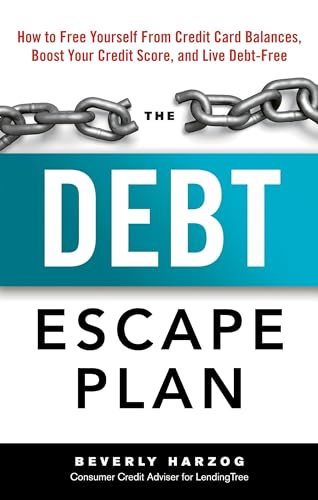
The Debt Escape Plan: How to Free Yourself From Credit Card Balances, Boost Your Credit Score, and Live Debt-Free: Harzog, Beverly
When she decided she wanted to ... So, Beverly created her own unique debt escape plan and <strong>succeeded in paying off more than $20,000 in credit card debt in two years</strong>....
Check Price on AmazonWhat is a balance transfer?
A balance transfer moves what you owe on one credit card to a new card offering a low or 0% introductory APR (annual percentage rate — the total yearly cost of borrowing including interest and certain fees) for a set period, typically 6–21 months. You’ll usually pay a balance transfer fee (commonly 3%–5% of the amount moved). During the promo period, interest is waived or drastically reduced on transferred balances. After the promo ends, the APR resets to the card’s regular variable APR — often in the high teens or 20%+.
How it’s used: People typically use balance transfers to knock out credit card debt faster by pausing interest, then paying aggressively during the intro window.
Key moving parts:
- Intro APR and length (for example, 0% for 18 months)
- Balance transfer fee (for example, 3% of $8,000 = $240)
- Go-to APR after the promo ends (for example, 21.99% variable)
- Transfer limits (often tied to your approved credit limit)
What is a personal loan?
A personal loan is an installment loan with a fixed APR, fixed monthly payment, and fixed payoff term (often 24–60 months). Many lenders charge an origination fee (a one-time processing fee, typically 1%–8% of the loan amount) that’s either deducted from the amount you receive or added to the loan. There’s no promo window — your rate is your rate for the life of the loan.
How it’s used: Personal loans are popular for debt consolidation — rolling multiple balances into one predictable payment — or when you need a longer payoff runway than a balance transfer offers.
Key moving parts:
- Fixed APR (rates vary widely by credit; stronger credit typically gets lower rates)
- Term length (for example, 36 months)
- Monthly payment (same every month, which helps with budgeting)
- Fees (origination, possible late fees; prepayment penalties are uncommon but check)
Core tradeoffs: cost, terms, credit impact, and predictability
Interest rates and total cost
- Balance transfer: If you can pay off the debt during the intro period, a 0% APR can beat almost any personal loan — even after including a 3%–5% transfer fee. If you don’t finish in time, the remaining balance starts accruing interest at the card’s regular APR, which may erase some savings.
- Personal loan: Rates aren’t 0%, but they’re fixed and often lower than typical credit card APRs. Over a longer timeline, a competitive fixed rate can be safer than gambling on finishing a promo in time.
Fees
- Balance transfer: Transfer fee (3%–5%) is common. Watch for fees on late payments — one misstep can void the promo APR in some cases.
- Personal loan: Origination fee (often 1%–8%) may apply. Many lenders have no prepayment penalty (a fee for paying off early), but verify before you sign.
Repayment terms and monthly payment
- Balance transfer: Minimum payments are low and variable, so you must self-enforce a payoff plan to finish before the promo ends. Great flexibility if you’re disciplined; risky if you’re not.
- Personal loan: Fixed term and fixed payment. You know exactly what you owe each month and when you’ll be debt-free — helpful for strict budgeting.
Credit score impact
- Both options: Expect a hard inquiry (a credit check that may slightly lower your score temporarily). Opening a new account can also reduce your average account age (a factor in your score).
- Balance transfer: Can improve your overall credit utilization ratio (your revolving balances versus revolving limits) if the new card increases your total available credit and you keep old cards open. But if you max out the new card with the transfer, that single card’s utilization may be very high.
- Personal loan: Moving debt from credit cards (revolving credit) to a personal loan (installment credit) can reduce your revolving utilization — often a positive factor. You also add to your credit mix (variety of account types), which may help over time.
Predictability for budgeting
- Balance transfer: Lowest potential cost if you finish in time, but requires a strict plan. Payments are flexible but can be too flexible if willpower wavers.
- Personal loan: Set-it-and-forget-it simplicity. You trade potential 0% savings for guaranteed predictability.
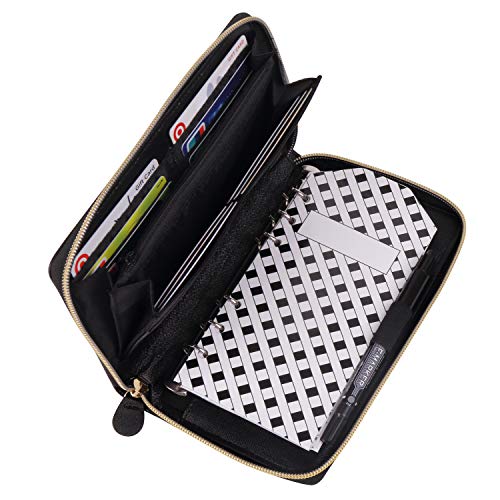
Soligt All-in-One Cash Envelopes Wallet with 12 Budget Envelopes & Budget Sheets - Red
View on AmazonWhen a balance transfer is better
Choose a balance transfer card when:
- You can realistically pay off the balance within the intro period.
- Your credit is strong enough to qualify for a top promo (approval standards vary by issuer).
- Your total debt is modest relative to likely credit limits (for example, $3,000–$10,000, though limits vary).
- You want the possibility of near-zero interest cost for a focused sprint.
Good fit scenarios:
- You owe $4,500 at 24.99% APR and can swing $300/month now and a $1,500 tax refund in six months. A 0% for 15 months card with a 3% transfer fee ($135) could let you clear it before interest returns.
- You have two cards totaling $3,200. You open a 0% for 18 months card, transfer both balances, set up a 17-month payoff plan, and automate payments.
When a personal loan is better
Choose a personal loan when:
- Your balance is larger and would be hard to finish during a promo period.
- You need fixed payments and a realistic multi-year payoff plan.
- Your credit profile qualifies you for a competitive fixed APR that beats your current credit card rates.
- You’re consolidating multiple debts and want one due date and one payoff date.
Good fit scenarios:
- You owe $12,000 across three cards at 22%–28% APR and can afford $350/month. A 48-month personal loan at, say, 12% APR (rates vary by credit) could cut interest meaningfully while giving a predictable timeline.
- You tend to overspend if a card has available credit. A personal loan can “lock in” the payoff and remove temptation.
Real-world cost comparisons (illustrative only — your rates will vary)
- Scenario A: $6,000 in credit card debt
- Balance transfer: 0% APR for 15 months, 3% fee ($180). Pay $400/month for 15 months = $6,000 paid + $180 fee = $6,180 total. If you finish on time, interest is essentially the fee.
- Personal loan: 12% APR for 24 months, no origination fee. Approx. payment $282/month; total interest around $768; total cost about $6,768. You pay more than the balance transfer if you could have finished within 15 months.
- Scenario B: $10,000 in credit card debt
- Balance transfer: 0% APR for 12 months, 4% fee ($400). You can afford $300/month plus an expected $4,000 bonus in month 10. If the bonus doesn’t arrive, you’ll carry $6,000 into the go-to APR (say 21.99%), and interest may pile up fast — the plan hinges on that bonus.
- Personal loan: 14% APR for 48 months, 5% origination ($500). Net proceeds $9,500 — you might need to borrow $10,600 to net $10,000. Payment about $289/month; total interest roughly $2,900–$3,000. More expensive than a flawless balance transfer payoff, but safer if cash flow is tight and uncertain.
Risks and fine print to watch
Balance transfer pitfalls
- Transfer fee math: A 5% fee on $8,000 is $400 — still often worth it versus months of 20%+ interest, but run the numbers.
- Promo clocks start quickly: Some cards require transfers within 60–120 days to get the intro APR. Delays can cost you.
- Lost promo APR: A late payment can, in some cases, trigger a penalty APR (a higher rate applied after certain violations) and void your intro rate. Automate payments to avoid this.
- Deferred interest offers: Some store cards use “deferred interest” (if any balance remains at promo end, they charge all the interest that would have accrued). Most mainstream balance transfer cards use true 0% APR (no retroactive interest), but always read the terms.
- New purchases: Many cards don’t give 0% on new purchases, or they apply payments to lowest-APR balances first, causing purchases to accrue interest. Consider keeping spending off the transfer card.
Personal loan pitfalls
- Origination fees: A 7% fee on a $15,000 loan is $1,050 — it changes your effective APR. Compare offers net of fees.
- Prepayment policies: Most reputable lenders have no prepayment penalty, but verify. If there is one, it can reduce the benefit of paying off early.
- Longer timelines mean more interest: Lower monthly payments can feel good but cost more overall. Choose the shortest affordable term.
- Temptation to re-borrow: Consolidation helps only if you avoid running balances back up on the now-empty credit cards. Consider lowering limits or closing unused cards selectively (but weigh credit score impacts before closing).
How to decide: a quick checklist
Ask yourself:
- How much do I owe, and how fast can I realistically pay it off? If within 12–21 months, a balance transfer can shine; if not, a personal loan’s fixed plan may be smarter.
- What’s my credit profile? Strong credit typically unlocks the best 0% offers and lower loan APRs. If your credit is fair, you may find loan rates high and balance transfer limits low.
- Do I have existing card limits high enough to hold my balances? If not, you might not be able to move the full amount via balance transfer.
- Do I value predictability or flexibility more? Personal loans are predictable; balance transfers are flexible but demand discipline.
- What are the total fees and interest in each path? Include transfer or origination fees, and model what happens if your payoff takes longer than planned.
- Will consolidating tempt me to spend more? If yes, prefer a structure that reduces temptation (fixed loan, frozen cards, or accountability tools).
What to look for and how to compare offers
Balance transfer cards: what matters
- Intro APR length and terms: Look for the longest true 0% window you can qualify for.
- Transfer fee: 3% is better than 5%; some offers are 0% fee during a short intro window.
- Go-to APR: If you might carry a balance past the promo, a lower ongoing APR matters.
- Credit limit: You need enough room to move your debt and still keep utilization reasonable.
- Penalty and payment allocation rules: Understand what happens if you’re late and how payments apply to balances.
Explore top offers and compare the fine print here: Best Balance Transfer Credit Cards: How to Compare the Top Offers
Personal loans: what matters
- APR range and how it’s set: Based on credit score, income, debt-to-income ratio (your monthly debt payments divided by monthly income), and other factors.
- Origination fee and total cost: Compare the APR and the fee together to get the real picture.
- Term options: Choose the shortest term that fits your budget to reduce total interest.
- Funding speed and payment flexibility: Some lenders fund same-day; some allow due date changes or extra payments easily.
Compare multiple lenders side-by-side here: Personal Loans Guide: Compare Rates, Terms & Apply (2026)
A practical payoff plan you can stick to
- Set a payoff target date before you apply. If it’s under 18 months, shortlist balance transfer cards; if it’s 24–60 months, shortlist loans.
- Automate payments the day you’re approved. For balance transfers, divide your total (plus the transfer fee) by the number of promo months and auto-pay that amount.
- Keep new spending off your payoff tool. For cards, avoid purchases; for loans, avoid taking new credit while paying down.
- Track progress monthly. If you’re falling behind on a balance transfer, start a backup plan early — like refinancing into a personal loan before the promo ends.
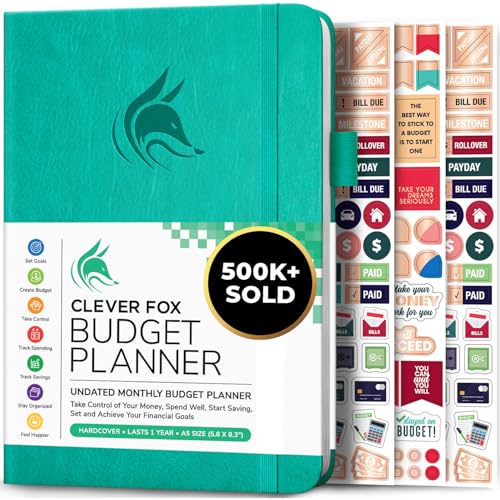
Clever Fox Budget Book – Financial Planner Organizer & Expense Tracker. Money Planner Account Notebook for Monthly Budgeting. Compact (Emerald)
View on AmazonLead-generation CTA: See your actual numbers
The fastest way to know which option saves you more is to compare personalized offers from 3–5 lenders and card issuers. It’s common to prequalify with a soft credit check (which doesn’t impact your score) before you formally apply. Start by checking both:
- 0% balance transfer card offers: Best Balance Transfer Credit Cards: How to Compare the Top Offers
- Fixed-rate debt consolidation loans: Personal Loans Guide: Compare Rates, Terms & Apply (2026)
Alternatives if neither path fits
- Snowball or avalanche payoff using your existing accounts — no new credit required.
- Debt management plan through a nonprofit credit counseling agency (can reduce interest with your current creditors, not a loan).
- If you’re juggling multiple balances and want to see all your consolidation paths side-by-side, read: Debt Consolidation Options: How to Compare Your Best Ways to Simplify Debt
Quick FAQs
- Will a balance transfer hurt my credit? You’ll likely see a small, temporary dip from the hard inquiry. If the new limit boosts your total available credit and you keep old cards open, your utilization may improve over time.
- Can I transfer a balance to an existing card? Sometimes, if your current card offers a new promo. Most 0% intro deals require opening a new card.
- Do personal loans have variable rates? Typically no — personal loans usually have fixed APRs and fixed payments.
- Can I pay off a personal loan early? In most cases yes, and many lenders do not charge a prepayment penalty — but always check your specific loan terms.
A quick word on personalized advice
If you’re unsure which path you’ll realistically stick to, consider a session with a nonprofit credit counselor or a fiduciary financial planner. They can review your budget and credit to help you pick the option with the highest chance of success.
Your next step
Run the numbers on both paths today, then prequalify to see real rates and limits. Start with:
- Best Balance Transfer Credit Cards: How to Compare the Top Offers
- Personal Loans Guide: Compare Rates, Terms & Apply (2026)
No single option wins for everyone. If you can finish fast and stay disciplined, a balance transfer can be the cheapest sprint. If you need structure and time, a personal loan can be the steadier marathon. Pick the tool that matches how you actually live — and then automate your plan so you don’t have to rely on willpower every month.
Recommended Resources
The Debt Escape Plan: How to Free Yourself From Credit Card Balances, Boost Your Credit Score, and Live Debt-Free: Harzog, Beverly
When she decided she wanted to ... So, Beverly created her own unique debt escape plan and <strong>succeeded in paying off more than $20,000 in credit card debt in two years</strong>....
Clever Fox Budget Book – Financial Planner Organizer & Expense Tracker. Money Planner Account Notebook for Monthly Budgeting. Compact (Emerald)
Use debt trackers to track your progress toward paying off your debts. Track all of your spending during the month. Add a category for each expense. Try not to overspend and stick to a budget. ... At
Soligt All-in-One Cash Envelopes Wallet with 12 Budget Envelopes & Budget Sheets - Red
<strong>Made of solid red PU leather and closing securely with a zipper, it has binder note that collect budget envelopes and tracker sheets as well as extra pockets for credit cards, coupons, and coi
Related Articles
- Best Balance Transfer Credit Cards: How to Compare the Top Offers
- Debt Consolidation Options: How to Compare Your Best Ways to Simplify Debt
- Personal Loans Guide: Compare Rates, Terms & Apply (2026)
- How Credit Card Interest Works: A Simple Guide to APR, Fees, and Balance Growth
- Best Credit Cards for Bad Credit: How to Compare the Top Options
- Best Secured Credit Cards: How to Compare the Top Options
- Best Business Credit Cards: How to Compare Rewards, Fees, and Features
- Best Credit Cards for Beginners: How to Choose the Right Starter Card