
Best Savings Account Rates 2026: How to Compare the Top Options
You’re seeing splashy ads promising sky‑high APYs and wondering: are these really the best savings account rates 2026 has to offer, or just marketing? Here’s what actually matters when choosing where to park your cash, how different account types compare, and the smart way to evaluate offers so you don’t get tripped up by teaser rates or hidden fees.
Already comparing rates? Our deep dive on high-yield options can help: Best High-Yield Savings Accounts in 2026.
What “best savings account rates” means in 2026
When people say “best rates,” they usually mean the highest advertised APY. But the real, take‑home return depends on several moving parts:

I Will Teach You to Be Rich: No Guilt. No Excuses. Just a 6-Week Program That Works (Second Edition)
<strong>The groundbreaking New York Times bestseller that taught a generation how to earn more, save more, and live a rich life</strong>—now in a revised 2nd edition. Personal finance expert Ramit Set
Check Price on Amazon- APY (annual percentage yield): The total yearly return including compounding. APY changes over time on variable-rate accounts, so what’s “best” today may shift next month.
- Compounding frequency: How often interest is added to your balance. Daily compounding (very common) earns slightly more than monthly. On $10,000, the difference is typically a few dollars a year — small, but not nothing.
- Fees: Monthly maintenance fees, excess transfer fees, paper statement fees, wire/ACH fees, and dormancy fees can erase a chunk of your yield. The best accounts typically have no monthly fee with no hoops.
- Minimum balance or deposit: Some top APYs apply only if you keep, say, $5,000+ in the account, or they pay the top rate only on the first $5,000–$25,000.
- Access and speed: How quickly you can move money in or out (external ACH transfer times, instant transfers, ATM access) matters for emergency funds.
- Online vs. branch: Online banks usually pay higher APYs and lower fees; brick‑and‑mortar banks may offer easier cash deposits and in‑person help, often with lower yields.
- Promotional vs. ongoing rates: A “bonus APY” for 3–6 months might not beat a slightly lower rate that lasts.
- Insurance: FDIC/NCUA coverage (up to $250,000 per depositor, per insured bank/credit union, per ownership category) protects your cash if the institution fails — not your APY if rates drop.
A quick example: Say you keep $15,000 in savings. A 4.75% APY compounded daily vs. a 4.60% APY compounded monthly is roughly a $22–$30 difference over a year. Add a $5 monthly fee to the 4.75% account and the “higher rate” suddenly loses. That’s why the best savings account rates 2026 should be read as “best net return after fees, with reliable access and coverage.”
The main savings options you’ll compare in 2026
High-yield savings accounts (HYSAs)
- What they are: Online-first savings accounts paying well above big‑bank rates. Variable APY.
- Typical features: No monthly fee, low or no minimums, daily compounding, easy mobile apps.
- Access: ACH transfers to your checking (1–3 business days). Some offer instant transfers or limited ATM access via a paired checking account.
- Who offers them: Online banks and some credit unions.
Traditional bank savings accounts
- What they are: Savings from large brick‑and‑mortar banks.
- Typical features: Very low APY in many cases, but you get branches, ATM networks, and bundled services.
- Access: Great for cash deposits and in‑person support. Rates tend to lag market leaders.
Money market accounts (MMAs)
- What they are: Hybrid accounts that may allow limited check‑writing or debit card access.
- Typical features: APY can be similar to HYSAs; some tie top rates to higher balances. Often come with ATM cards and checks.
- Access: Faster access than a pure savings in some cases, but watch transaction limits and potential fees.
Credit union savings (“share” accounts)
- What they are: Savings at member-owned institutions. Your initial deposit buys a share of the credit union.
- Typical features: Competitive APYs depending on the credit union, strong service, and often very low fees.
- Access: Regional availability or membership rules may apply. Insured by the NCUA (similar to FDIC for banks).
Cash management accounts (CMAs) at fintechs/brokerages
- What they are: Accounts that sweep your cash into one or more partner banks to earn interest.
- Typical features: Attractive APYs, large potential FDIC coverage through multiple program banks, and modern apps.
- Access: Varies widely. Always confirm how your funds are insured and where they actually reside.
If you want a primer on account types, fee structures, and rate basics, bookmark this: Savings Accounts: How to Choose the Best Account & Get Top Rates.
“Best” is personal: factors that make one account truly better for you
1) Rate changes and how quickly banks reprice
Savings rates are variable in most cases. Some institutions adjust APYs quickly when the Federal Reserve moves; others lag. A bank that consistently tracks the top tier may beat a flashy promo that fades.
- Watch the recent APY history: Has the bank kept pace with market leaders?
- Look beyond the headline: “Up to” rates sometimes apply only to new money or a narrow balance tier.
2) FDIC/NCUA protection and coverage strategy
- FDIC (banks) and NCUA (credit unions) both insure up to $250,000 per depositor, per institution, per ownership category (individual, joint, trust, etc.).
- CMAs may split balances across multiple program banks to expand coverage, but read the list of participating banks and confirm how coverage is allocated on any given day.
- If you hold more than $250,000, consider splitting funds across multiple insured institutions or different ownership categories.
3) Access to your money
- Transfer speeds: Many online banks offer 1–3 business day ACH; some provide instant transfers for a small fee or to their own checking accounts.
- ATM/check access: MMAs may issue debit cards or checks; pure savings usually don’t.
- Holds: New deposits can face holds (especially mobile check deposits). Check the funds availability policy.
4) Transaction limits and fees
- The federal six‑per‑month savings transfer limit was lifted, but many banks still cap certain transactions or charge “excess activity” fees. Know the rules.
- Outgoing transfers over certain amounts may require extra verification and time — good for security, inconvenient in a pinch.
5) Promotional vs. ongoing rates
- Teaser APYs: A 5.25% promo for 3 months that falls to 3.75% may underperform a steady 4.75% account over a year.
- Relationship hoops: Some “bonus” rates require a checking account, direct deposit, or minimum card spend. If you won’t maintain the requirements, assume you’ll get the base rate.
6) Balance tiers and caps
- Tiered APYs: “5.00% on the first $5,000; 0.50% above that.” Large balances may earn a blended rate that’s lower than you think.
- Minimums: A $10,000 minimum to earn the top tier is fine if you’ll keep that much; expensive if you dip below and trigger fees.
7) Digital experience and support
- Mobile deposit limits, budgeting tools, card controls, and 24/7 chat/phone support are quality‑of‑life features that matter when you actually use the account.
8) Taxes
- Savings interest is typically taxable at the federal level and may be taxable at the state level depending on your state. Earning a bit more APY could raise your tax bill slightly — still worth it for most savers, but plan ahead.
Who each account type is best for
Emergency fund savers (3–6 months of expenses)
- What matters: Reliable access, strong APY, no fees.
- Good fit: High‑yield savings or a competitive money market account with broad ATM access if you want card convenience. Keep it simple and liquid.
- Example: With $20,000 in an HYSA at a top‑tier rate, you could earn hundreds more in a year vs. a 0.01% traditional account — and still transfer to checking in a day or two.
Short‑term goal savers (home down payment in 12–24 months, wedding, car fund)
- What matters: Rate plus predictability. You probably don’t want market risk.
- Good fit: HYSA or MMA. If you don’t need access and want to lock a rate, consider a certificate of deposit (CD).
- Tip: Comparing CDs? Read this explainer on tradeoffs: CDs vs. High-Yield Savings: Where to Put Your Money.
High‑balance savers ($100,000+)
- What matters: FDIC/NCUA coverage strategy, tier thresholds, and service.
- Good fit: Multiple HYSAs across different institutions, a CMA that spreads deposits across program banks for expanded coverage, or a mix of HYSAs and CDs.
- Example: If an account pays the top APY only on the first $25,000, your blended yield may be lower than using two separate accounts that each pay a strong APY on your full balance.
People prioritizing easy access or low fees
- What matters: No minimums, easy transfers, simple app.
- Good fit: Fee‑free HYSA or credit union savings. If you regularly need ATM access or occasional checks, an MMA can be ideal.
Branch loyalists and cash depositors
- What matters: In‑person service, teller access, safe deposit boxes, integrated banking.
- Good fit: Traditional bank savings — just know you’re usually trading rate for branches. You can also pair a top‑yield online savings with your favorite branch bank checking.
If you want a one‑stop shop with strong savings plus daily banking features, explore our picks for Best Online Banks 2026: Top Picks for Fees, APY, and Everyday Banking.
How to evaluate savings account offers in 2026 (and avoid traps)
Here’s the checklist I use when helping friends pick a savings account. Apply it to 3–5 contenders to find your best fit quickly.

Texas Instruments BA II Plus Financial Calculator, Black ...
View on Amazon- Confirm the current APY and how it’s earned
- Is the advertised APY for everyone or only new customers? On what balance range? Does it require a checking account, direct deposit, or debit activity?
- Is it a promo rate? How long does it last, and what’s the ongoing/base APY afterwards?
- Scan the fee schedule
- Monthly maintenance fee? If “waived with $X balance,” can you comfortably maintain that?
- Excess transfer fee? Paper statement fee? Dormancy/inactivity fee?
- Wire/ACH fees for large moves? International ATM fees on MMAs?
- Check compounding and interest crediting
- Daily vs. monthly compounding, and how often interest is credited (daily/monthly). The difference is small but favors daily compounding.
- Validate FDIC/NCUA insurance details
- Bank or credit union? Confirm the institution’s FDIC/NCUA certificate.
- CMAs: Which program banks hold your funds, and how much coverage do you receive per bank? Is the list fixed or dynamic?
- Test the access and speed
- External ACH transfer limits and timelines (both directions). Are instant transfers available to your checking?
- ATM access for MMAs. Any partner networks? Daily withdrawal limits?
- Hold times for new deposits, especially mobile check deposits.
- Evaluate the digital experience
- Quality of the app and website, customer support hours, and dispute resolution track record.
- Budgeting tools, alerts, and goal features if that helps you save.
- Run the “net yield” math
- Estimate annual interest: Balance × APY (approximate; APY already includes compounding).
- Subtract any expected fees. Compare blended rates if the APY is tiered.
Example: You’re choosing between Account A and Account B for a $15,000 emergency fund.
- Account A: 5.00% APY, no fees, daily compounding.
- Account B: 5.25% APY promo for 3 months, then 4.25% APY, $10 monthly fee unless you keep $20,000.
Result: Account A likely pays more over 12 months if you can’t keep $20,000 parked, because B’s $120 in annual fees and the post‑promo rate drag the return. This is why a rock‑solid ongoing APY often beats a flashier headline.
- Consider your tax situation and location
- Some accounts or bonuses may vary by state or region. Interest is typically taxable — factor it into your plan.
Red flags to watch for in 2026
- “Up to” APY without clear tiers or caps.
- Short‑term promos that drop steeply.
- Relationship hoops you won’t actually maintain.
- Sneaky fees (paper statements, inactivity, excess transactions).
- Limited membership eligibility you don’t meet (certain credit unions).
- CMAs that don’t clearly list program banks or how coverage is allocated.
Real‑world scenarios to make it concrete
New saver with $3,000 building an emergency fund: A no‑fee HYSA with no minimum beats a checking account “saver” sub‑account with conditions you might not meet. Quick transfers let you top off goals automatically.
Family holding $60,000 for a home down payment in 12 months: Consider splitting across two HYSAs to keep each under $50,000 while staying under the $250,000 FDIC limit per ownership category. If you’re rate‑sensitive and certain you won’t touch the cash, a 12‑month CD ladder might add stability.
Freelancer with variable income who needs frequent access: A money market account with ATM access can smooth cash flow. Just confirm excess transaction policies and any debit card fees.
Quick CTAs to speed up your search
The fastest way to see which accounts will actually pay you the most is to compare current APYs, fees, and minimums from 3–5 banks or credit unions today. Shortlist your top three, then apply where you can keep the perks without fees.
Want a curated view of rate leaders? Start with our roundup of Best High-Yield Savings Accounts in 2026, then check requirements and fees before you open.
FAQs that matter in 2026
Do savings accounts still have a 6‑per‑month limit? The federal cap was lifted, but many banks still enforce limits or charge fees for “excessive” transfers. Read your bank’s policy.
How often do banks change APYs? In most cases, rates are variable and can change any time. Some institutions reprice quickly with market moves; others lag.
Are online banks safe? Yes, if they’re FDIC‑insured (or NCUA for credit unions). Your deposits are protected up to coverage limits. Always verify the institution and certificate.
Should I chase rates? It can pay to keep a “primary” top‑tier HYSA and occasionally move to better options. Just weigh the hassle against the extra yield, and avoid accounts that require hoops you won’t keep up with.
When does a CD make more sense than savings? If you won’t need the cash for a set period and you can lock a higher fixed rate than savings is likely to pay, a CD can be a good move. Compare here: CDs vs. High-Yield Savings: Where to Put Your Money.
A smart next step
- Build a personal rate sheet: list 3–5 contenders with APY, fees, minimums, transfer speeds, and insurance details.
- Pick the account that offers the highest net yield with the least friction for how you actually bank.
- Set up automatic transfers from checking to savings on payday. Behavior beats spreadsheets.
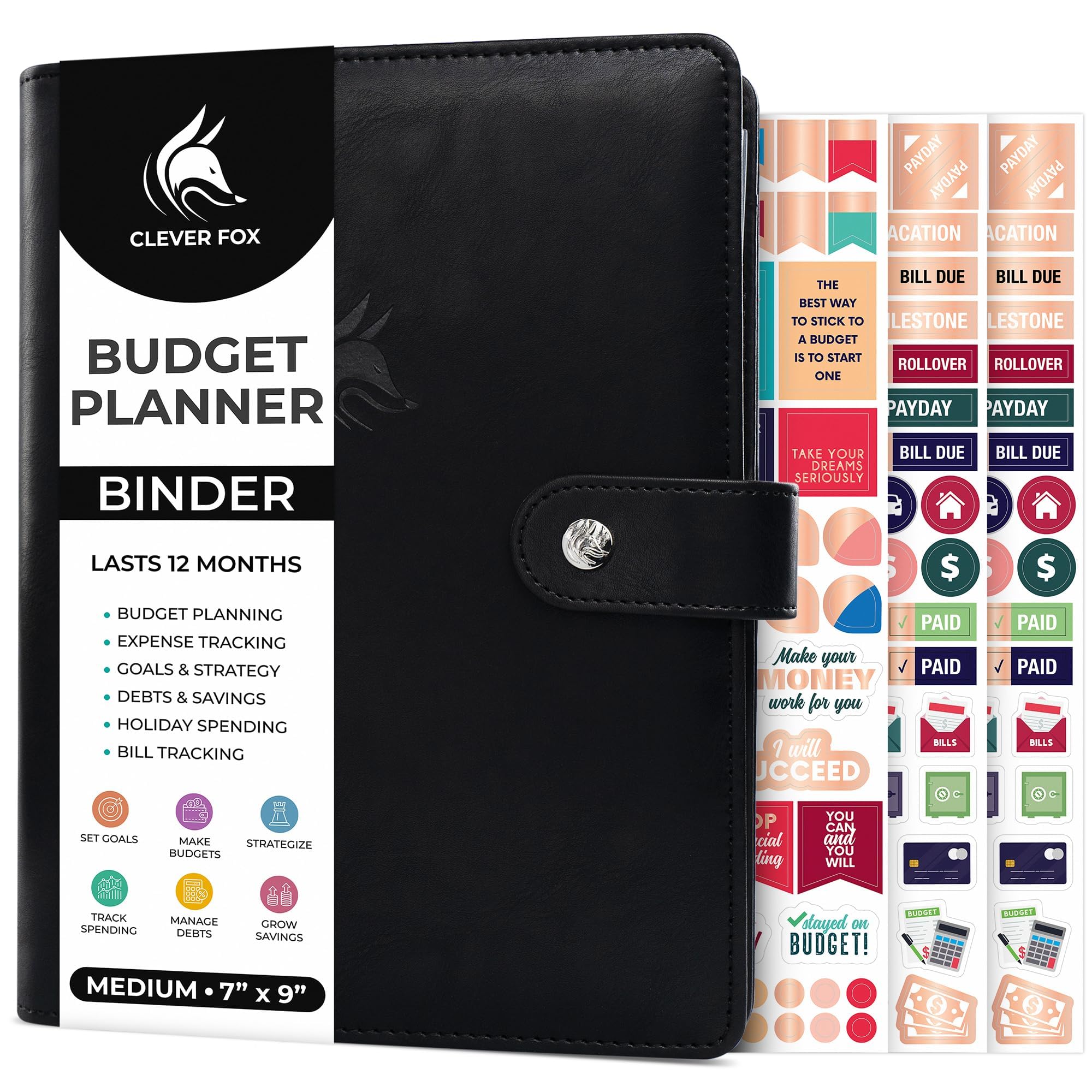
Clever Fox Budget Planner & Monthly Bill Organizer With ...
View on AmazonIf you hold large balances or have complex ownership needs (trust/estate accounts), consider consulting a licensed financial professional or a bank/credit union specialist for personalized guidance. And remember: rates vary by institution and can change frequently — always confirm the current APY and disclosures before you apply.
Ready to compare? Shortlist a few leaders, then open the one that gives you a strong ongoing APY, no hidden fees, and fast access when life happens.
Recommended Resources
I Will Teach You to Be Rich: No Guilt. No Excuses. Just a 6-Week Program That Works (Second Edition)
<strong>The groundbreaking New York Times bestseller that taught a generation how to earn more, save more, and live a rich life</strong>—now in a revised 2nd edition. Personal finance expert Ramit Set
Texas Instruments BA II Plus Financial Calculator, Black ...
Browse financial calculators with easy-to-read displays and intuitive keyboards. Perfect for solving business and statistical calculations efficiently.
Clever Fox Budget Planner & Monthly Bill Organizer With ...
Clever Fox Budget Planner - Expense Tracker Notebook. Monthly Budgeting Organizer, Finance Logbook & Accounts Book, Bill Tracker, A5 (Dark Green) · Clever Fox Budget Planner & Monthly Bill Org
Related Articles
- Savings Accounts: How to Choose the Best Account & Get Top Rates
- Best Banks for Savings Accounts in 2026: Top APY, No-Fee & Mobile Picks
- Best CD Rates in 2026: How to Compare the Top Offers
- Best High-Yield Savings Accounts in 2026
- Best Online Banks 2026: Top Picks for Fees, APY, and Everyday Banking
- Best Cash Back Credit Cards 2026: Top Picks and How to Choose
- Marcus vs Ally Savings: Which High-Yield Account Wins?
- Money Market Accounts vs. Savings Accounts: Which Is Better for Your Cash?