
Small Business Insurance Options: What to Know and How to Choose
You’re spinning a lot of plates—sales, payroll, maybe a new lease—and now a landlord or client is asking for “proof of insurance.” Where do you even start? This guide walks through small business insurance options in plain English: what each policy covers, who typically needs it, how costs work, and how to choose without overpaying.
Along the way, I’ll flag the gotchas insurers don’t always explain and give you practical steps to compare quotes. The fastest way to see what you would actually pay is to compare quotes from 3–5 carriers—more on that below.
Small Business Insurance Options: Essential Policies to Consider
Here are the core policy types most small businesses look at first, what they cover, and which businesses typically need them.

The Health Insurance Handbook For Small Business Owners eBook : Smith, Brian: Kindle Store
The book "<strong>The Health Insurance for Small Business Owners</strong>" provides a comprehensive overview of health insurance options for small businesses.
Check Price on AmazonGeneral Liability (GL)
- What it covers: Third-party bodily injury, property damage, and personal/advertising injury (like libel or slander). If a customer slips in your shop or you accidentally damage a client’s property at their site, GL is the standard policy that responds.
- Who needs it: Most businesses with a physical location, customer foot traffic, or who work at client sites (retailers, restaurants, contractors, event vendors, professional service firms that meet clients in person). Many leases and client contracts require it.
- Typical limits: Often $1 million per occurrence and $2 million aggregate (the total the policy will pay in a year). Higher limits are common for contractors and manufacturers.
- Jargon watch: “Deductible” is the amount you pay before insurance pays; GL often has no deductible for liability claims but may for property damage to others’ property in your care.
Commercial Property
- What it covers: Your business’s physical stuff—buildings you own, tenant improvements (buildouts in a leased space), furniture, equipment, and inventory—against covered perils (like fire, theft, certain weather events). It can also include Business Interruption or Business Income coverage (lost income and ongoing expenses if you have to shut down due to a covered property loss).
- Who needs it: Any business with gear, inventory, or a location to protect—retail stores, restaurants, manufacturers, wholesalers, offices.
- Key choice: “Replacement cost” (pays today’s cost to replace) vs. “actual cash value” (replacement cost minus depreciation). Replacement cost typically costs more but avoids big depreciation write-downs.
Business Owner’s Policy (BOP)
- What it is: A BOP bundles General Liability and Commercial Property into one package and often includes Business Interruption and some add-ons (called “endorsements,” which are policy amendments that expand or restrict coverage).
- Who needs it: Many small to mid-sized businesses with low-to-moderate risk profiles (think retail, light manufacturing, restaurants, small offices). A BOP is often more budget-friendly than buying GL and property separately.
- Why it’s popular: One bill, coordinated coverage, and usually a better price for the bundle.
Professional Liability (Errors & Omissions, or E&O)
- What it covers: Claims that your professional advice or services caused a financial loss (even if there’s no bodily injury or property damage). Example: a consultant’s recommendation leads to a client’s lost revenue, or a technology firm’s coding error causes downtime.
- Who needs it: Consultants, accountants, marketing agencies, IT firms, real estate professionals, design and engineering firms, healthcare practices (often with specialized malpractice policies).
- Jargon watch: Many E&O policies are “claims-made” (coverage applies if the claim is made during the policy period) and rely on a “retroactive date” (the earliest date your work is covered). Keep that retro date the same at renewal so your past work stays covered.
Workers’ Compensation
- What it covers: Medical bills, lost wages, and rehabilitation for employees hurt or made ill on the job. It also typically includes employer’s liability (lawsuits related to workplace injuries).
- Who needs it: In most states, if you have employees, you’re required to carry it. Rules vary by state and employee count.
- Cost drivers: Payroll by job classification (riskier roles like roofing cost more than office work), claims history, and your state’s rates. You’ll do an annual payroll audit to true up premium.
Commercial Auto
- What it covers: Liability for injuries and damage you cause while driving for business, plus physical damage to your owned vehicles (comprehensive and collision). It can also include “hired and non-owned auto” (HNOA) liability—coverage for vehicles you rent or your employees’ cars when used for business.
- Who needs it: Any business that owns vehicles, lets employees drive for business, or rents cars for work. Food trucks and delivery operations need it, too.
- Pro tip: Even if you don’t own vehicles, consider HNOA if your team drives their own cars for errands—your business can be pulled into a claim.
Cyber Liability (sometimes called Data Breach or Network Security & Privacy)
- What it covers: Costs from a cyber incident—data breach response, notification, credit monitoring, legal fees, ransomware, business interruption, and sometimes social engineering fraud (impersonation scams). Coverage varies widely, so read carefully.
- Who needs it: Any business that stores customer data, takes credit cards, or relies on email or digital systems. That’s almost everyone now—from solo consultants to online shops.
- Risk controls that help: Multi-factor authentication, regular backups, endpoint protection, and phishing training. Insurers often require some of these.

Yubico - YubiKey 5C NFC - Multi-Factor authentication (MFA) Security Key and passkey, Connect via USB-C or NFC, FIDO Certified - Protect Your Online Accounts : Electronics
View on AmazonUmbrella/Excess Liability
- What it is: Extra liability limits that sit on top of underlying policies (like GL, auto, and employers’ liability). If a big claim exceeds your GL limit, the umbrella can kick in.
- Who needs it: Businesses with higher foot traffic, contractual requirements for higher limits, or bigger perceived risk (contractors, manufacturers, distributors, property owners). Often purchased in $1M increments.
How to Assess Your Business’s Specific Insurance Needs
Start with risk mapping: what could realistically go wrong, how bad would it be financially, and how likely is it? Then match policies to those exposures.
Key factors to review:
- Industry: A contractor’s risks look nothing like a copywriter’s. Construction, food service, and manufacturing typically carry more premises and product risk; professional services lean toward E&O and cyber.
- Size and revenue: More customers, projects, or shipments usually means more exposure. Higher revenue can push you to higher liability limits.
- Location: Weather risk (hail, hurricanes, wildfire), local crime rates, and state regulations all matter.
- Employee count and roles: Workers’ comp classes and payroll drive that premium. If employees drive, add HNOA or commercial auto.
- Assets and equipment: Consider property and business income limits high enough to actually rebuild/replace and keep cash flow going.
- Contracts and regulations: Leases, vendor agreements, or client MSAs may require specific policies, limits, “additional insured” status, and endorsements like “waiver of subrogation” (you agree not to seek recovery from a party that contributed to the loss). Don’t sign before you know you can meet the requirements.
- Common exposures: Slip-and-fall, product liability, data breach, employee injuries, service mistakes—prioritize what’s most likely and costly for your business.
Real-world snapshots:
- Coffee shop with a leased space: General Liability, Commercial Property/BOP (including Business Income), Workers’ Comp, and possibly Cyber (POS systems). Landlord likely requires a certificate of insurance with them as additional insured.
- Solo marketing consultant: General Liability (often required by clients), E&O for professional work, and Cyber for email and data. Workers’ comp may not be required if no employees, depending on your state.
- Residential contractor: General Liability with higher limits, Commercial Auto and HNOA, Workers’ Comp, Tools & Equipment coverage (often scheduled on the property or inland marine part of a BOP), and possibly Umbrella.
- Online retailer: Property coverage for inventory (on-site and in transit), General Liability including Products-Completed Operations, Cyber, and possibly a BOP for bundling.
Want a deeper dive into prioritizing and budgeting coverage? See our practical take on keeping costs in check without creating gaps: Affordable Business Insurance Options: Smart, Budget-Friendly Coverage for Small Businesses.
What Drives Cost—and Smart Ways to Save
Insurance pricing is math and behavior. Here are the biggest levers.
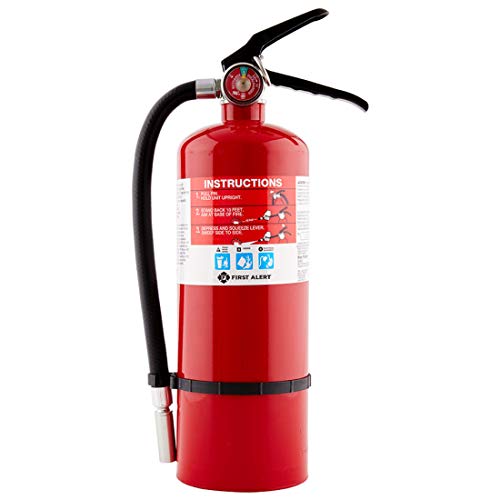
FIRST ALERT PRO5 Rechargeable Heavy Duty Fire Extinguisher, UL RATED 3-A:40-B:C, Red, 1-Pack - Amazon.com
View on AmazonKey cost drivers:
- Limits: Higher liability limits and larger property values increase premium. Balance client requirements with your risk tolerance.
- Deductibles/retentions: A deductible (what you pay before the insurer) or a retention (similar concept, more common in E&O/cyber) lowers premium when you take on more first-dollar risk.
- Revenue and payroll: Used as rating bases for liability and workers’ comp. Growing businesses see premium move with them.
- Location and construction: Fire protection, roof age, proximity to fire hydrants, and regional weather risks influence property rates.
- Claims history: Prior losses can push premiums up or restrict carrier appetite. Good documentation of fixes helps.
- Risk controls: Fire suppression, burglar alarms, driver telematics, cybersecurity controls, and formal safety programs can all earn credits.
- Endorsements: Adding coverage via endorsements (policy amendments) costs extra but may close critical gaps (e.g., HNOA, cyber social engineering, utility service interruption).
Practical ways to reduce premiums without gutting protection:
- Bundle via a BOP: Packaging GL and property is typically cheaper than separate policies for eligible businesses.
- Right-size limits and deductibles: Consider a slightly higher deductible to lower costs if you can afford small losses.
- Safety and training: Documented safety programs, driver MVR checks, and fleet telematics can earn discounts and prevent claims.
- Tighten contracts: Use hold-harmless and indemnification clauses with vendors/subs, and collect certificates of insurance (proof they carry coverage) listing you as additional insured where appropriate.
- Strengthen cybersecurity: Multi-factor authentication, backups, email security filters, and employee training materially improve eligibility and rates for cyber.
- Pay-in-full or autopay: Small but real savings in many cases.
- Shop around at renewal: Carriers’ appetites change. A clean, well-presented submission helps you get better terms.
If you mainly need liability protection for customer injuries or property damage, this primer focuses on the essentials and how to trim costs: Affordable Business Liability Coverage: Get the Right Protection for Less.
Quick, low-pressure next step: the fastest way to see your actual price is to compare quotes from multiple carriers. Here’s exactly how to prep and what to ask: How to Get Business Insurance Quotes: What to Ask, What to Provide, and How to Compare.
How to Compare Quotes and Choose the Right Policies
This is where most people overpay or end up with gaps. Here’s how to compare apples to apples.
- Line up limits and deductibles: Make sure each quote uses the same liability limits and similar deductibles so price comparisons are meaningful.
- Occurrence vs. claims-made: Occurrence (common for GL) covers incidents that happen during the policy period, even if the claim is filed later. Claims-made (common for E&O and some cyber) covers claims made during the policy period and after the retroactive date. Keep your retro date the same at renewal.
- Watch the exclusions: Read the “Exclusions” section carefully. Common carve-outs include professional services under GL, certain construction work, pollution, communicable disease, or product categories. If an exclusion hits your operations, ask about buy-back endorsements.
- Additional insured and waivers: If contracts require clients/landlords to be added as “additional insured” (they are protected under your policy) or ask for “waiver of subrogation” (your insurer agrees not to seek recovery from them), confirm your policy can issue those endorsements—some charge a fee per certificate.
- Business Income limits and triggers: For property/BOP, confirm the coverage period (e.g., 12 or 18 months) and whether there’s a “waiting period” instead of a deductible.
- Cyber specifics: Check ransomware coverage, sublimits for social engineering fraud, minimum security requirements, and panel provider requirements for legal/forensics.
- Hired and non-owned auto: If employees drive personal vehicles for work, make sure HNOA liability is included.
- Claims handling: Ask carriers or your agent about average claim response times, preferred vendors, and where to file. Speed matters when something actually happens.
What to look for in an insurance partner:
- A licensed agent or broker who specializes in your industry segment.
- Carriers rated A- or better by AM Best (a financial strength rating) to help ensure claims-paying ability.
- Clear, written explanations of any coverage you decline and why.
Agent vs. broker—what’s the difference?
- Captive agent: Represents one carrier (or a small set). Simpler but fewer options.
- Independent agent or broker: Shops multiple carriers on your behalf. Often better for comparing coverage and price. Compensation is usually commission from carriers; some brokers charge fees—ask upfront.
Certificates of Insurance (COIs)—what they do and don’t do:
- A COI is proof of coverage for a point in time. It lists your policies, limits, and key endorsements. It isn’t the policy itself and can’t change coverage.
- If a client wants to be additional insured, it must be endorsed on your policy; the COI then references the endorsement.
State-specific mandates to keep in mind:
- Workers’ compensation: Required in most states once you have employees; thresholds and exemptions vary.
- Commercial auto: Required if you title vehicles to the business. Minimum limits vary by state; many contracts require higher limits.
- Specialty licenses: Some professions (e.g., contractors, healthcare) have insurance requirements tied to licensing.
Basic claims and renewal steps:
- When something happens: Protect safety first, then preserve evidence. Notify your agent or carrier promptly. Late reporting can complicate coverage.
- Documentation: Photos, incident reports, invoices, and witness details help speed claims.
- Review at renewal: Update revenues, payroll, locations, inventory values, and contracts. Shop if rates jump or your risk profile changed.
After you shortlist the policies you likely need, it’s worth taking 15 minutes to gather quotes. You’ll want to see at least three to five offers so you can pinpoint a fair market price for your exact risk profile. Here’s a step-by-step on doing that efficiently: How to Get Business Insurance Quotes: What to Ask, What to Provide, and How to Compare.
Example Scenarios and Typical Cost Ranges
Rates vary by state and your specific details, but ballparks help for planning.
Independent consultant (no employees), $150K revenue, low-risk office work:
- Likely policies: GL ($1M/$2M), E&O ($1M), Cyber (basic), maybe a BOP if you need property coverage.
- Typical annual premiums: GL $300–$600; E&O $600–$1,500; Cyber $300–$900; BOP (with modest property) $500–$1,200.
Specialty retailer with small storefront, $400K revenue, 3 employees:
- Likely policies: BOP (GL + property + business income), Workers’ Comp, Cyber; possibly HNOA.
- Typical annual premiums: BOP $1,200–$3,500; Workers’ Comp highly state-dependent but often 1%–6% of payroll; Cyber $400–$1,200; HNOA add-on $150–$500.
Residential contractor, $1M revenue, 6 employees, 2 service vans:
- Likely policies: GL ($1M/$2M or higher), Commercial Auto, Workers’ Comp, Tools & Equipment (inland marine), Umbrella ($1M–$2M), possibly BOP if you have a shop.
- Typical annual premiums: GL $1,500–$5,000; Auto per vehicle $1,000–$3,000; Workers’ Comp varies widely by trade/state; Umbrella $600–$1,500 per $1M.
These are rough planning ranges; your actual offers will depend on underwriting details, prior losses, and carrier appetite.
When You’re Ready to Act: A Smart, Low-Stress Path
- Make a quick inventory: What do you own (or lease) that needs protection? What contracts require insurance? Who could sue you and for what?
- Decide the must-haves: For many small businesses, that’s a BOP, Workers’ Comp (if you have employees), and possibly E&O and Cyber.
- Compare 3–5 quotes: Same limits and deductibles, check exclusions, confirm ability to issue required endorsements.
- Ask a licensed agent questions: “What exclusions should I worry about for my operations?” “What are my options for higher deductibles?” “How fast do you issue COIs?”
CTA—Get personalized quotes: The clearest way to confirm your real price is to compare offers side-by-side. Use our checklist to make it easy: How to Get Business Insurance Quotes: What to Ask, What to Provide, and How to Compare.
If you’re still deciding which policies are essential for your size and industry, this list will help you prioritize: Best Insurance Policies for Small Businesses: Essential Coverage, Costs, and How to Choose.
A quick note: This guide is educational and not legal or tax advice. Laws and requirements vary by state and industry. For personalized recommendations tailored to your operations, speak with a licensed insurance professional.
Next step: Pick one scenario above closest to your business, jot down your basic details (revenue, payroll, assets, locations), and request 3–5 quotes. You’ll go from guessing to clarity in under an hour.
Recommended Resources
The Health Insurance Handbook For Small Business Owners eBook : Smith, Brian: Kindle Store
The book "<strong>The Health Insurance for Small Business Owners</strong>" provides a comprehensive overview of health insurance options for small businesses.
Yubico - YubiKey 5C NFC - Multi-Factor authentication (MFA) Security Key and passkey, Connect via USB-C or NFC, FIDO Certified - Protect Your Online Accounts : Electronics
Yubico - YubiKey 5 NFC - Multi-Factor authentication (MFA) Security Key and passkey, Connect via USB-A or NFC, FIDO Certified - Protect Your Online Accounts · Yubico - YubiKey 5Ci - Multi-Factor authe
FIRST ALERT PRO5 Rechargeable Heavy Duty Fire Extinguisher, UL RATED 3-A:40-B:C, Red, 1-Pack - Amazon.com
The First Alert PRO5 Fire Extinguisher is <strong>UL rated 3 A: 40 B:C and exceeds minimum 2 A:10 B:C code requirements</strong>; It features durable all metal construction with a commercial grade met
Related Articles
- Business Insurance Types Explained: What Each Policy Covers and How to Choose
- Best Insurance Policies for Small Businesses: Essential Coverage, Costs, and How to Choose
- Affordable Business Insurance Options: Smart, Budget-Friendly Coverage for Small Businesses
- Health Insurance for Small Businesses: What Owners Need to Know
- How Business Insurance Protects Your Company: Key Benefits and What They Cover
- Understanding Business Liability Insurance: What It Covers, Who Needs It, and How to Choose
- Commercial Insurance Coverage Basics: Essential Coverages, Costs, and How to Choose
- How to Get Business Insurance Quotes: What to Ask, What to Provide, and How to Compare